Top Things To See In Kyoto: Must-Visit Temples, Shrines & Gardens

Plan Your Trip To See Kyoto’s Top Attractions
Kyoto is one of those destinations that impresses from the moment you arrive. With more than 1,700 temples and shrines, elegant gardens, peaceful alleyways, and some of Japan’s most iconic landmarks, Kyoto offers an endless collection of sights to explore. We spent five days in Kyoto and were able to explore in depth what would become one of our favourite cities in Japan.
While many visitors arrive in search of the city’s most famous sights, such as the Golden Pavilion or the bright red torii gates of Fushimi Inari-taisha, we also found some wonderful, quieter spots with lesser-known temples, hidden streets, and the unforgettable cultural experiences that stay with you long after your trip ends.
If you’re planning your itinerary and trying to decide on the top things to see in Kyoto, this guide will walk you through the most impressive and fascinating places to include in your visit. From breathtaking viewpoints to ancient Buddhist temples, mystical bamboo forests, serene Zen gardens, and loads of shopping filled with local flavours, these are the places that make Kyoto one of the most memorable destinations in the world.
Things To Do In Kyoto
✅ Fushimi Inari Shrine and the Golden Pavilion are the top two sights to see
✅ Visit the numerous beautiful gardens
✅ Shopping options including malls, food courts and boutique shops
✅ Enjoy fabulous local food at the restaurants in Kyoto
Fushimi Inari-Taisha Shrine
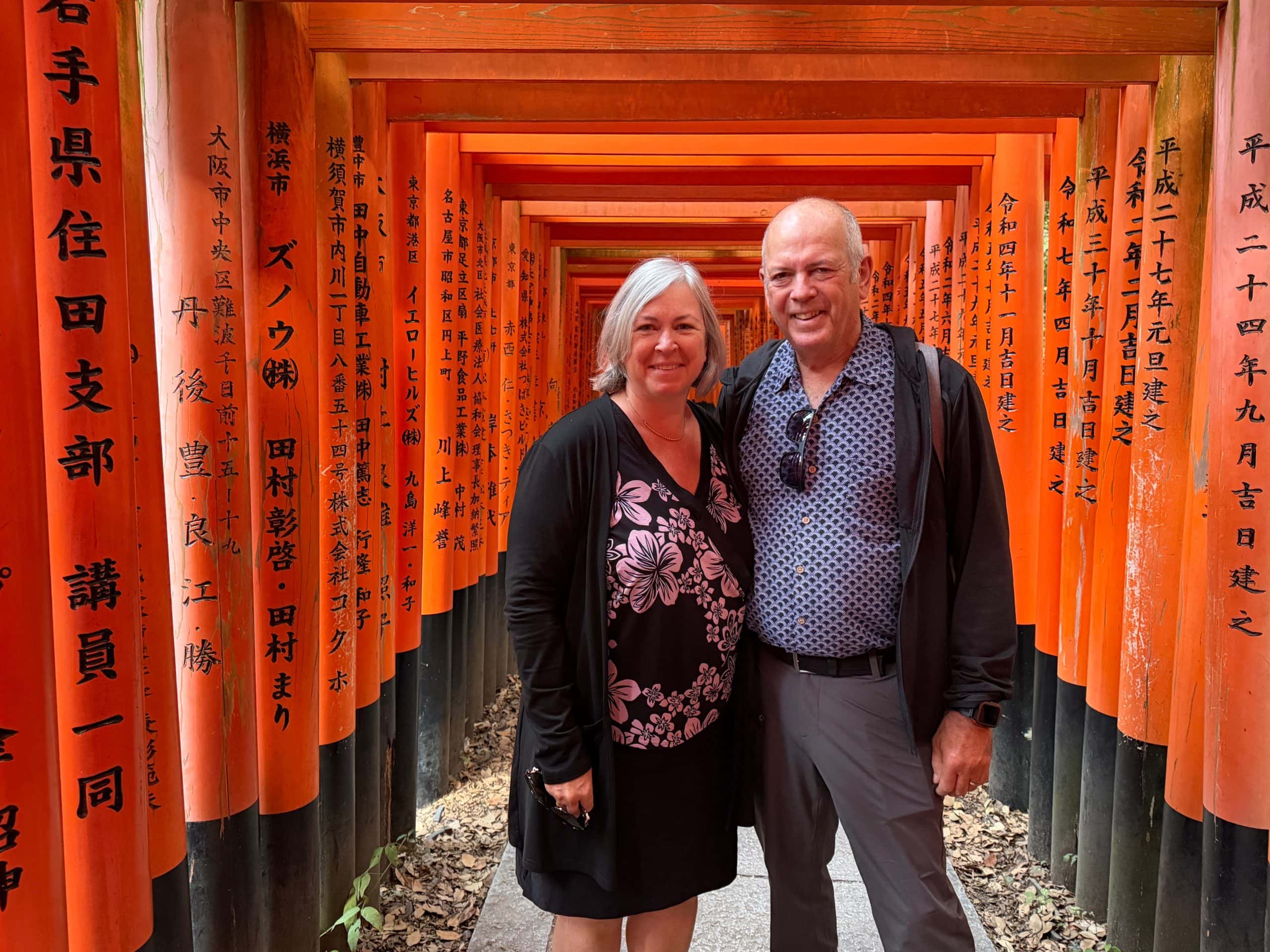
One of the most iconic landmarks in all of Japan, the Fushimi Inari-taisha Shrine is instantly recognizable thanks to its endless tunnel of bright red torii gates. It’s no surprise that this is one of the top things to see in Kyoto, but what many visitors don’t realize until they arrive is just how extensive the experience truly is.
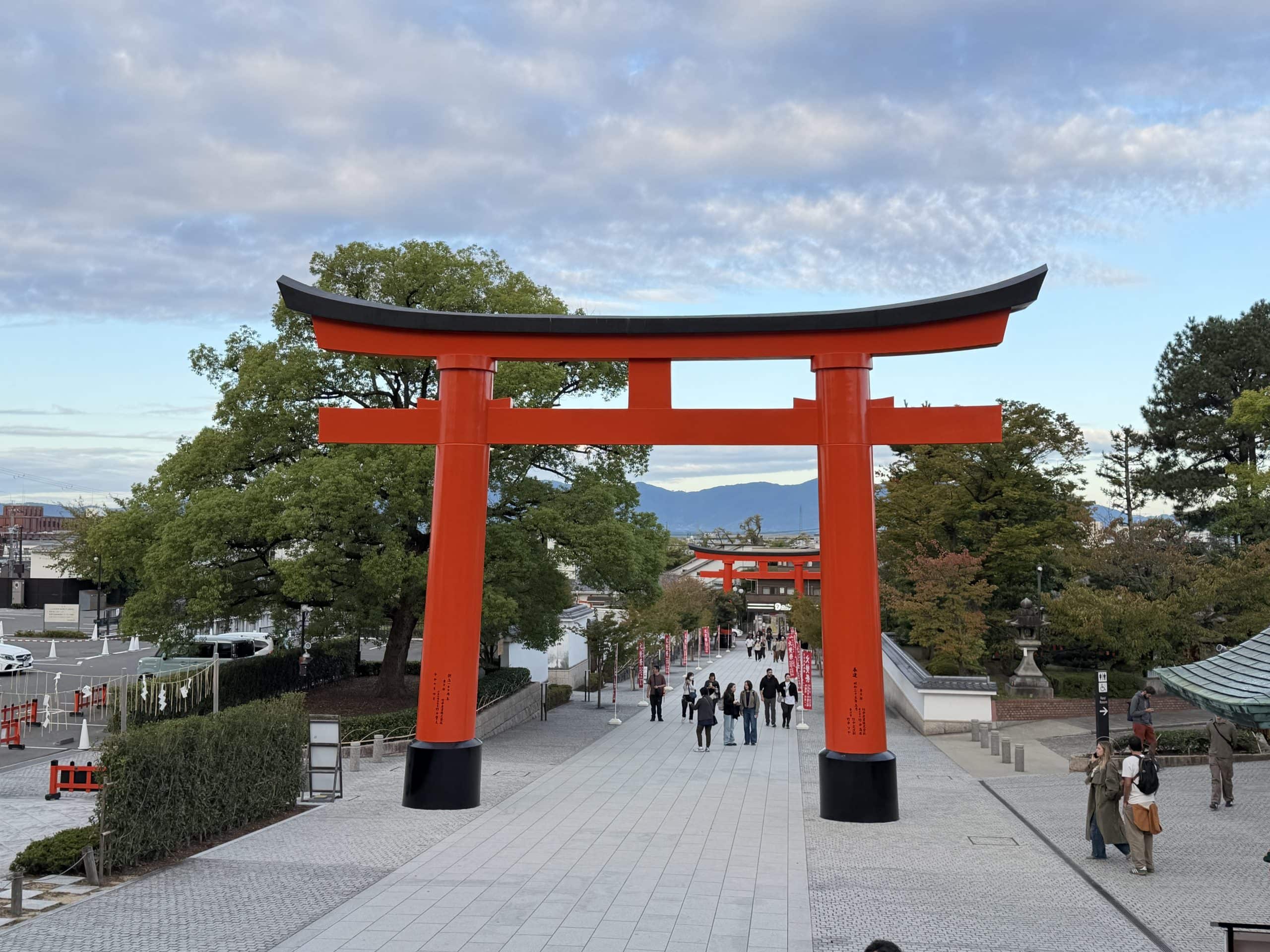
The best time to visit is early in the morning, when the sun is just rising, and the crowds haven’t arrived yet. We took an early bird tour when the shrine was quiet, and the red-orange glow of the gates seemed even more magical.
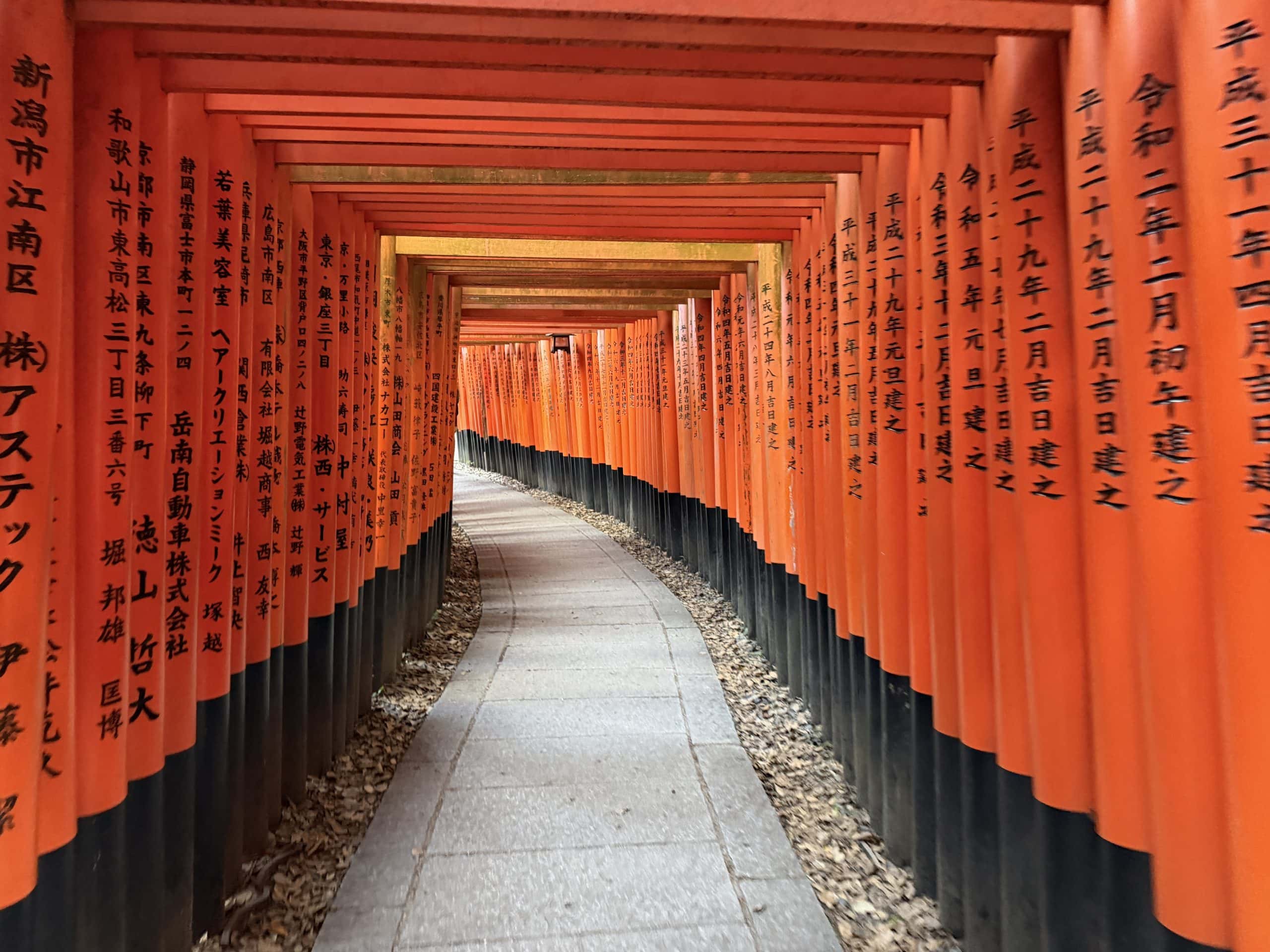
As you begin your walk through the thousands of torii gates, more than 10,000 in total, you’ll notice inscriptions on each pillar. These are the names of individuals or companies who donated to the shrine, often paying around $10,000 USD per gate. Every twenty years, the pillars are replaced to maintain the brilliant colour.
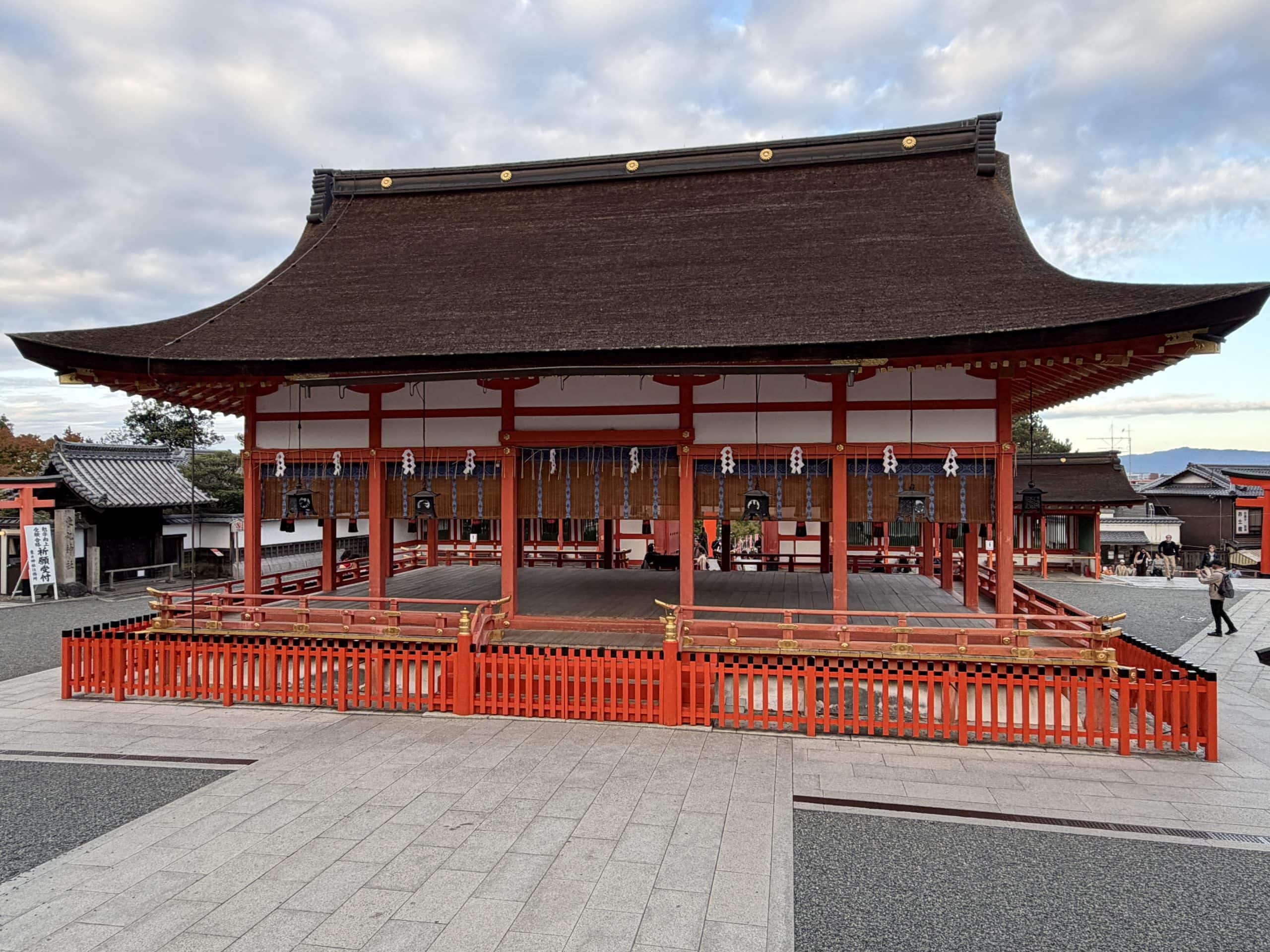
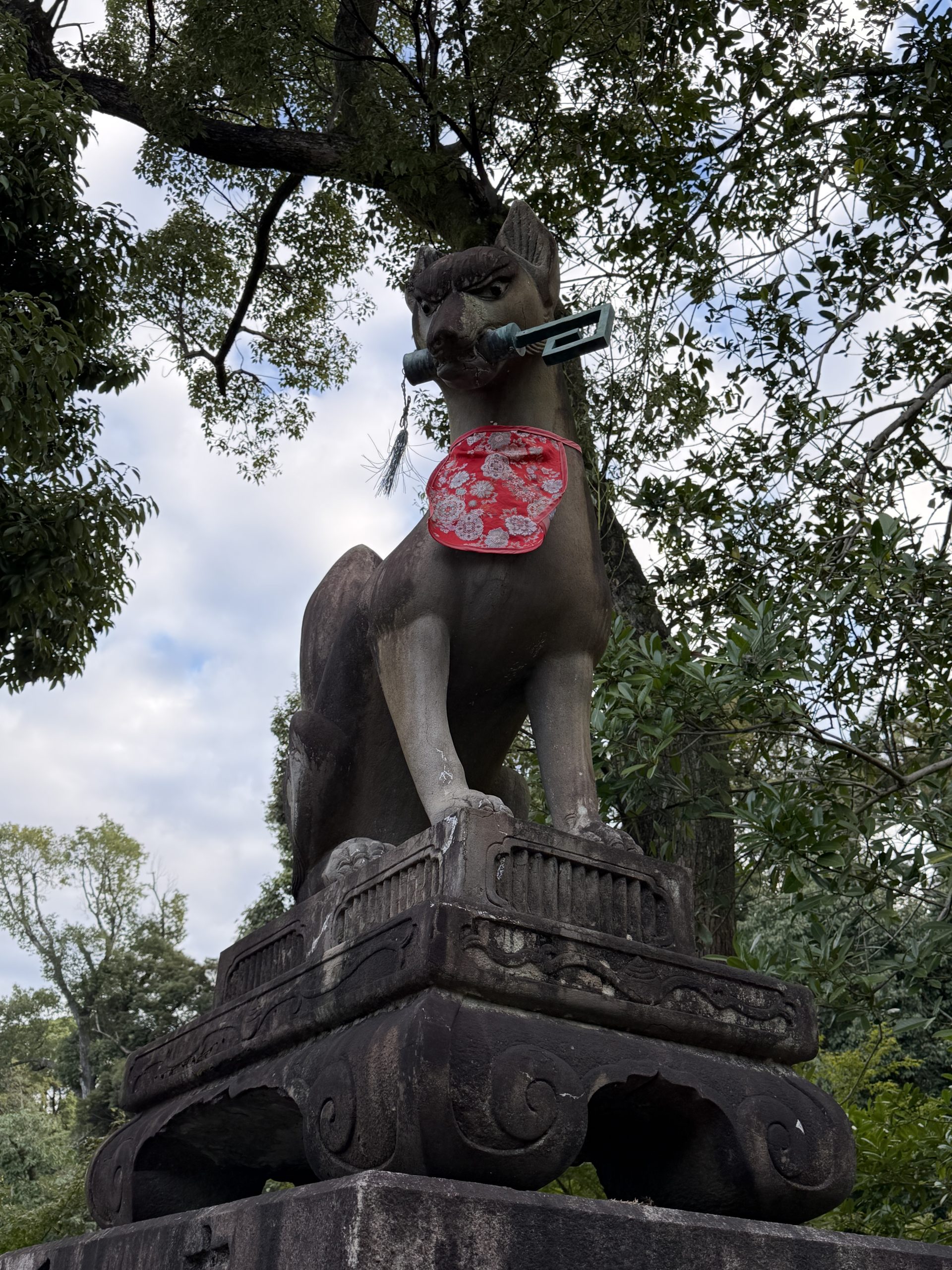
Fushimi Inari is dedicated to the Shinto god of rice and prosperity, and all over the grounds, you’ll see statues of foxes, each with unique expressions and symbolic items.

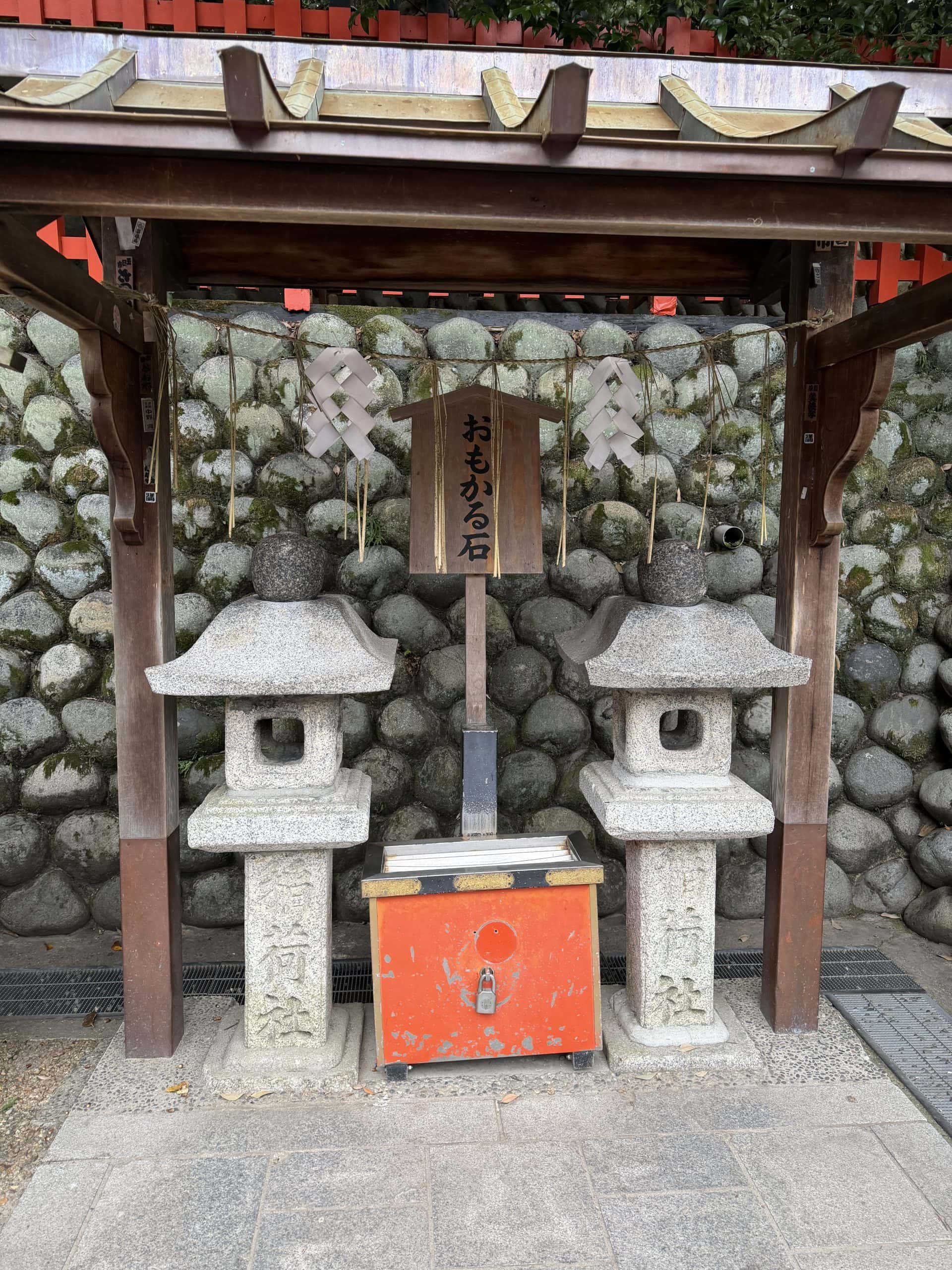
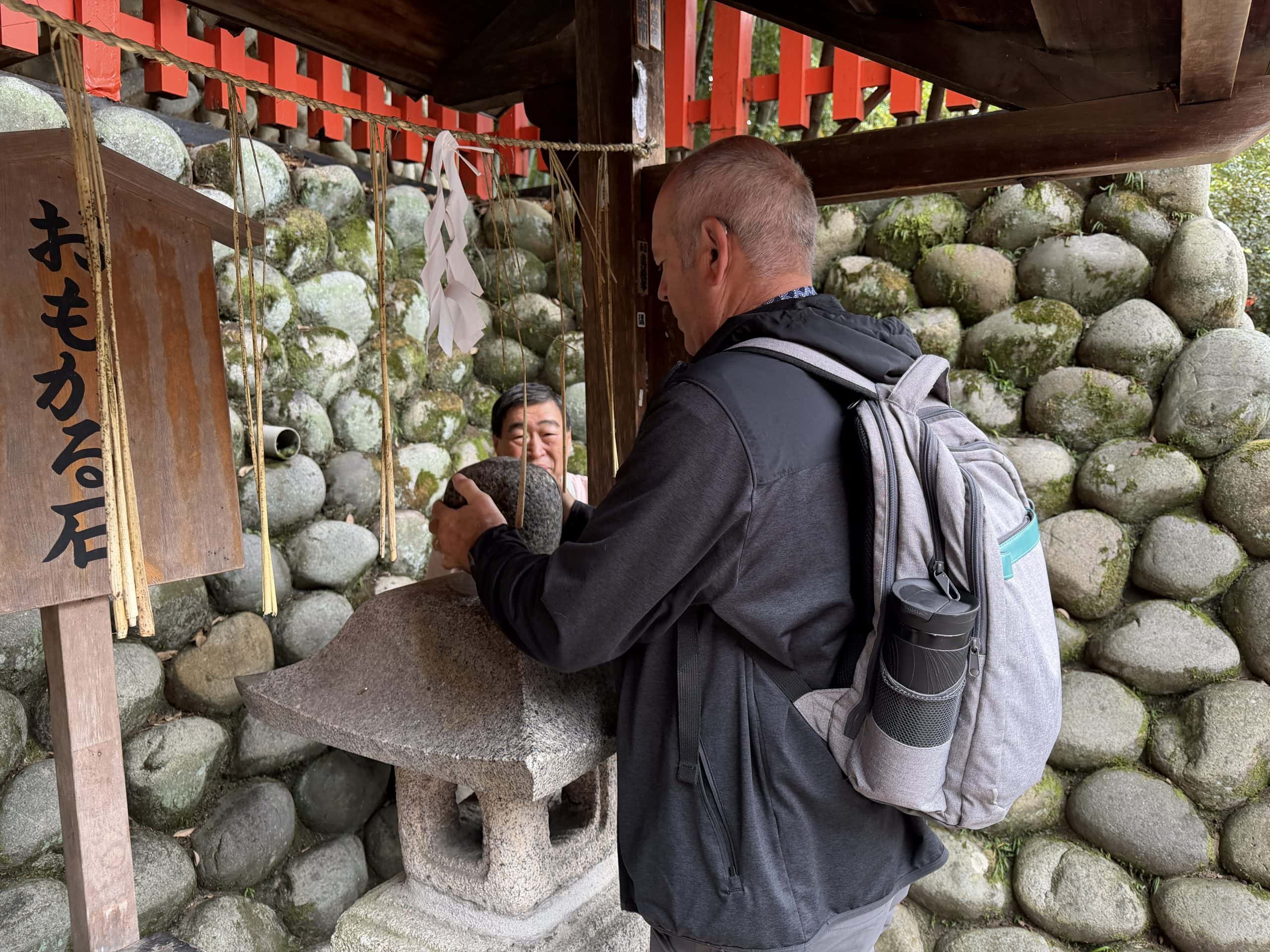
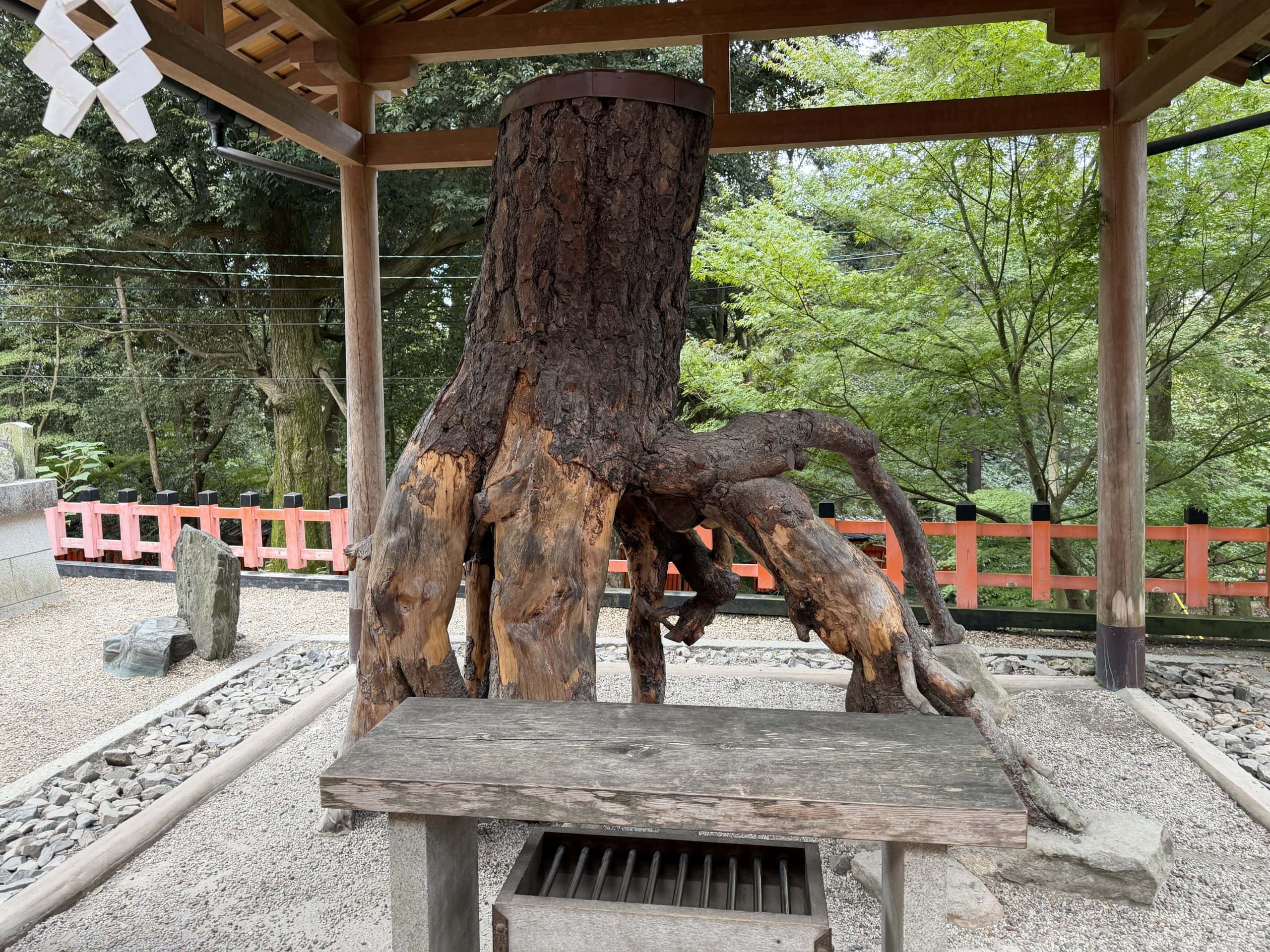
Inside the shrine complex are places where visitors test their luck, including heavy stone balls that you try to lift to determine whether good fortune is in your future. And there is a tree root said to help sore knees when gently rubbed. Since we were walking upwards of 20,000 steps a day exploring Kyoto, I didn’t pass this one up!
The full walk to the summit takes about an hour and a half, but we only did the lower section due to time constraints. Even if you don’t go all the way to the top, this complex is definitely worth visiting.
CHECK OUT OUR TOP TRAVEL RESOURCES
✦ Find superior accommodations on Expedia.com or Booking.com
✦ Book your rental car wth Discover Cars
Kinkaku-ji Temple (The Golden Pavilion)
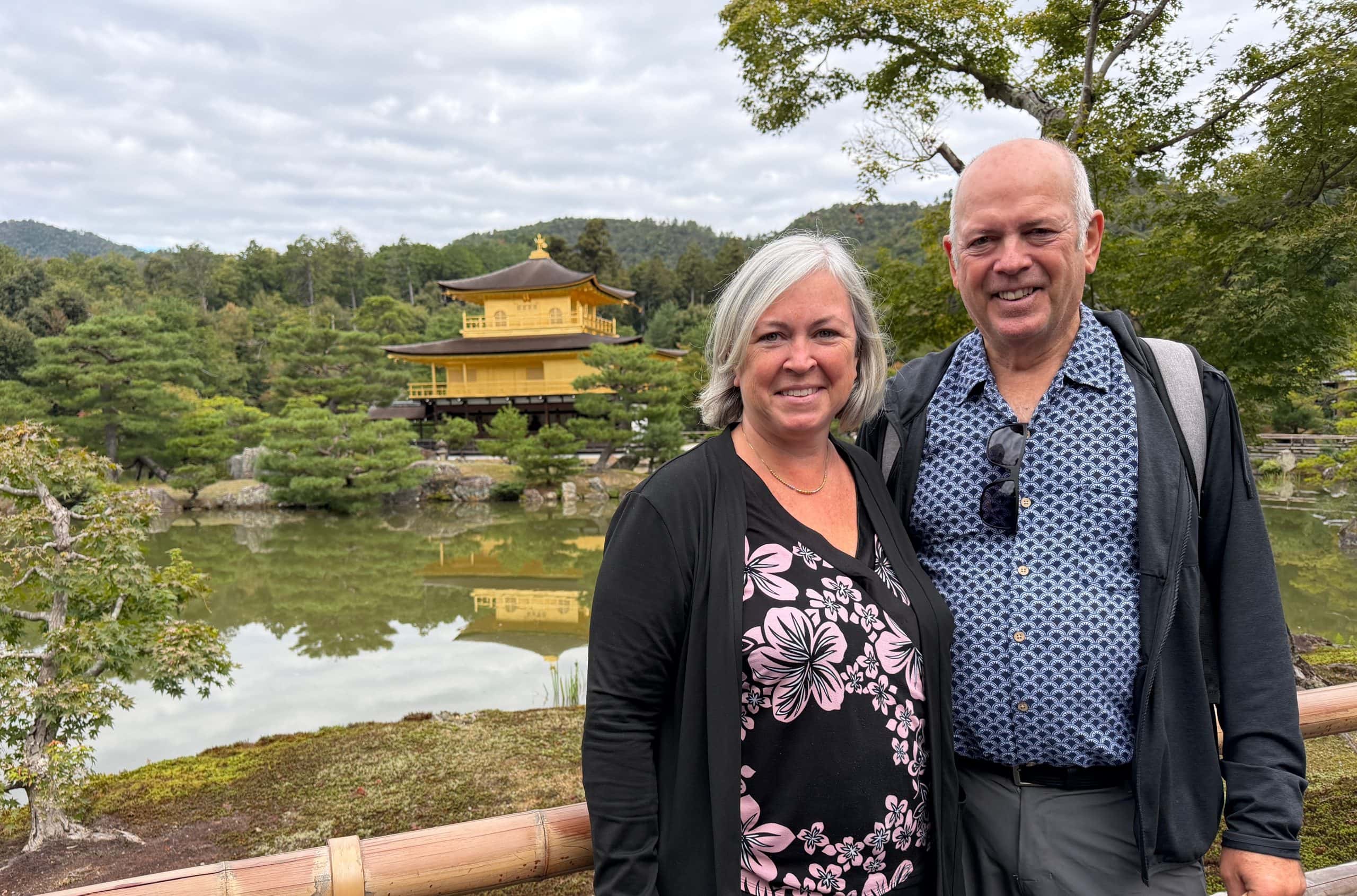
If there’s a single sight in Kyoto that seems straight from a fairytale, it’s the spectacular Kinkaku-ji Temple, also known as the Golden Pavilion. Surrounded by a mirror-like pond and meticulously landscaped gardens, this incredible three-story temple is one of the most iconic images of Japan.

We arrived 1/2 hour before the temple opened at 9:00am, as the lines formed quickly. By arriving early, not only were we able to get ahead of the crowds, but it is worth mentioning that the early morning light reflects beautifully off the gold coloured building. The pond itself is so significant that it is designated as a World Cultural Heritage Site, and the entire scene feels almost dreamlike.
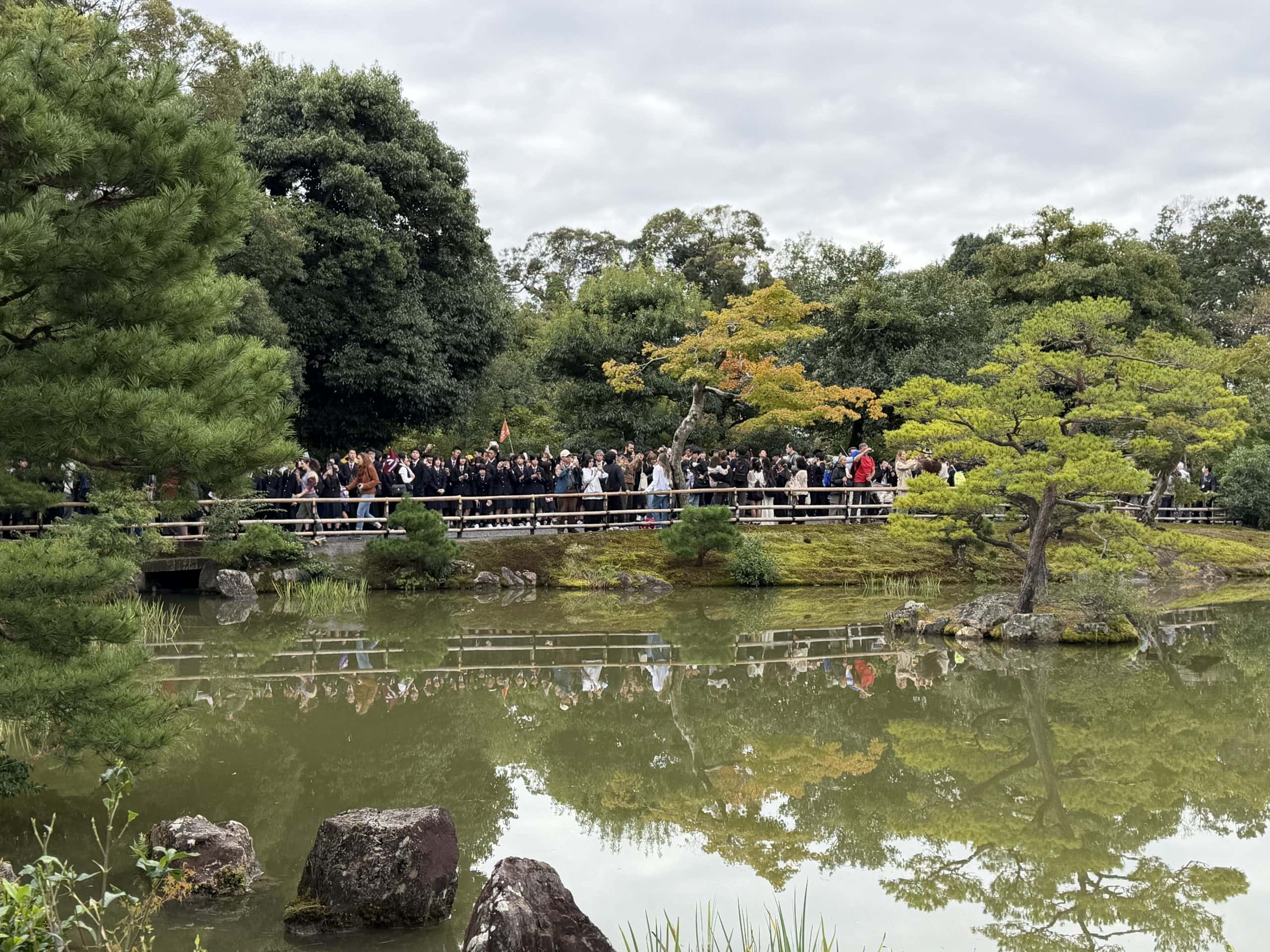
What makes Kinkaku-ji particularly fascinating is that each level of the pavilion represents a different architectural style. The first floor is built in the Shinden style, traditionally used for the residences of nobles. The second floor is the Buke style, which shows the style of the samurai class. The third level is pure Zen Buddhist architecture.
The top two floors are covered entirely in gold-leaf lacquer. And at the very top stands a golden representation of the fenghuang, a mythical Chinese bird that is often mistaken for a phoenix.

The original temple was built in 1397, as part of a complex built by the Shogun, who wanted to entertain the Chinese to increase business relations. It was unfortunately burned down by a monk in 1950 and was later rebuilt with a much grander look. Our guide showed us a picture of the original, rather plain structure. The current building is much more impressive.
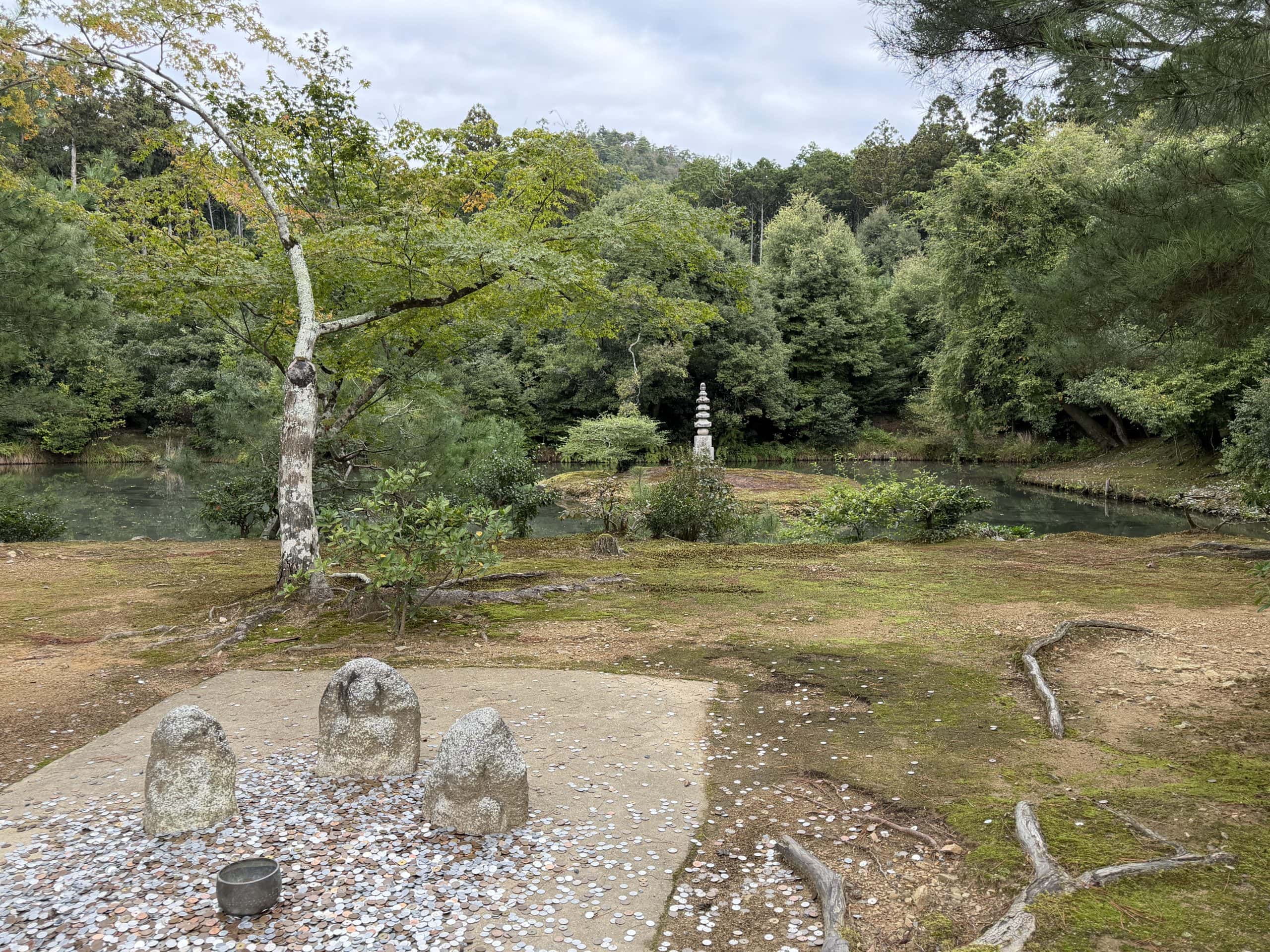
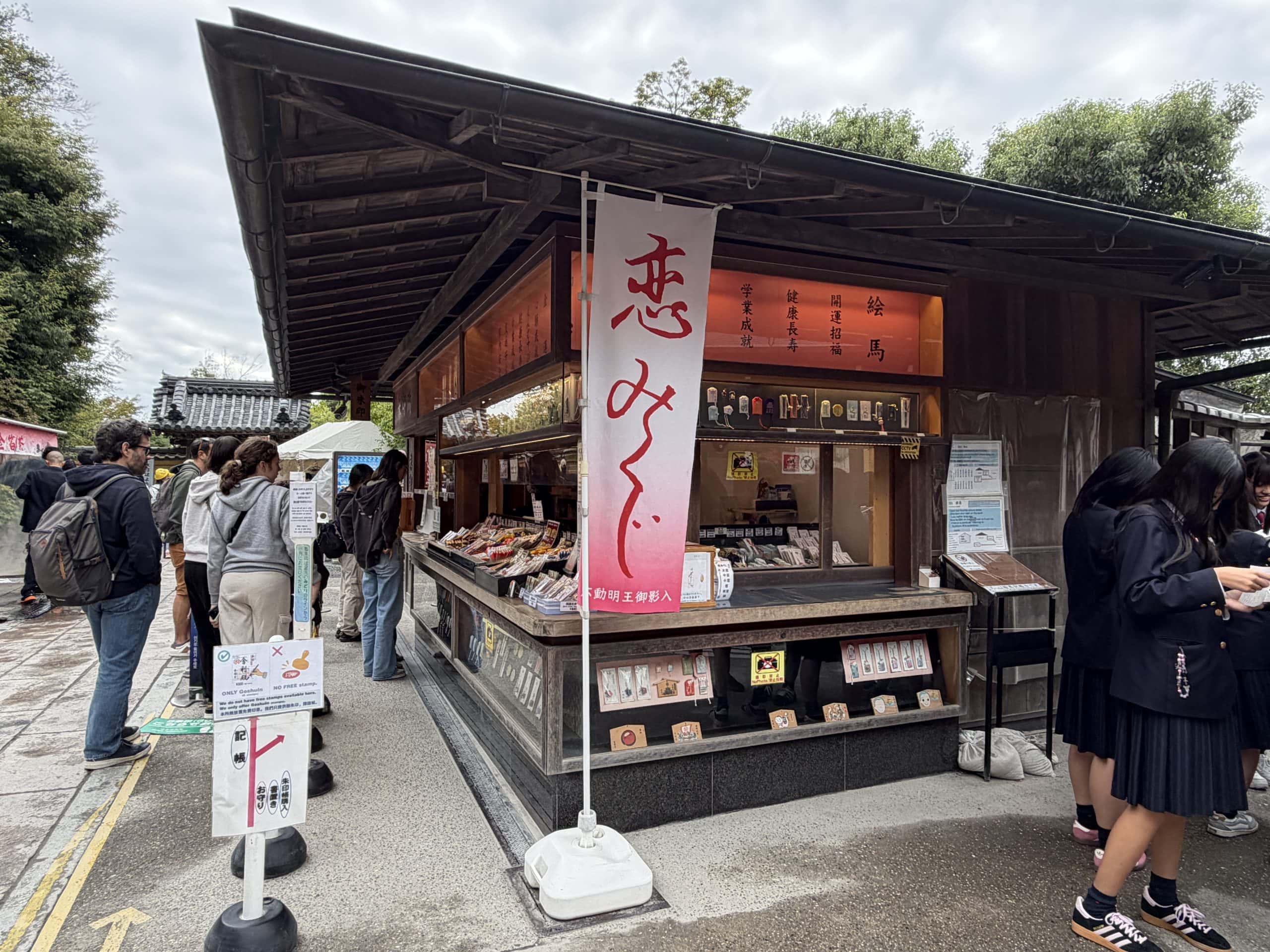
After walking through the elegant gardens filled with waterfalls, mossy paths, and peaceful statuary, make time to browse the small booths near the exit. They offer local snacks, tea, and charming souvenirs that reflect the traditional craftsmanship of Kyoto.

✅ If you want to beat the crowds at the three most popular sights, then consider taking the Early Bird Tour that we did. While it did require an early start, it was worth it to see the torii gates of Fushimi Inari, the Golden Pavilion and the Bamboo Forest before they were overwhelmed with people.
Nanzen-ji Temple
Located at the bottom of the Higashiyama Mountains, Nanzen-ji is a large Zen Buddhist complex that blends natural beauty with interesting architecture. One of the highlights is the striking brick aqueduct running through the grounds, originally built in the late 1800s during Japan’s modernization period. Its picturesque arches are now one of the most photographed spots in Kyoto.
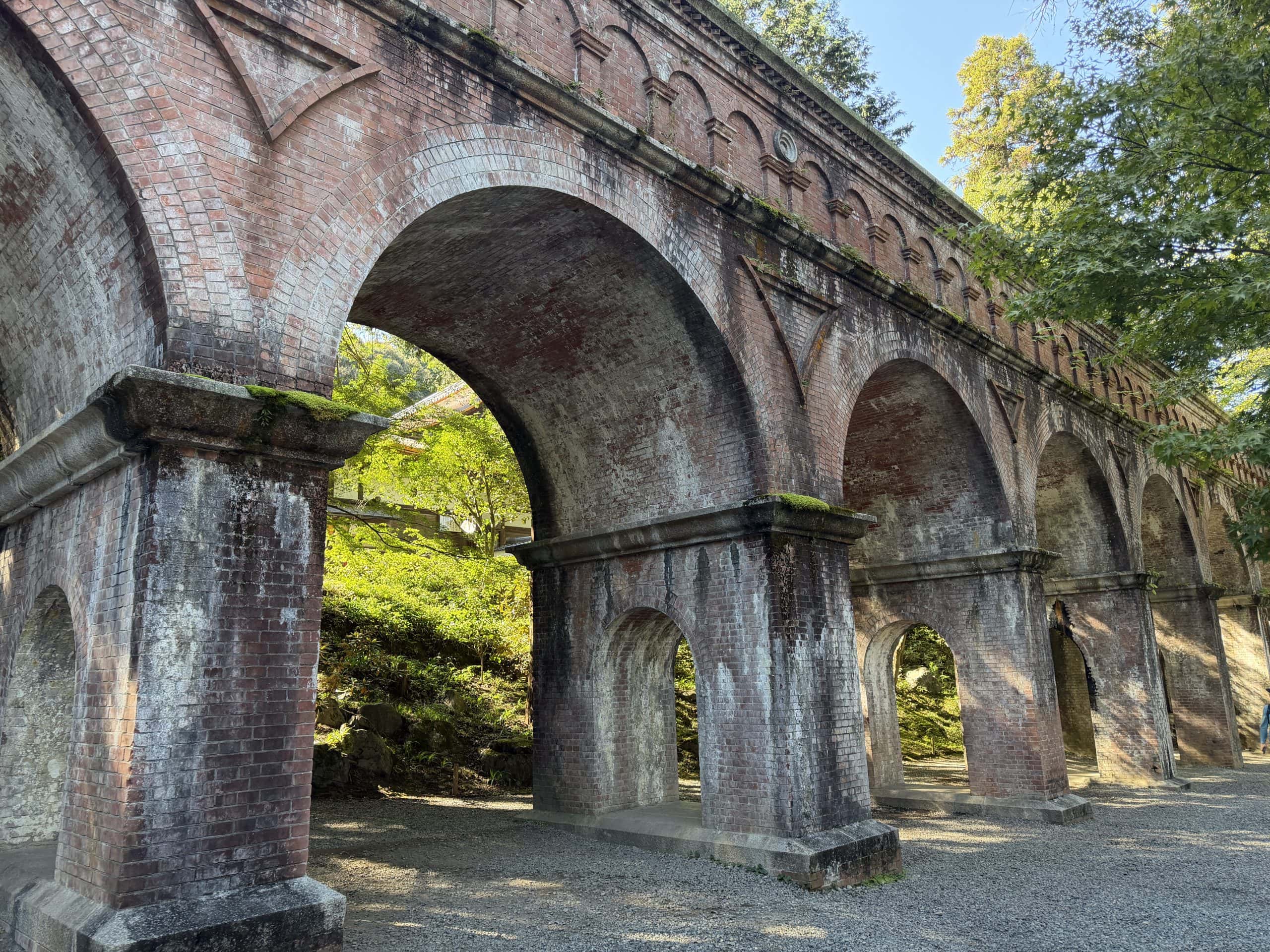
The serene temple gardens offer a quieter space from the busier tourist areas, and wandering along the stone paths and shaded walkways feels incredibly peaceful. We even ventured up to see the open area of the aqueduct and how the structure has been built, where water is still running.


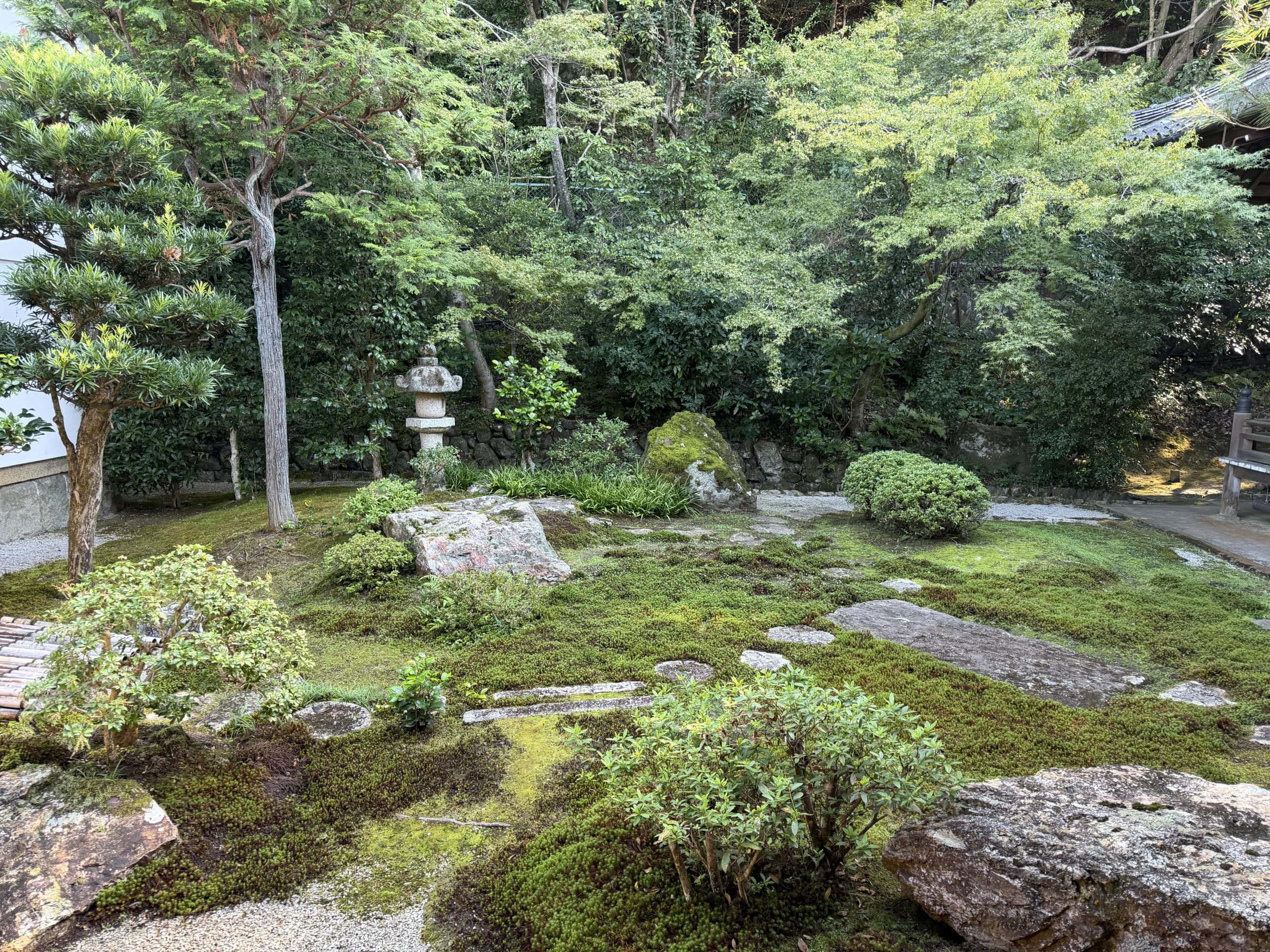
Nanzen-ji is also a wonderful place to explore traditional Zen landscaping, where simplicity and balance are evident with the placement of rocks, trees, and pools. It’s a perfect stop if you want a deeper look into Kyoto’s spiritual traditions.
✅ On our first day, we booked a private tour to see the city highlights, and it was a perfect way to get our bearings for the rest of our stay. Our guide was knowledgeable and shared a lot of the history and culture of Kyoto. He also gave us great restaurant recommendations that we enjoyed.
Kiyomizu-dera Temple
Another one of the top things to see in Kyoto, Kiyomizu-dera, offers fabulous views of the city. Located on a hillside overlooking Kyoto, this UNESCO World Heritage Site is a beautiful complex that seems to float above the treetops. For another incredible UNESCO site, don’t miss our article on Visiting the Great Wall of China.
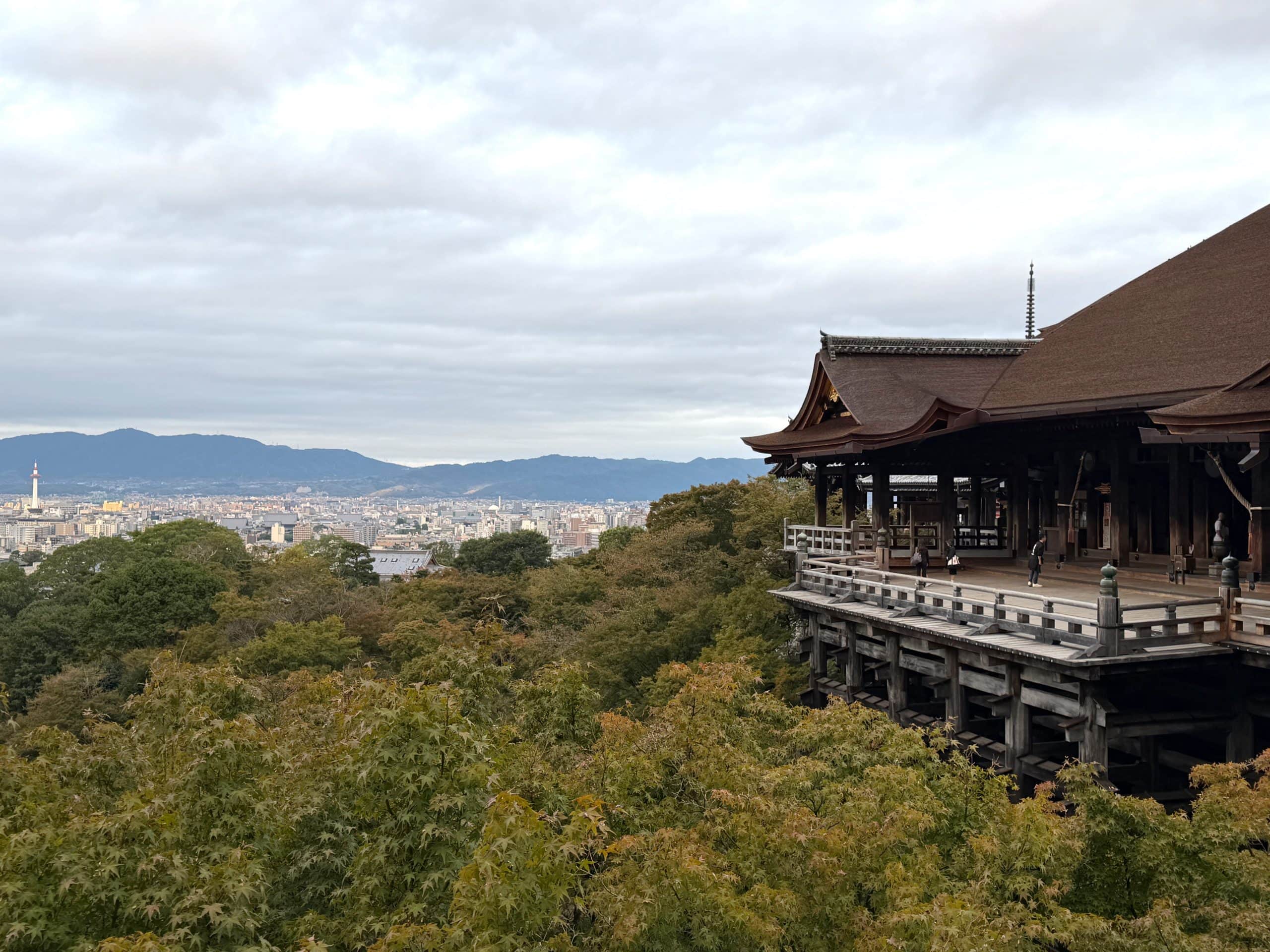
To truly appreciate the temple without crowds, it’s important to arrive by 6:30am. The walk up the hill is lined with charming traditional buildings and small shops. We tried to make our way there one afternoon, but found it to be packed with people, making it much harder to enjoy. On a different day, we planned an early morning visit, and it was perfect.
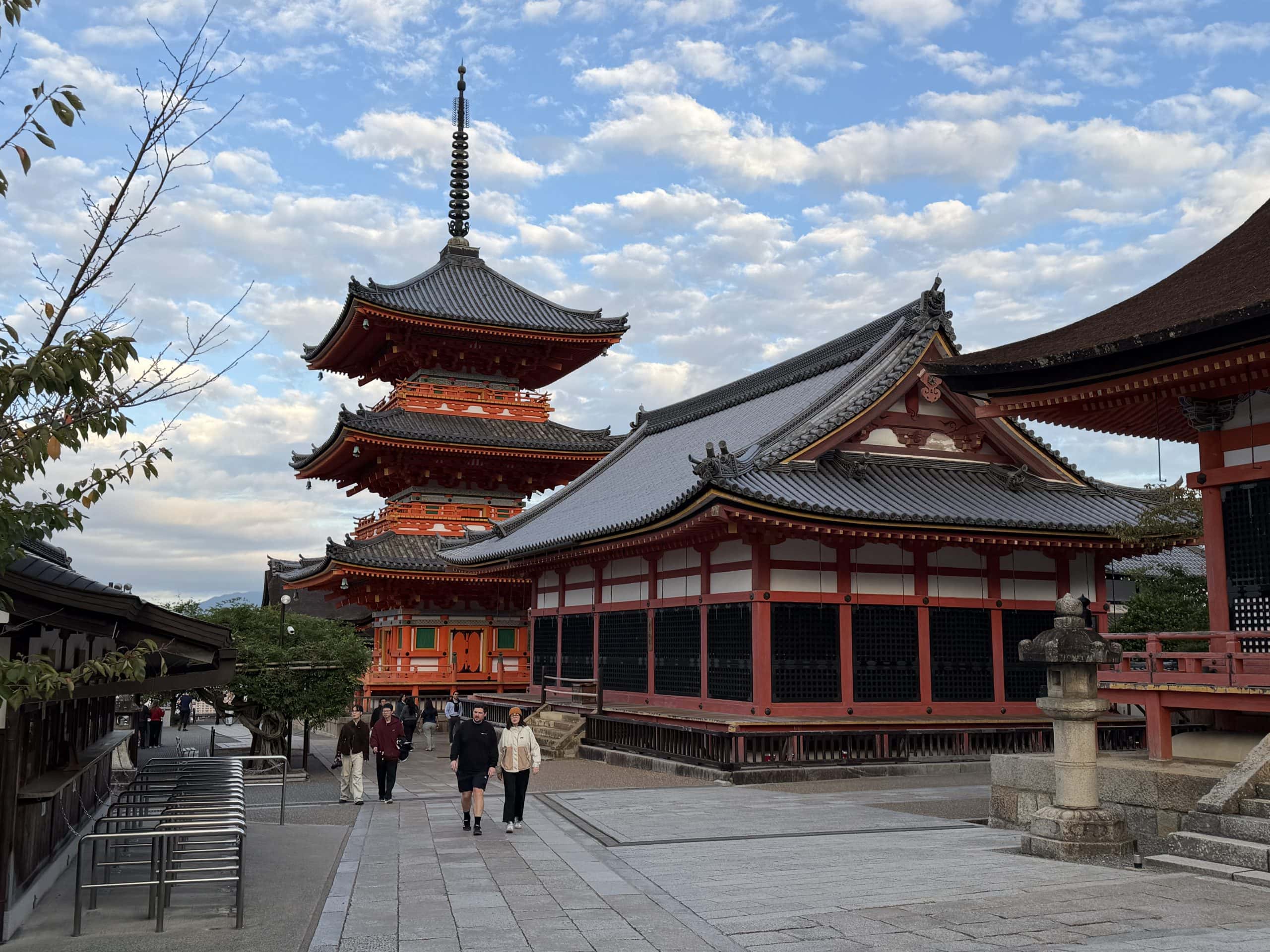
In the morning, the soft light is ideal for exploring the wooden terrace, the pagoda in the distance, and the peaceful charm that makes it so popular. You can even see many Japanese people participating in morning Tai Chi.

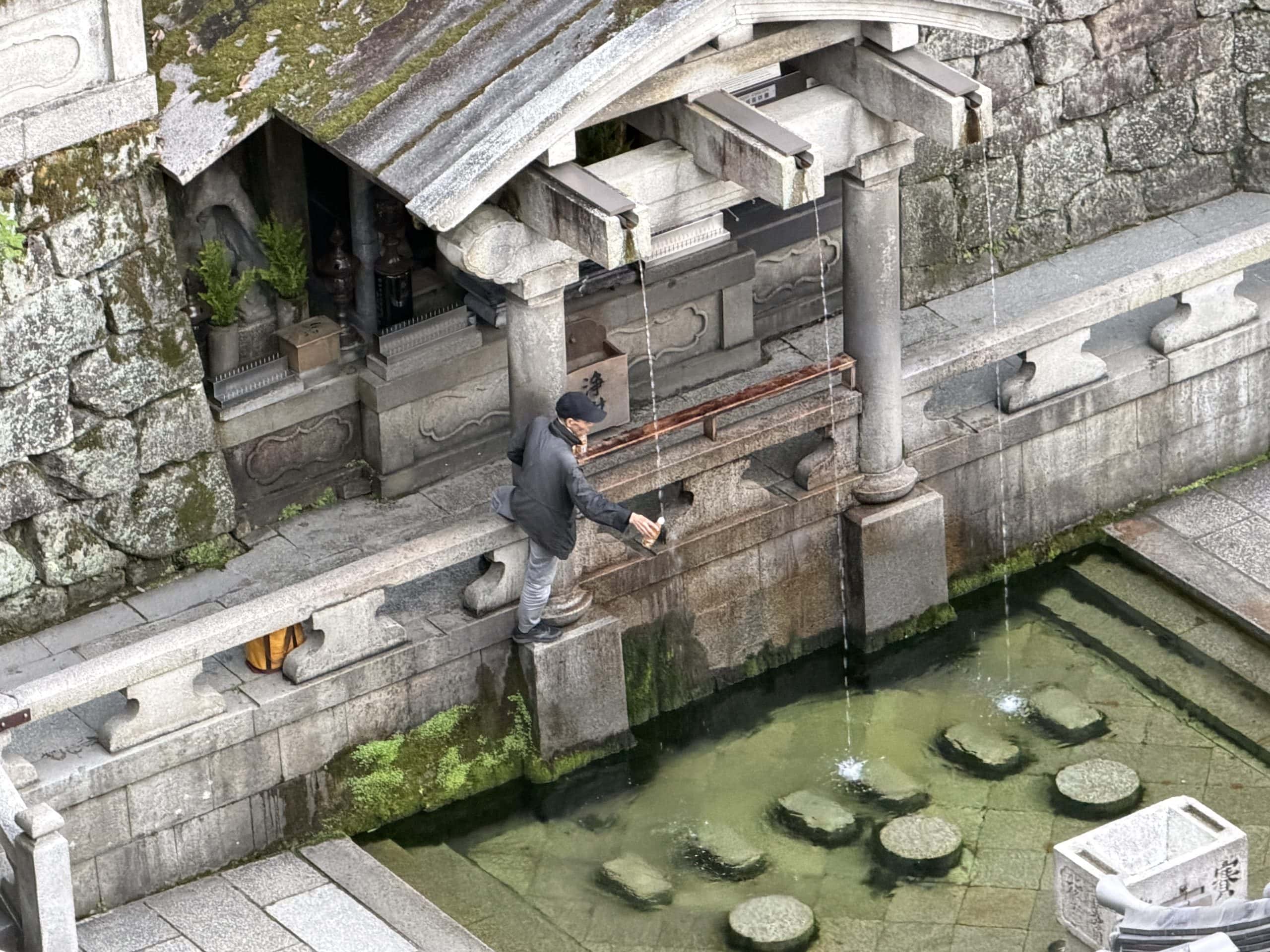
Looking down into the valley, you can see people filling their bottles with the well-known, pure spring water that flows from the Otowa waterfall, which is always running.
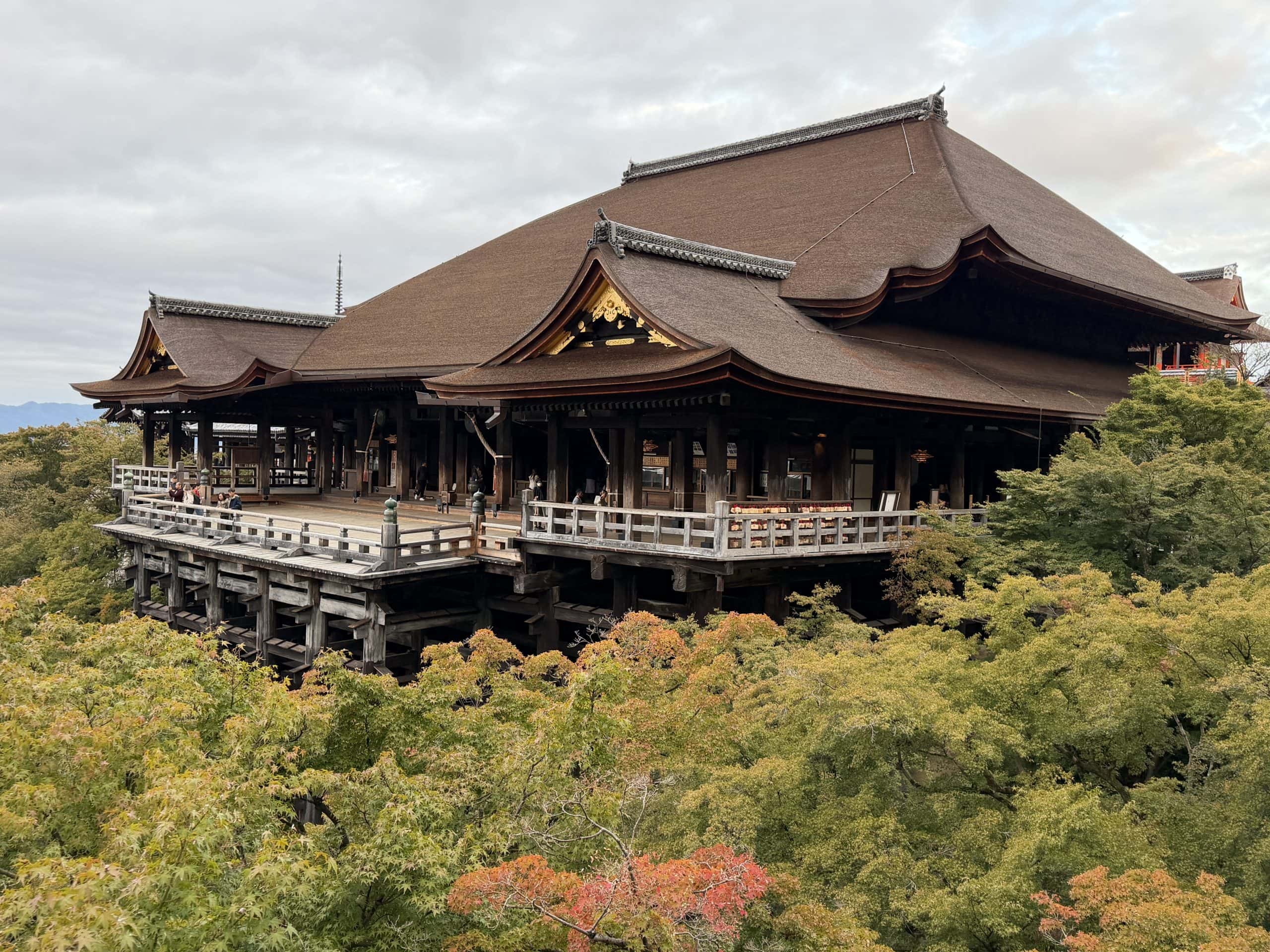
This building is constructed with a technique known as kakezukuri (overhanging construction), and Kiyomizu-dera is famous for being constructed without the use of nails, relying instead on an interlocking wooden system that somehow keeps the temple standing.
Be sure to peek into the rooms of the Main Hall, where you can see very elaborate furnishings and incredible gold light fixtures.


Then step out onto what is called the “Stage” to gaze out over the grounds and really appreciate some of Japan’s amazing engineering that has allowed easy access to this important sacred site.

Don’t Have Time To Read This Now? Pin It For Later:
Zuisen-ji Temple
If you are looking for a temple with historical significance without all the crowds, Zuisen-ji offers a more peaceful experience. The temple is dedicated to the remembrance of the tragic massacre of the wife, daughters and mistresses of Hidetsugu (Toyotomi’s nephew) in 1595, and it is the location where their remains have been buried.
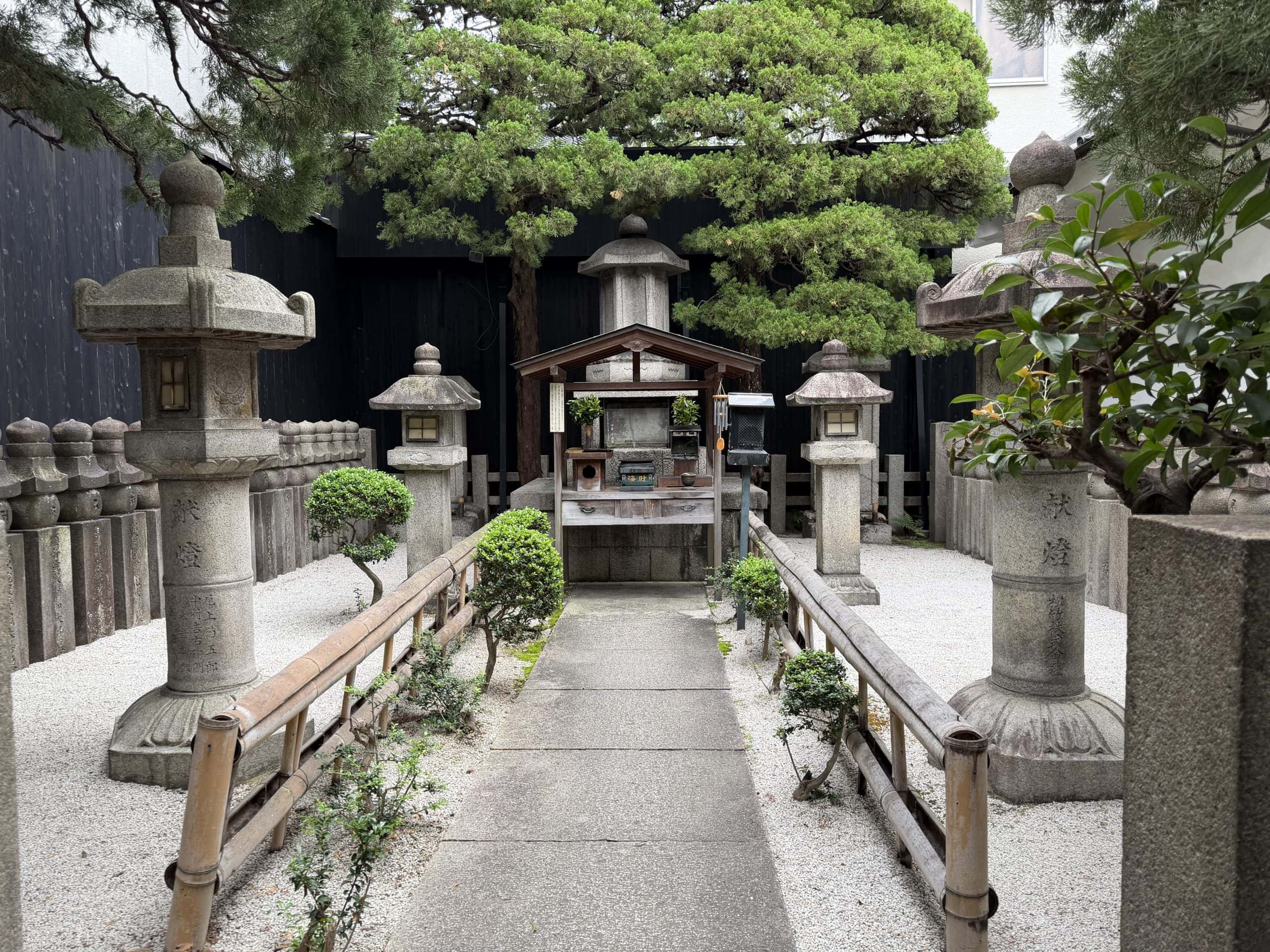
It is sad to see that the shrine has many small statues that represent each of the women who died, but we were glad they were acknowledged.

Although simple in appearance compared to Kyoto’s grander temples, Zuisen-ji is a really lovely spot to visit. Surrounded by a simple garden, it is a significant piece of Kyoto’s history.
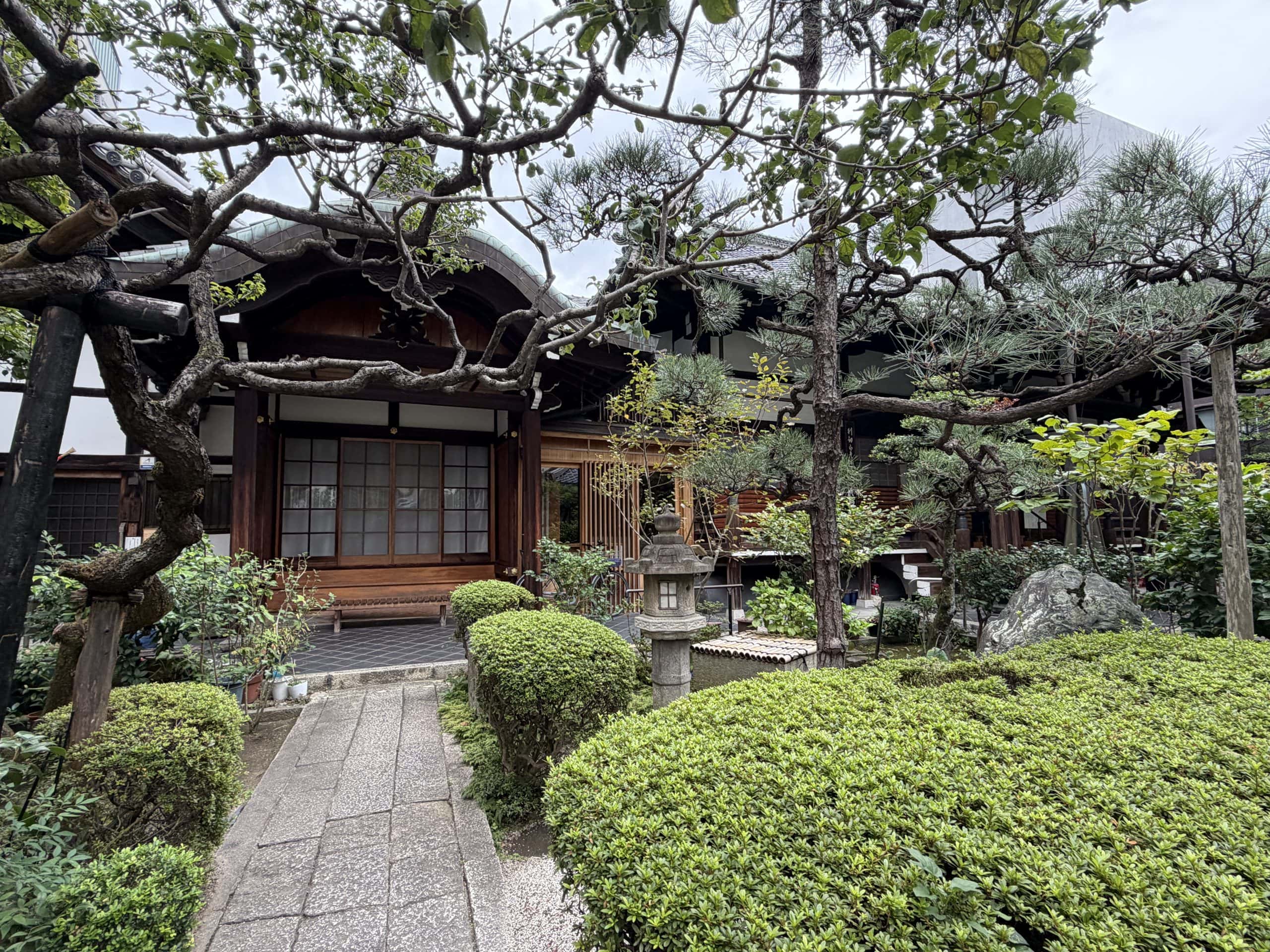
Tofuku-ji Temple
Although this location is known for its spectacular autumn colours, we were a little early for nature’s show at the time of our visit in late October. But Tofuku-ji is one of Kyoto’s oldest and most historically significant Zen temples, and is worth a visit no matter the time of year.
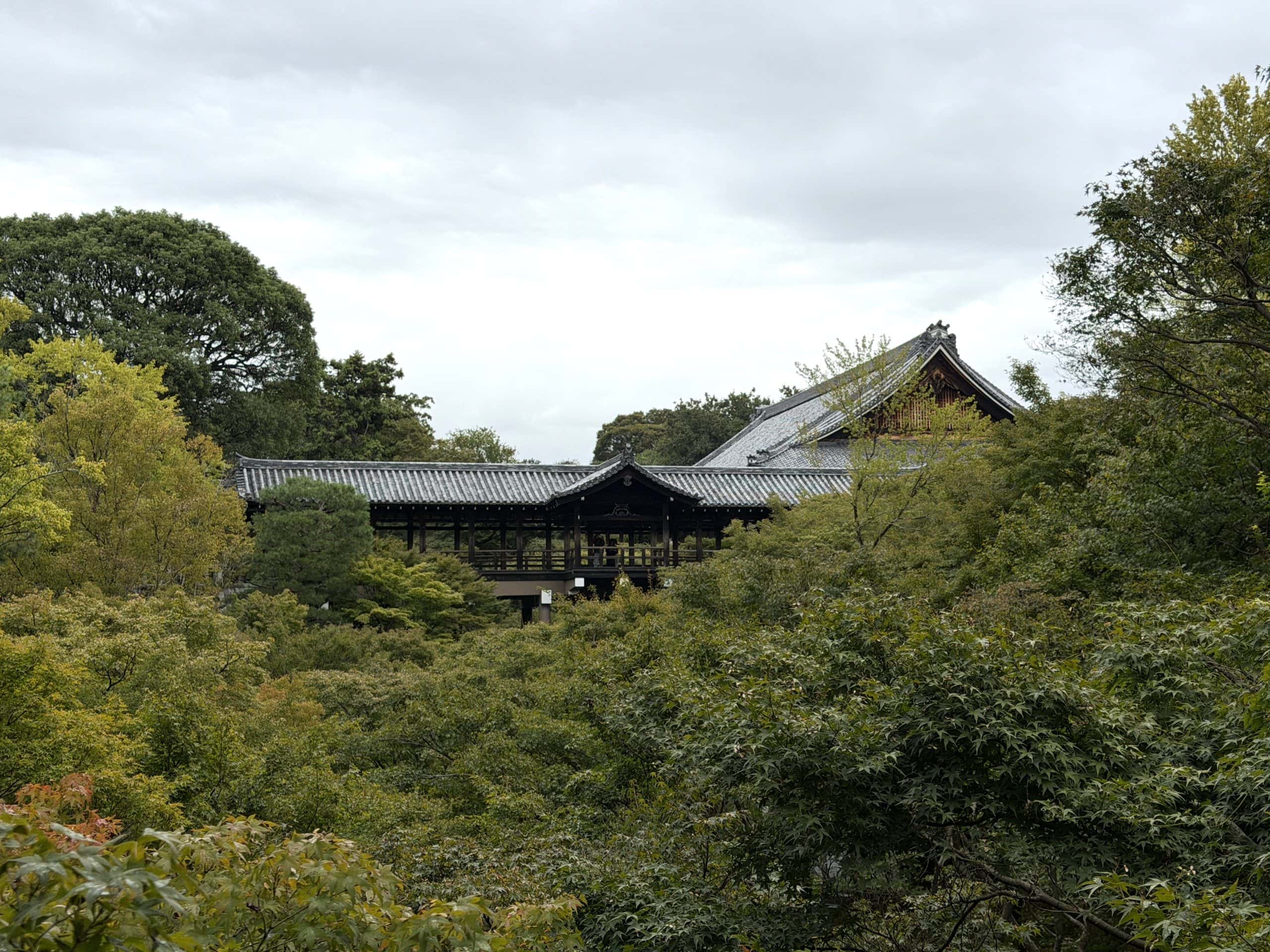
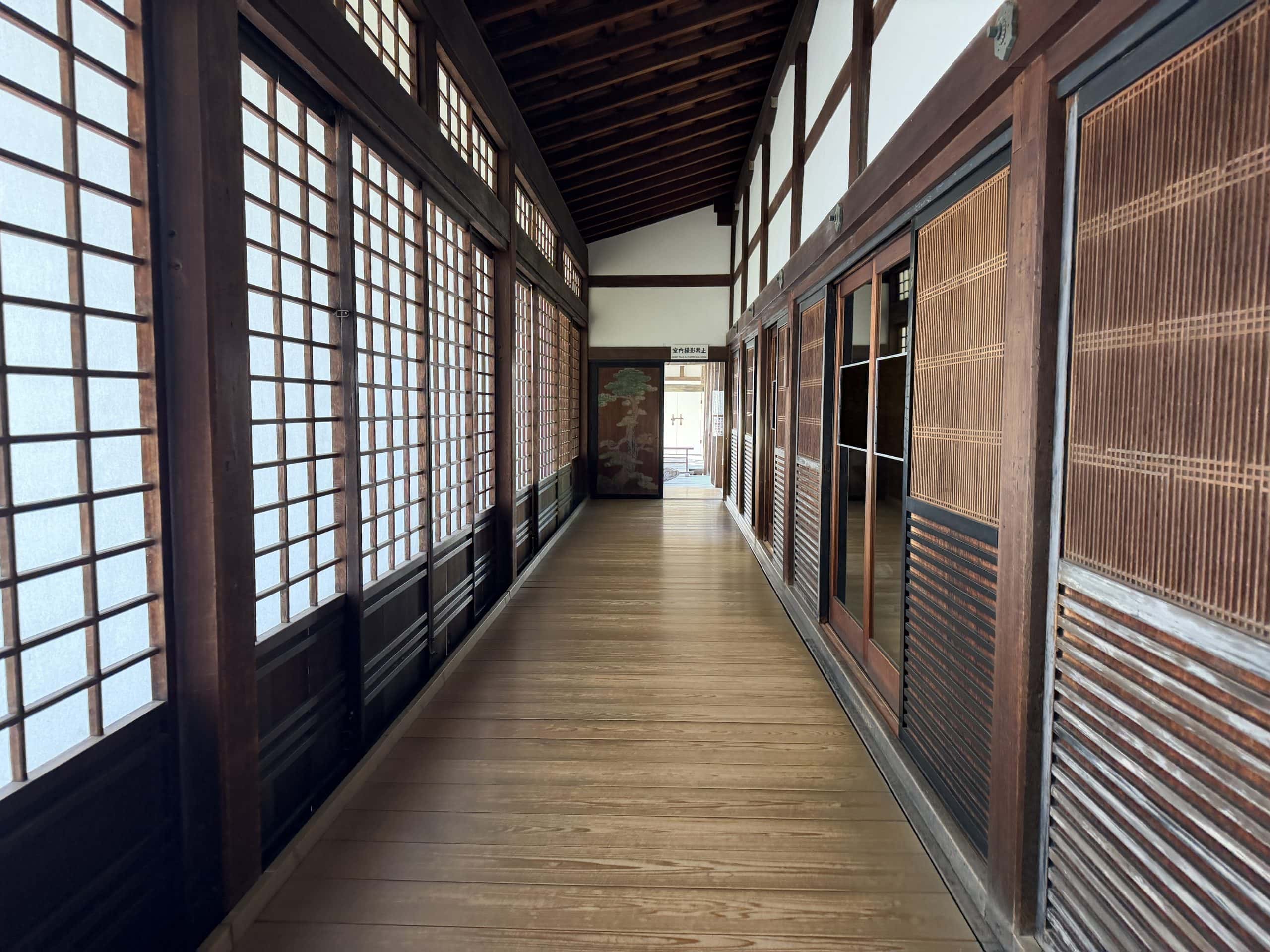
We entered through covered wooden walkways that stretched overtop of lush gardens, offering gorgeous views of the moss, shrubs, and carefully maintained pathways below.


Inside the temple grounds is one of Kyoto’s most impressive Zen gardens, where you are asked to remove your shoes before stepping onto the polished wooden floors. We loved walking slowly around the building to admire the peaceful garden and were even inspired to create something on a smaller scale at home in our own garden!

Just being in these places calms your mind and provides such a peaceful experience. We admired the intricate ceiling paintings and architectural details and thoroughly enjoyed Tofuku-ji’s design that beautifully displays the essence of Zen philosophy.

Yasui Konpiragu Shrine
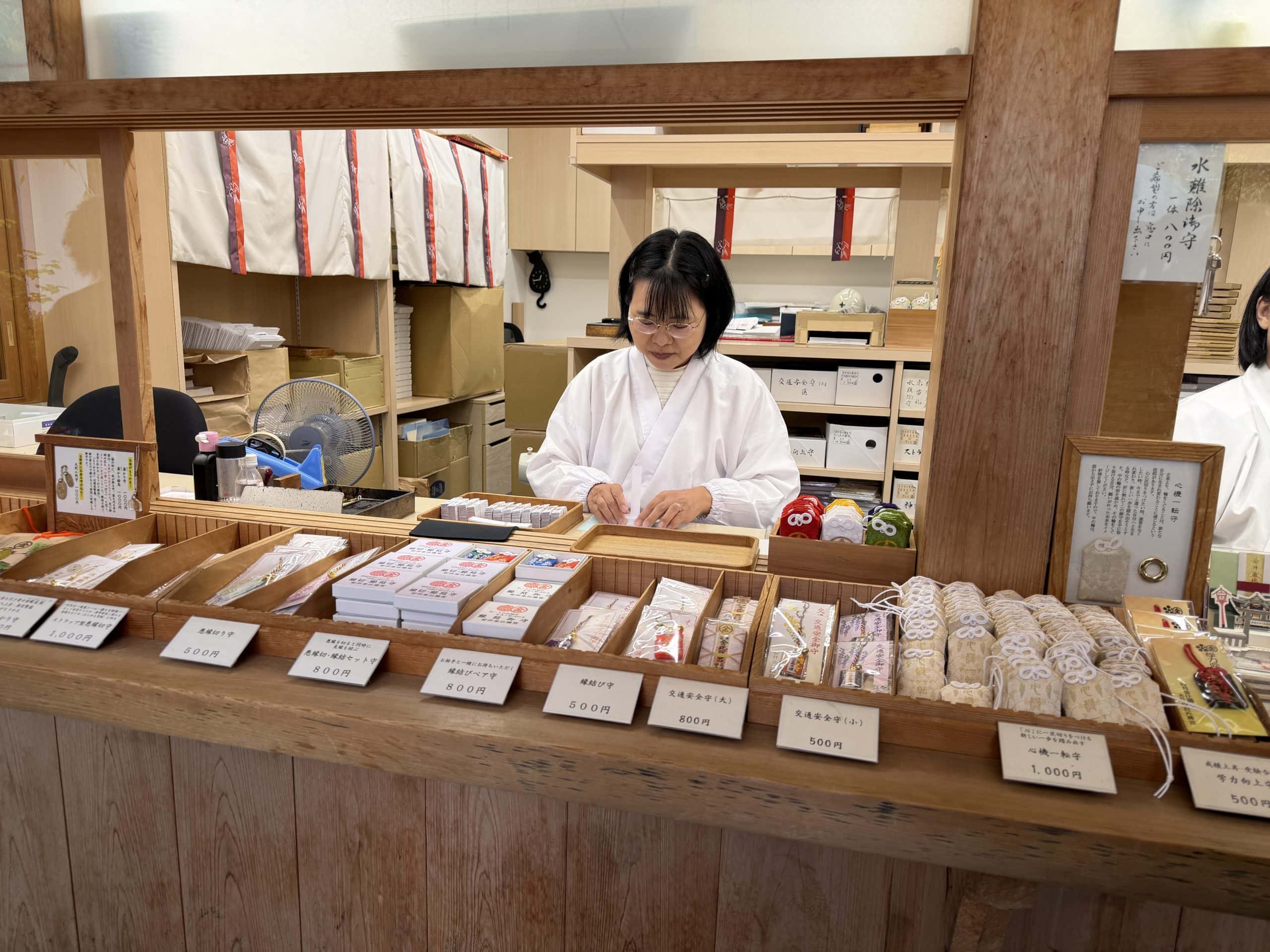
Dating back to the year 862, Yasui Konpiragu is a shrine unlike any other in Kyoto. Its most famous feature is a large “wishing stone” with a hole in the centre. We watched as visitors wrote their wishes on pieces of paper, bowed respectfully, and crawled through the stone’s opening and back again to symbolize breaking ties with bad habits or attachments. They then attach their wish to the surface of the stone in hopes that it comes true.


Women working in the nearby booths offer fortune reading, a popular tradition that adds to the cultural charm of the shrine. Apparently, if your fortune isn’t favourable, there is a rack where you can leave it rather than bring it home. We learned Yasui Konpiragu is a meaningful stop for visitors wanting a deeper connection to Kyoto’s spiritual customs.

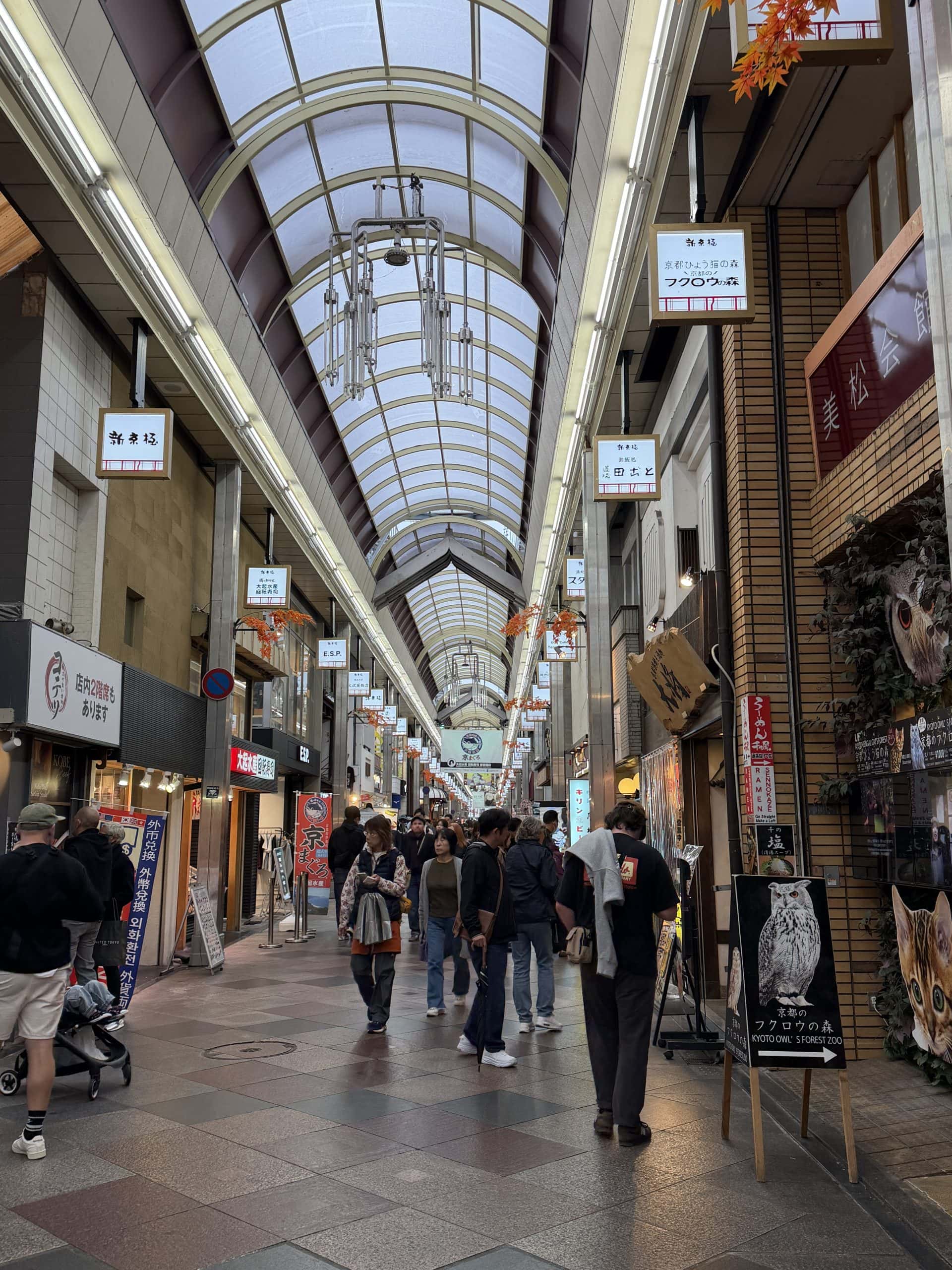
Shopping in Kyoto: Shinkyogoku, Teramachi & Nishiki-dori
Kyoto is filled with bustling shopping arcades, and Shinkyogoku and Teramachi are two of the best. Here you’ll find everything from trendy boutiques to traditional crafts to quirky souvenir shops.
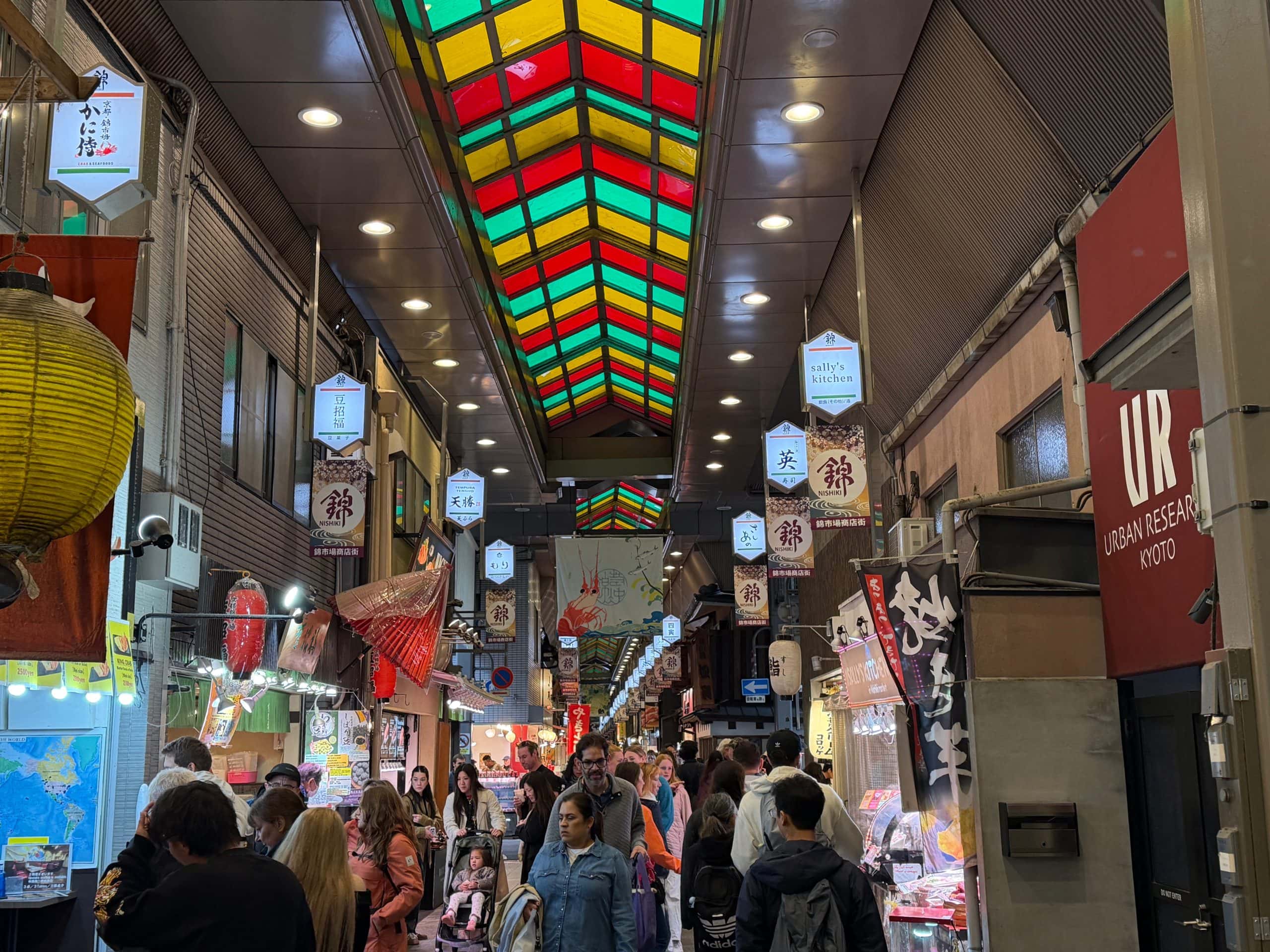
Nearby is Nishiki-dori, often called “Kyoto’s Kitchen.” While it’s fascinating to walk through, it has become quite overpriced for dining, and the food we tried was nothing fancy.
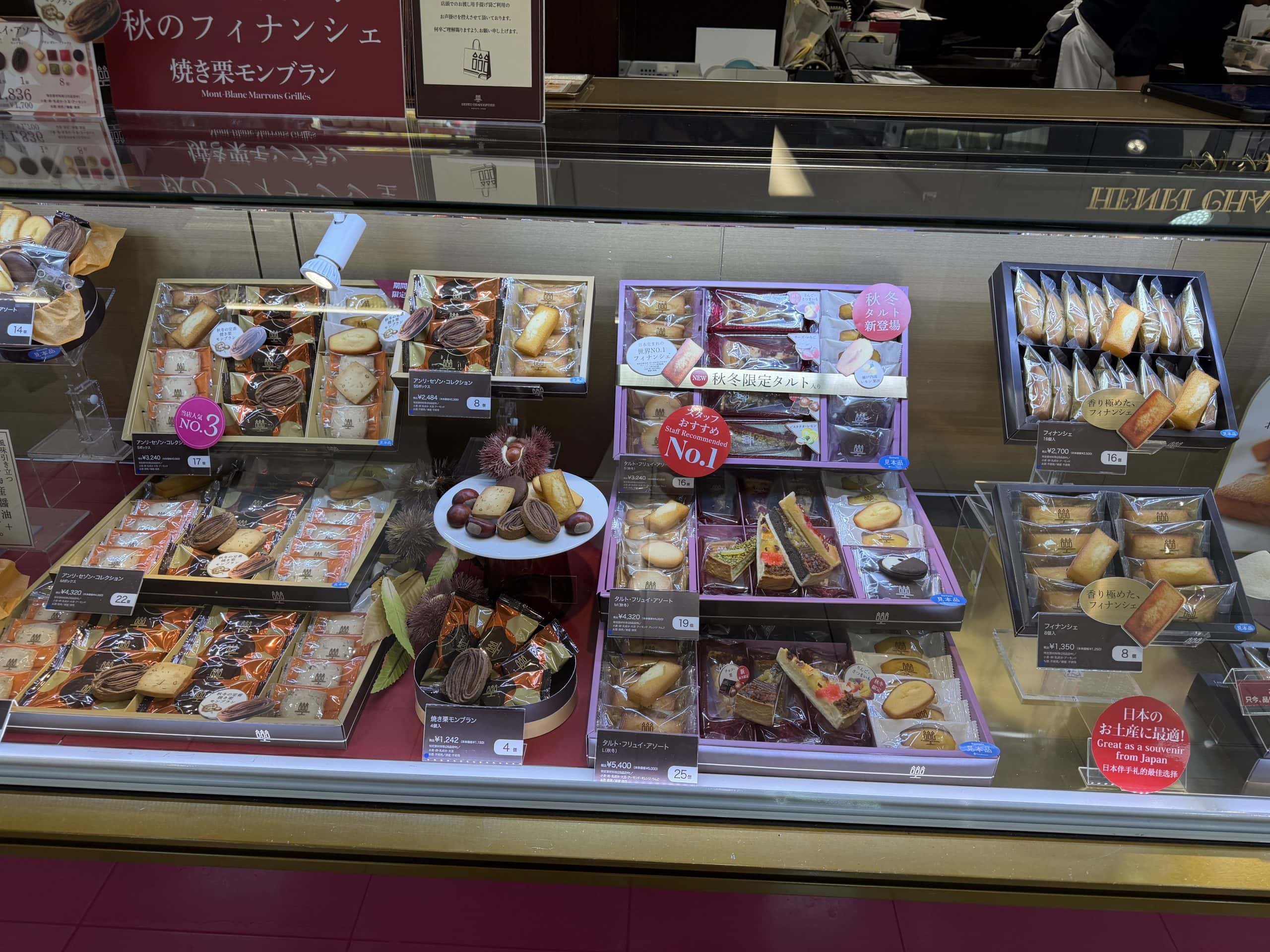
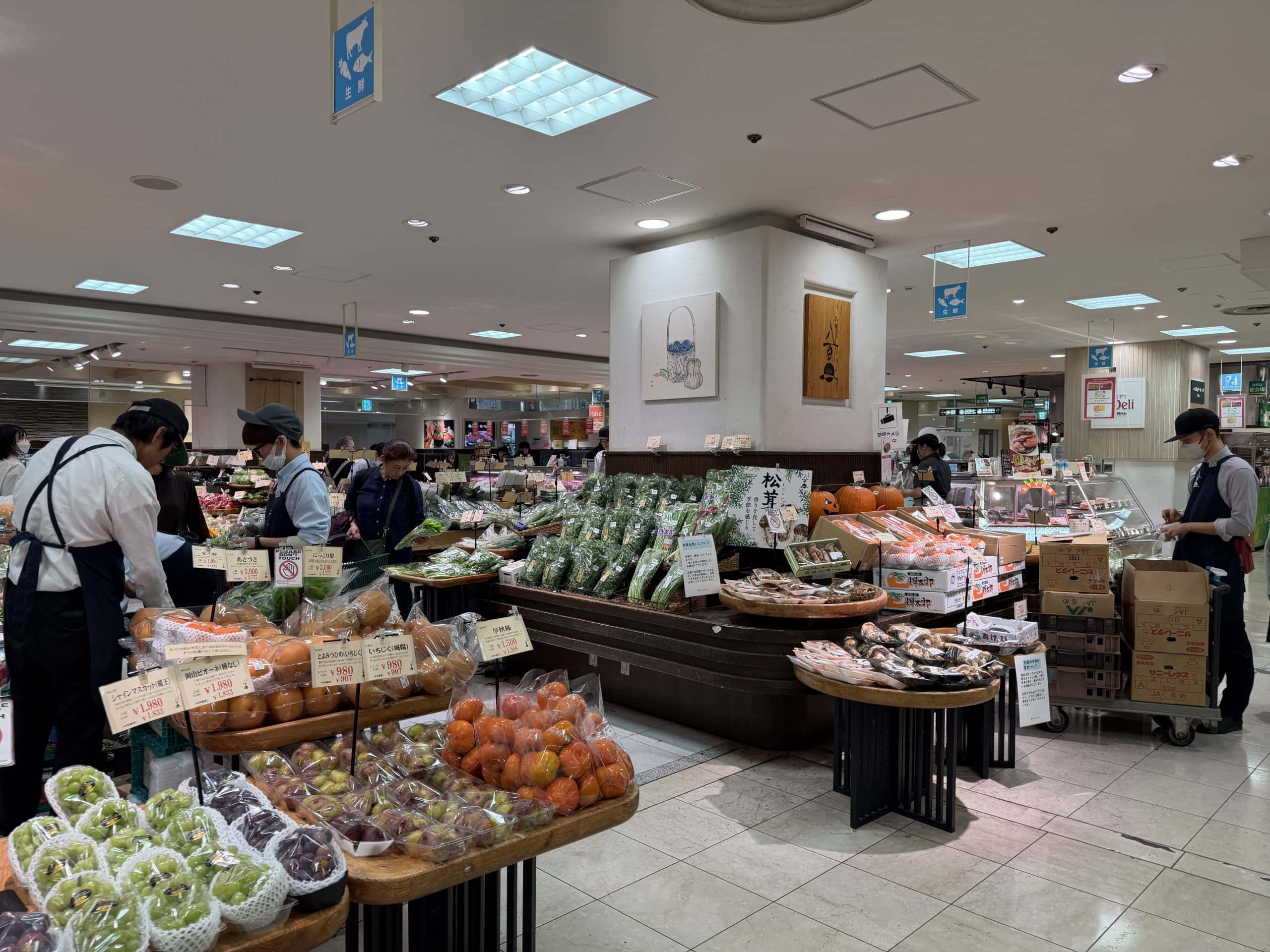
Instead, a great alternative is the lower level of the Takashimaya Mall, an underground maze packed with prepared foods, sweets, fresh produce, a full grocery store, and specialty snacks. It’s a wonderful place to pick up lunch or take-away items.


Kodaiji Zen Temple
One of Kyoto’s most beautiful temple complexes, Kodaiji was built in 1606 by the wife of Toyotomi Hideyoshi, one of Japan’s most influential samurai lords. The grounds include exquisite gardens, reflective ponds, teahouses, and walking paths that wind through bamboo groves.

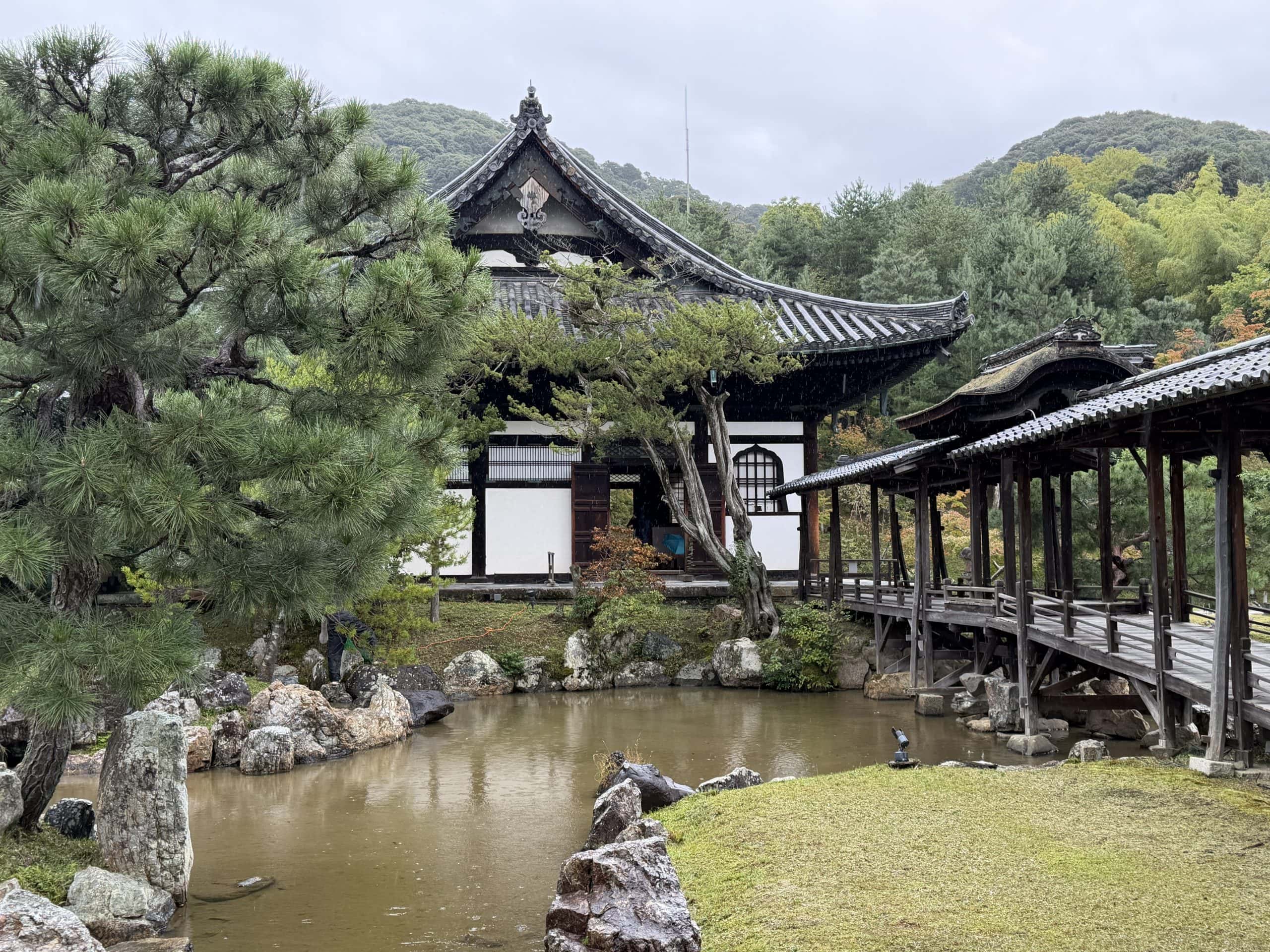
Inside the mausoleum sanctuary, you’ll find stunning Makie lacquerware crafted with gold and silver, an extraordinary display of this Japanese artistry (no pictures allowed).
One of the highlights is the Lady Nene Path, which led us through a peaceful bamboo forest that was almost as impressive as the famous grove in Arashiyama (and not as busy). Visiting Kodaiji offers a nice combination of history, craftsmanship, and serene natural beauty.

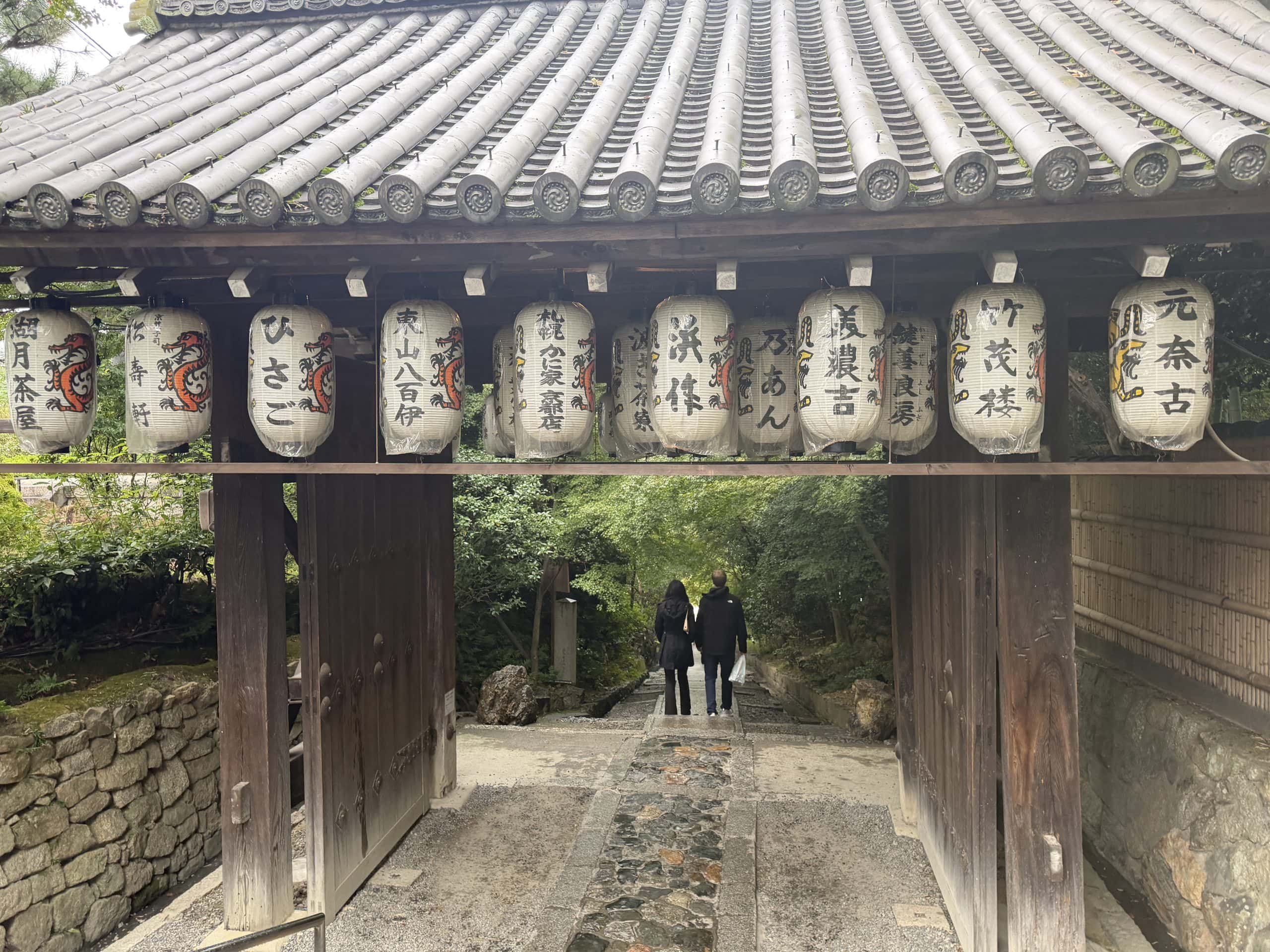
Arashiyama Bamboo Grove
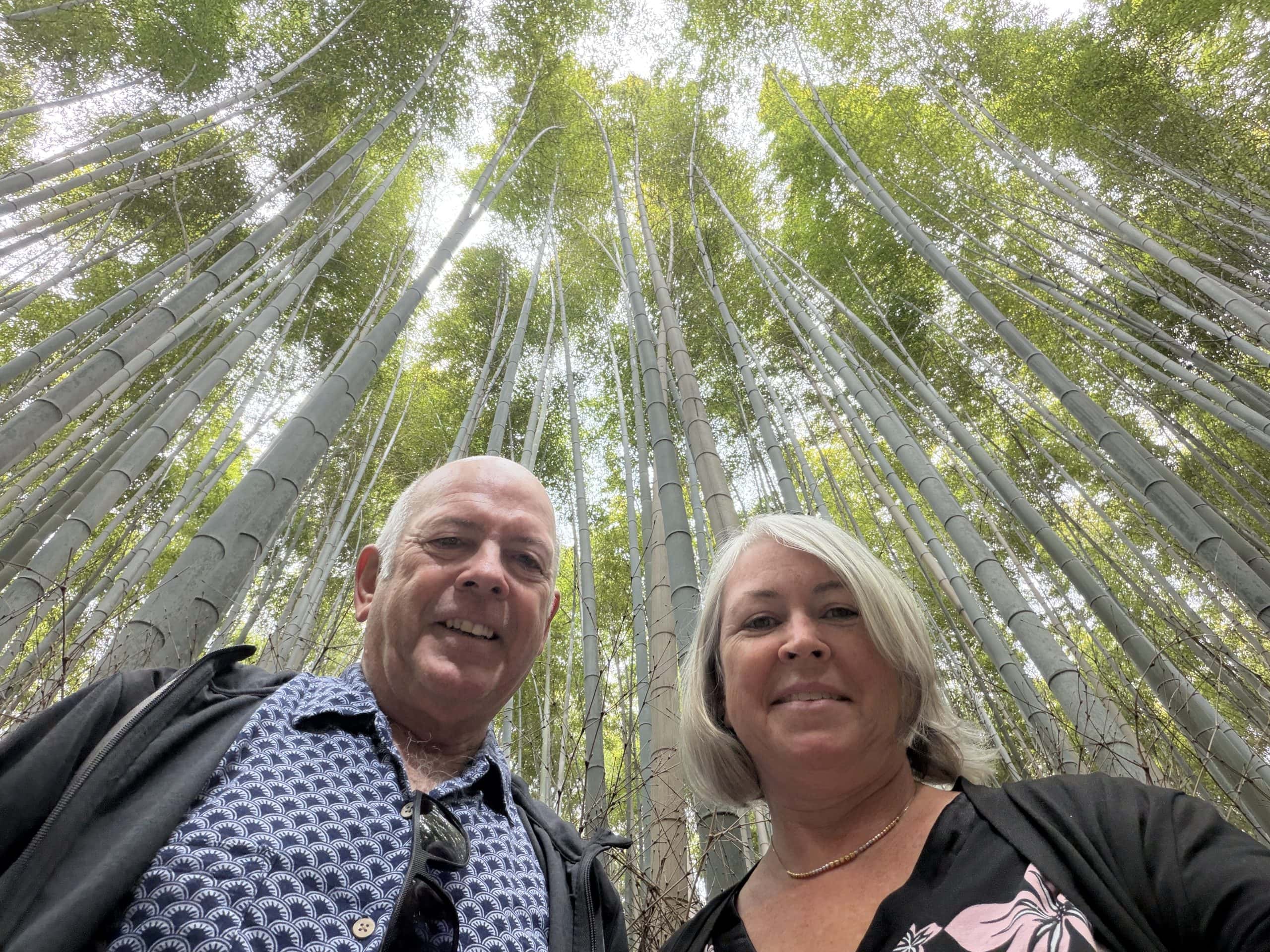
Speaking of Arashiyama, this Bamboo Forest is another one of Kyoto’s most photographed locations, and its massive green stalks create a surreal atmosphere. Although the grove is ancient, it wasn’t always maintained until about twenty years ago, when the tourists discovered it, and it became quite popular.

The bamboo was originally imported from China in the 6th century, and it remains one of the most sustainable plants in the world, capable of absorbing more CO2 than it emits and growing up to a metre in a single day when young. The grove also has an interesting connection to Einstein, who reportedly used bamboo from this area as a filament in his work.
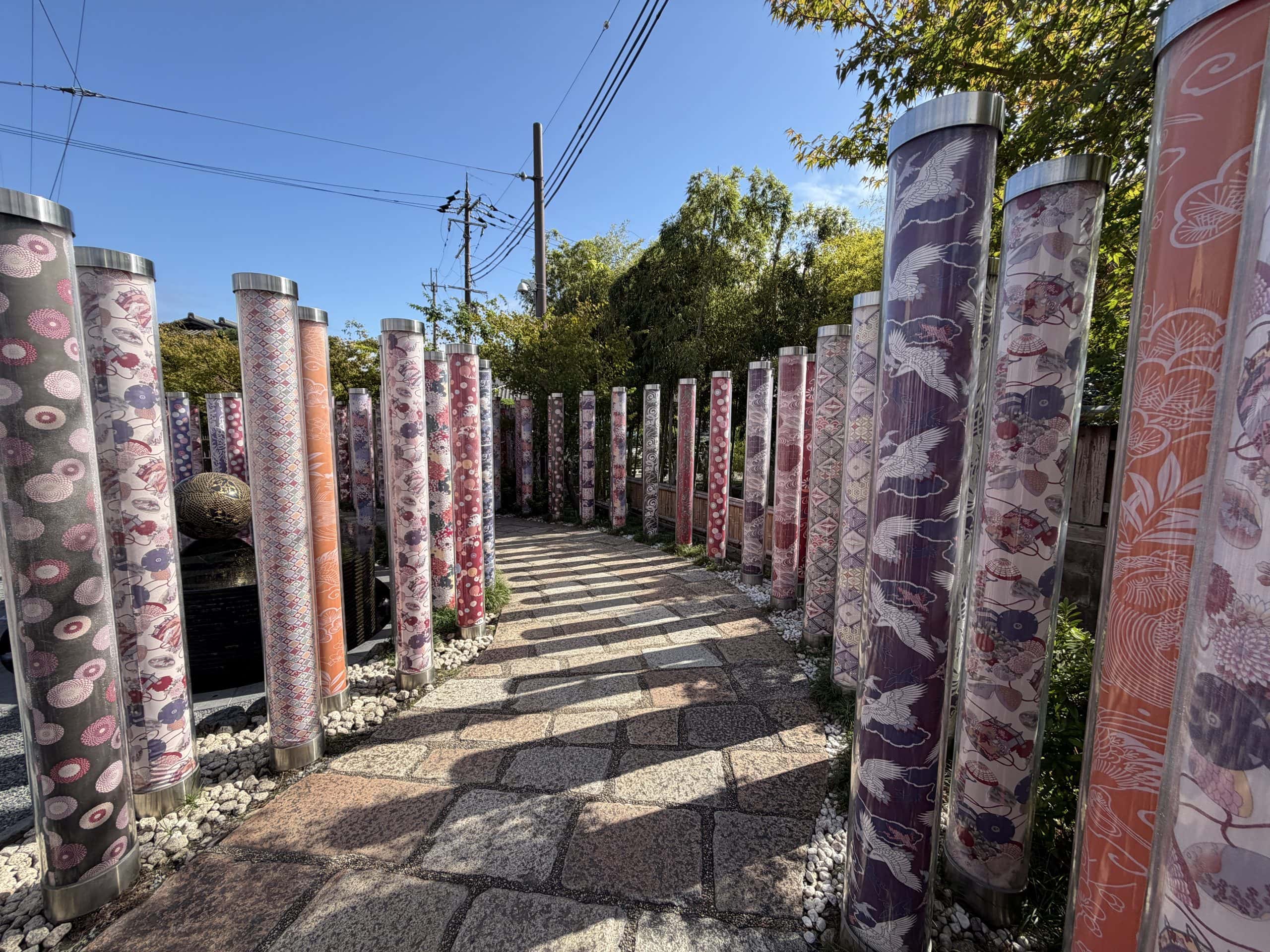
While visiting, don’t miss the nearby Kimono Forest, where cylindrical pillars wrapped in colourful kimono patterns line the walkways near the train station.

Ninenzaka Street
One of Kyoto’s most charming historic streets, Ninenzaka is lined with beautifully preserved buildings, traditional shops, and snack stalls.
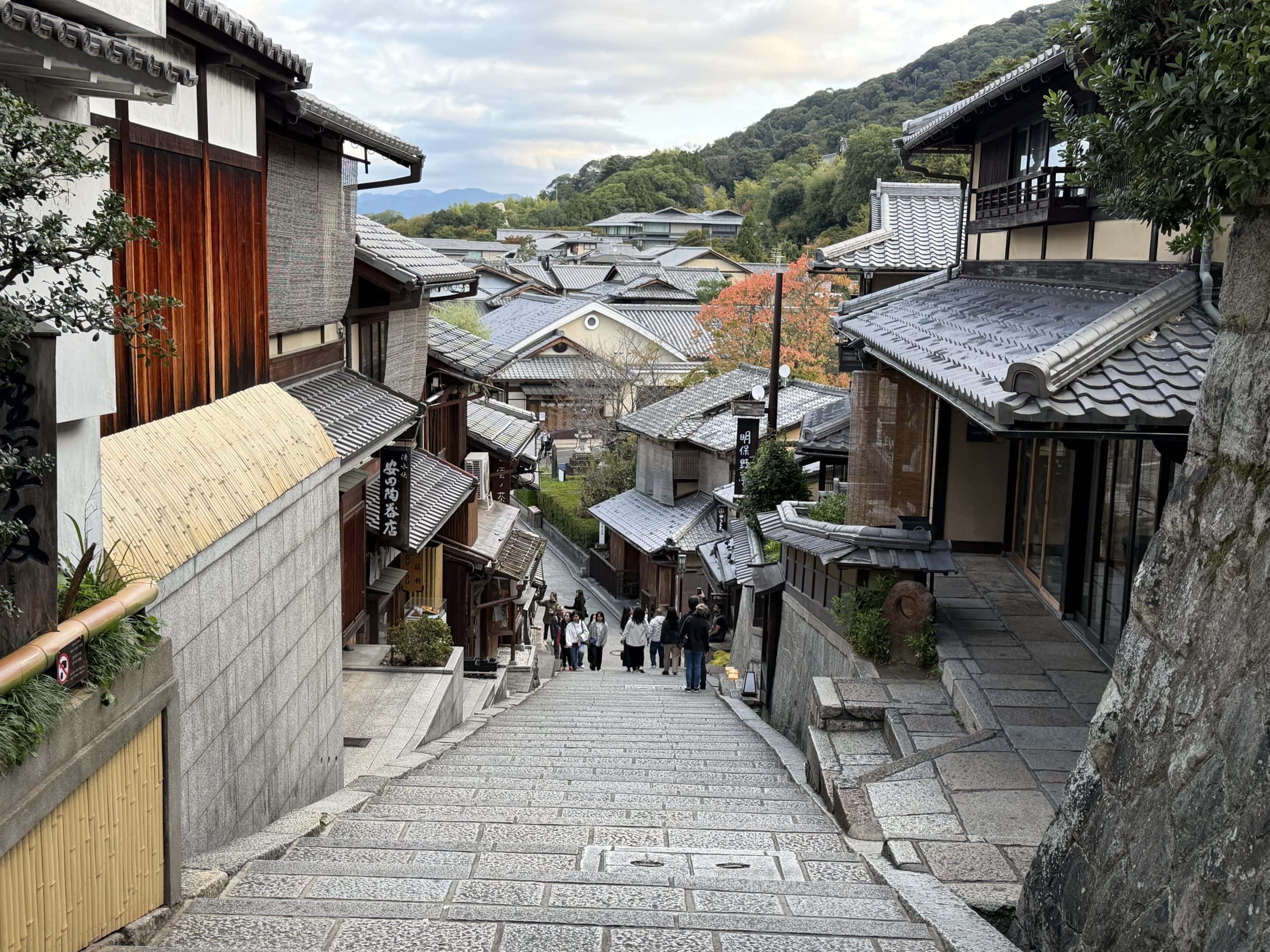
It’s an ideal place to pick up local handicrafts or treat yourself to a sweet treat. We tried a treat of dango, which is a sticky rice dumpling served with fresh cream and chocolate. It was pretty good!

Something to keep in mind is that the street becomes extremely crowded in the afternoon, so visiting earlier in the day provides a much more enjoyable experience.

Yasaka-no-To Pagoda
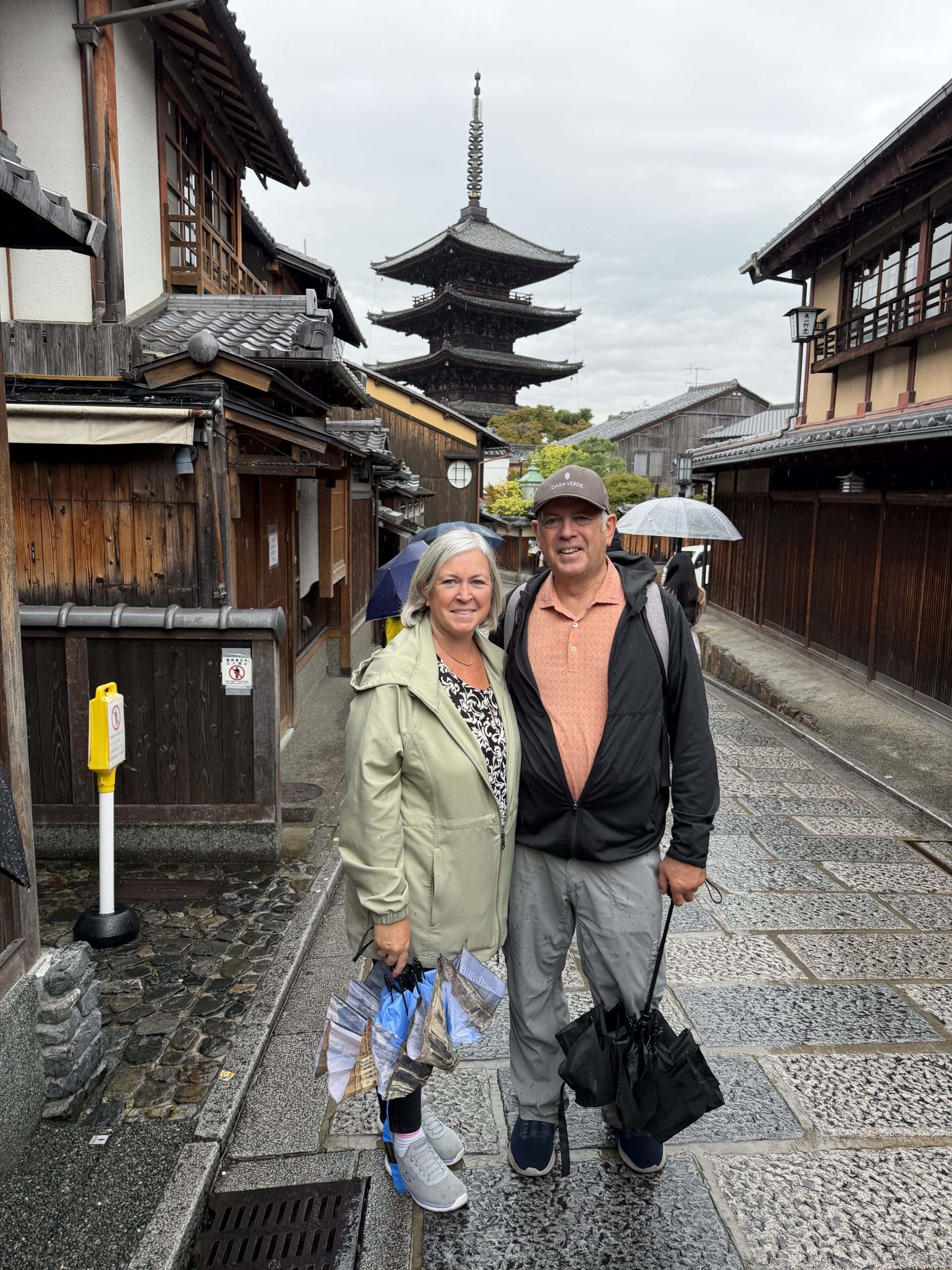
Also in this area is where you can see the five-story Yasaka-no-To Pagoda. At 46 metres tall, it is one of Kyoto’s most famous landmarks and the second-tallest pagoda in Japan. Originally built during the Hakuho Period, the pagoda has been destroyed by fire multiple times and rebuilt, with the current structure dating from 1440.
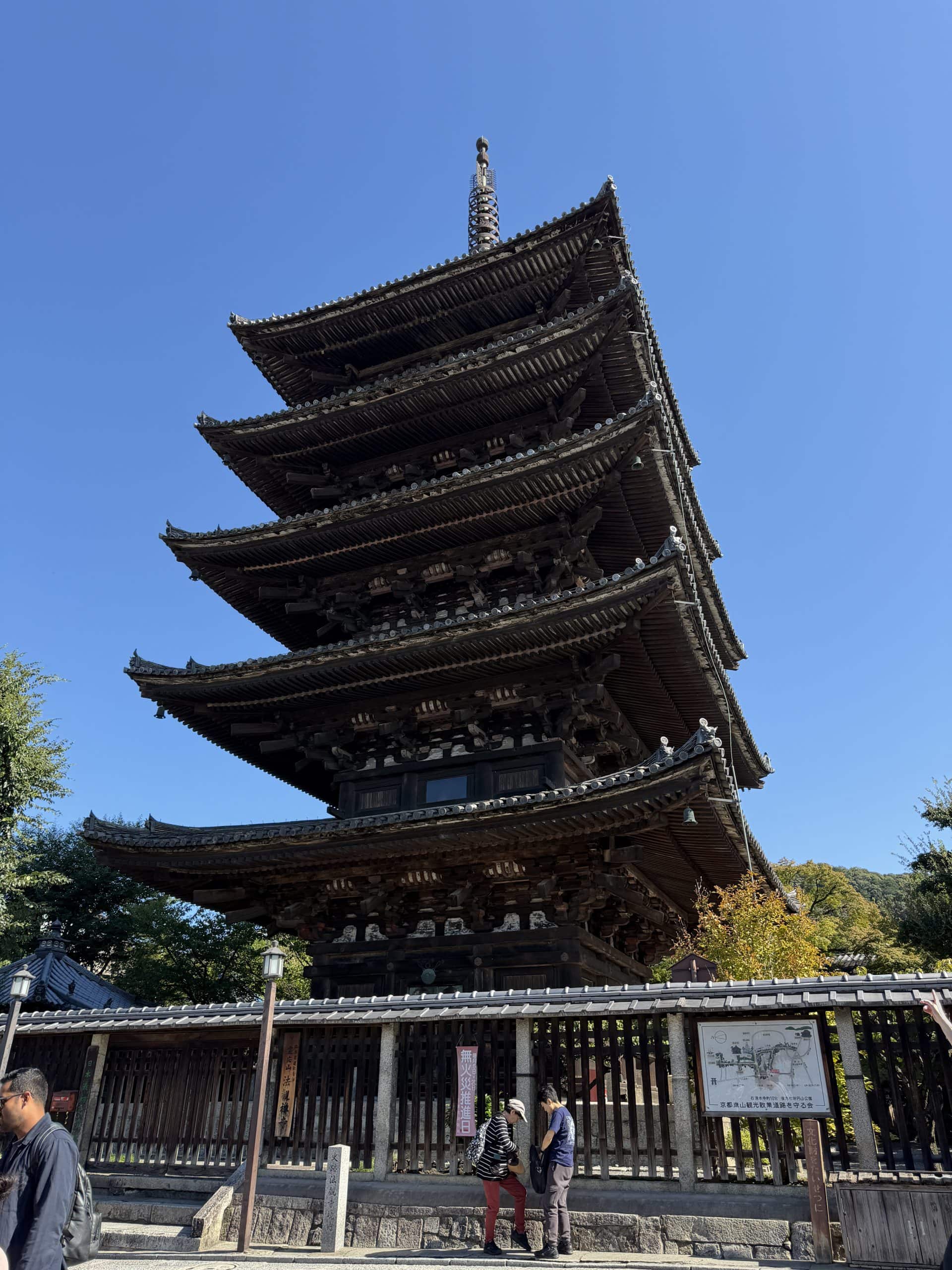
One of its most remarkable engineering features is that it was constructed without nails; like Kiyomizu, it is another impressive example of ancient Japanese craftsmanship. Inside, the pagoda is a sacred bone relic of the Buddha, making it an important spiritual site as well as a beautiful building.
Chion-in Temple
Founded in 1235, Chion-in is the headquarters of Jodo Buddhism and one of Kyoto’s most significant religious sites. Its expansive grounds contain massive temple buildings and beautifully landscaped gardens. Scenes from the film The Last Samurai were filmed here, which makes it a notable spot.


Up behind the temple buildings, one of the most remarkable features of Chion-in is its enormous temple bell, which weighs 70 tonnes and dates back to 1630. We were told that watching the monks ring the bell is a memorable experience, especially during New Year celebrations when crowds gather to hear it echo across Kyoto. We were impressed just to see the enormous size of this bronze structure, and we can only imagine what an effort it must have taken to ring it.


Gion District and Traditional Streets
No visit to Kyoto is complete without exploring the old geisha district of Gion, where narrow lanes, wooden houses, traditional lanterns, and elegant tea houses make you feel like you are back in the Edo period. Streets such as Pontocho Alley and Hanamikoji Street are filled with restaurants, specialty shops, and charming buildings that are very welcoming in the evening.
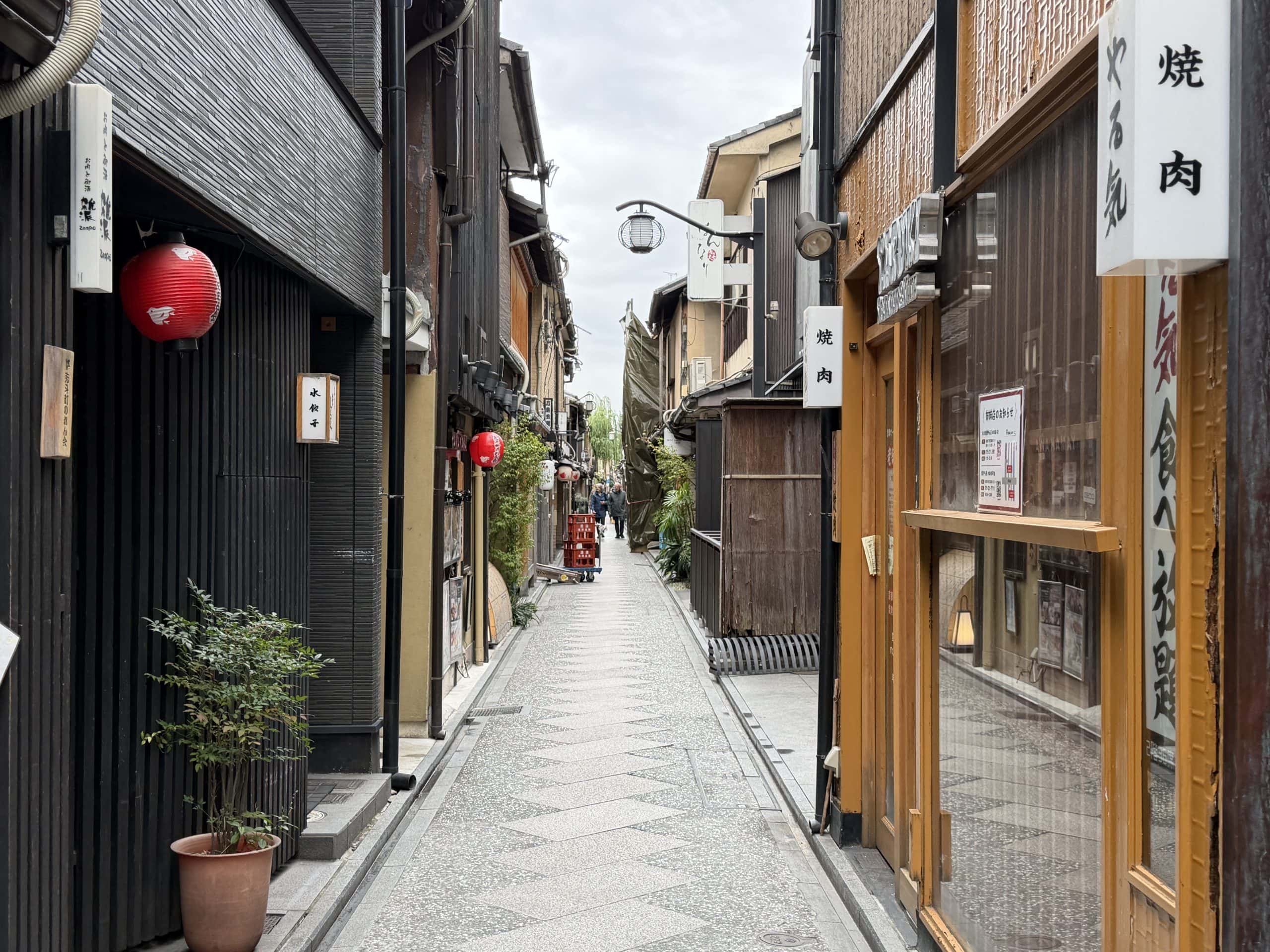
If you’re lucky, you may spot a geisha or maiko on her way to an appointment, though it’s important to be respectful and avoid blocking their path.

✅ Taking an organized geisha culture tour as we did is an excellent way to learn about this ancient and highly skilled tradition, which now exists only in Kyoto, Kanazawa, and one small district in Tokyo.

Yasaka Jinja Shrine
Located at the edge of the Gion district, Yasaka Jinja is one of Kyoto’s liveliest shrines. Dating back to the 700s, its reddish orange buildings, lanterns, and statuary create a festive atmosphere, especially during festivals when food vendors line the walkways.

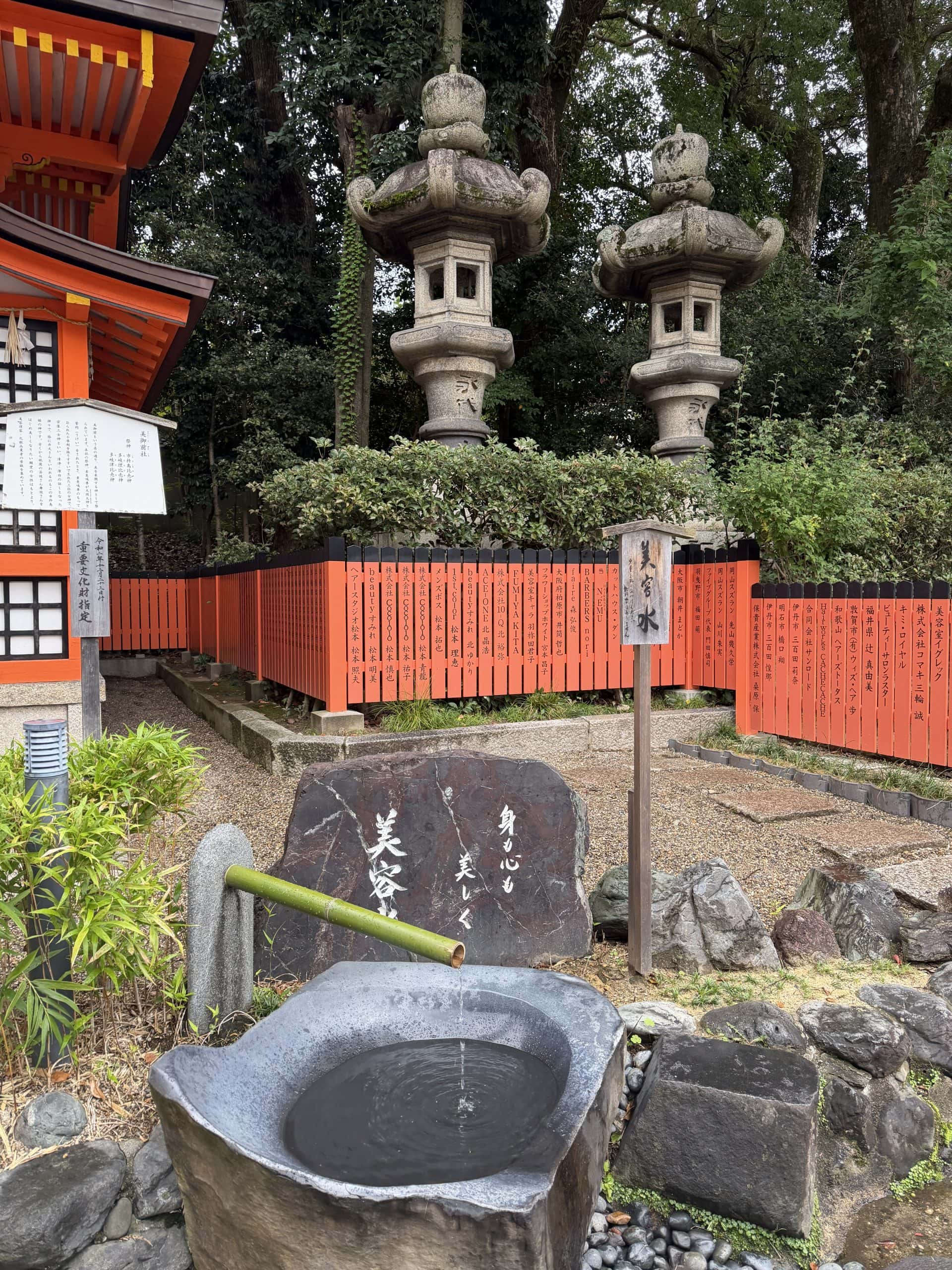

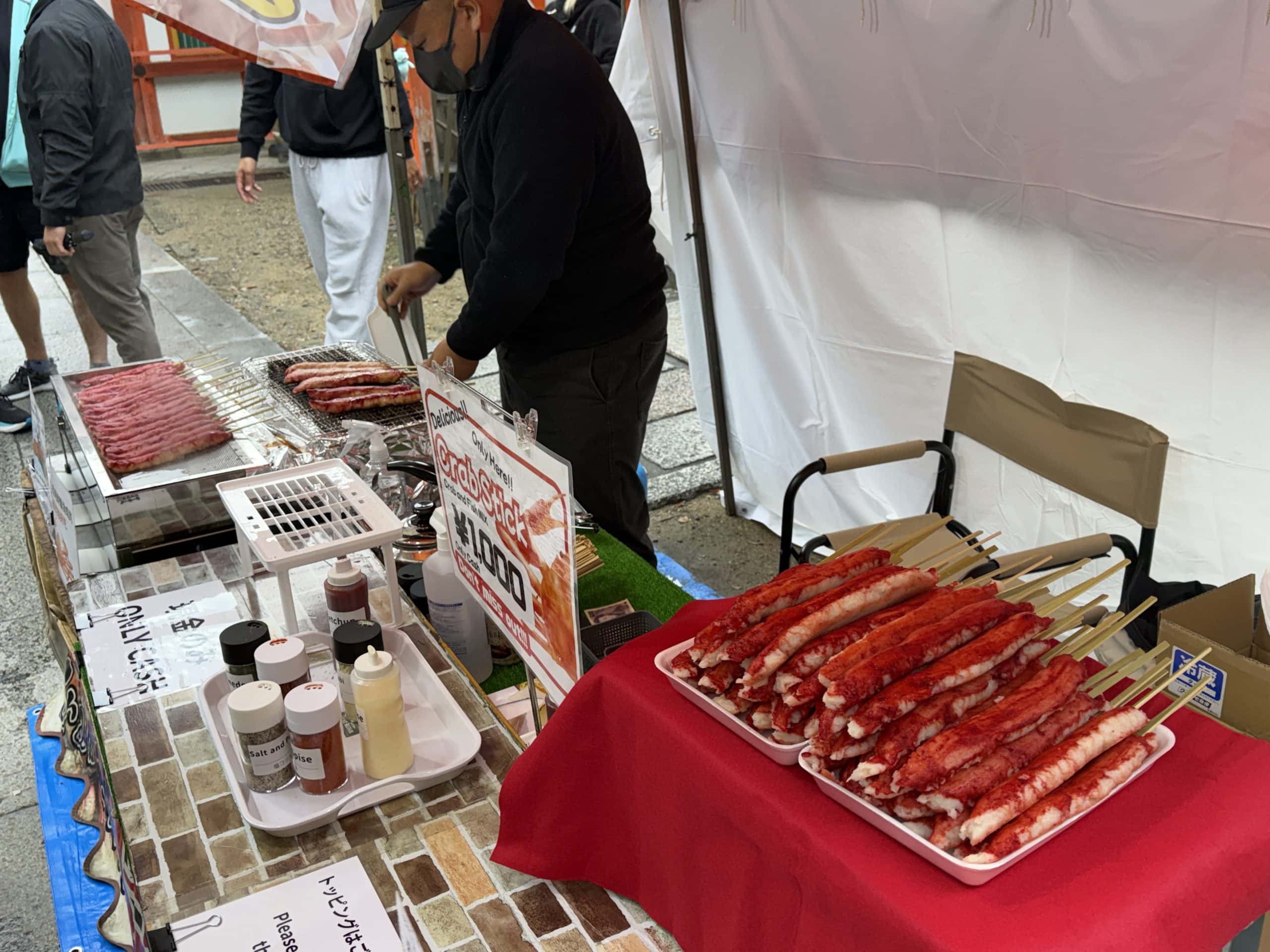
Yasaka Jinja is a wonderful place to visit either before or after exploring the historic lanes of Gion. Its central location and colourful architecture make it one of the most accessible and enjoyable shrines in the city.

Maruyama Park
Beside the Yasaka Shrine, Maruyama Park is one of Kyoto’s most well-liked green spaces. Its curving paths lead past ponds, stone bridges, waterfalls, and a wide variety of trees.

The park is especially famous during cherry blossom season, but it’s beautiful and relaxing at any time of year.

Where To Stay In Kyoto
We stayed in the Gion district of Kyoto. We found this to be a perfect position to easily walk to all the major sights, but it was also a much quieter area where we could escape to at night. We stayed at the Hotel Gion Misen. This small boutique property is located in the quaint Gion district. The rooms are simple but a good size with modern bathrooms. The onsite staff is very helpful with making reservations at the many nearby restaurants.

If you want more in the centre of downtown within walking distance to the train station, we suggest the Mitsui Garden Hotel Kyoto Shijo. This is a much larger property with full services, comfortable rooms and breakfast on-site. The hotel also features an onsen.
Food In Kyoto
Kyoto is a paradise for food lovers, and some of our favourite spots offer a delicious mix of traditional flavours and cozy atmospheres. Taka is a wonderful yakitori restaurant with limited counter seating and perfectly grilled skewers and other wonderful small plates.

For classic Kansai-style okonomiyaki, Chibo is a great choice, serving savoury pancakes piled with tasty toppings. The combination of noodles, egg, cabbage and special sauce was super tasty!

If you’re craving ramen, Tenkaippin is a terrific spot known for its rich broth and large bowls. You could tell it would be good since it was all locals at the surrounding tables.

The Final Word…Things To See In Kyoto
With its endless temples, historic sites, peaceful gardens, and numerous notable neighbourhoods, Kyoto is a destination that is definitely worth visiting. While it does take some pre-planning to avoid the huge crowds at some sites, there are plenty of other places to enjoy while visiting there.
The city truly offers a beautiful balance of history, culture, spirituality and natural beauty. There is something about this place that invites you to slow down, breathe deeply, and appreciate the traditions that have shaped Japan for centuries. We loved our time there and would go back in a heartbeat. Don’t miss this lovely city.
For another location that is similar in heritage to Kyoto, check out our post on Kanazawa. Another location with traditional Geisha neighbourhoods, stunning gardens and a fantastic Castle Park to explore. Additionally, if you are looking for a mid-sized city in Japan with a lot of history, read about Hiroshima.