Is Nagasaki Worth Visiting? What To See and Why It Matters

Some cities have the ability to change how you see history, and Nagasaki is one of them. We found it offered powerful lessons and gave us a deeper understanding of Japan’s past.
If you’re wondering, is Nagasaki worth visiting? In our opinion, yes! This city offers a combination of important sites, memorials, and cultural locations shaped by international trade and religious influence.
After spending time exploring the city, we agreed that we really liked Nagasaki and we found it to be one of our most meaningful stops in Japan. It provides perspective and experiences you will not find anywhere else in the country, and that made it all the more worthwhile.
This travel guide explains exactly why we think Nagasaki is worth visiting and what you should prioritize when planning your trip around the city.
What You’ll Learn and Experience in Nagasaki
If you are considering adding Nagasaki to your Japan itinerary, here is what you can expect:
✅ Learn about the atomic bombing and its lasting impact
✅ Visit peaceful memorial sites and monuments from around the world
✅ Explore historic neighbourhoods influenced by international trade
✅ See religious sites shaped by centuries of cultural change
✅ Visit restored colonial homes and gardens overlooking the port
✅ Experience one of Japan’s most internationally influenced cities
✅ If you are looking for a private tour to show you the main sights of Nagasaki, then consider the tour company that we chose. Our guide was knowledgeable, personable and gave some excellent insights into life in Nagasaki.
Nagasaki offers a different experience compared to Japan’s larger cities. It is less crowded but equally rich in history and culture. Read on for a comprehensive list of things to see while there.
Nagasaki Atomic Bomb Museum
By far, the most important site in Nagasaki city is the Atomic Bomb Museum. It commemorates the events of August 9, 1945, when an atomic bomb was dropped on the city. This happened just three days after the bombing of Hiroshima.
The museum experience begins before you even enter the exhibits. You walk into a large, brightly lit space and begin descending a ramp. As you walk downwards, you will notice that years are displayed along the wall. With each step, you move closer to 1945. It creates the feeling that you are physically travelling back in time.
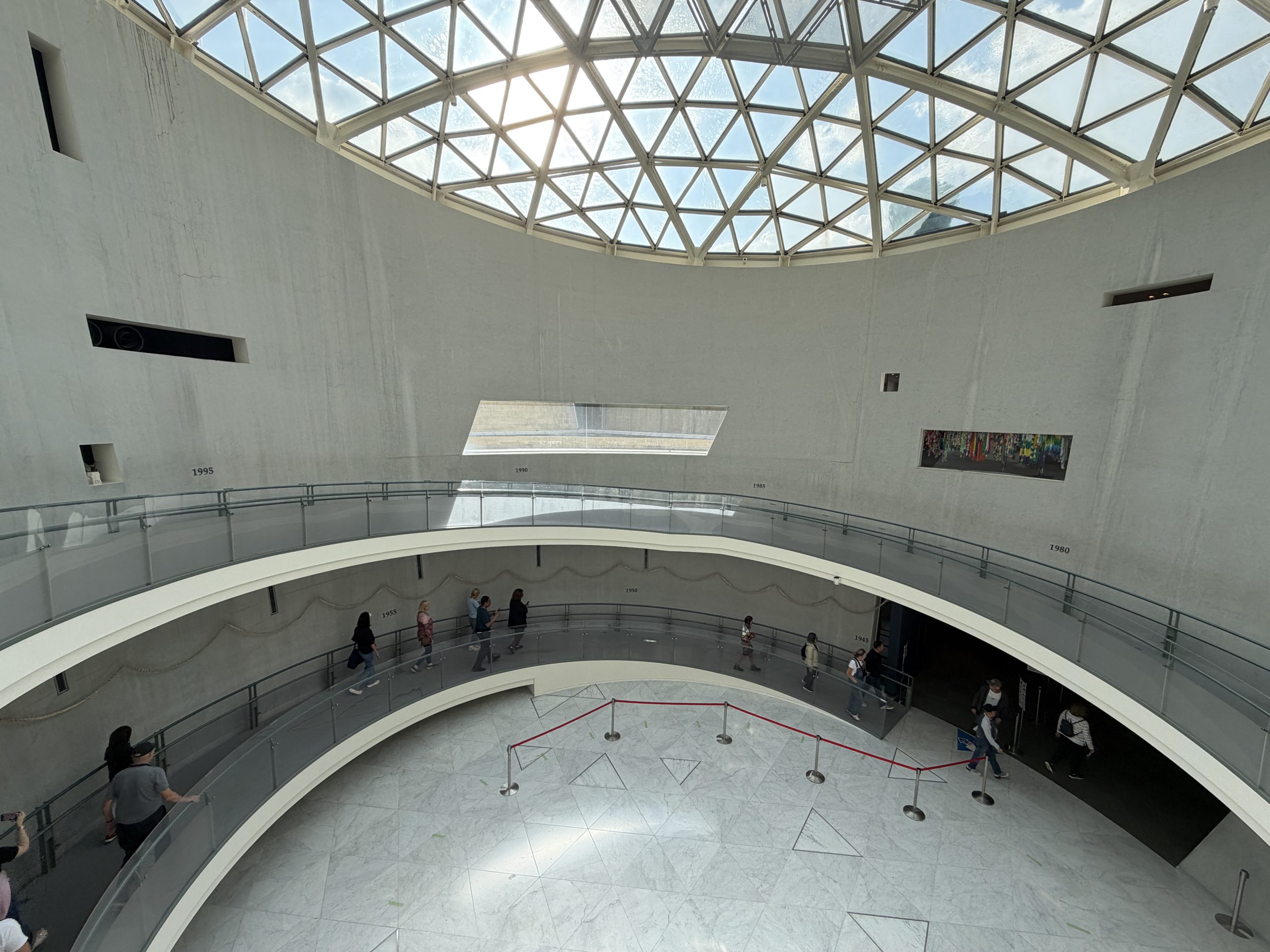
At the base of the ramp, you enter the main exhibit area. The museum begins with a film explaining the historical events and their impact on the city. This provides important context before you explore the displays.
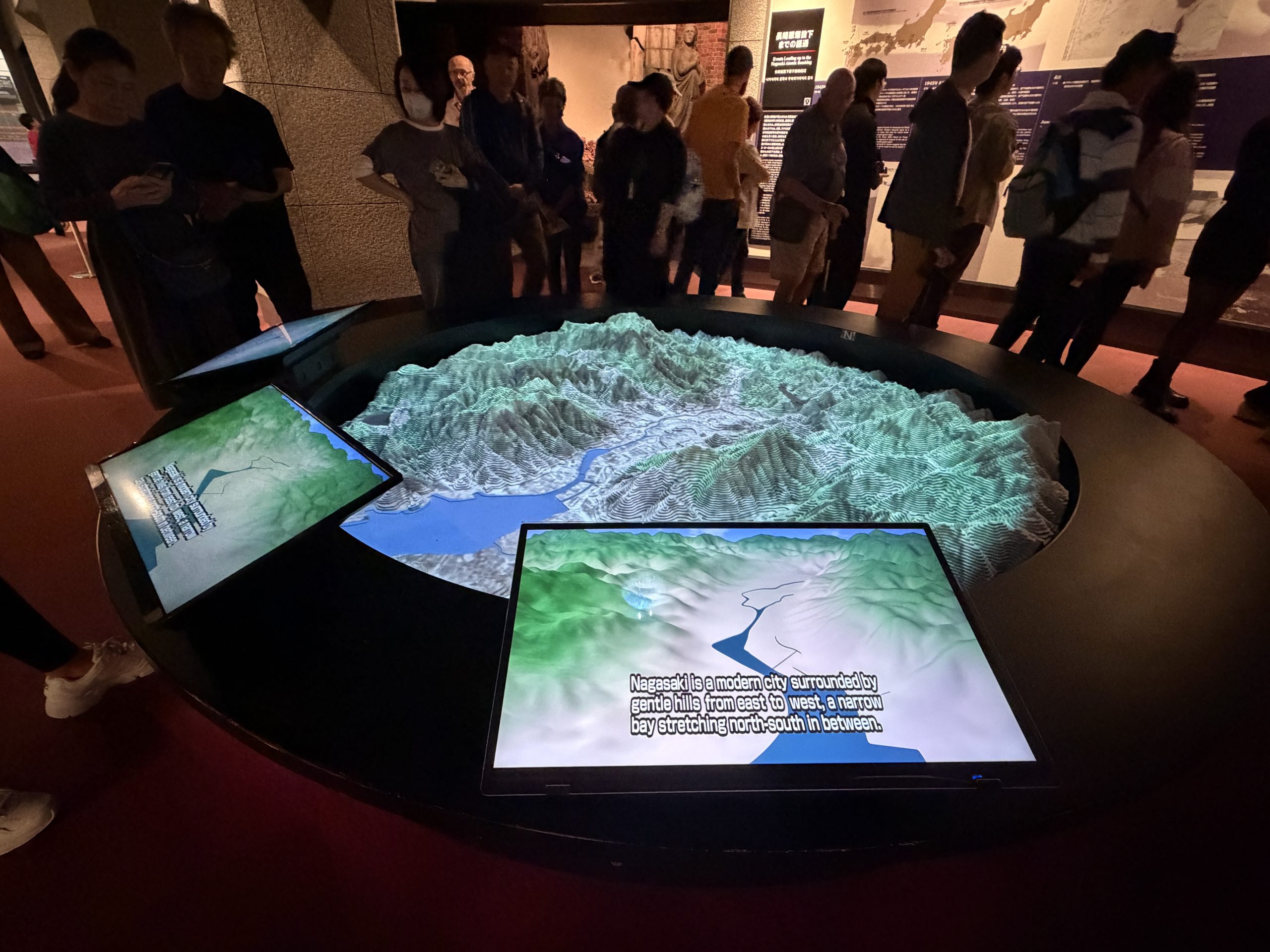
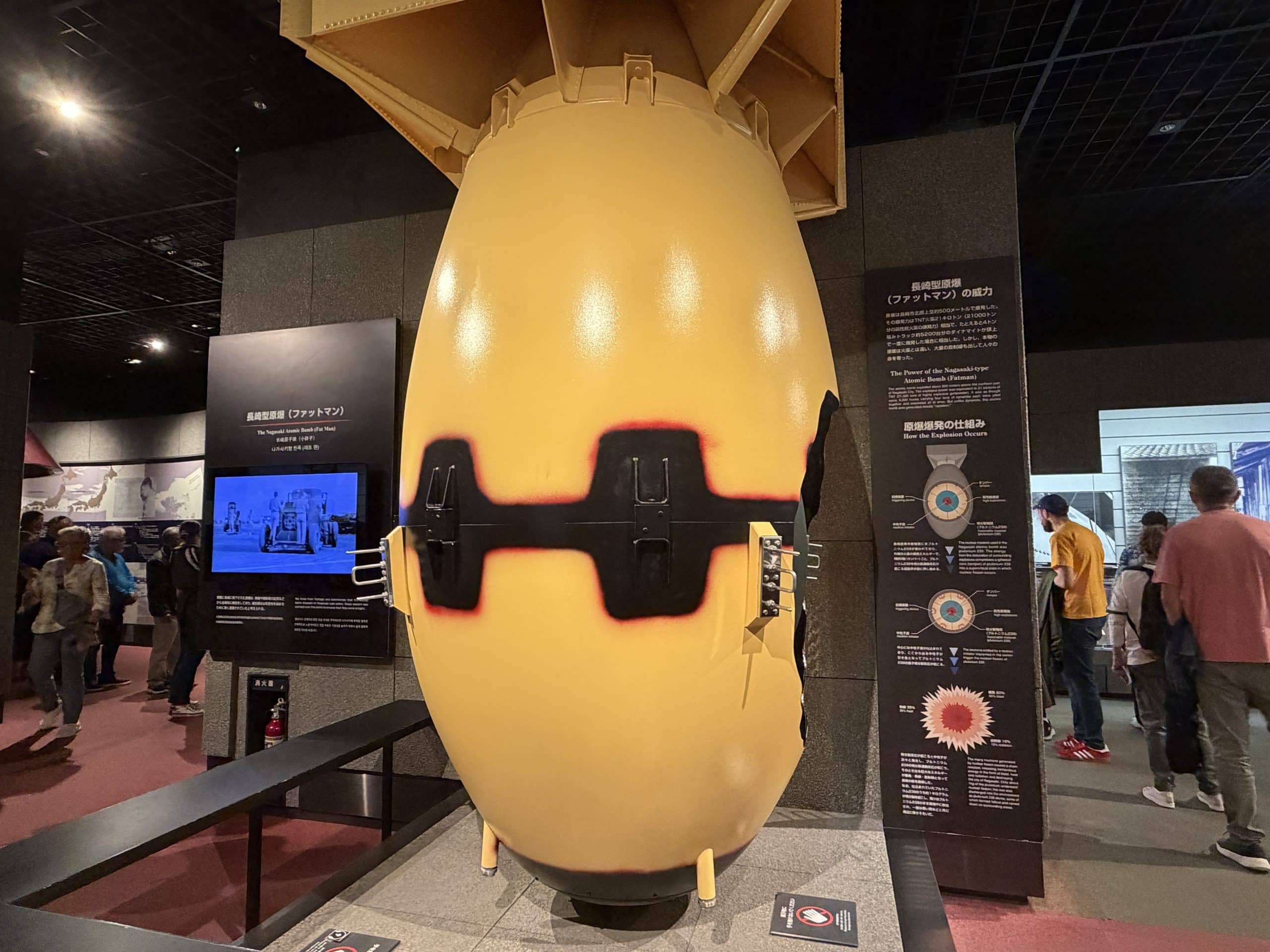
The exhibits include personal belongings, damaged objects, and photographs showing the destruction. Many items belonged to people who were present when the bomb exploded. Seeing these objects is sobering and certainly makes the history feel real and very personal.
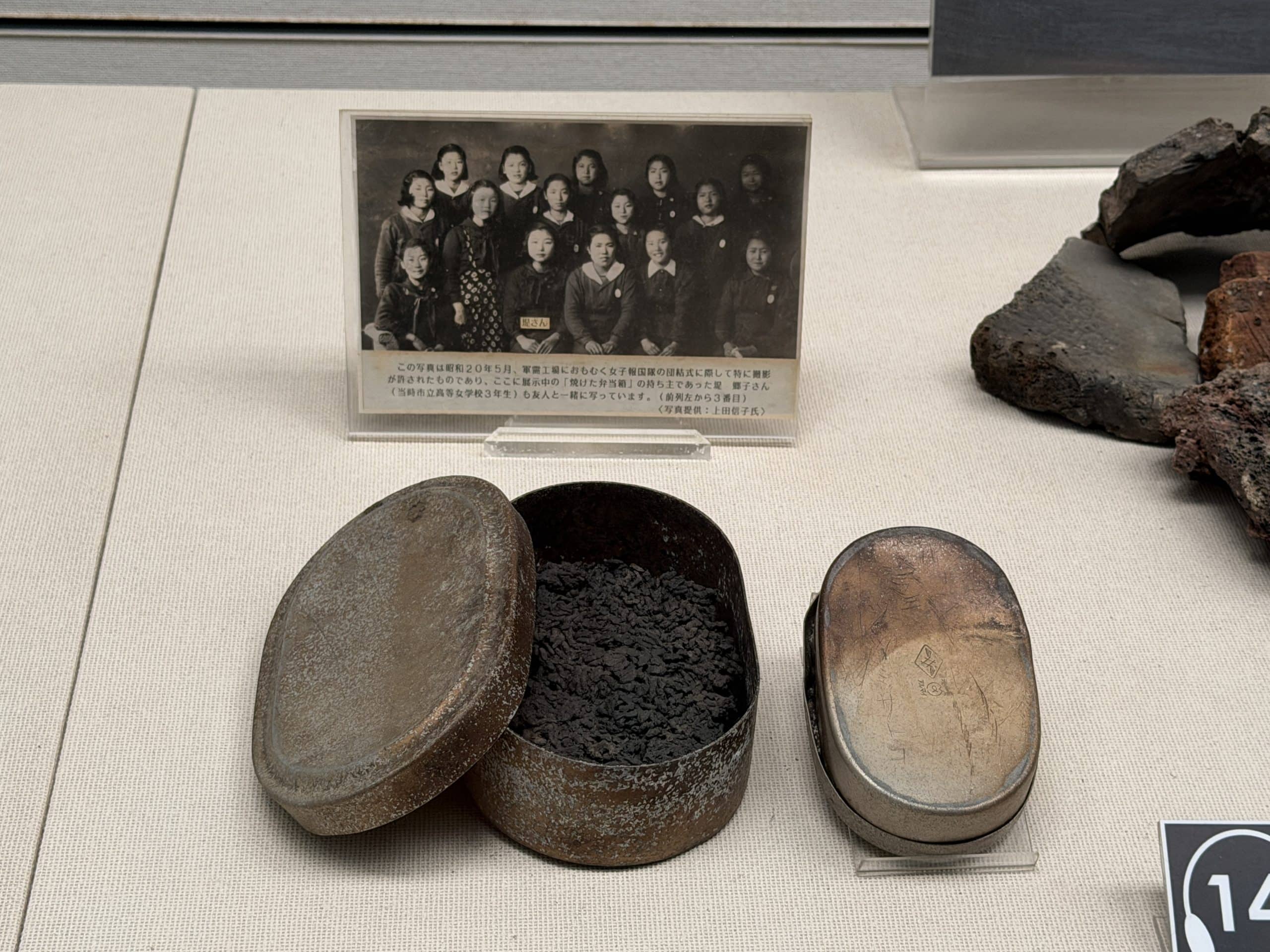
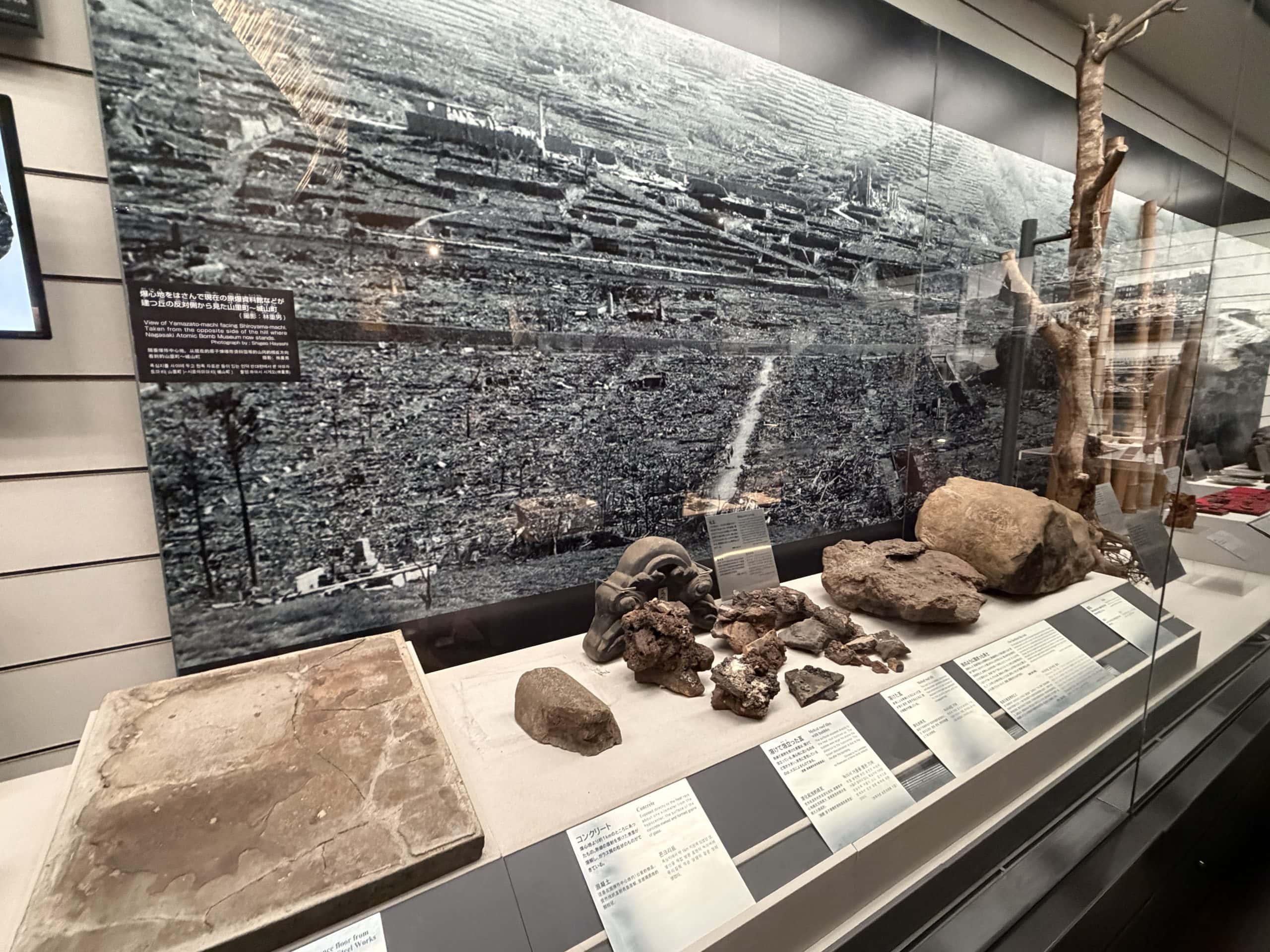
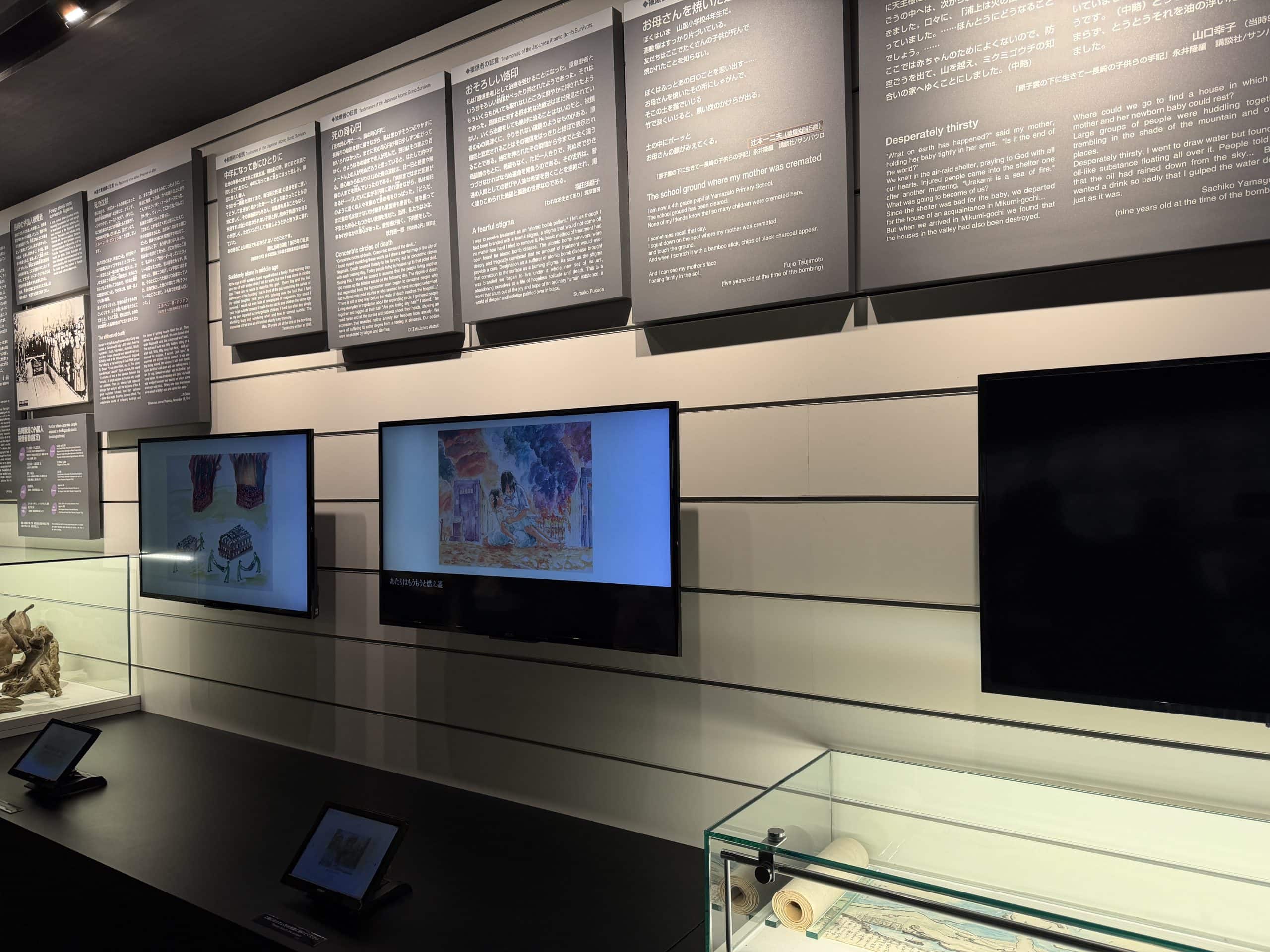
The second half of the museum focuses on the aftermath. It shares survivor stories and explains the long-term effects of radiation. Some of the stories are extremely difficult to read and brought me to tears.
There is also a timeline showing the development of nuclear weapons and the global effort to prevent their use.
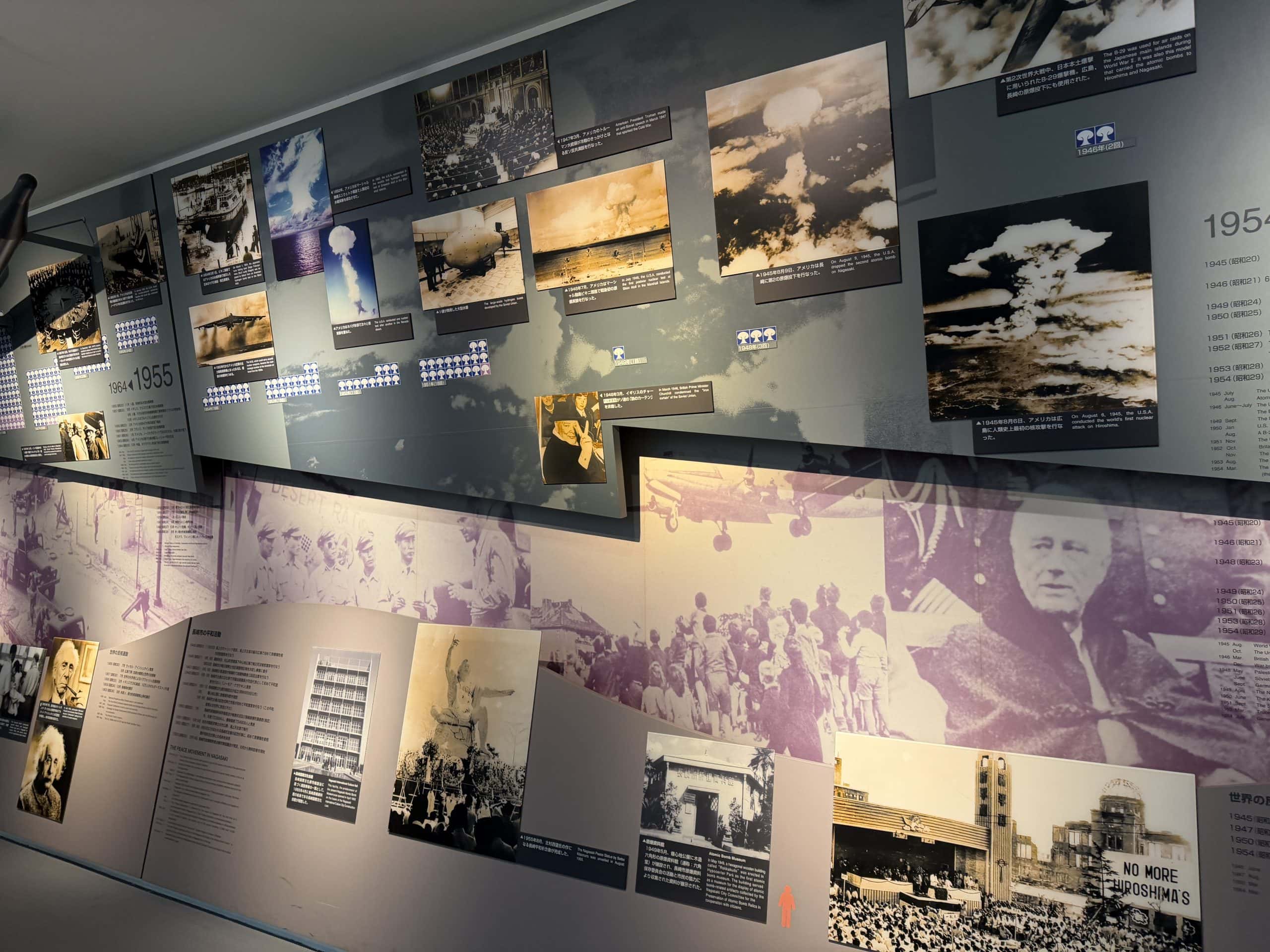
We felt the museum presented the information clearly and respectfully. It does not exaggerate or dramatize the facts. It allows you to understand the human impact of this devastating event.

We found this museum very well organized and appreciated the space to move through the exhibits at our own pace. If we had to choose between the museums in Hiroshima and Nagasaki, we would choose Nagasaki since it wasn’t as crowded and allowed us to really take in all the exhibits.
Peace Memorial Park
After leaving the museum, you can walk through Peace Memorial Park. This is a calm and reflective space built to honour the victims of the bombing.
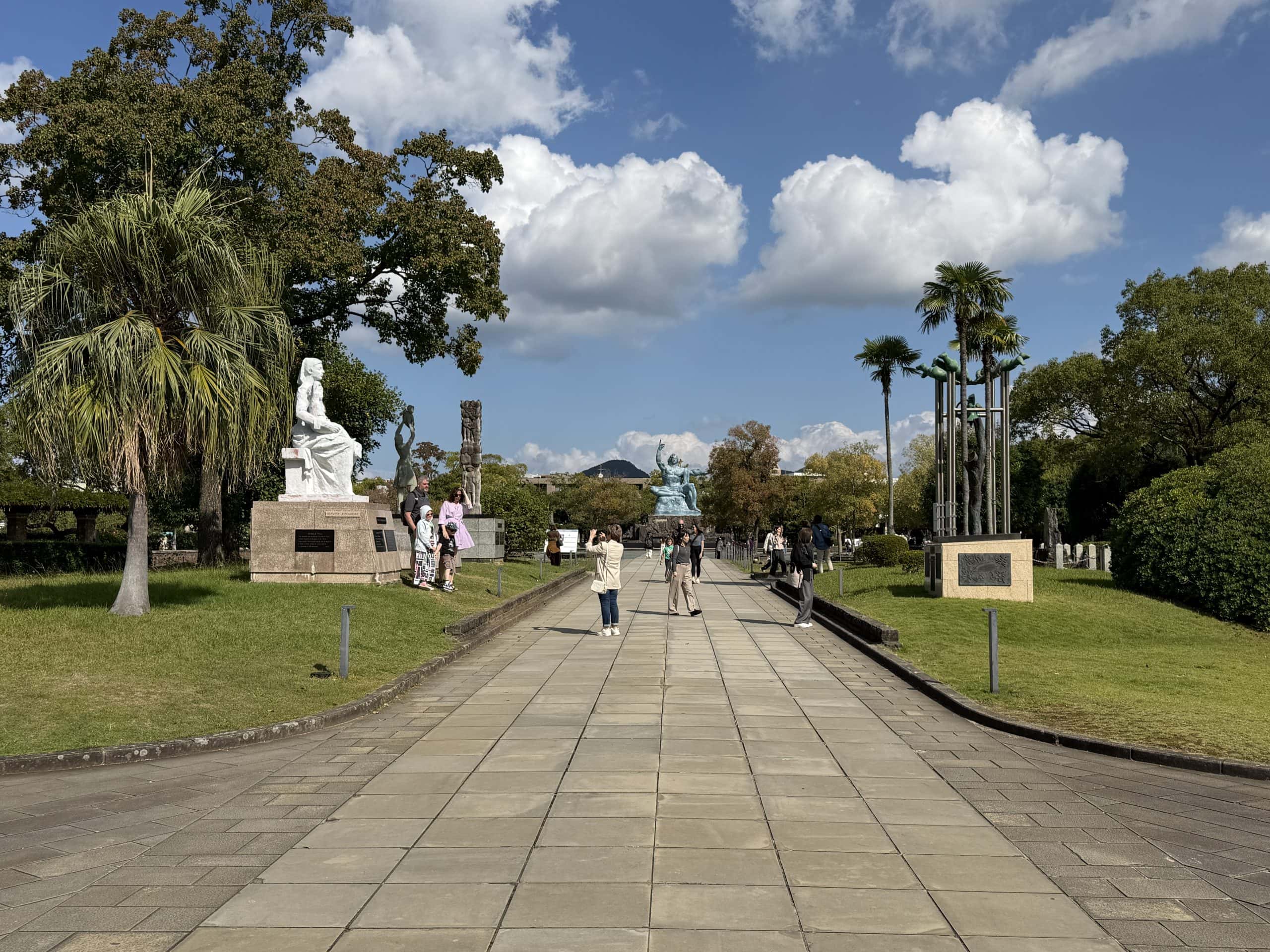
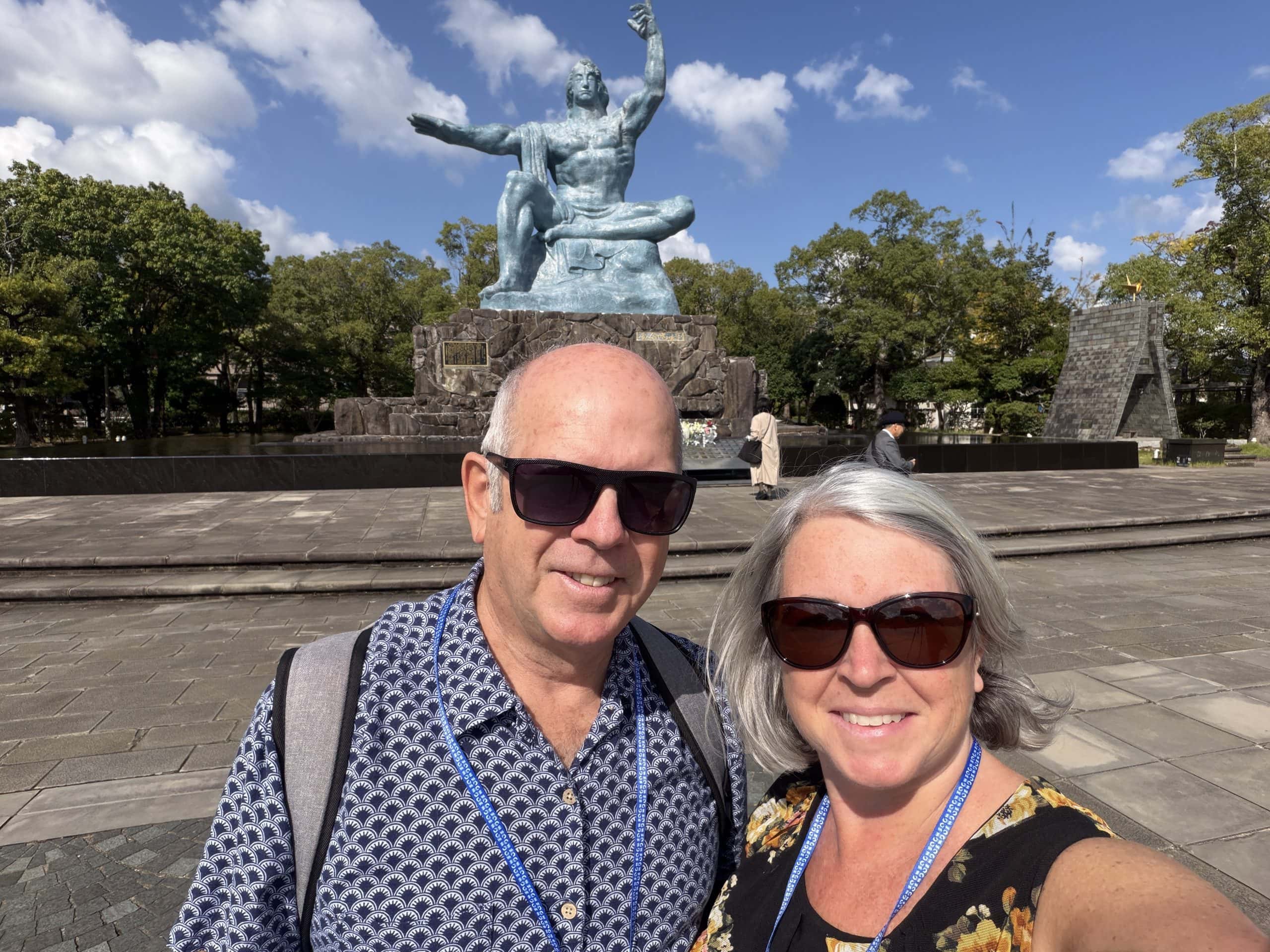
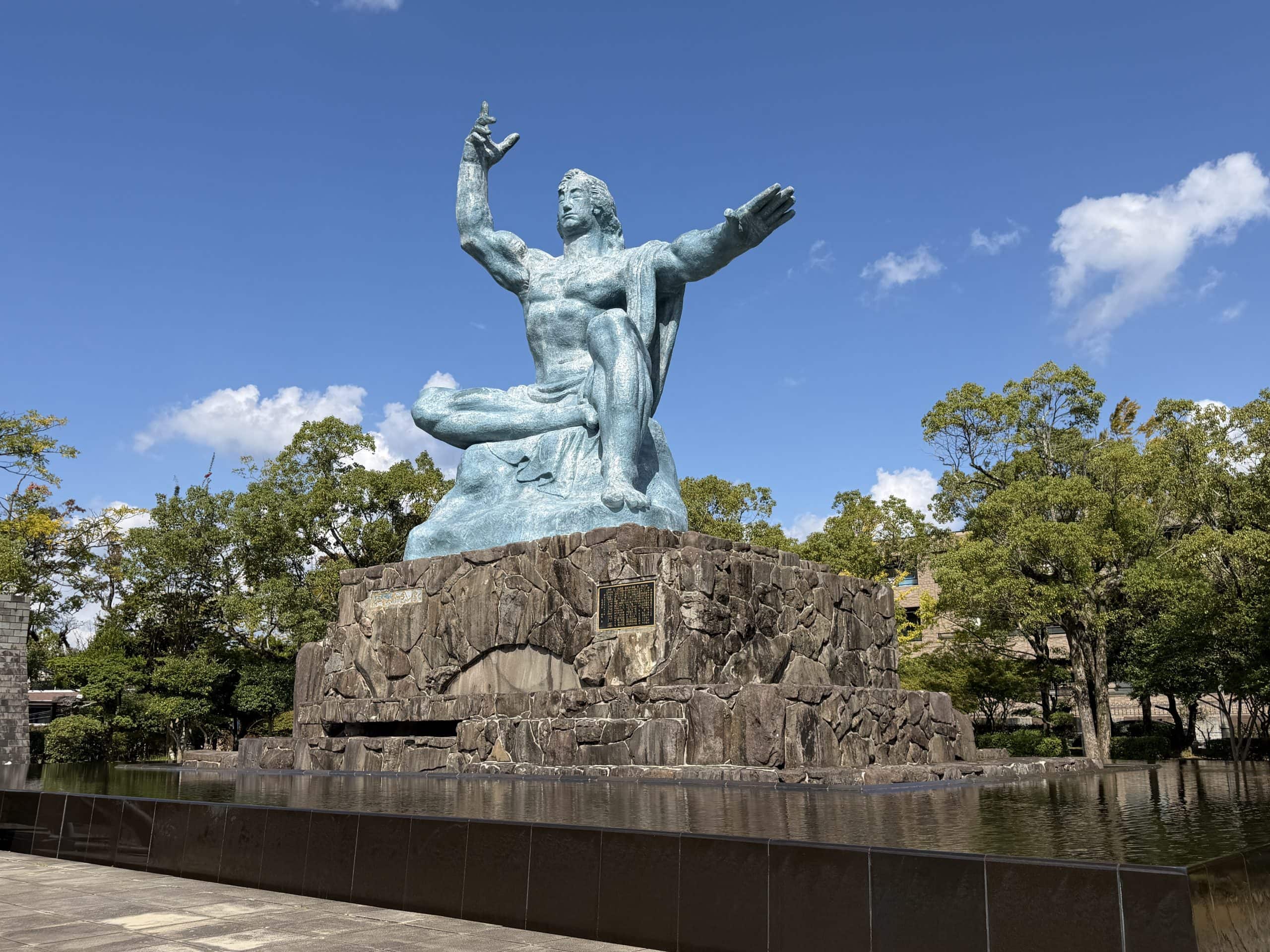
The most recognizable feature is the Peace Statue. This is an enormous statue that shows a seated man with one hand pointing upward and the other extended outward. His right hand points to the threat of nuclear weapons. His left hand symbolizes peace. His closed eyes represent prayer for the victims. It is quite striking in its size and symbolism.
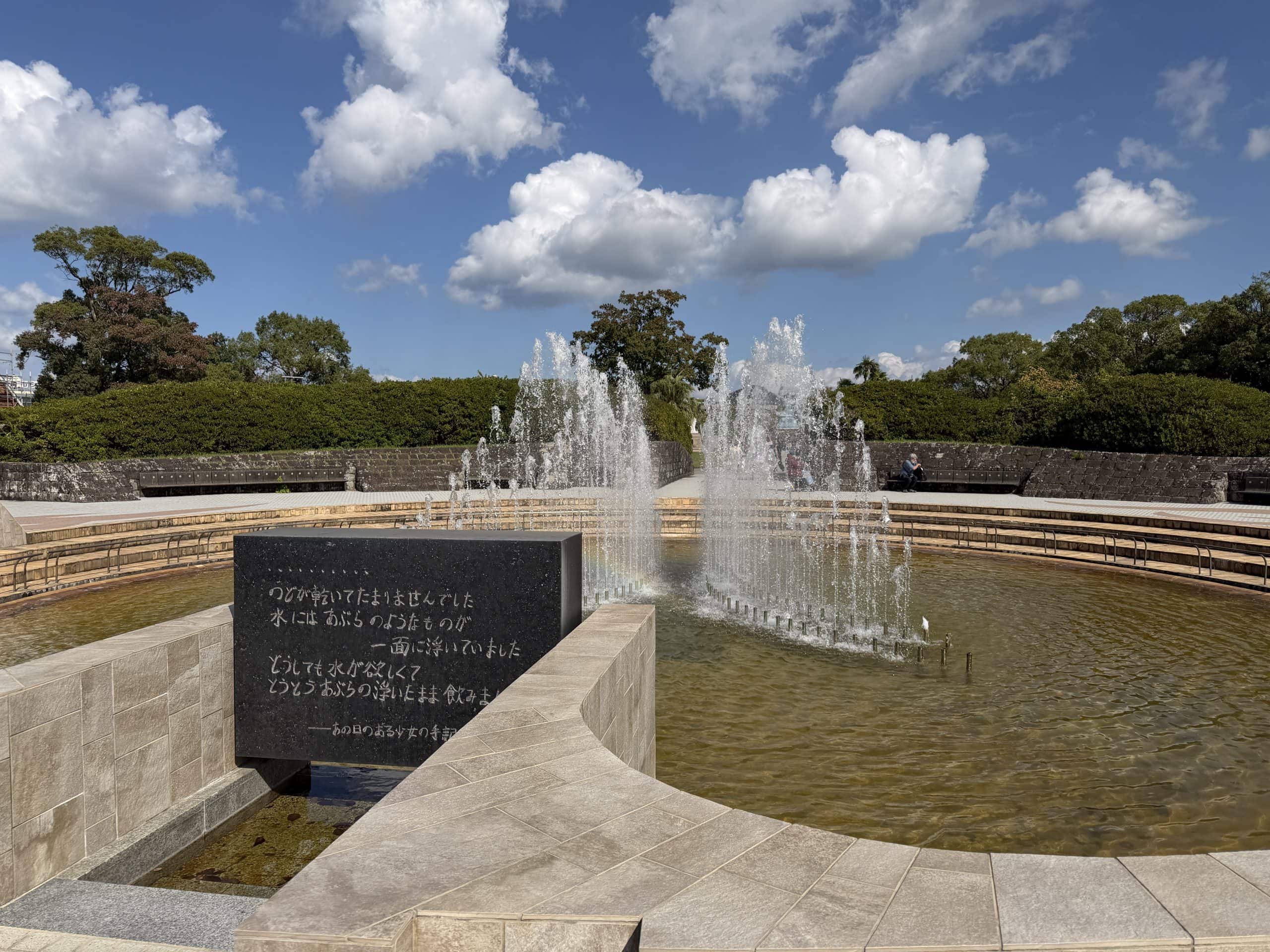
Nearby is the Fountain of Peace. It was created in memory of the victims who suffered from severe thirst after the bombing. Sadly, many people were reported to have begged for water before they died. The fountain is shaped like wings, representing a dove, which is also a symbol of peace.
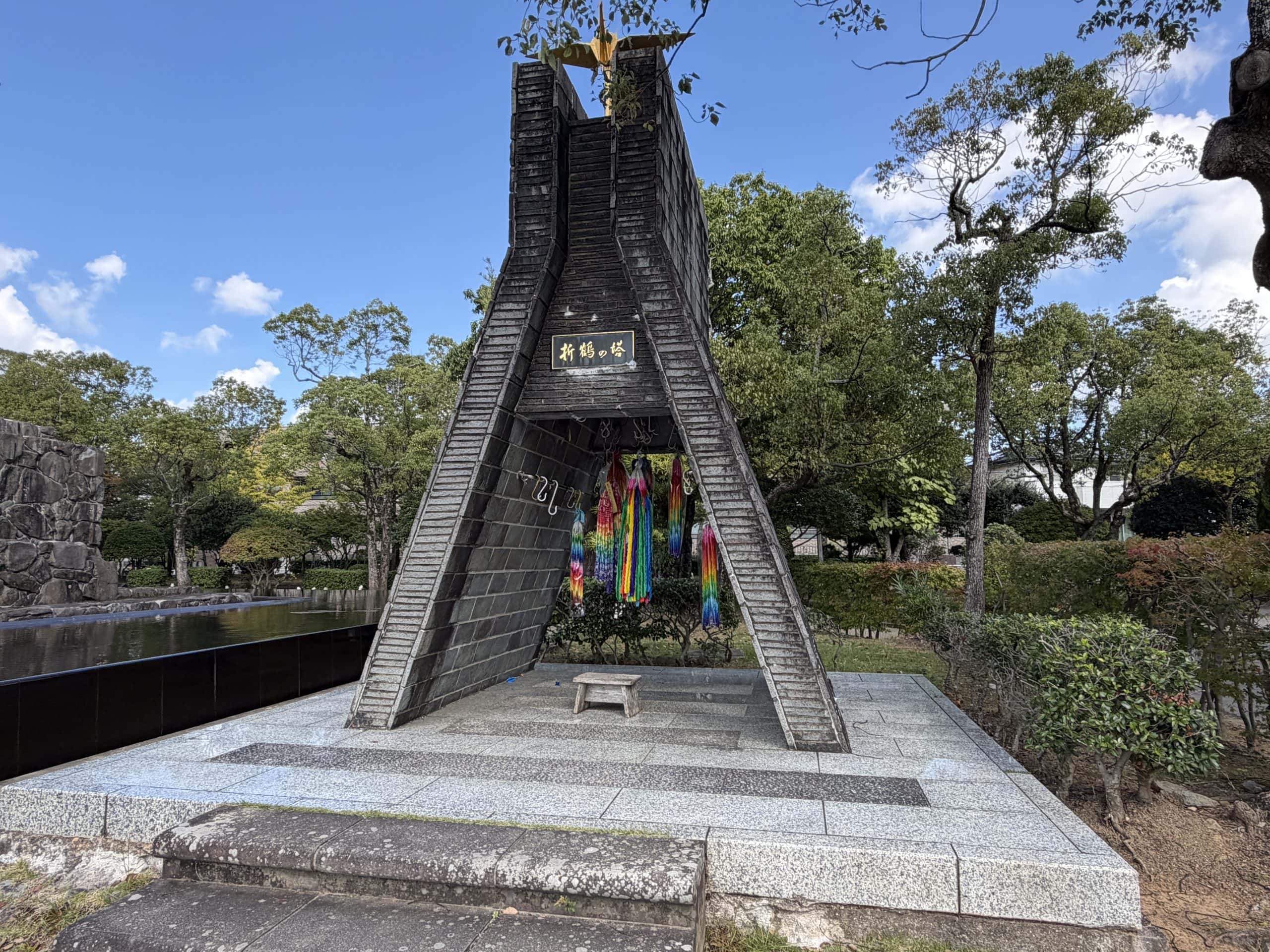
Walking through the Nagasaki Peace Park, you will see memorials donated by countries from around the world. These monuments recognize the tragedy but also promote peace. The park offers a quiet place to reflect after visiting the museum, and we found it to be a welcome area to explore after the heaviness of the museum.
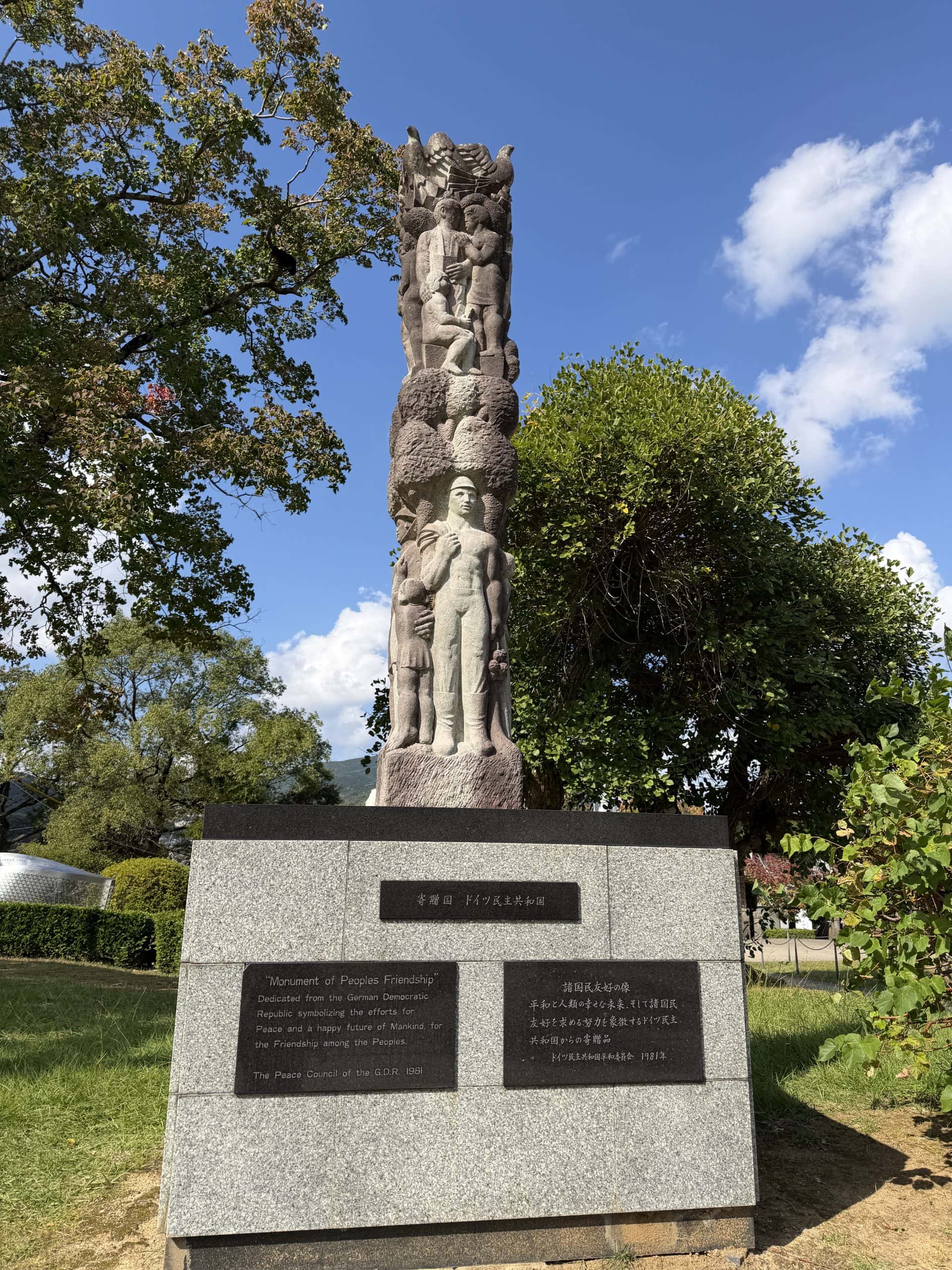
The Hypocentre
One of the most powerful places to visit is the hypocentre. This marks the exact location where the atomic bomb exploded, approximately 500 metres above the ground.
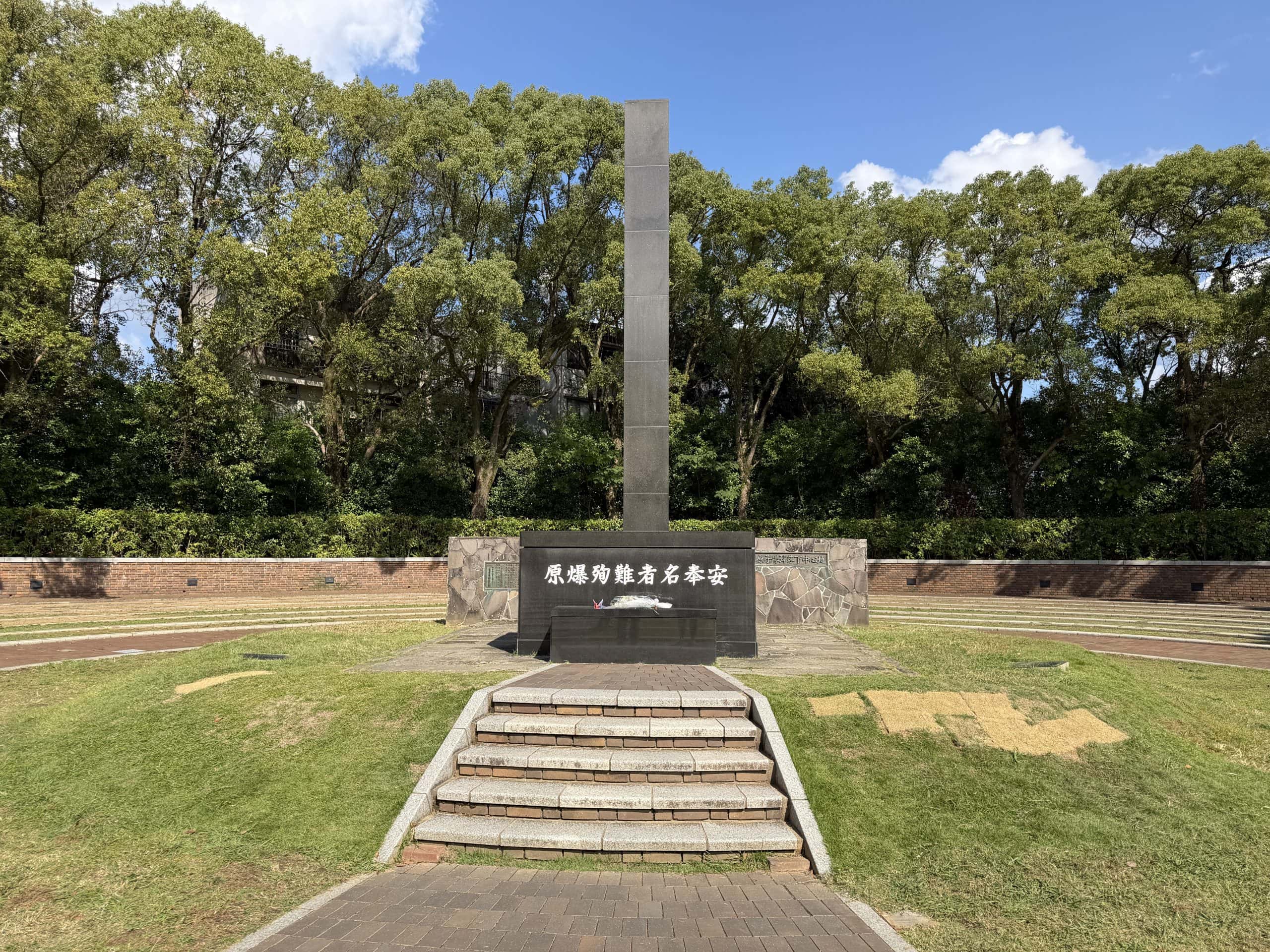
Today, the site is marked by a simple monument. The surrounding area has been rebuilt, but standing at this location helps you understand the scale of what happened. It is a quiet and sobering place where you can feel the connection to this awful time in history.
Urakami Cathedral
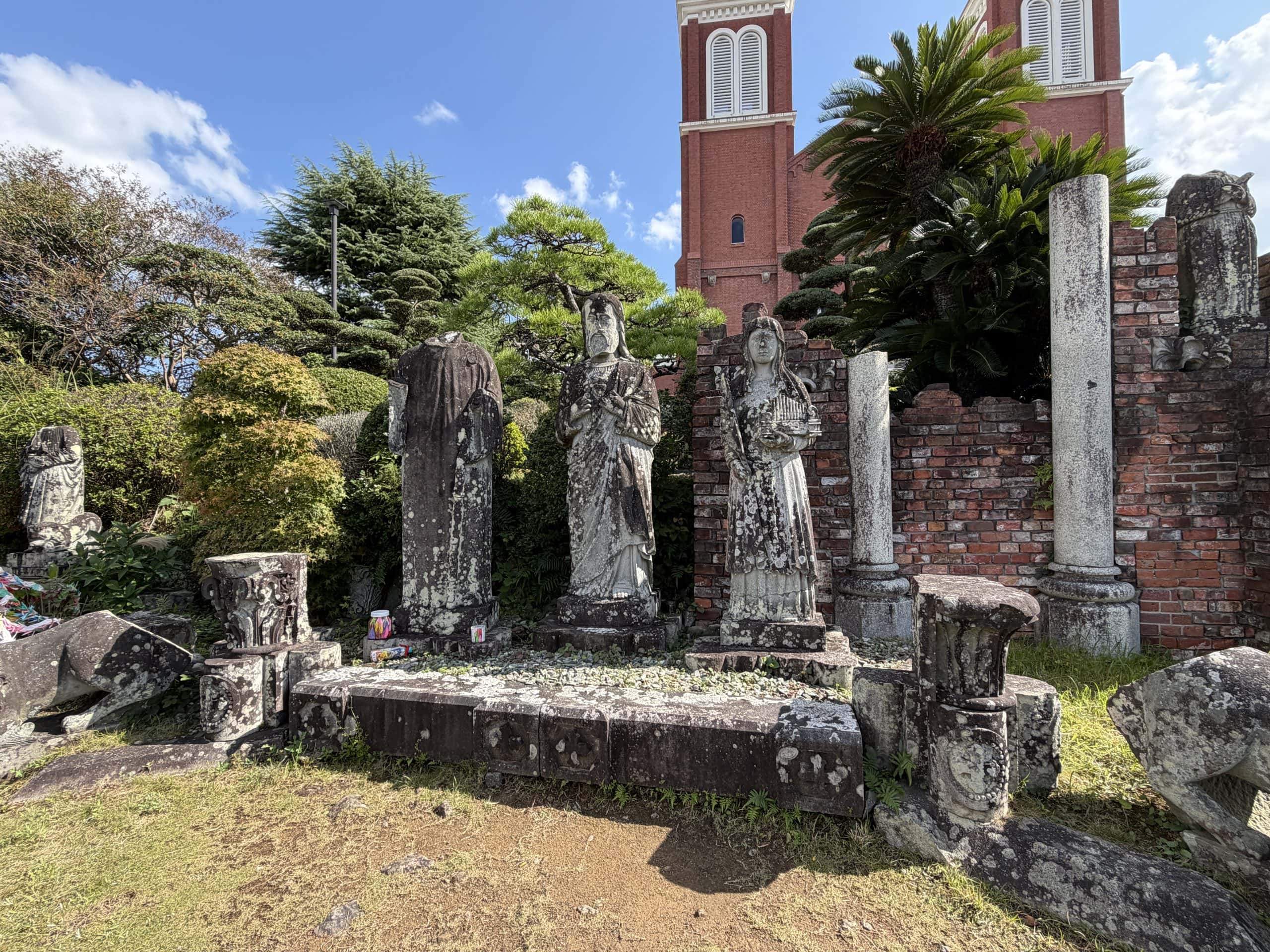
Not far from the hypocentre is Urakami Cathedral. At the time of the bombing, it was one of the largest Catholic churches in East Asia. The explosion caused severe damage to the building, demolishing everything except the front facade.
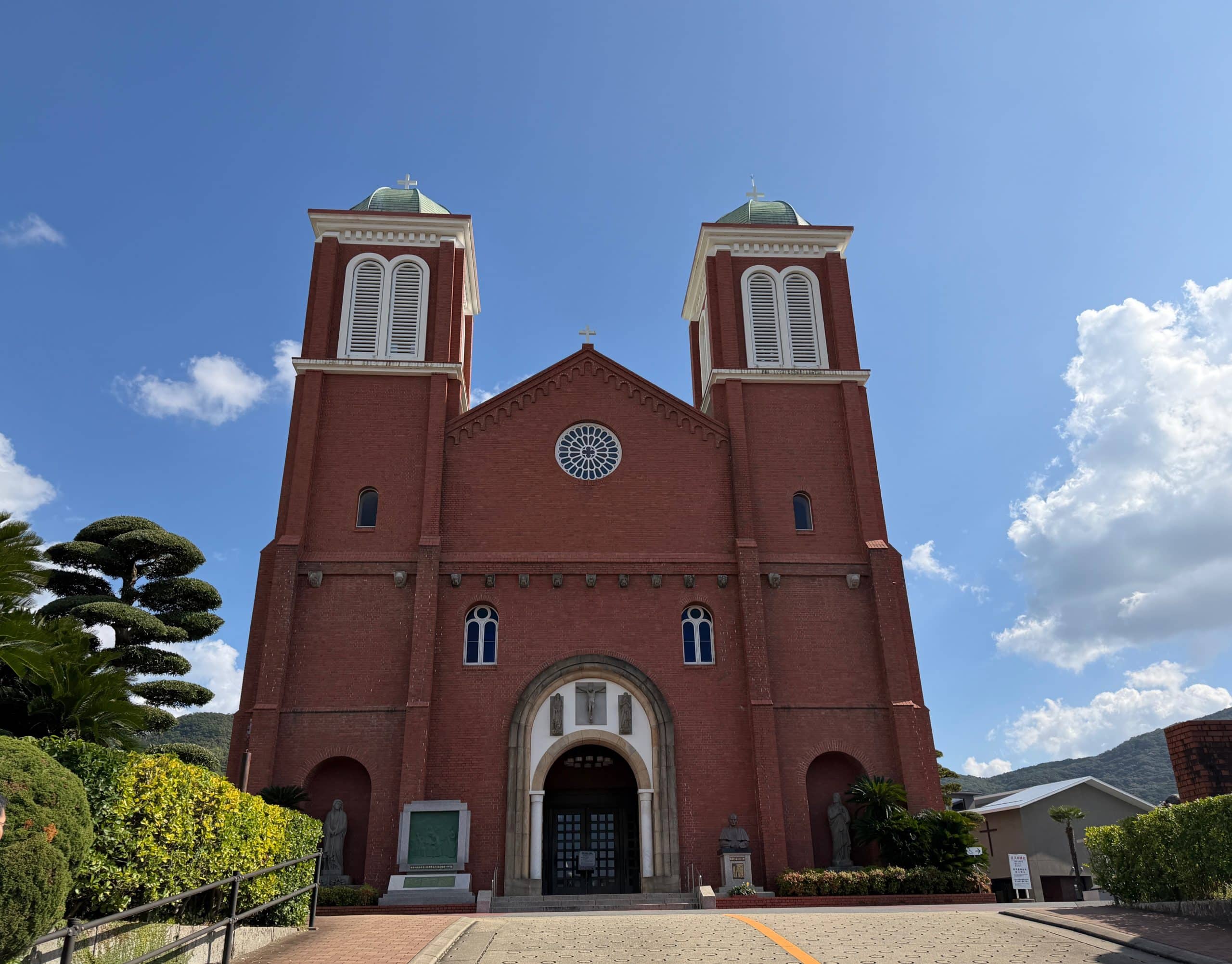
The cathedral has since been rebuilt and continues to serve the local community. In front, there are many pieces of the original structure that remain intact, and we felt these stood as a symbol of resilience and faith.
Although you can’t go inside, visiting the cathedral highlights Nagasaki’s unique religious history, which includes strong Christian influences not typically found in most parts of Japan.
CHECK OUT OUR TOP TRAVEL RESOURCES
✦ Find superior accommodations on Expedia.com or Booking.com
✦ Book your rental car wth Discover Cars
Suwa Shrine
Suwa Shrine is one of the most important Shinto shrines in Nagasaki. It was built in 1625 and sits on a hill overlooking the city.

Reaching the shrine requires climbing more than 200 stone steps, so it is a bit of a workout! In fact, when there, we even saw school children using these steps as part of their exercise routine.

The staircase passes through a residential area and leads to the shrine entrance.
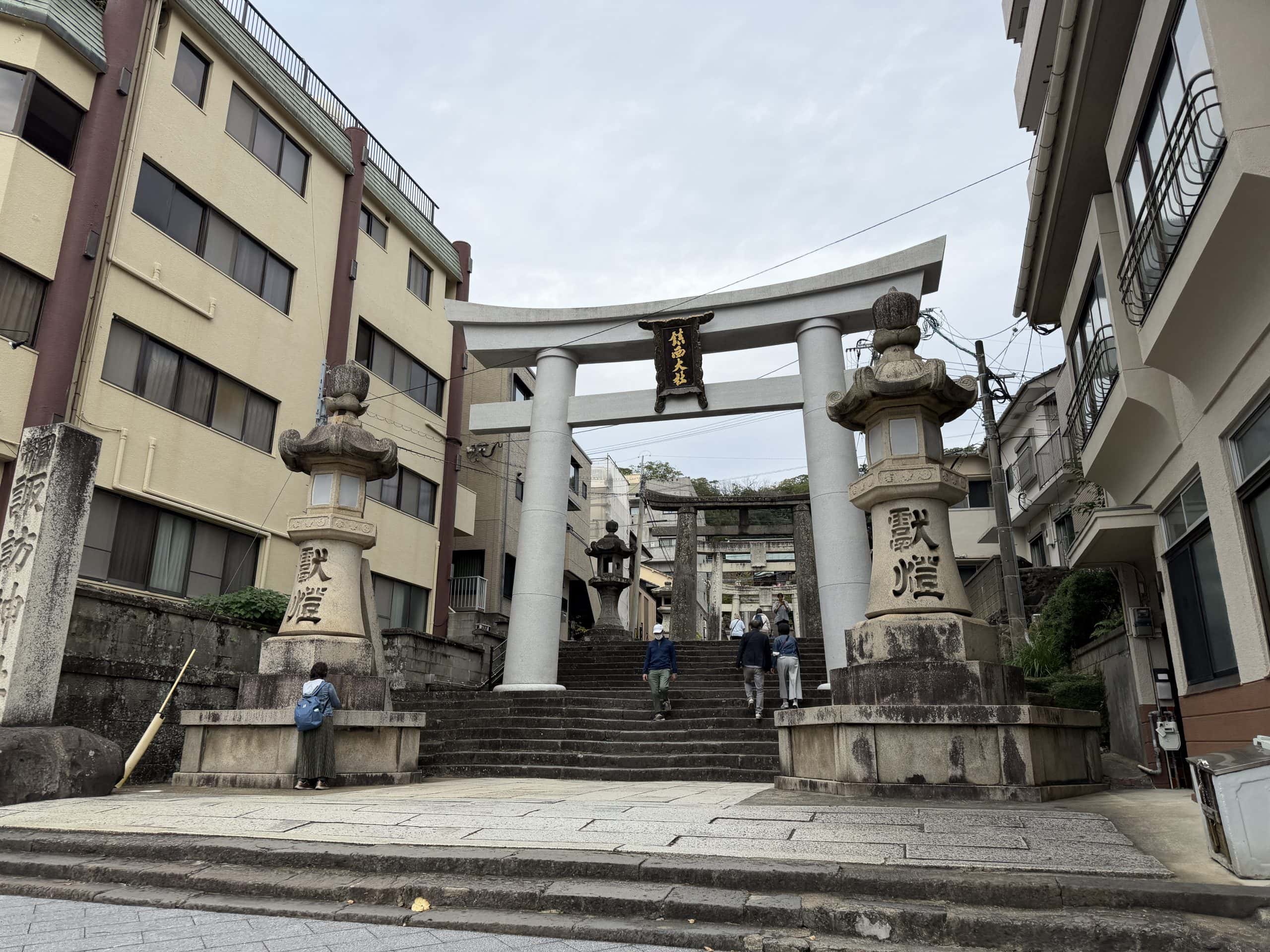
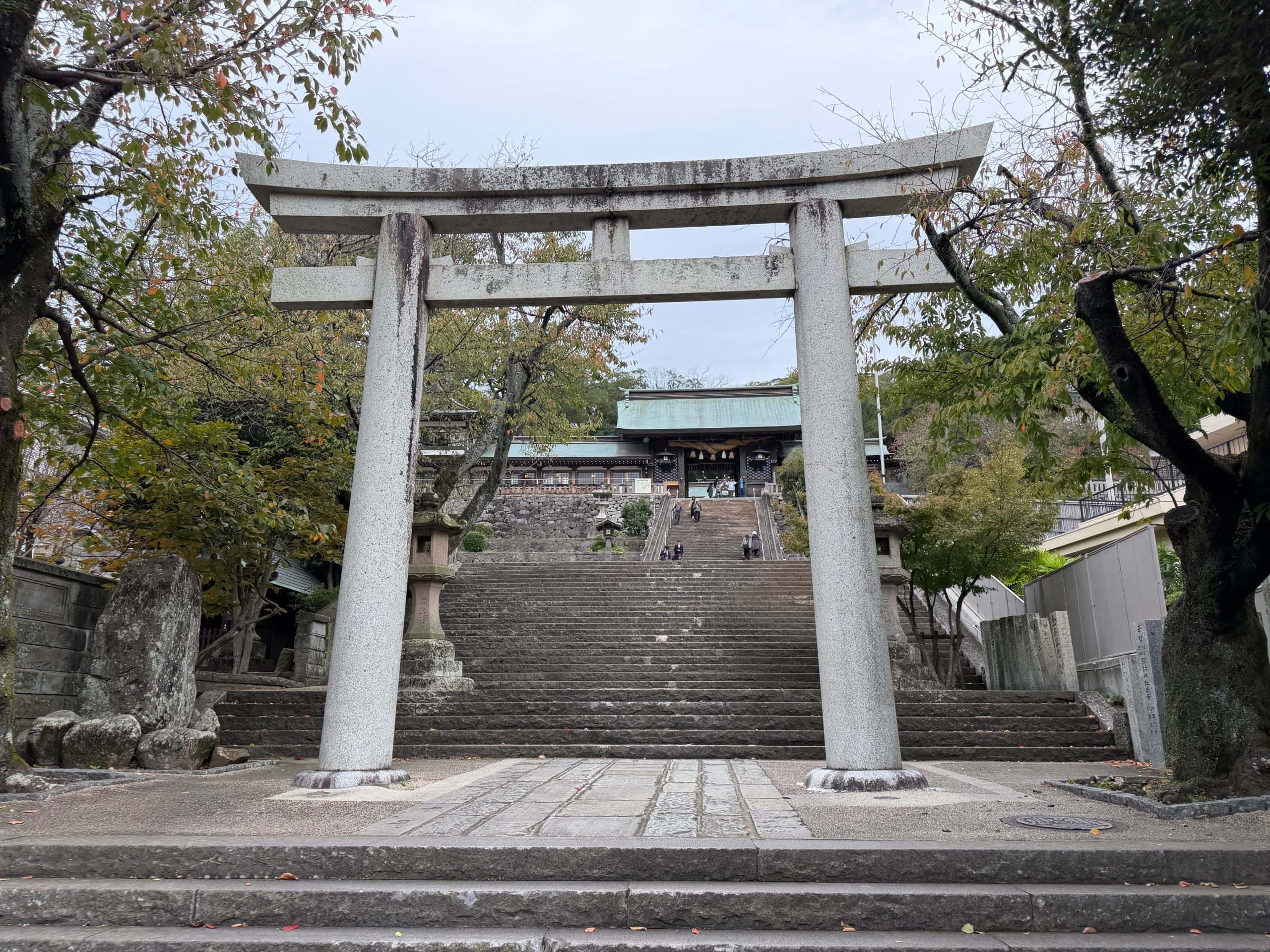
The climb is worth the effort, as the shrine grounds offer peaceful surroundings and views of the city.
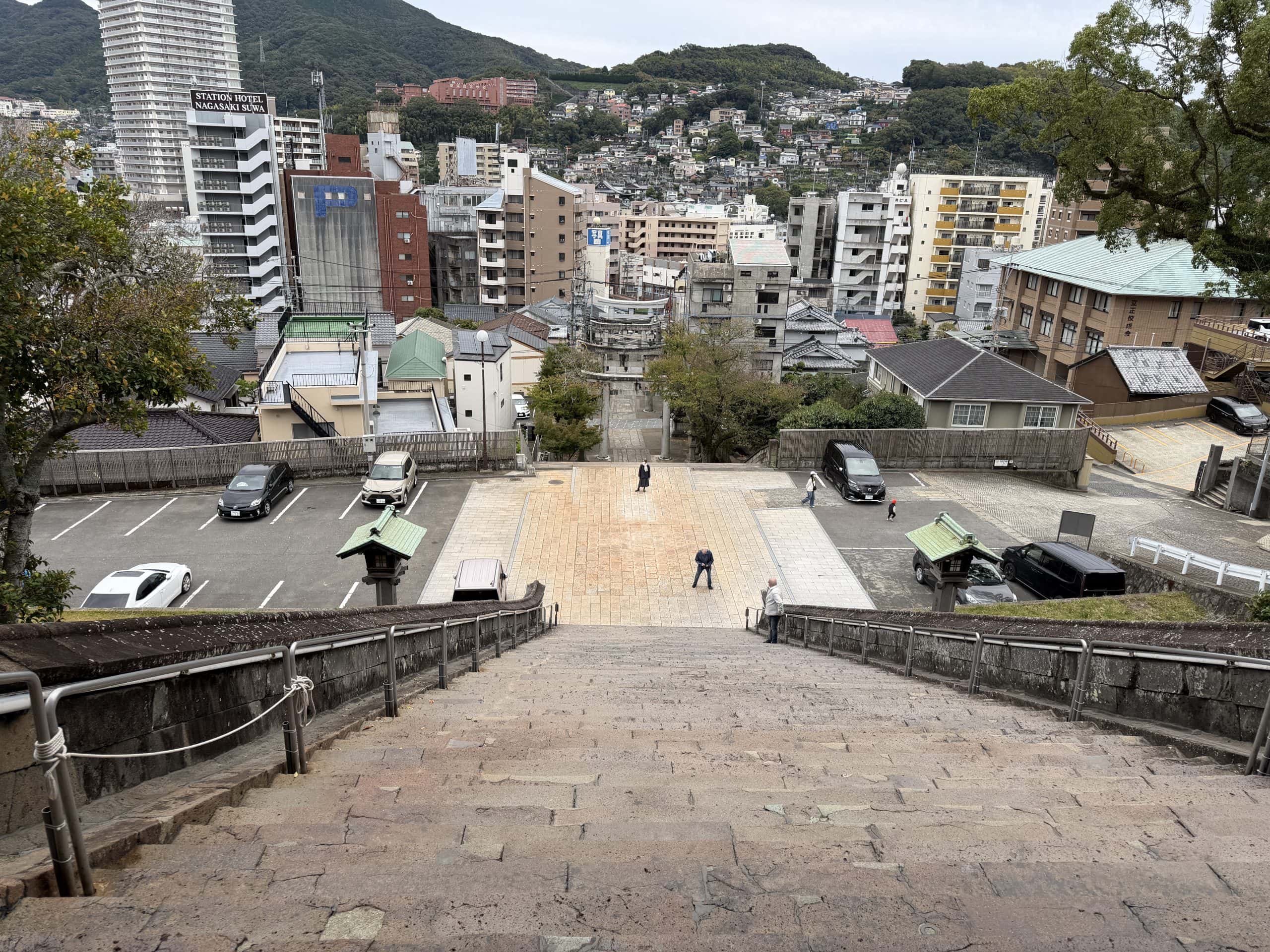
The shrine was built during a time when Christianity was being suppressed in Nagasaki, and it was intended to encourage people to return to traditional Japanese religions. Today, it remains an important cultural and historical site.
Don’t Have Time To Read This Now? Pin It For Later:
Megane Bridge
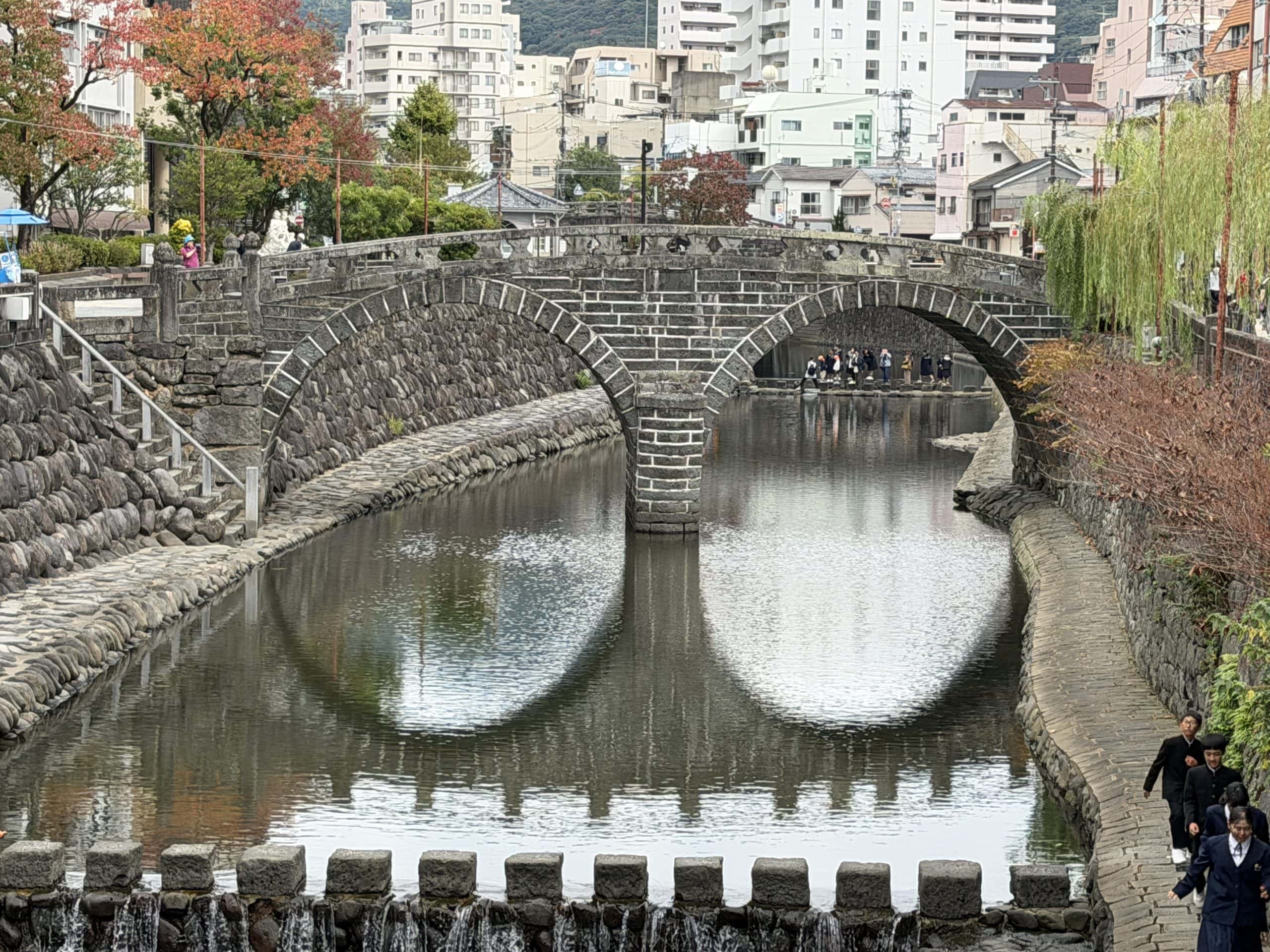
Megane Bridge, also known as the Spectacles Bridge, is the oldest stone bridge in Japan. It was built in 1634 by a Buddhist monk. The bridge crosses the Nakashima River and is known for its distinctive shape.
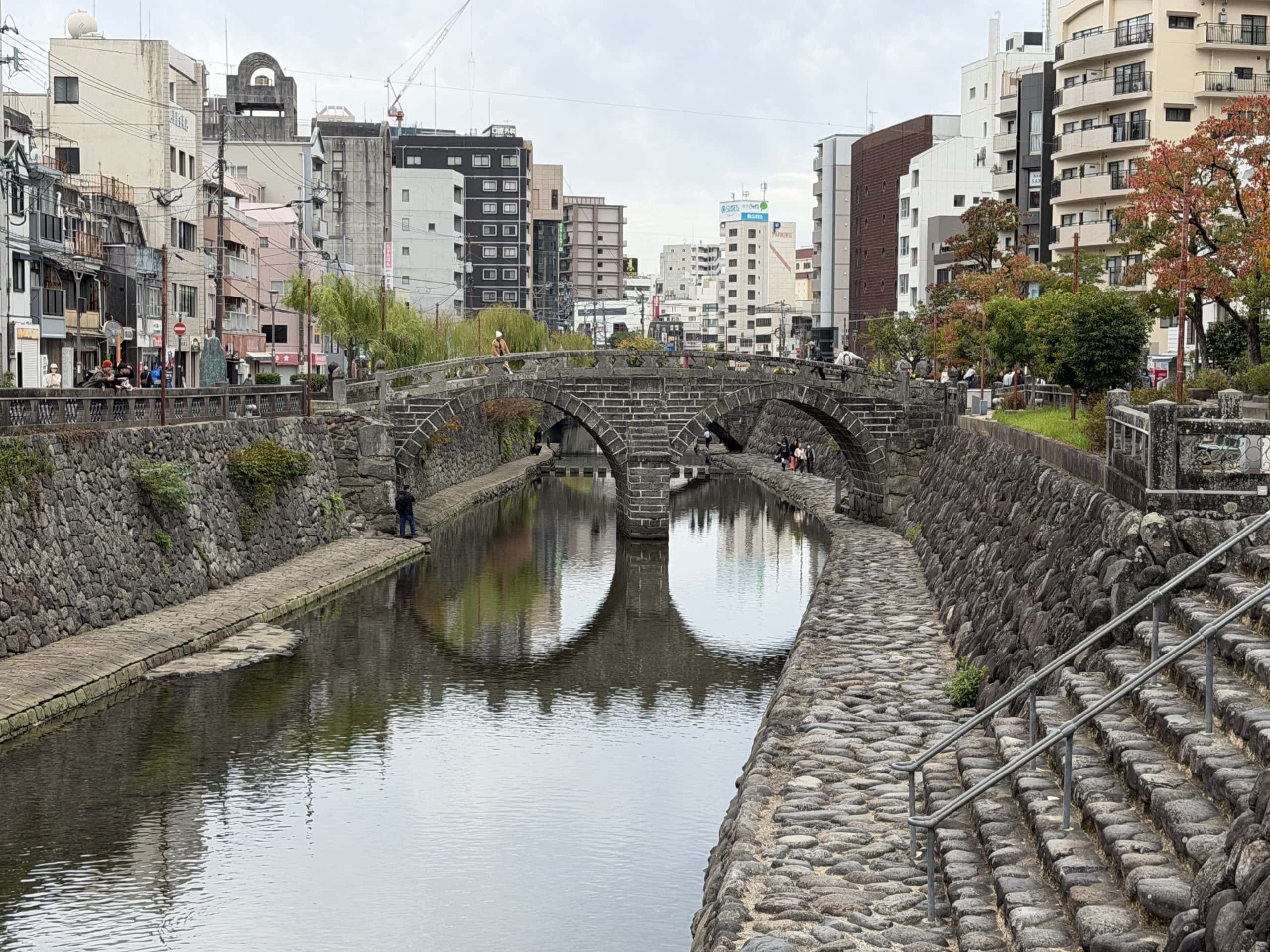
The name Megane means glasses, and it is well-suited since the arches of the bridge reflect in the water, creating the appearance of eyeglasses. It is a popular spot for photos, especially when the water is calm.
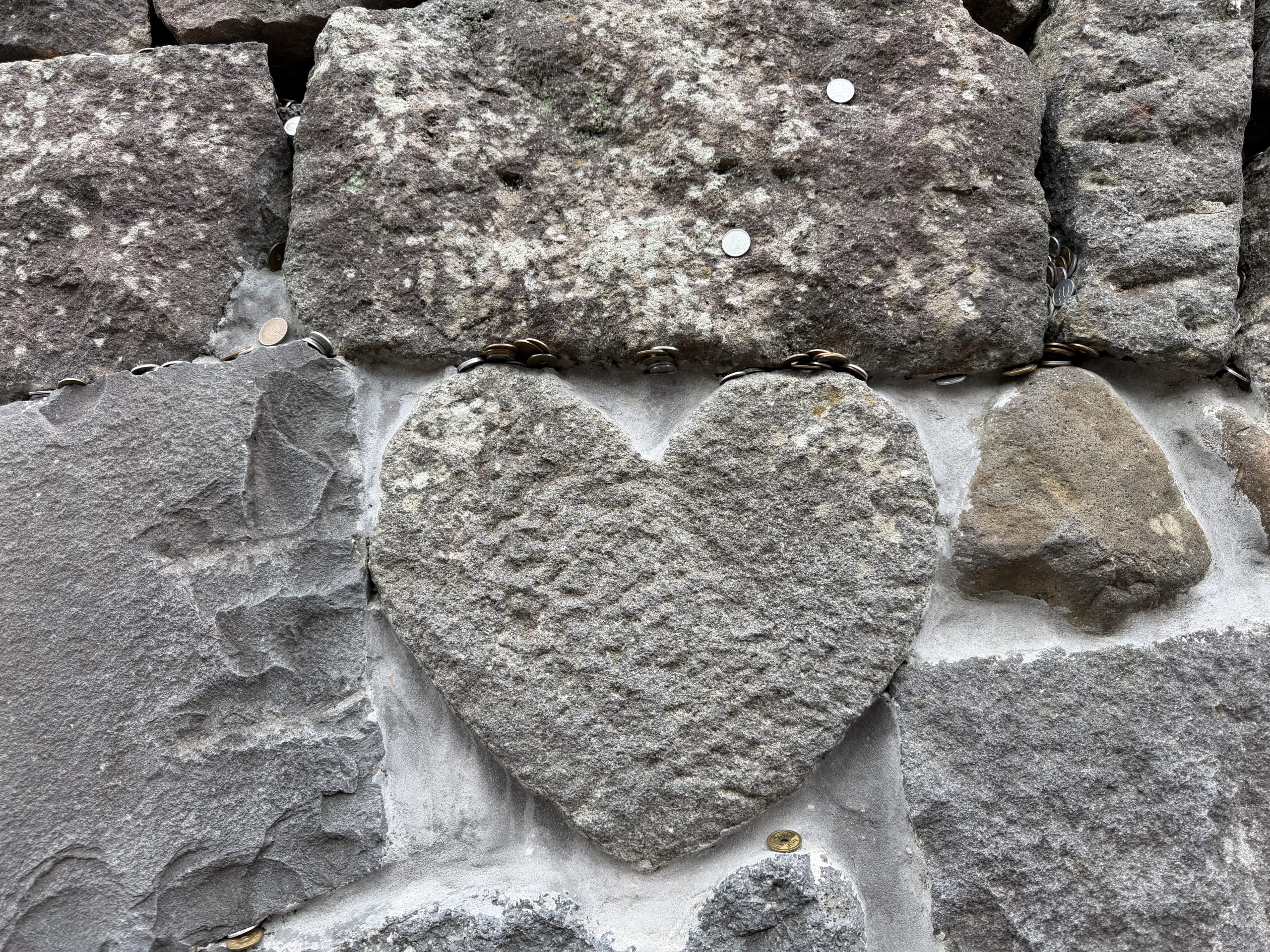
After taking all your photos from above, if you walk along the riverbank, you can look for the famous heart-shaped stone carved into the wall. It is said that finding it and making a wish will bring lasting love. We made our wish just to be safe.
Sofukuji Temple
Sofukuji Temple was built in 1629 by Chinese residents of Nagasaki. The temple reflects the influence of Chinese culture in the city.
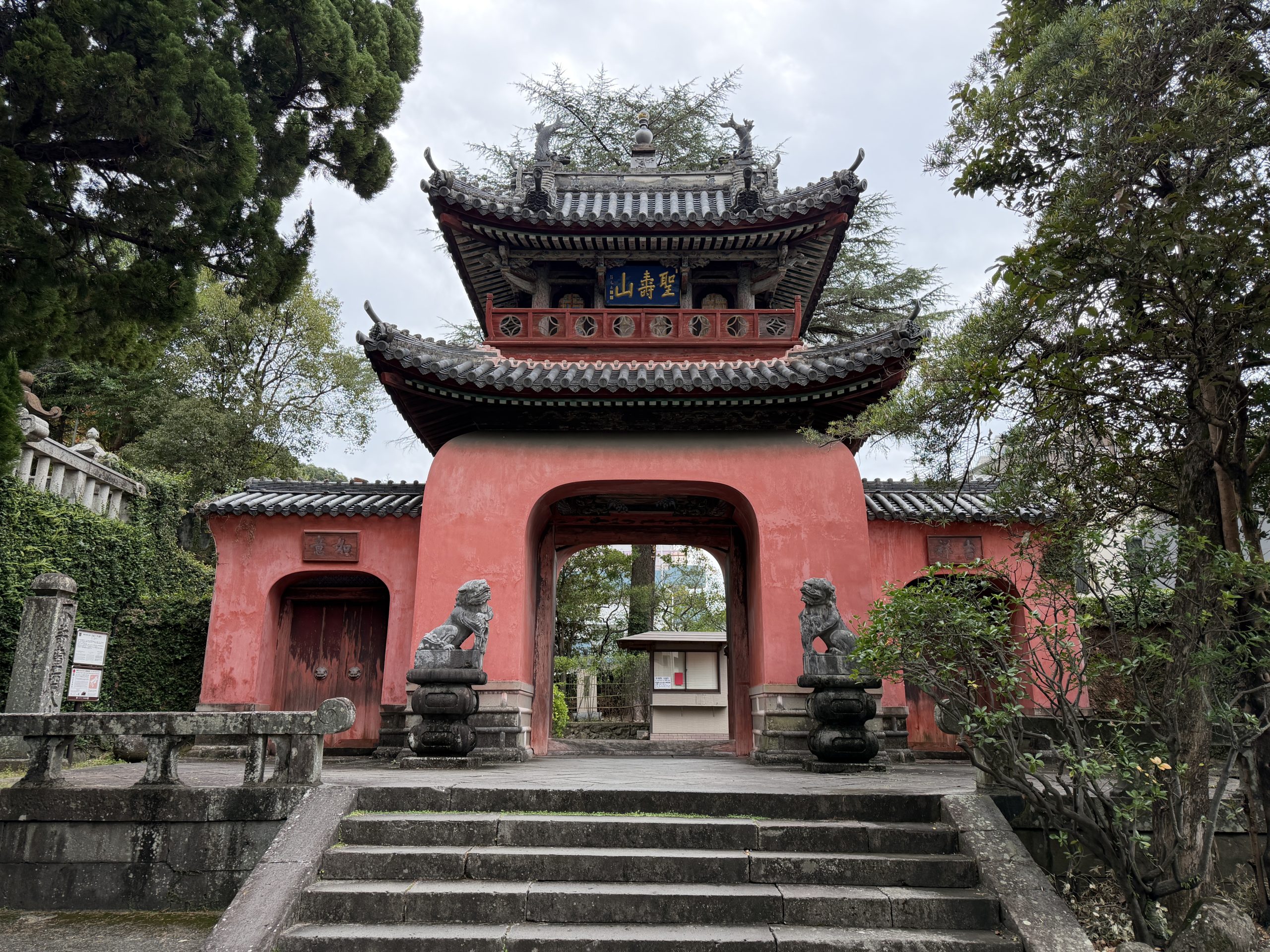
Its architecture is different from that of many other temples in Japan since the design and decorations reflect Chinese traditions.

We were impressed by the elaborate Main Hall and the number of Buddha statues around the property. And even the old cemetery was fascinating to see.
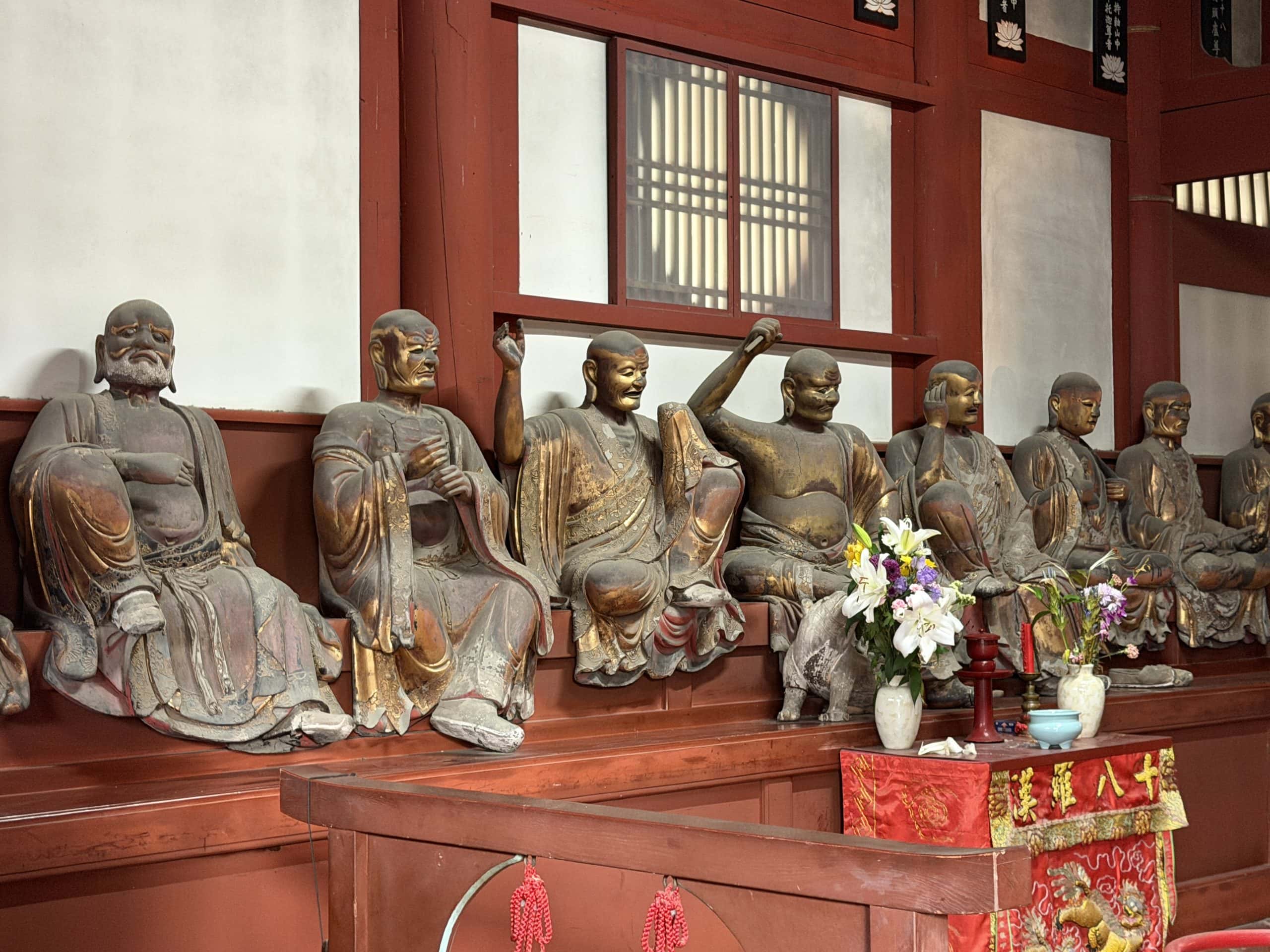
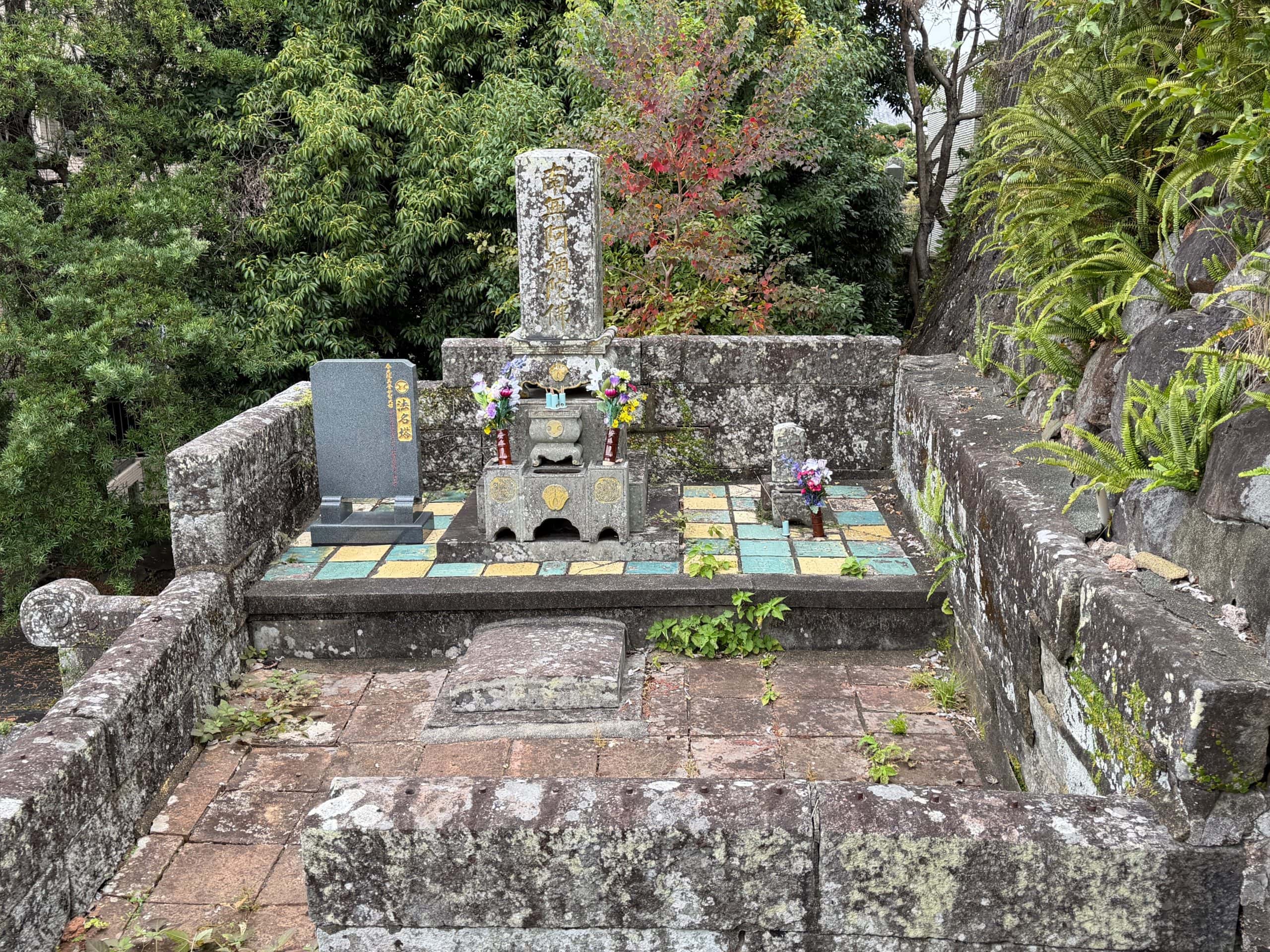
Sofukuji Temple reflects the Chinese influence in Nagasaki during its early years as an international trading center.
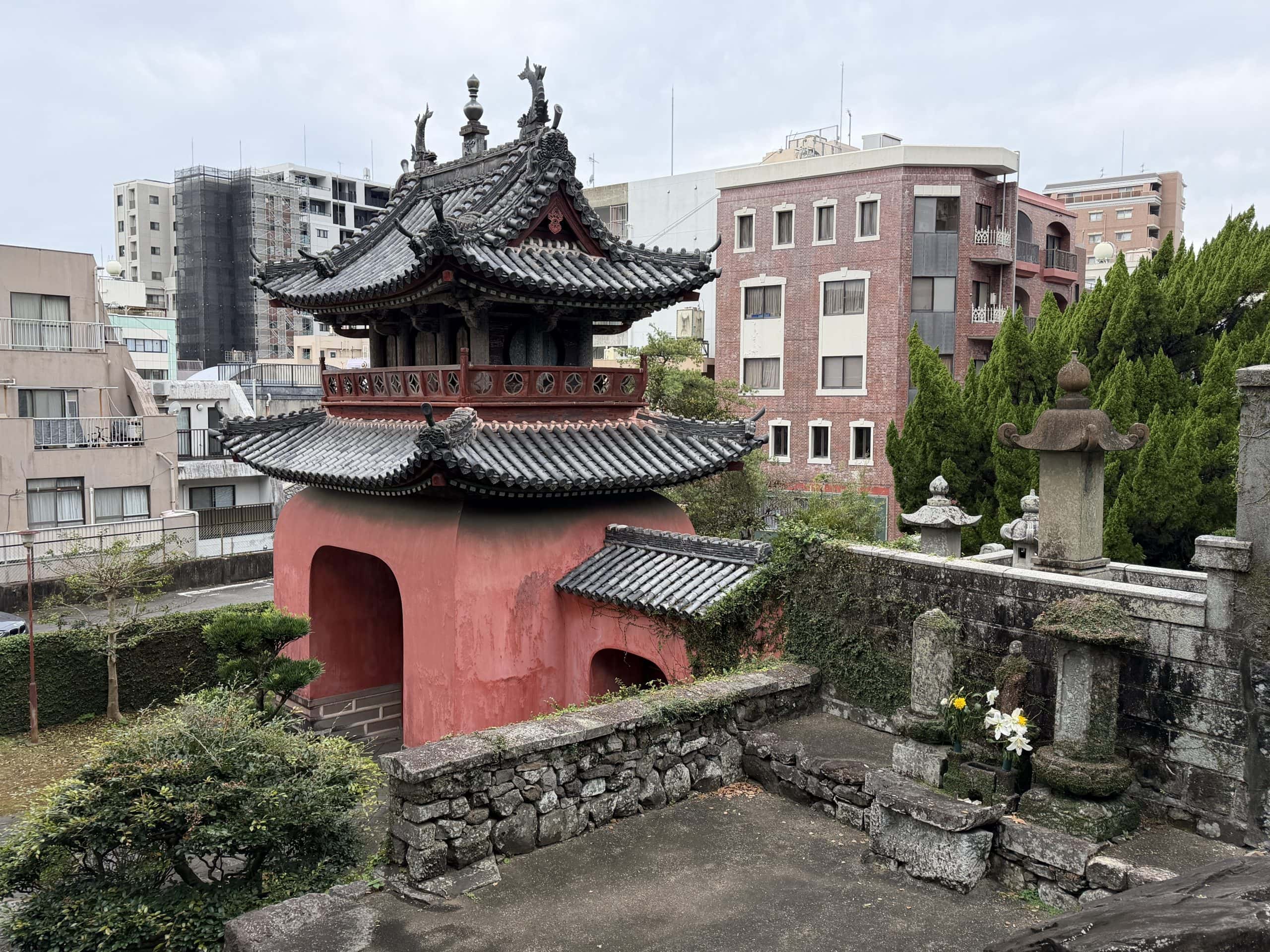
The temple is quiet and less crowded, and we think it is worth a visit.
Nagasaki Chinatown
Nagasaki’s Chinatown is another reminder of the city’s international history. This area has the longest history of any Chinatown in Japan.
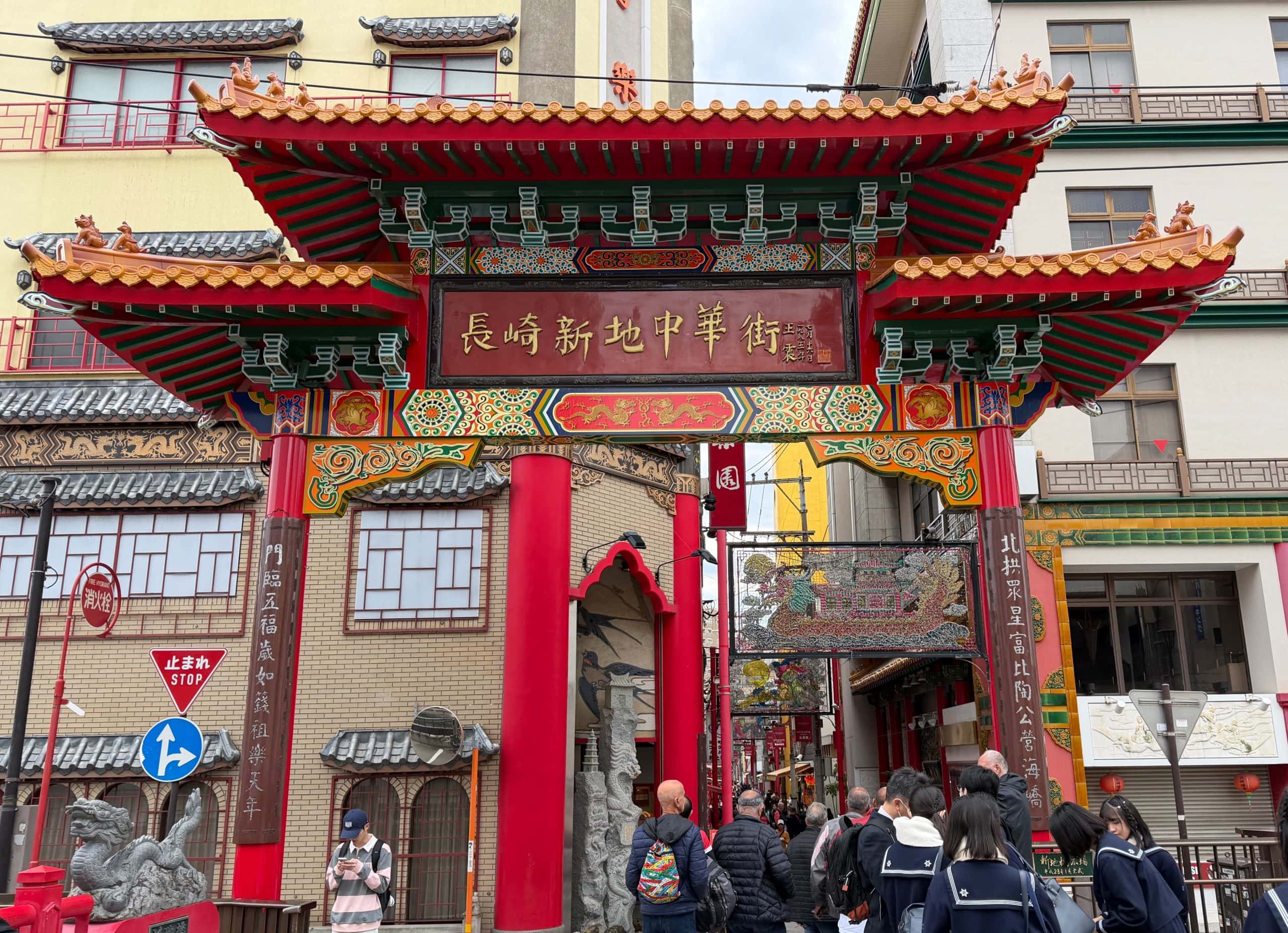
Despite its importance, it is surprisingly small, covering only about 100 metres by 150 metres. After Japan entered a period of isolation, Chinese residents moved into this area to live. Today, it combines residential streets with shops and restaurants and offers a perfect opportunity to try some local dishes from the many shops that line the streets.
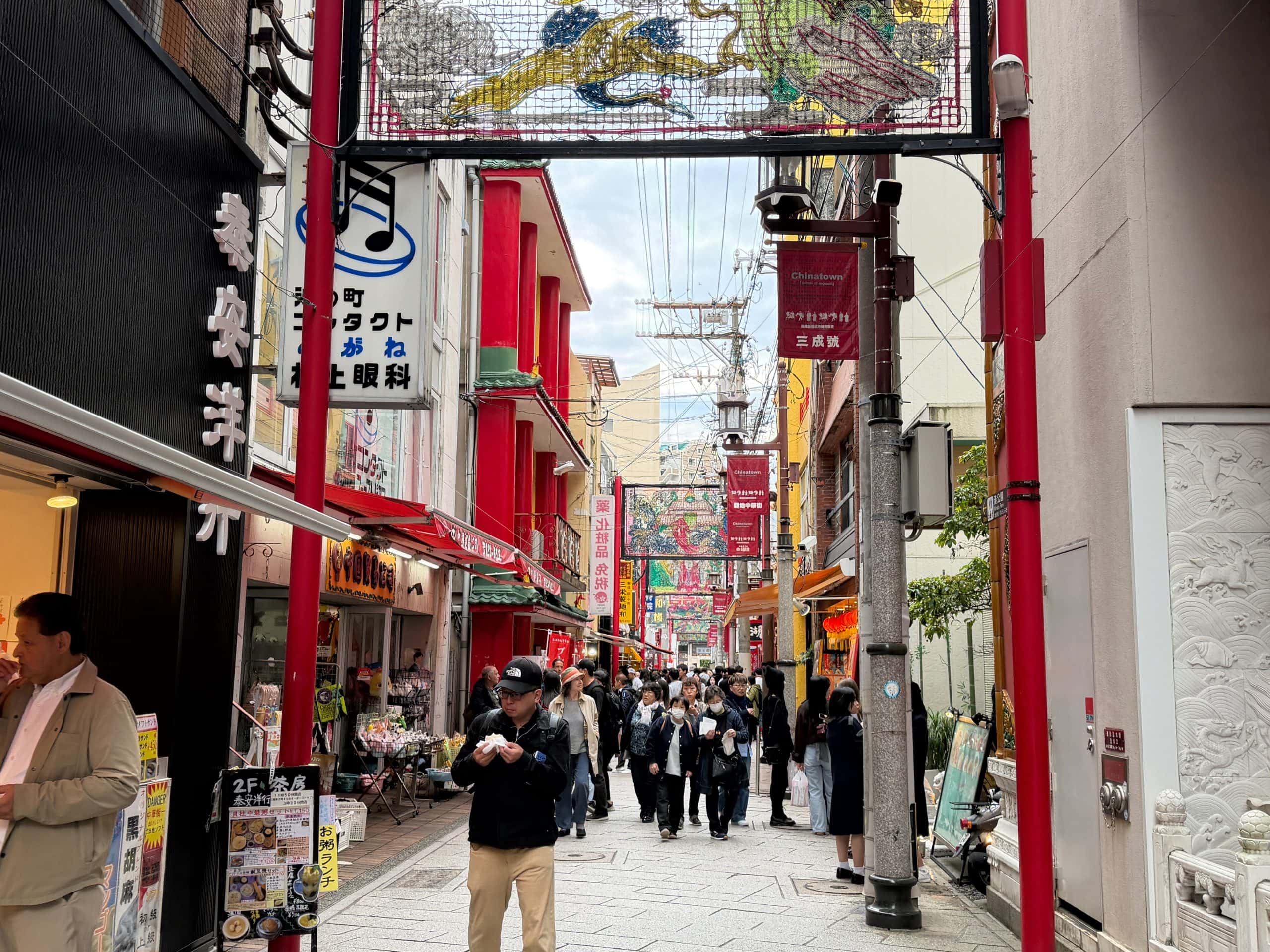
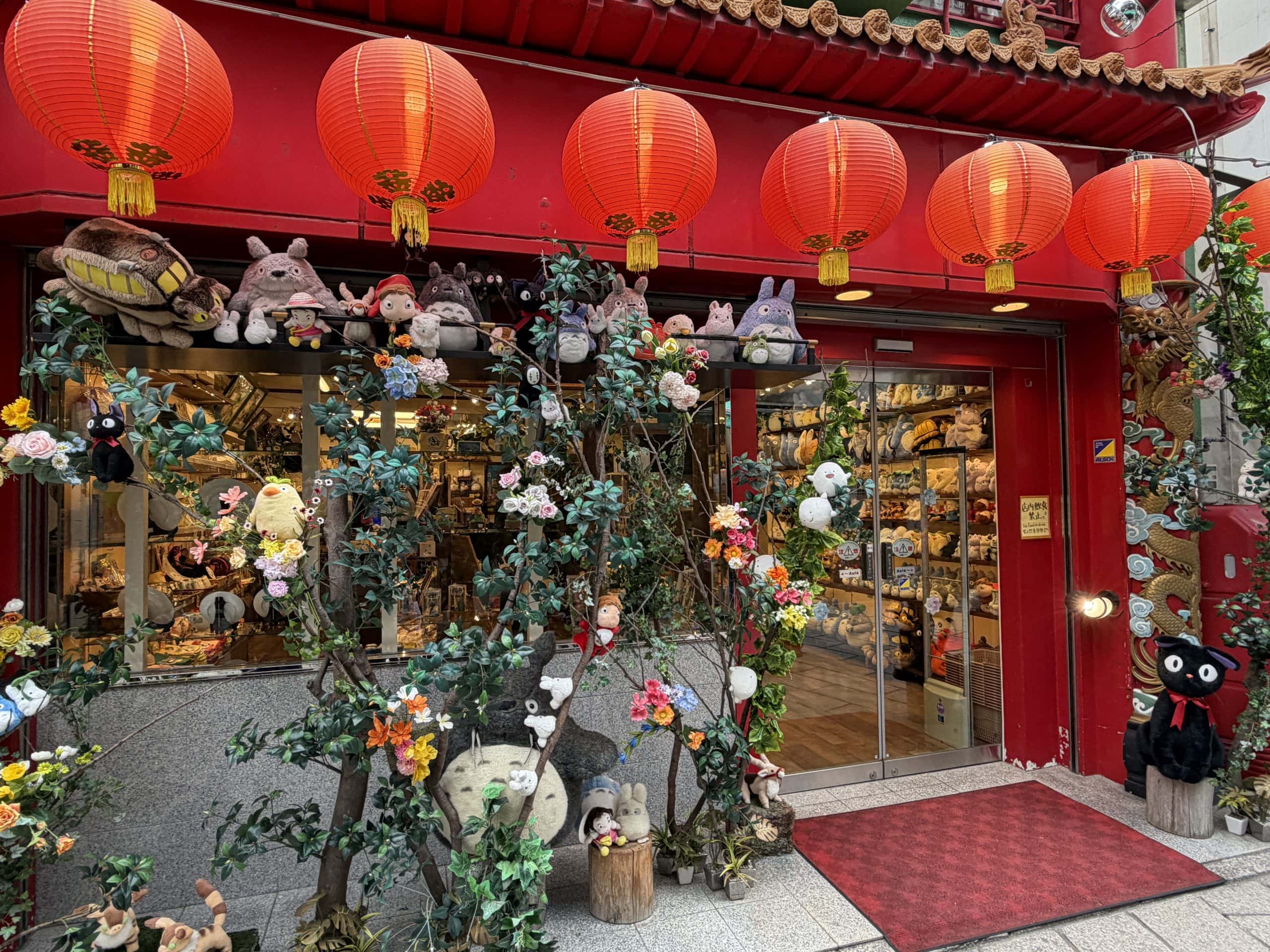
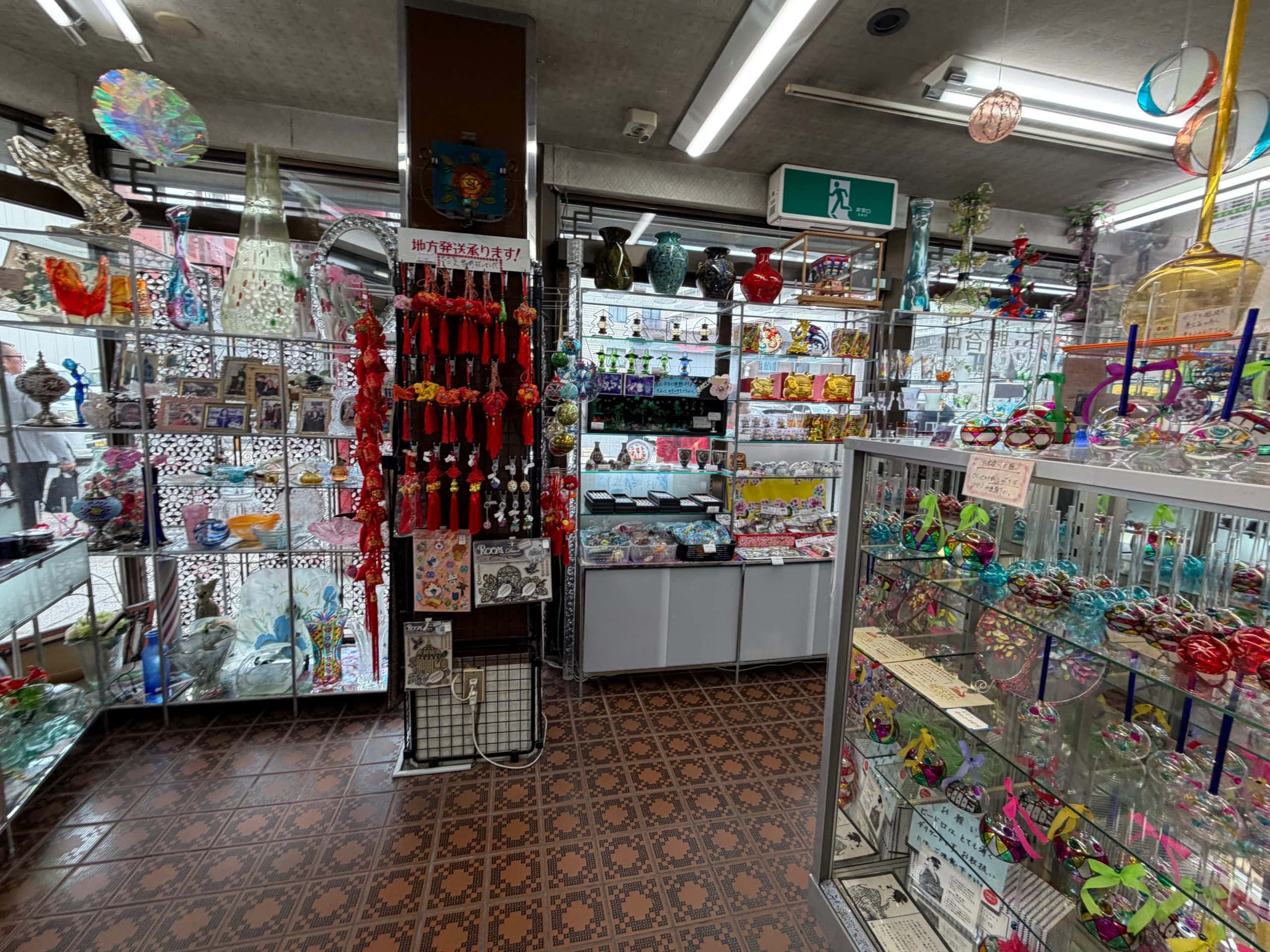
While exploring the area, we visited the oldest glass shop in Nagasaki to purchase a delicate blown glass vase called vidro.
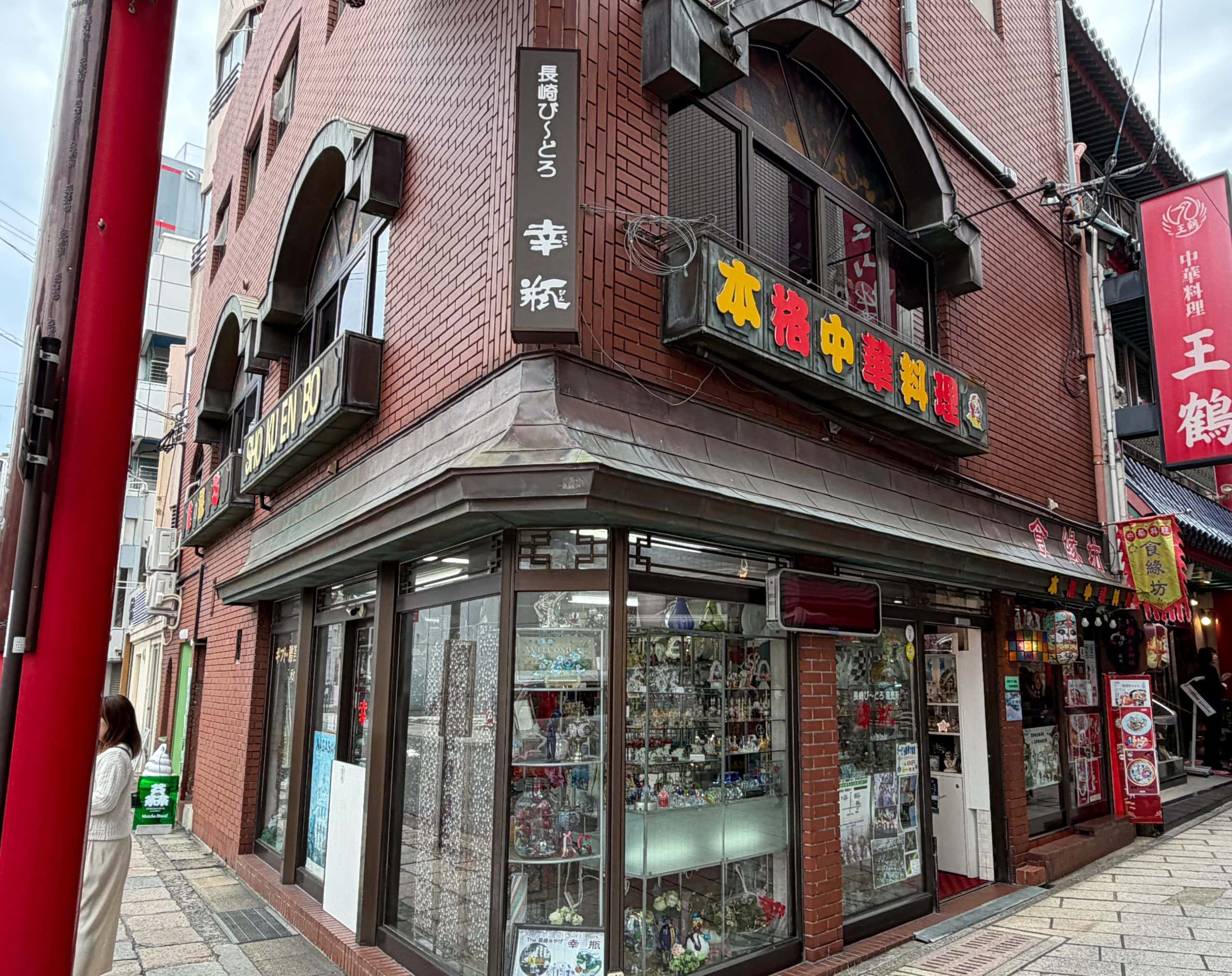
This style of glass was introduced by Portuguese traders in the 1600s. The glass is beautifully coloured, and when blown into, it makes a popping sound. It is very specific to this part of Japan, and we thought it made a lovely souvenir.
Glover Garden
Glover Garden sits high on a hill overlooking Nagasaki’s port. In the 1800s, Nagasaki was the closest port to Shanghai, which helped create a thriving tea export industry.
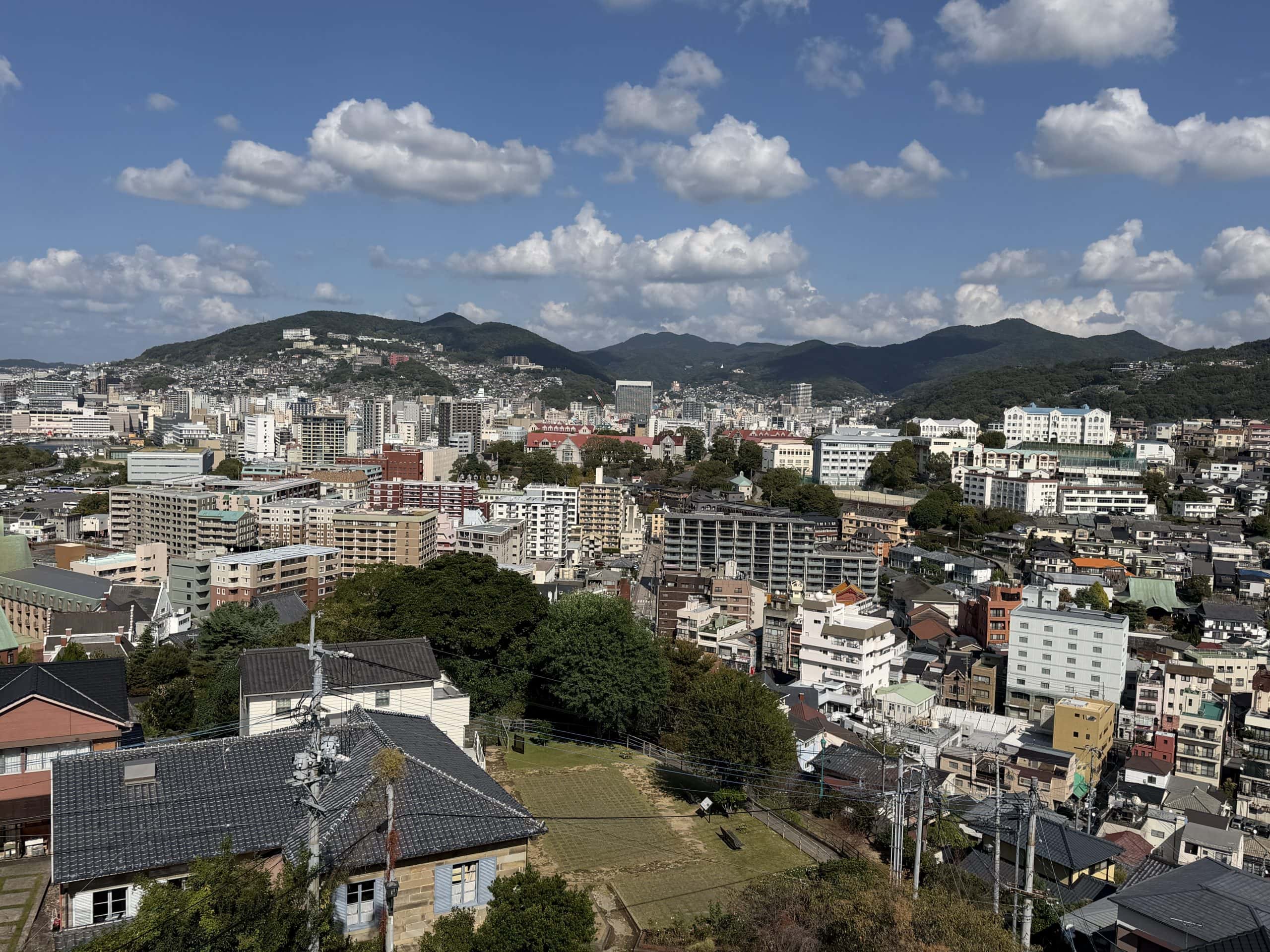
Thomas Glover built several homes in this area during that time. Today, the houses have been restored and show what life was like during the colonial period.
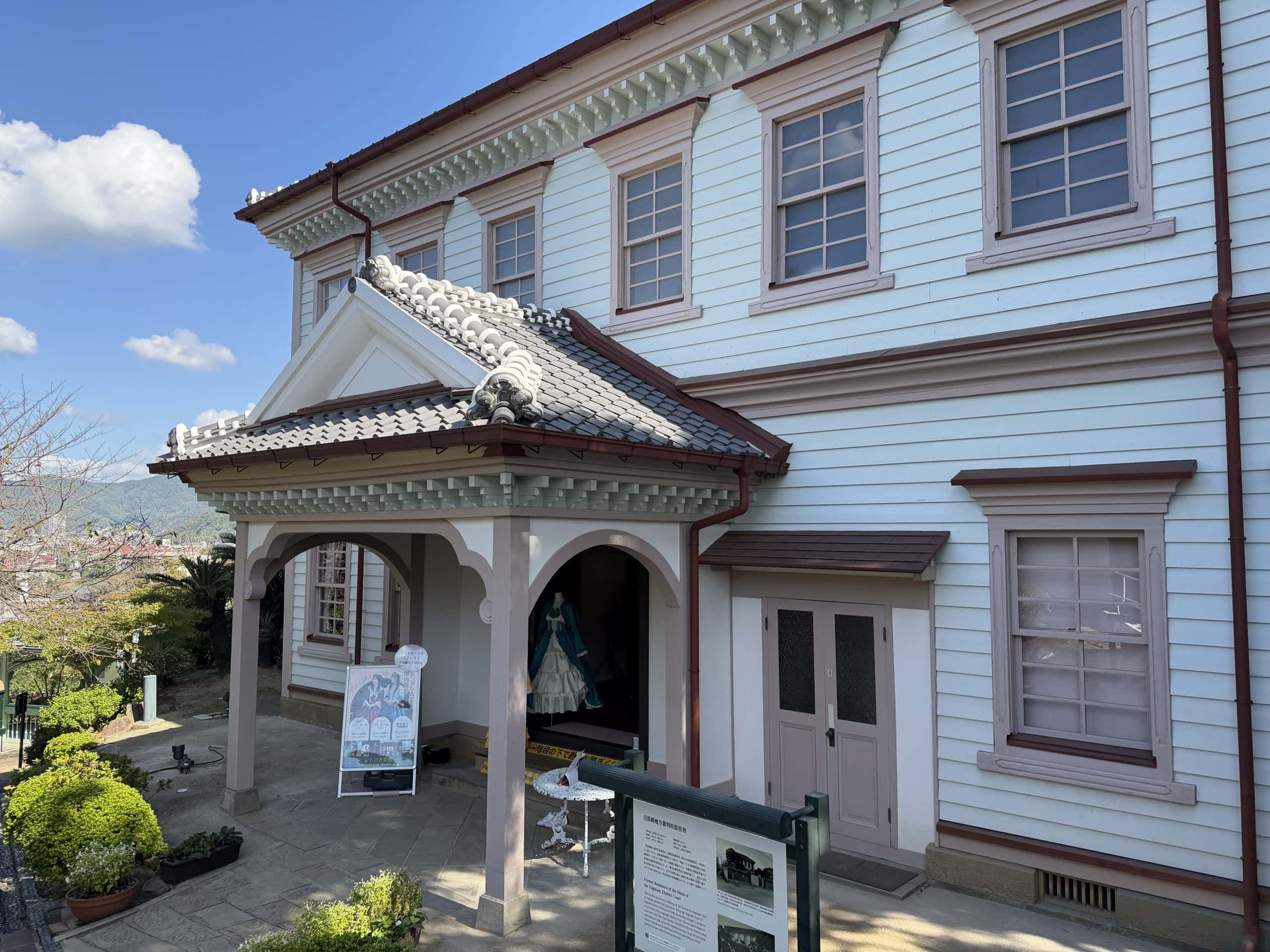

The gardens are built on a slope, and you can gradually walk downhill through the complex. The views over the port are excellent. And the gardens make for a lovely natural alternative to the city centre.
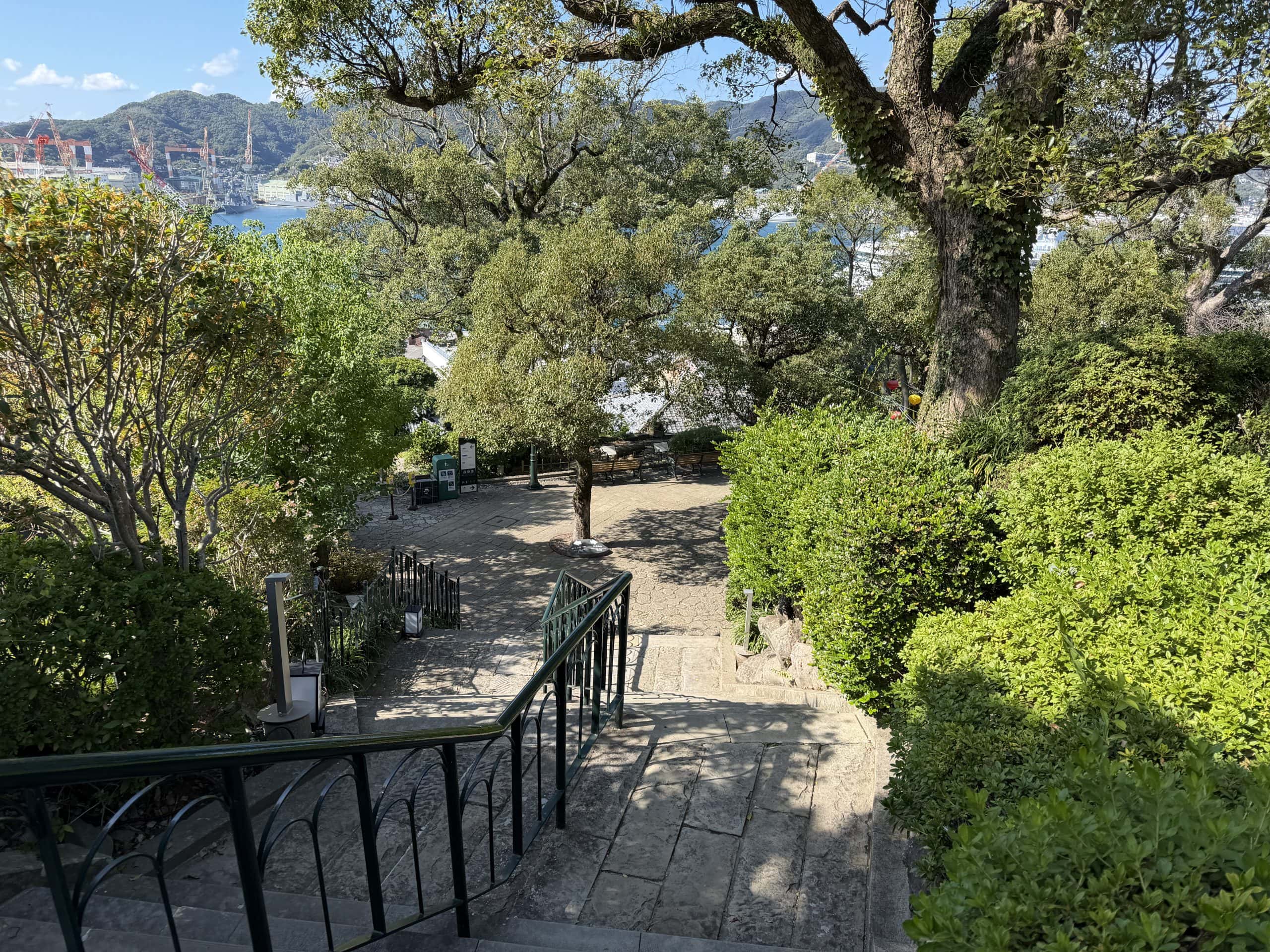
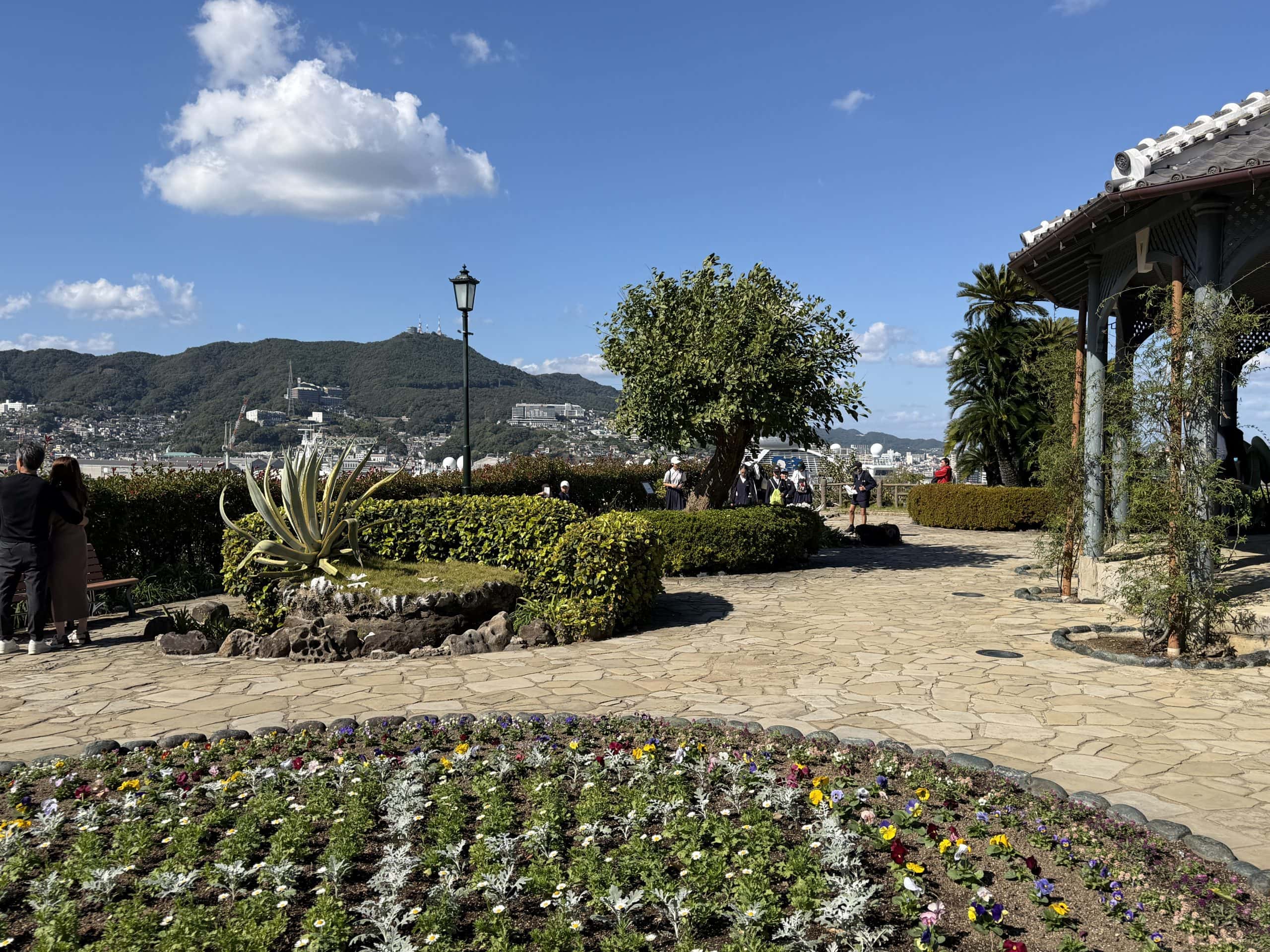
We love gardens, so this was a nice treat to see various plants and statuary among the grounds.
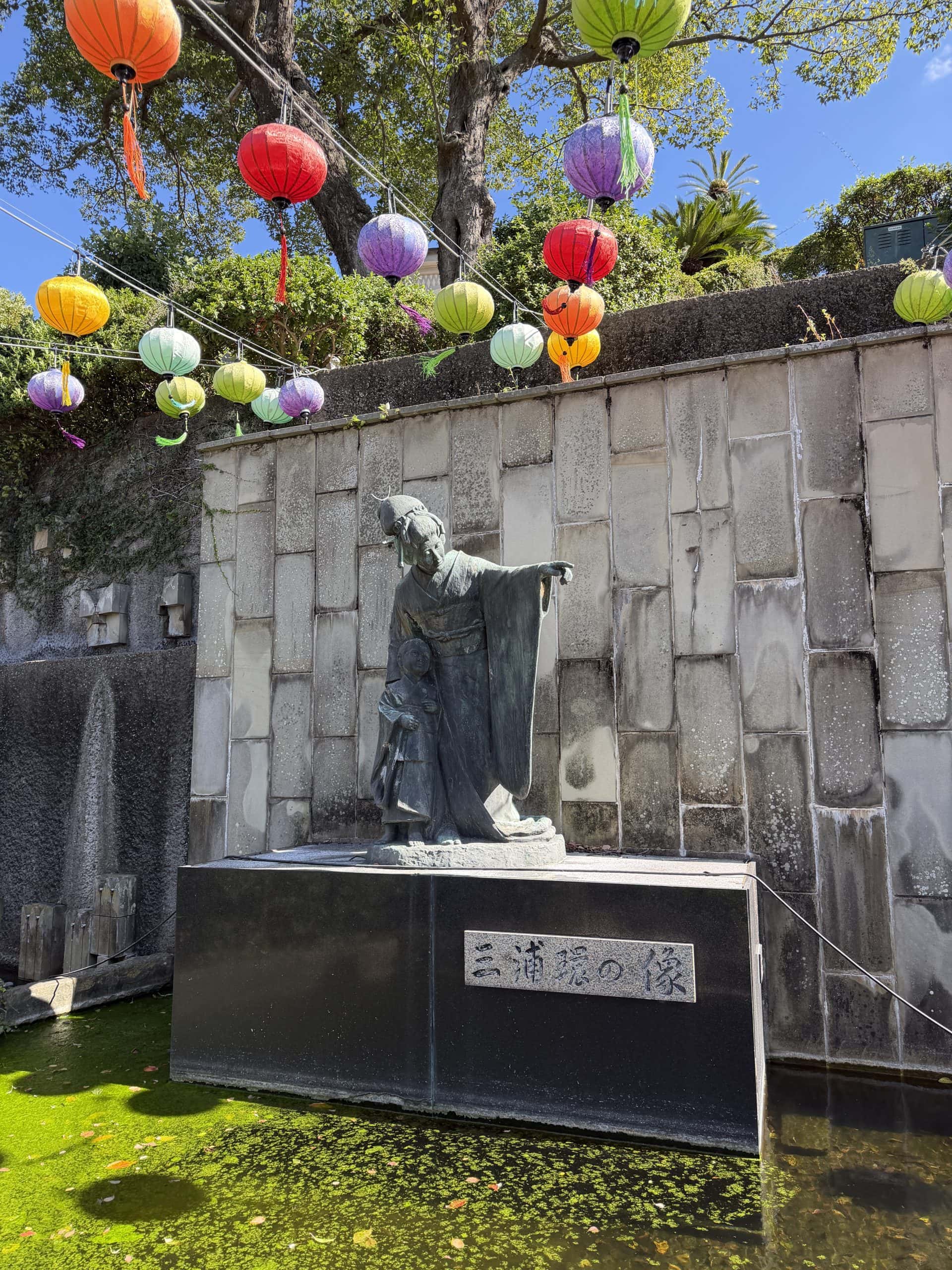
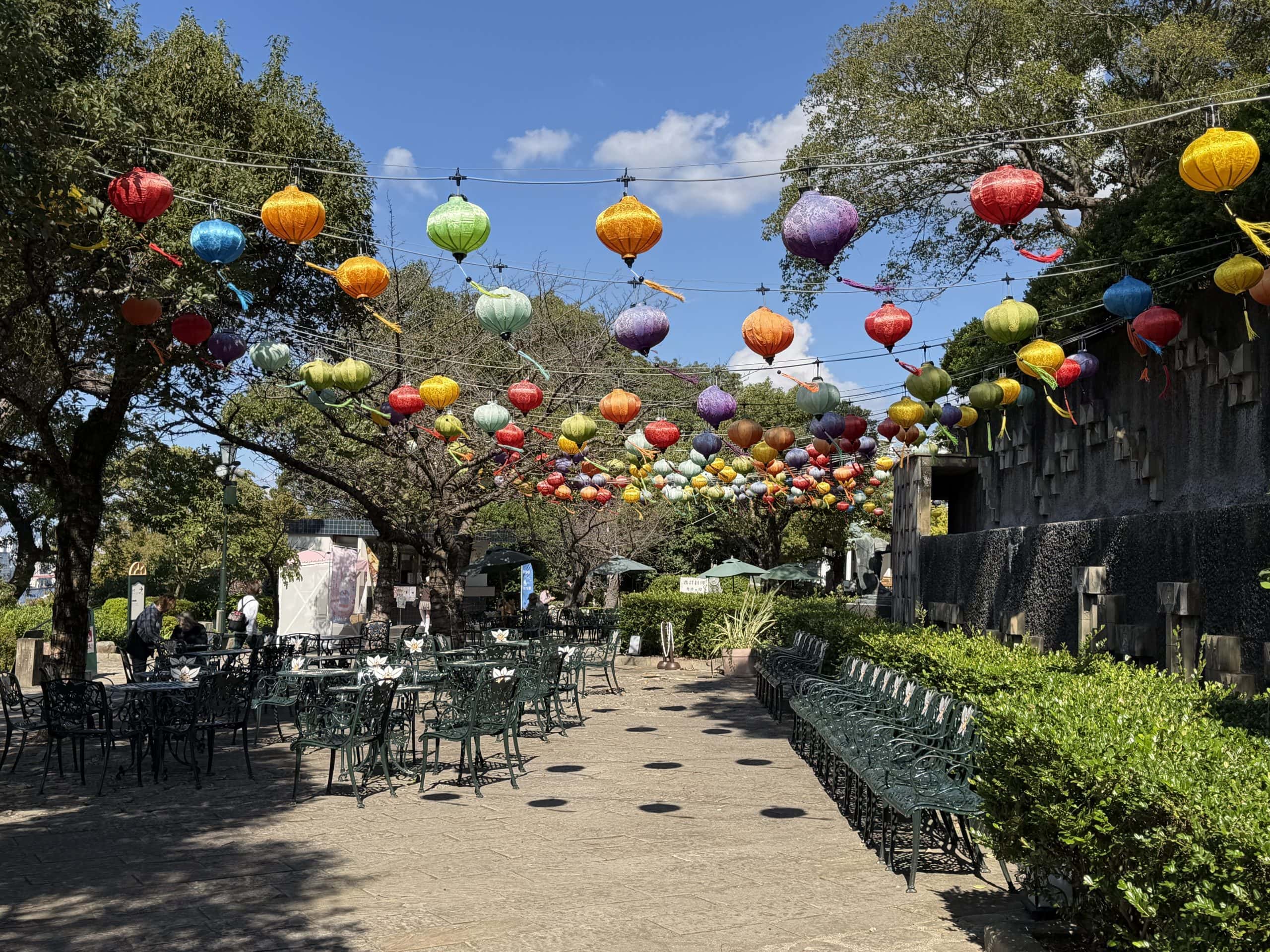
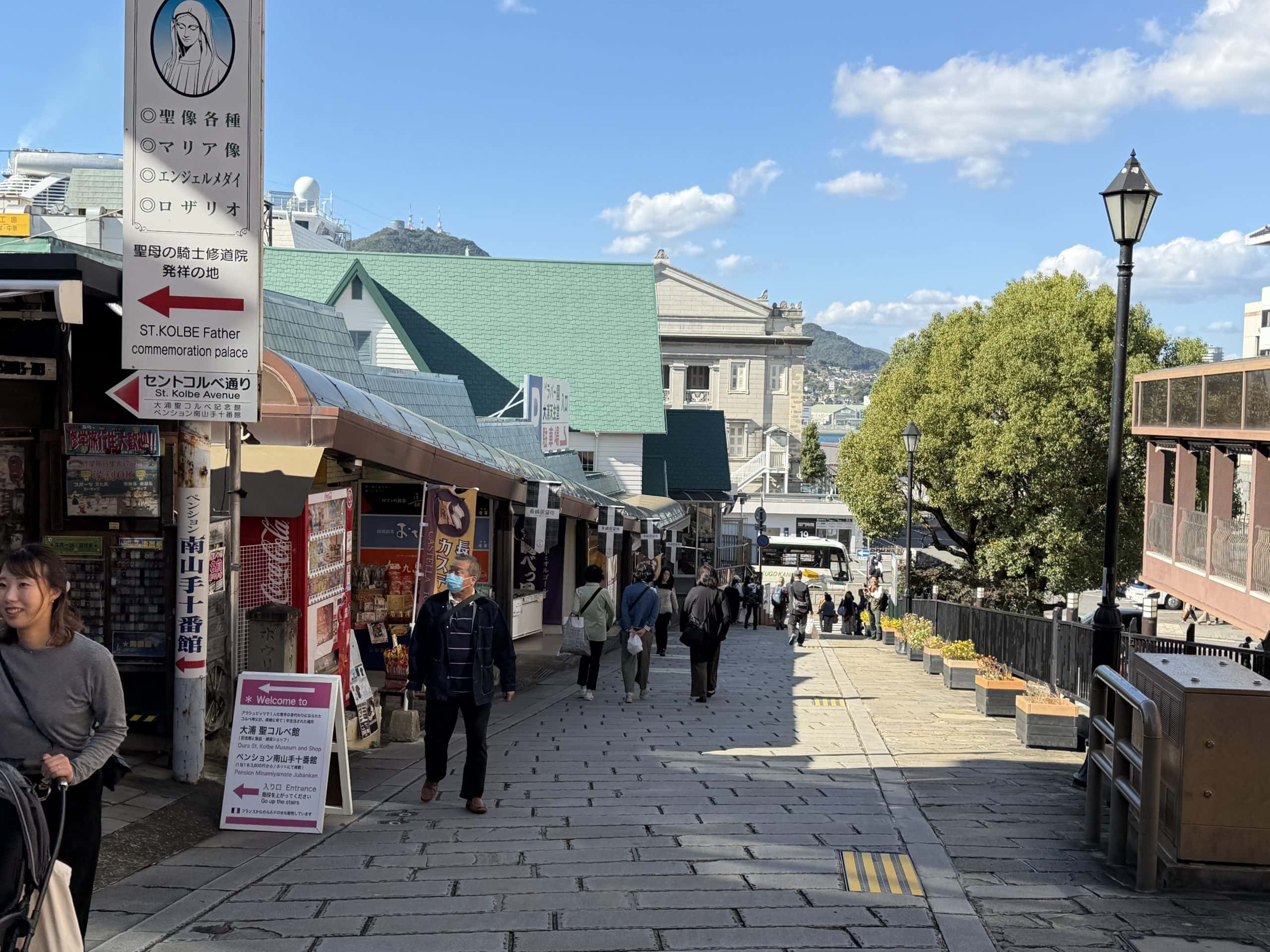
Getting there requires navigating steep streets, so taking a taxi or using the elevator entrance is helpful.
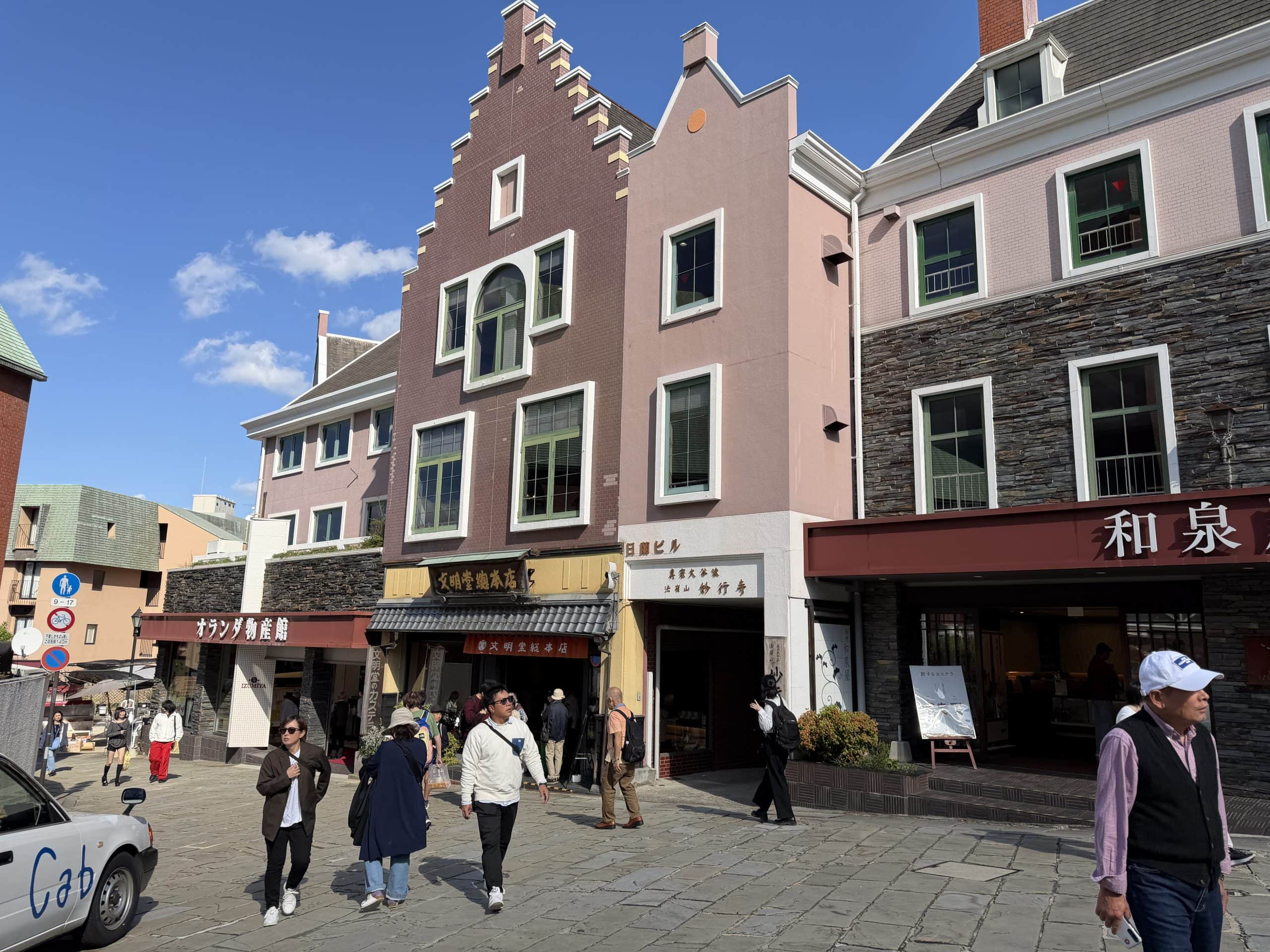
Walking down toward the port, you pass through a neighbourhood filled with shops, restaurants, and churches.
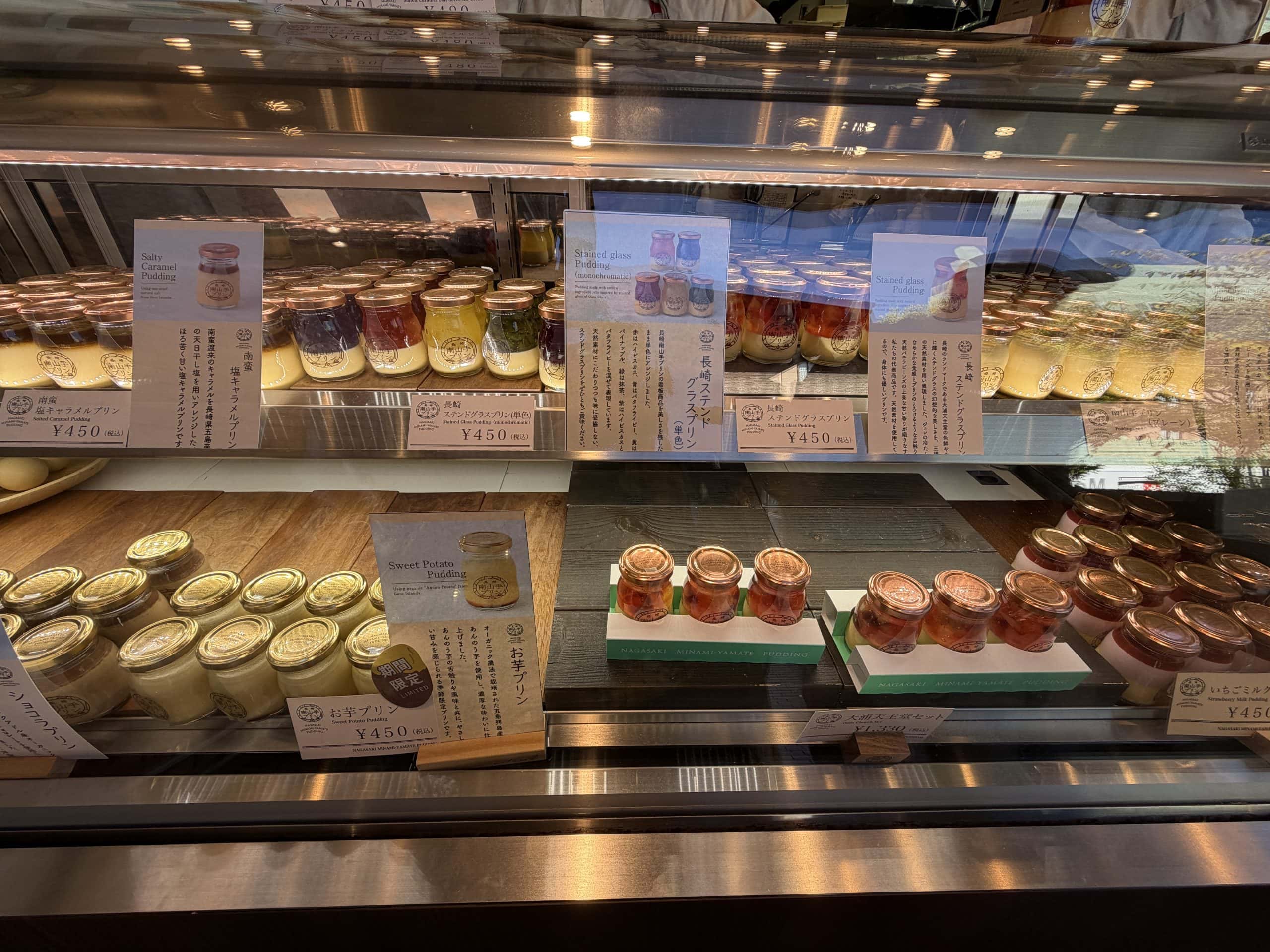
We also tried the famous Minami Yamate pudding here, which was very tasty. They have loads of different flavours, so check it out.
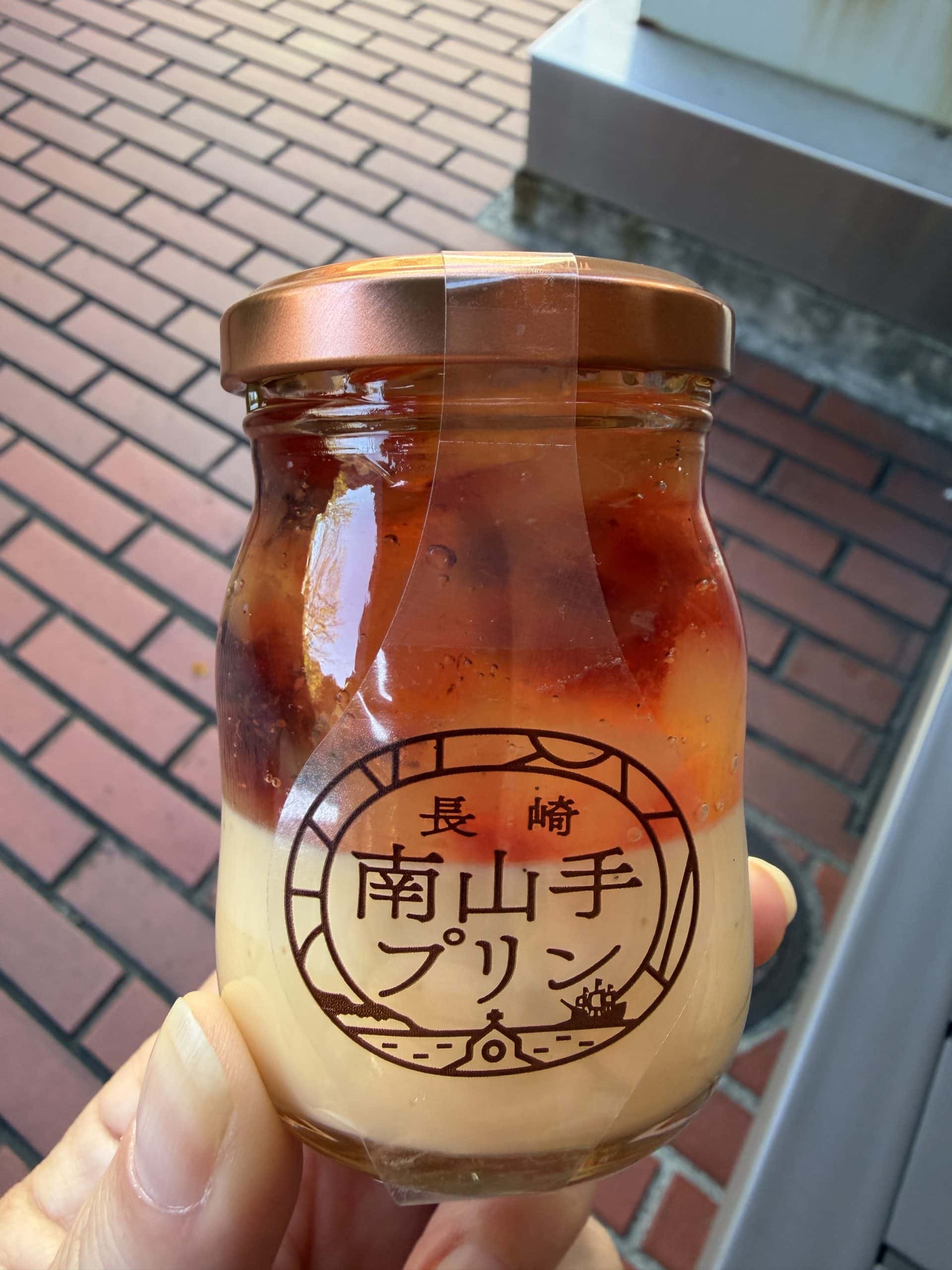
✅ If you are looking to focus more on the heritage of the city, check out this shorter tour that visits the Glover Garden and Oura Cathedral, highlighting where Japanese tradition and global history intersect.
Dejima Island
If you are looking for additional historical locations, be sure to add Dejima Island to your Nagasaki itinerary. From 1679 to 1859, it was the only place in Japan open to foreign trade during the country’s isolation.
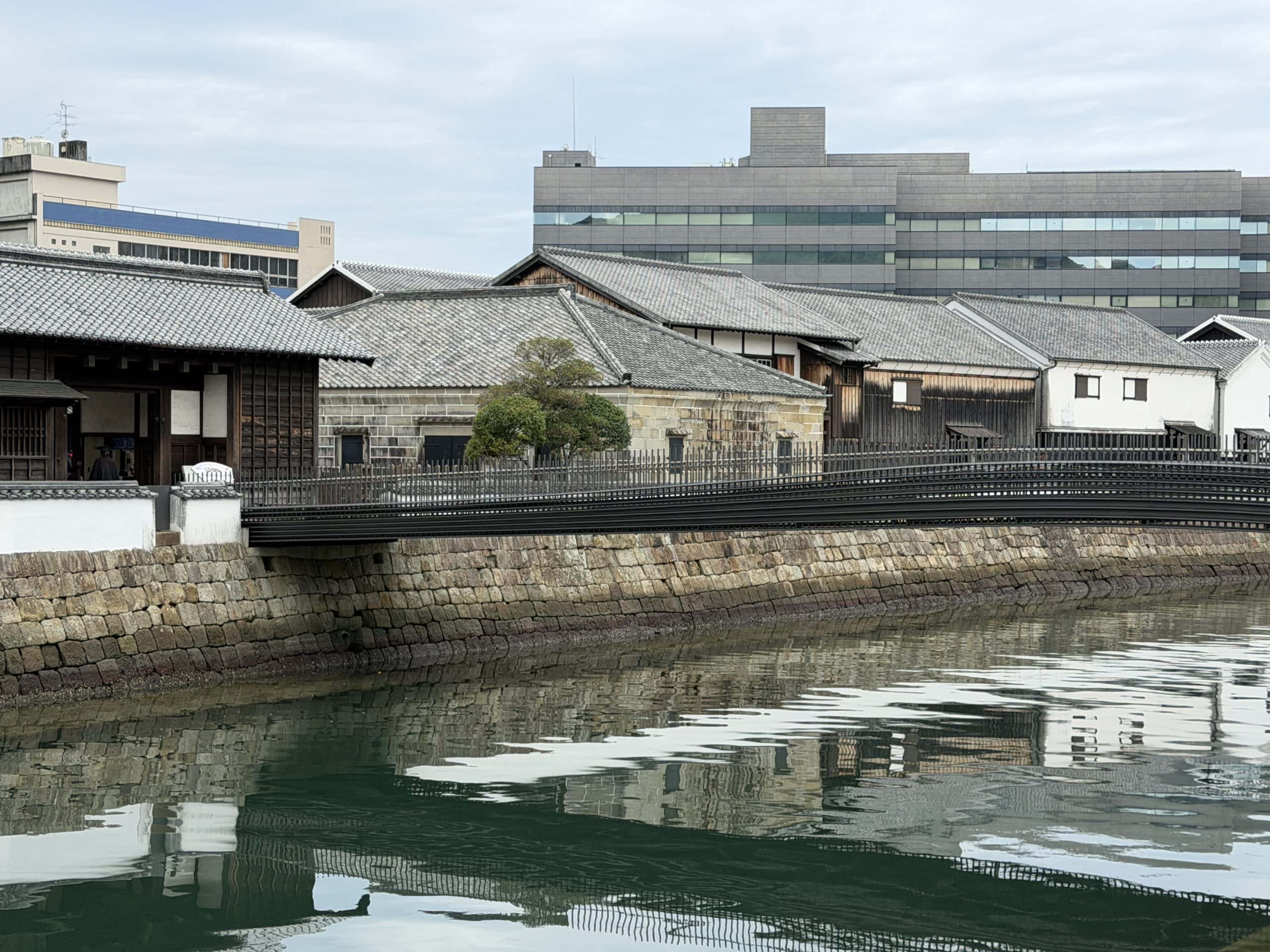
The Portuguese first occupied the island, but were later asked to leave due to their efforts to convert people to Christianity. The Dutch replaced them and became successful traders. This is the location where their factory and trading post operated from.
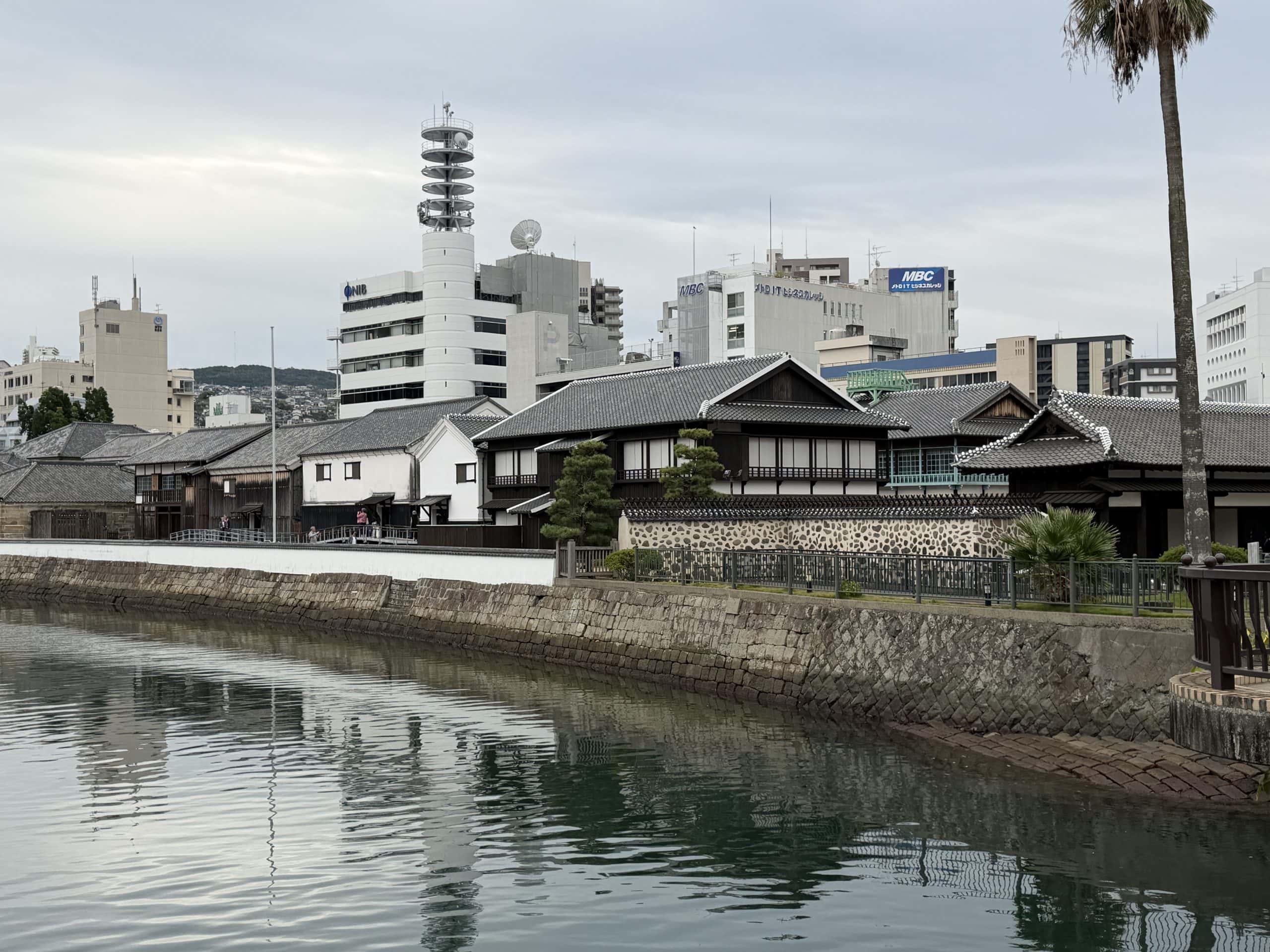
Dejima has been restored and now operates as a museum. Visitors can see buildings recreated to reflect their original appearance.
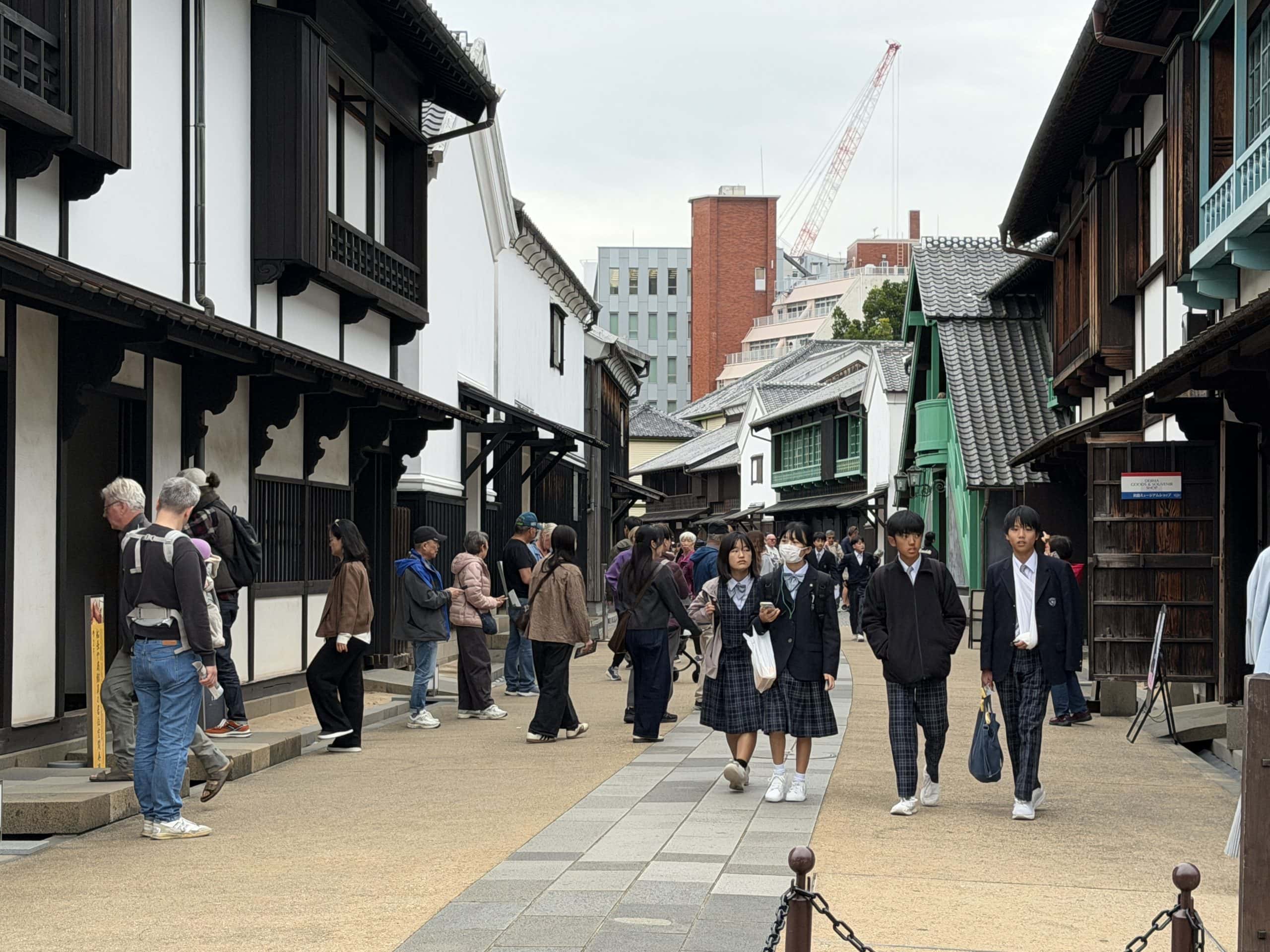
This site helps explain why Nagasaki has strong Portuguese, Dutch, and Chinese cultural influences, including its food and architecture.
FAQs: Is Nagasaki Worth Visiting?
Is Nagasaki Worth Visiting Compared To Hiroshima?
Yes. Nagasaki offers similar historical importance but has fewer crowds. It provides a more relaxed experience and equally powerful educational sites.
How Many Days Should You Spend In Nagasaki?
One to two days in Nagasaki is enough to see the main attractions. You can visit the museum, Peace Memorial Park, and historic sites comfortably.
What Is Nagasaki Best Known For?
Nagasaki is most known for the atomic bomb dropped in 1945 and its historical role as an international port city.
Is The Nagasaki Atomic Bomb Museum Worth Visiting?
Yes. It provides important historical context and helps visitors understand the devastating impact of the bombing.
Is Nagasaki Safe To Visit Today?
Yes. Nagasaki is a modern and safe city with a welcoming atmosphere.
The Final Word: Is Nagasaki Worth Visiting
Nagasaki is one of the most meaningful places we visited in Japan. It provides important historical insight and offers peaceful places to reflect. The city balances its difficult past with a strong message of peace and resilience.
While Tokyo and Kyoto show Japan’s modern and traditional culture, Nagasaki helps you understand its history. It is quieter, less crowded, and we thought, very memorable.
If you want to experience a different side of Japan, Nagasaki is absolutely worth visiting.
If you need additional resources for planning a trip to Japan, be sure to read our posts on Tokyo, Kyoto, Hiroshima, Sakaiminato and Kanazawa.