
What To See in Taipei in 2026: What We Experienced and Recommend

Taipei surprised us from the moment we arrived.
It feels modern and traditional at the same time. Skyscrapers sit near temples. Busy streets lead to quiet courtyards filled with the aroma of incense. And everywhere we went, we felt like we were learning something new about the culture.
If you are wondering what to see in Taipei, the answer is this: powerful memorials, cultural temples, an interesting art collection, vibrant food streets, and skyline views from one of Asia’s most famous towers.
We spent our time exploring the city with a local guide, which helped us understand the history and context regarding each location. Taipei is not just about checking off landmarks. It is about understanding the layers of politics, religion, migration, and identity that shaped modern Taiwan.
What You’ll Discover in Taipei
During your visit to Taipei City, you can expect to:
✅ Witness a formal Changing of the Guard ceremony
✅ See one of the largest collections of Chinese art in the world
✅ Visit temples that remain central to community life
✅ Walk through grand political memorial spaces
✅ Experience one of Asia’s most famous skyscrapers with the best view
✅ Explore vibrant food streets filled with local and international cuisine
Taipei offers culture, history, food, and architecture within an easy to navigate city. Here is exactly what we saw and what stood out most.
✅ If you are looking for a private guide and tour of Taipei, we can highly recommend this company. We saw all of the sights below, learned alot and were transported to each location in a clean and well-maintained vehicle.
National Revolutionary Martyrs’ Shrine And The Changing Of The Guard
The National Revolutionary Martyrs’ Shrine was built in 1969. The grounds are expansive and beautifully maintained, and the symmetry and the colours of the buildings are very striking. The architecture immediately reminded us of the Forbidden City in Beijing.
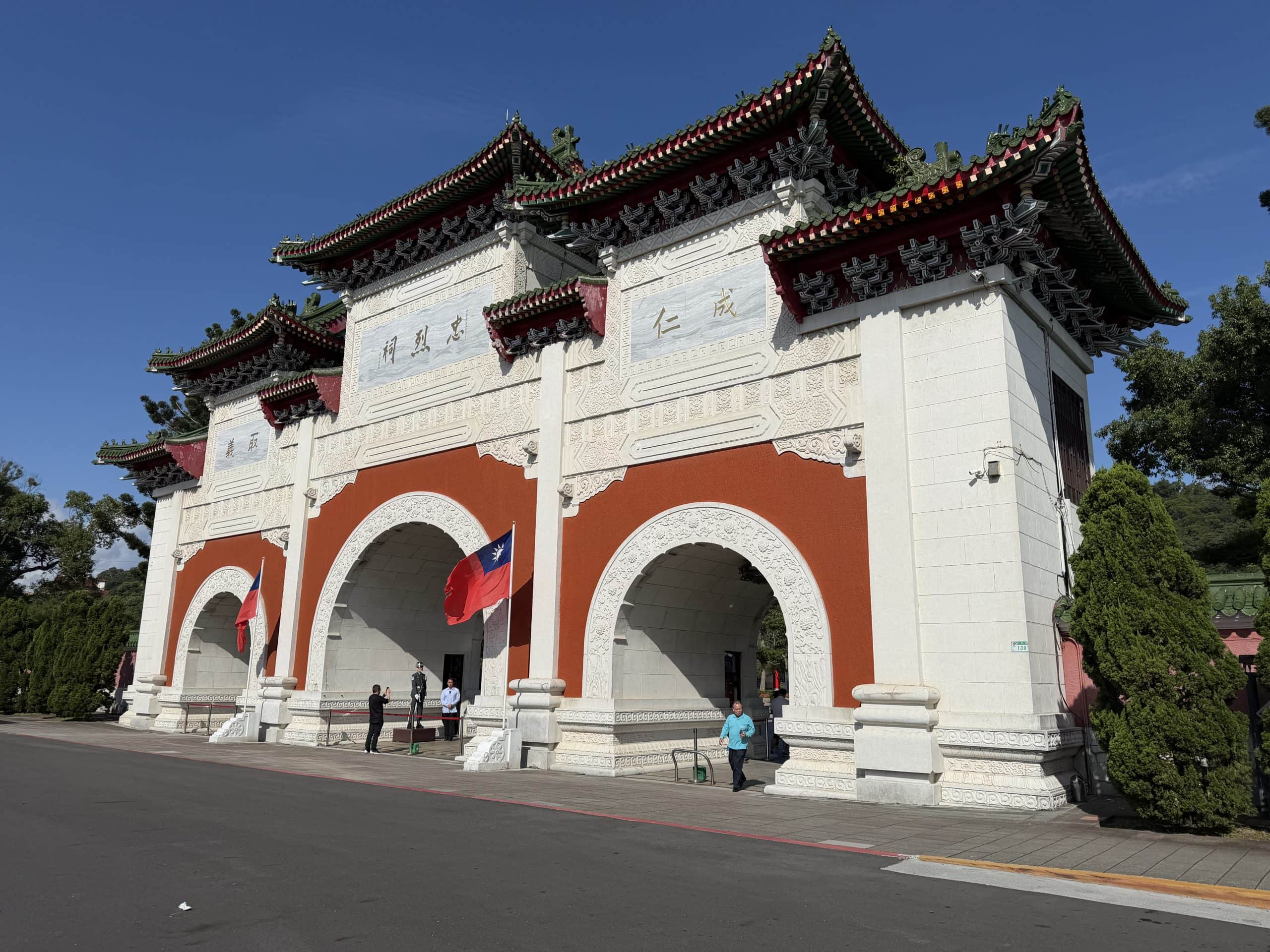

This shrine honours several hundred thousand men who died during the Sino-Japanese War and the Chinese Civil War.

We arrived just in time for the Changing of the Guard ceremony. It happens every hour on the hour, and it is worth planning your visit around it.

The military soldiers, in full uniform, march across the courtyard in perfect sync. They carry bayonets and perform several precise maneuvers and twirling of their guns before relieving the guards on duty. The discipline and timing are impressive, and it draws quite the crowd.

National Palace Museum
The National Palace Museum is enormous. It houses one of the largest collections of Chinese art in the world. In 2025, it celebrated its 100th anniversary.

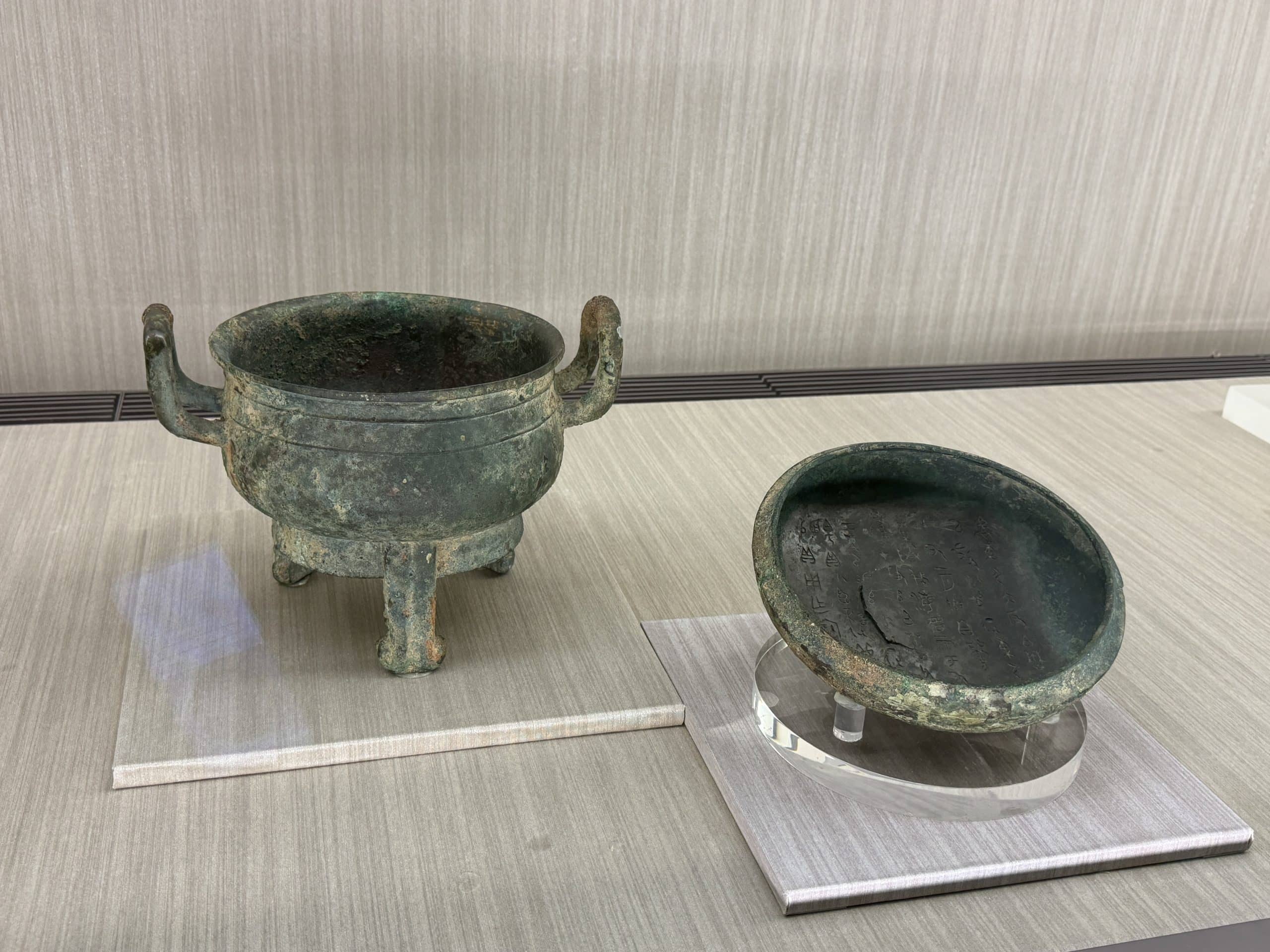
Inside are paintings, bronze statues, calligraphy, jade carvings, ceramics, furniture, books, and religious sculptures. The collection is vast.


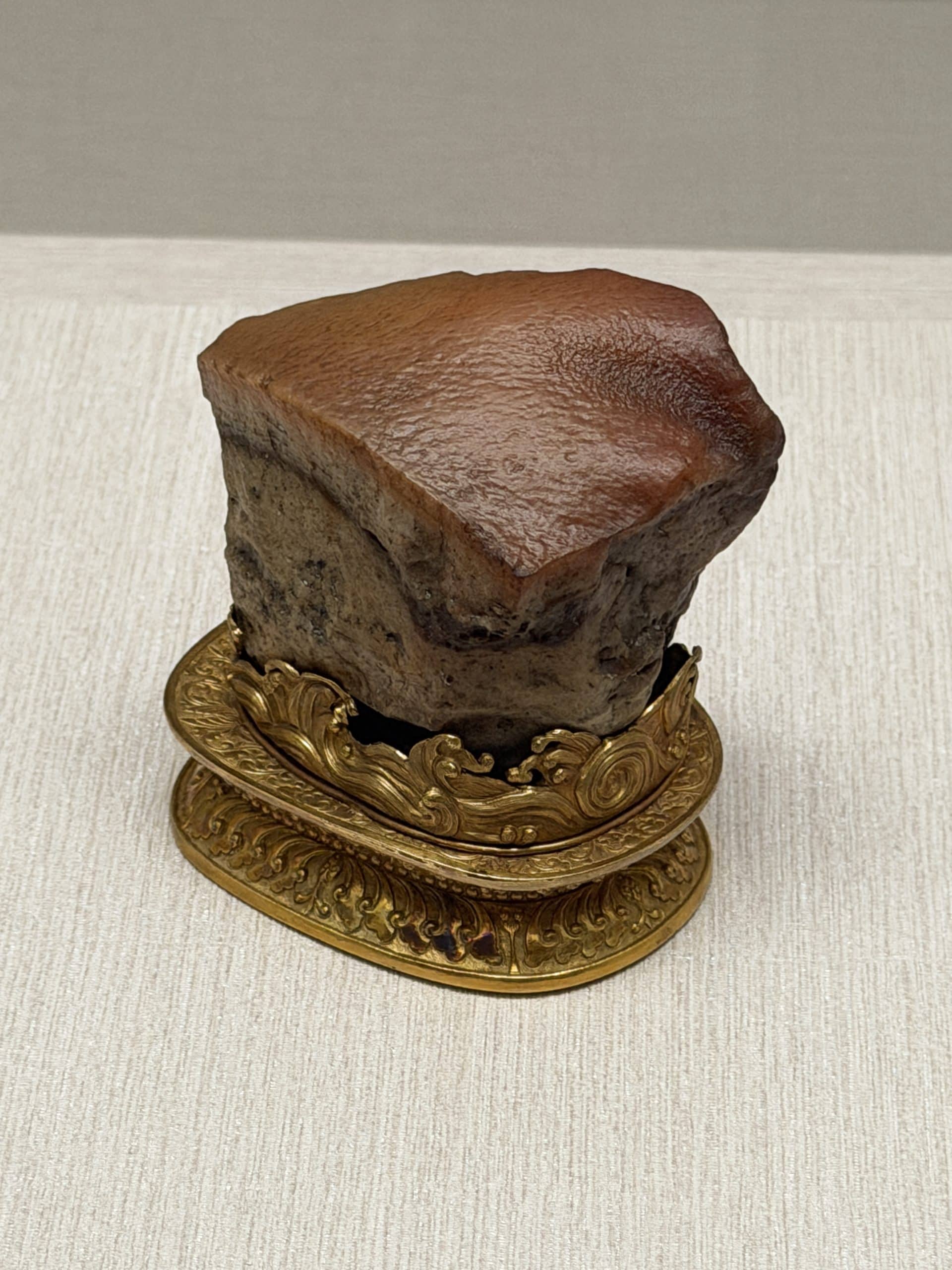
We were lucky to see the unusual but famous, meat-shaped stone. It is a carved jasper that resembles braised pork. It is unusual and surprisingly detailed. We were not quite sure what to think of it.
Another piece that amazed us was a carved ivory ball from the 19th century. It features concentric layers carved within each other. The detailing was remarkable, and we wondered exactly how the intricate carving was completed.

We began with the museum’s audio guide must-see tour. It highlighted jade pieces, pottery, and scrolls. However, we found the numbering system confusing since nothing was sequential. Eventually, we stopped trying to follow the suggested route and wandered room to room instead.


It is very busy, especially with tour groups. Plan your time carefully and focus on selected galleries rather than trying to see everything.
CHECK OUT OUR TOP TRAVEL RESOURCES
✦ Find superior accommodations on Expedia.com or Booking.com
✦ Book your rental car wth Discover Cars
The Grand Hotel
Our guide suggested a quick stop at The Grand Hotel. Built in 1952, this 14-story palace-style building with 500 rooms sits high above the city.

We stepped inside the lobby onto the lush red carpet and were impressed immediately. The ceiling is covered in detailed carvings. Massive red pillars line the hall, huge lanterns hang overhead, and flower arrangements fill the space.

It feels dramatic and historic and oozes opulence. Even if you are not staying there, it is worth walking inside to see.

✅ For a more active option, you could look at this highly rated bike tour of Taipei. This small group tour gives you some good insight into the city and allows you to visit many sights in a morning tour.
Lungshan Temple
One of the largest and most popular temples in Taipei, Lungshan Temple, dates back to 1738 and was built during the Qing dynasty. It is dedicated to Guanyin, the Goddess of Mercy, who is the guardian of the sea.

Over the centuries, it was damaged by storms, earthquakes, and termites. In 1945, it was bombed by mistake, and the main hall was destroyed. Remarkably, the statue of Guanyin survived. The temple was rebuilt to its original design, and it is worth noting that the fish pond is one of the original components. The entire complex was listed as a National Historic Site.

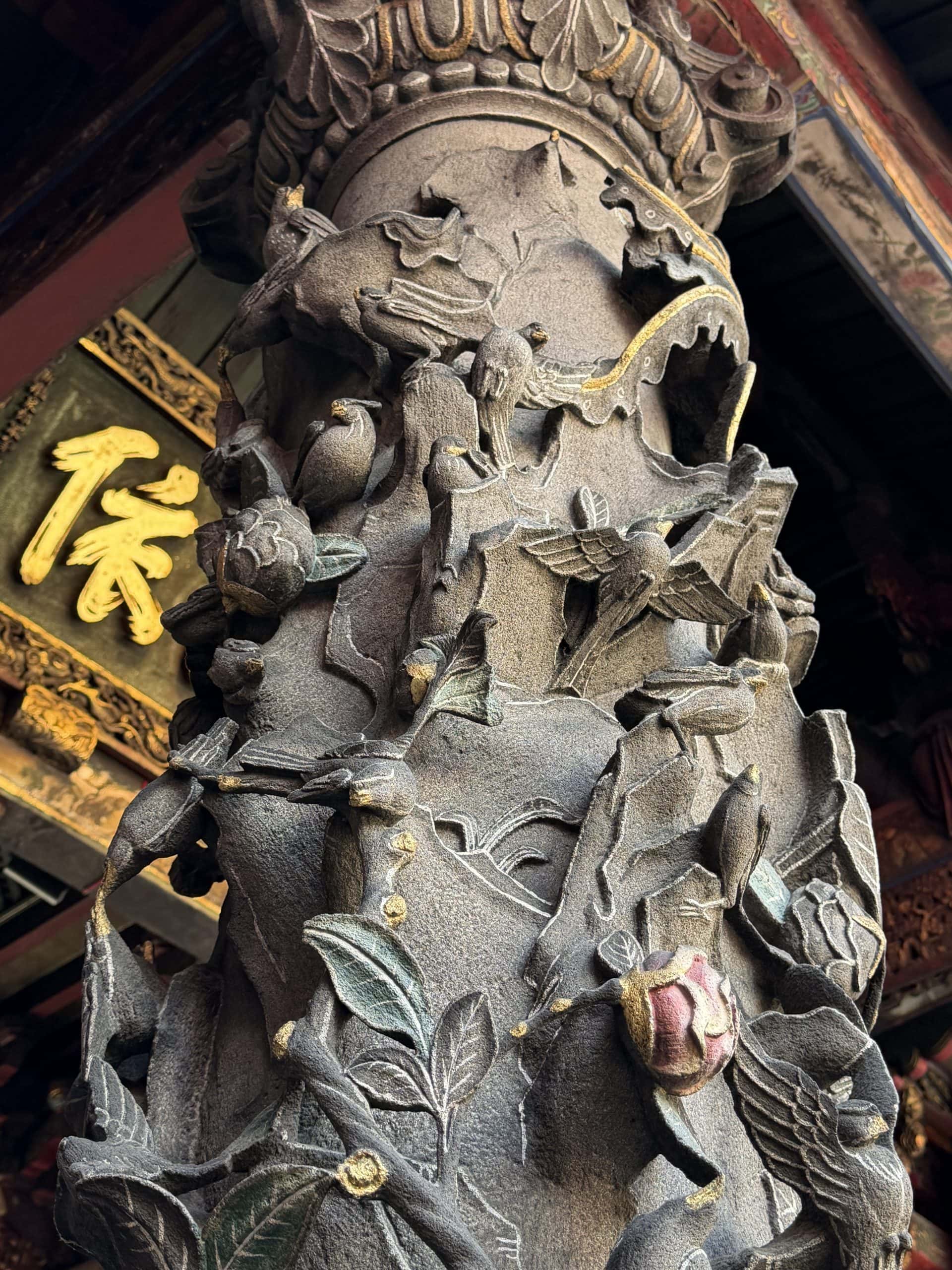
We were struck by the detailed carvings throughout the temple. Large stone pillars are carved from single blocks. Flowers, leaves, and dragons wrap around them. The craftsmanship reflects devotion and respect.
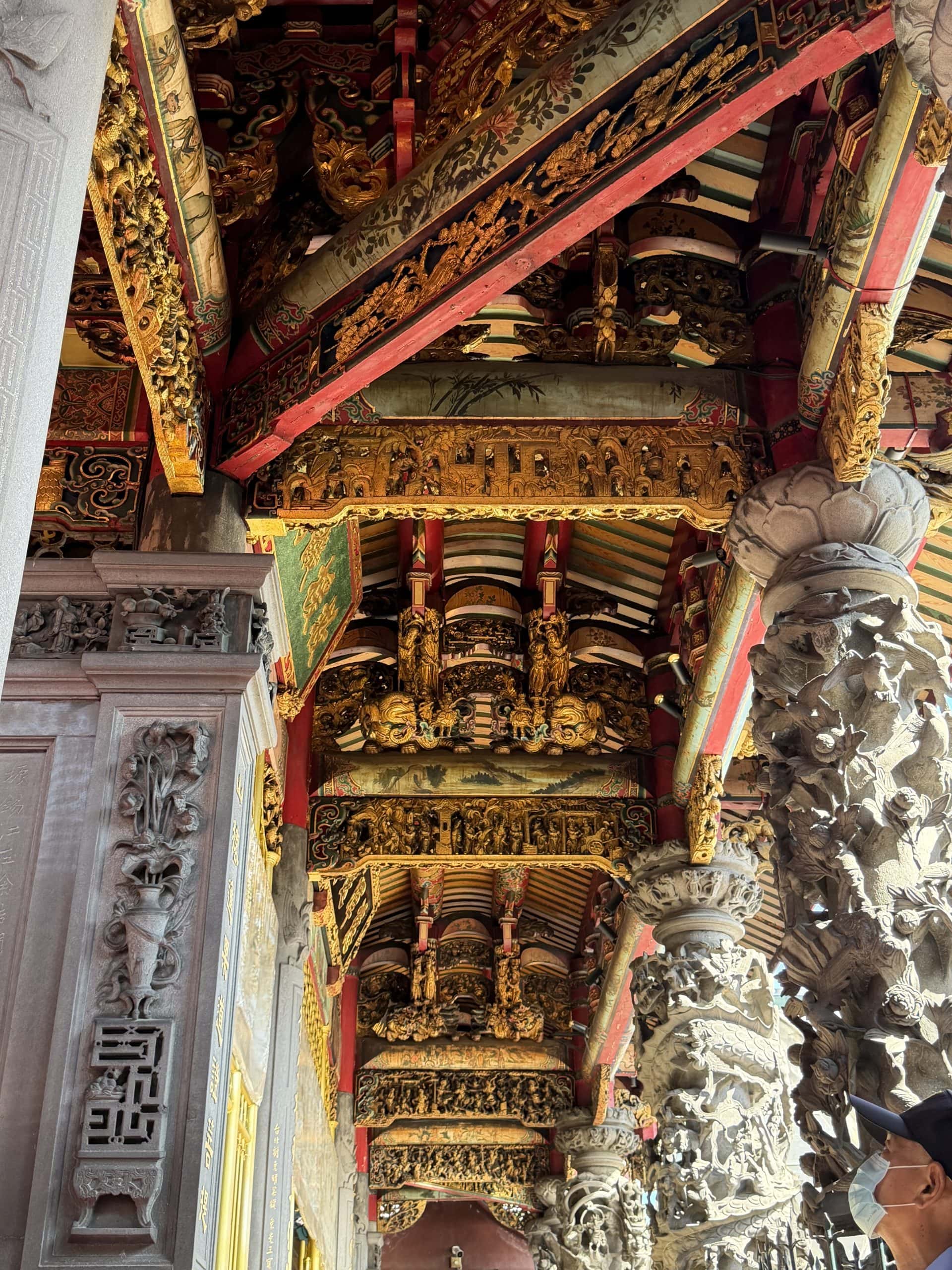
Offerings covered the altars that people had brought to support their requests for prayers or answers to life’s questions. Fruit, packaged food, candy, and flowers were placed before the gods. It was interesting to see such a mix.
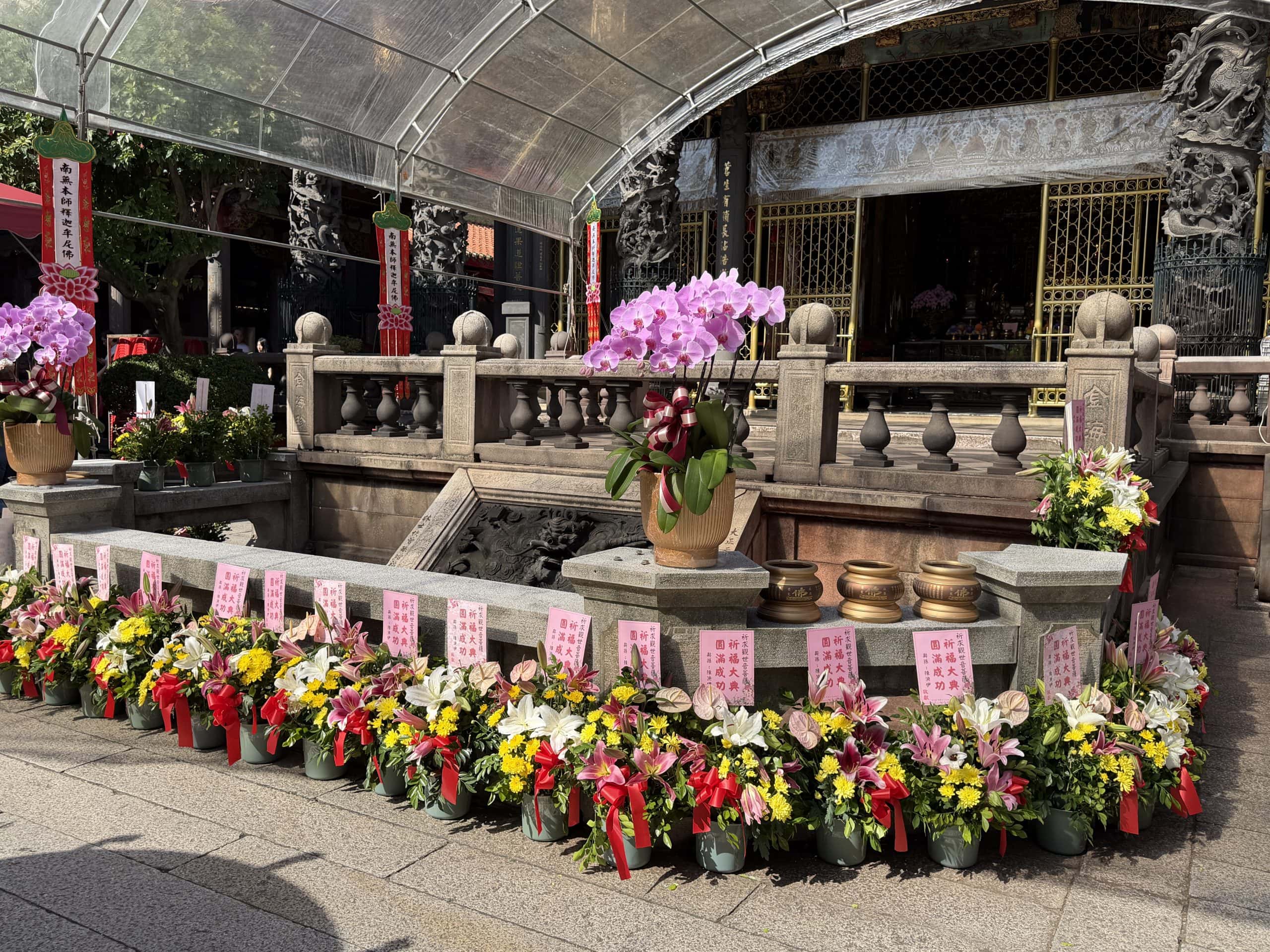


We watched worshippers perform rituals. Some chanted. Others poured water from large gold bowls. Many used moon blocks to ask questions about the future. And of course, wishes could be purchased from the side booths. It was fascinating to observe and gave us insight into the local spiritual practices.


Chiang Kai-Shek Memorial Hall At Liberty Square
Liberty Square is one of the largest memorial spaces we have ever seen. The scale is impressive, and it feels both monumental and loaded with respect. This prominent memorial is dedicated to the Generalissimo, Chiang Kai-Shek, who came into Taiwan after World War II, when there had been both a war with Japan and a civil war taking place.

Taiwan’s political history is complex. Depending on who you speak with, Chiang is viewed either as a leader who built the country or a controversial figure due to his implementation of martial law during the period known as White Terror.
Either way, the memorial is very grand. The entrance begins with enormous white gates. Beyond them are manicured gardens and wide walkways. The square includes a theatre, a concert hall, and the central memorial hall.

Walking across Liberty Square, down the pathway called Democracy Boulevard, took us about 10 minutes to reach the memorial hall. This space reminded us of the expansive Tiananmen Square.
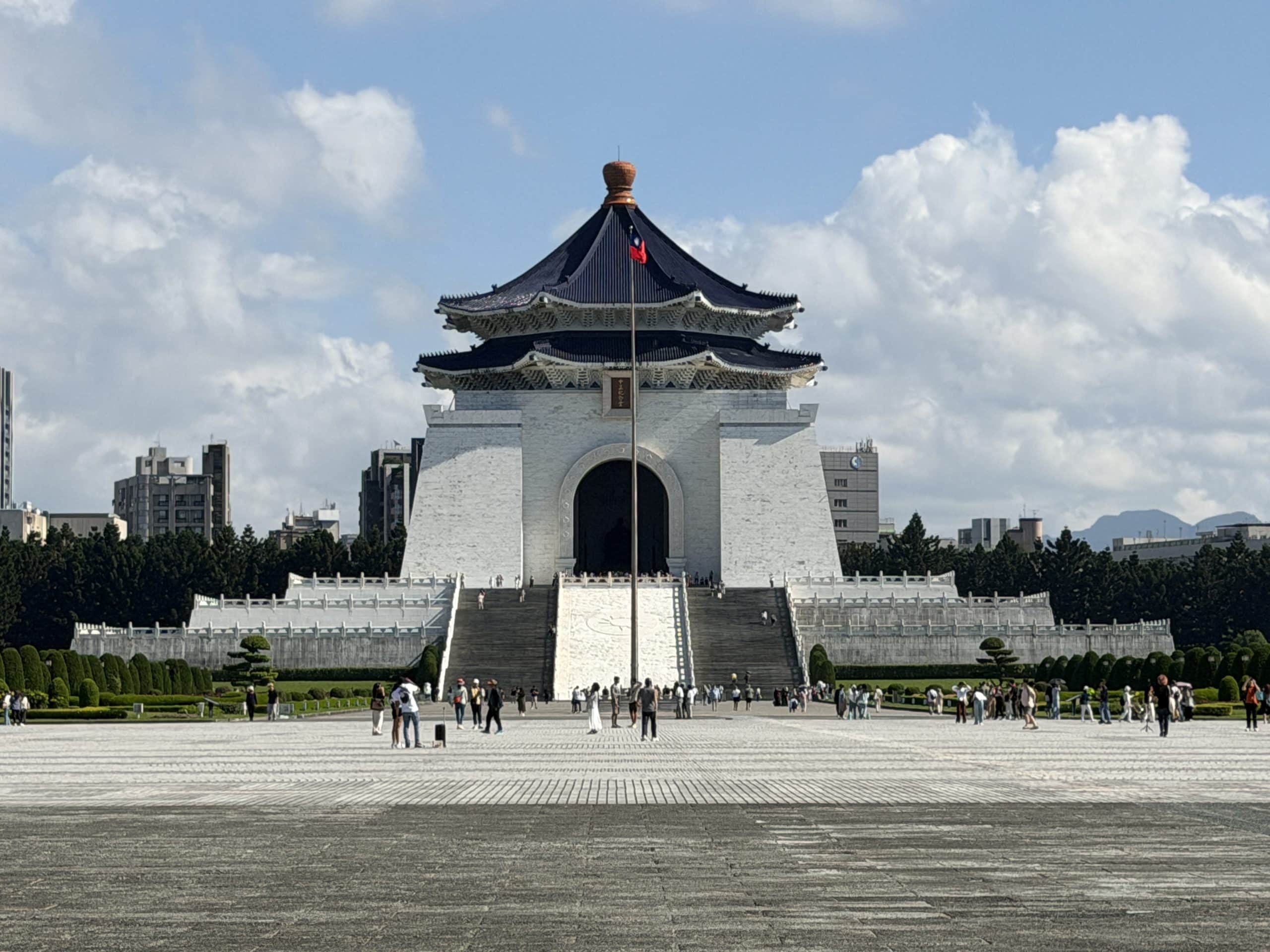
The hall opened in 1980 and rises 70 metres high. It covers 15,000 square metres with a roof that is covered in royal blue tile, and the overall structure is made of white marble.

There are 89 steps leading up to the entrance. Each step symbolizes one year of Chiang Kai-Shek’s life, indicating he was 89 when he died. Once you make it to the top, you can appreciate the surrounding grounds spread out below.

Inside it is surprisingly simple in design. The focal point is a massive statue of Chiang. The most decorative part is the carved ceiling above, reflecting the national emblem.

Yongkang Street
Yongkang Street is one of Taipei’s most vibrant neighbourhoods. It is filled with shops, restaurants, cafés, and food stalls. There are more than 30 established operations, plus street vendors and night market carts.
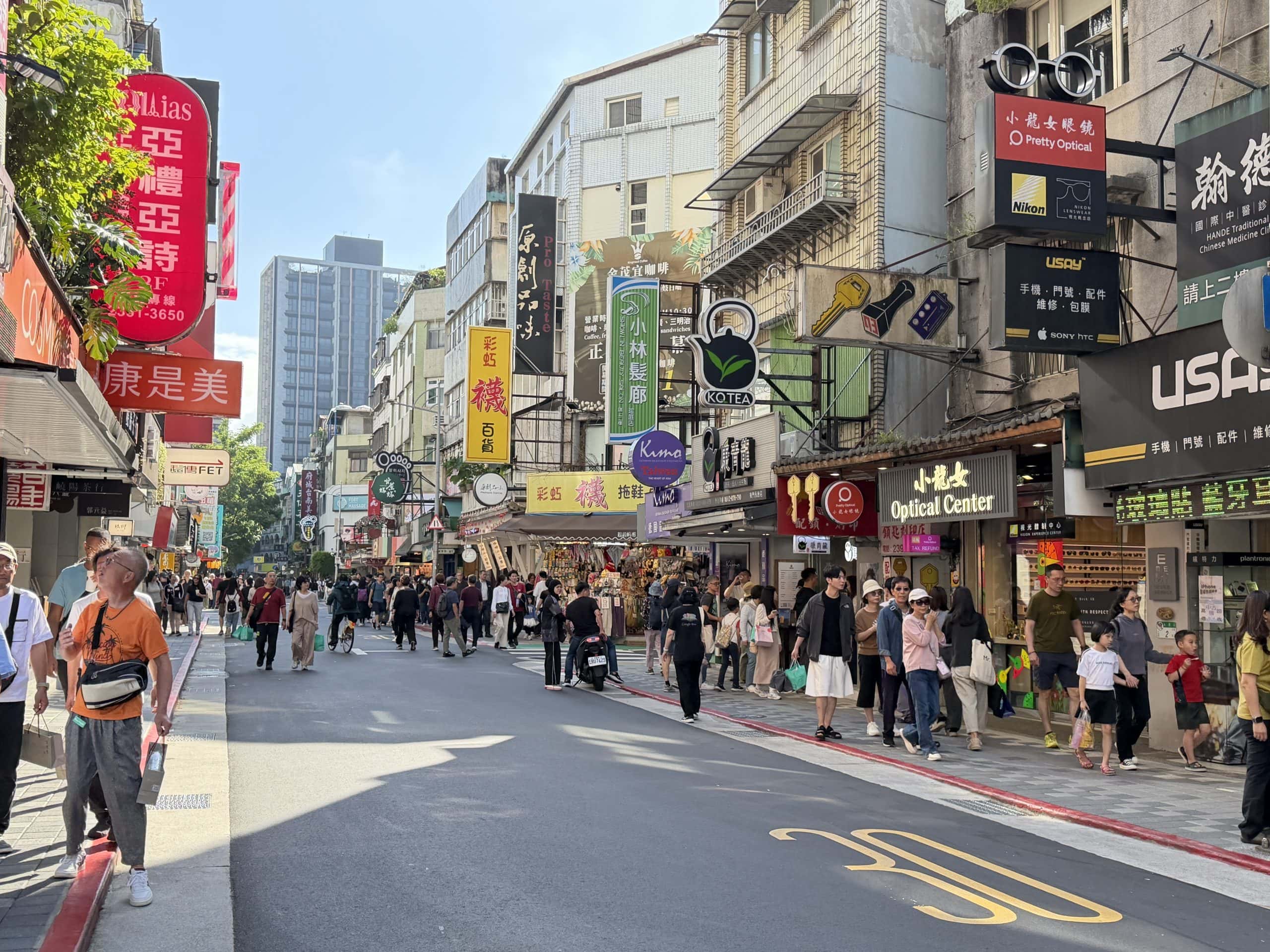
The variety of food amazed us. You can find Chinese, Korean, Japanese, Western, and fusion dishes all within a few blocks.

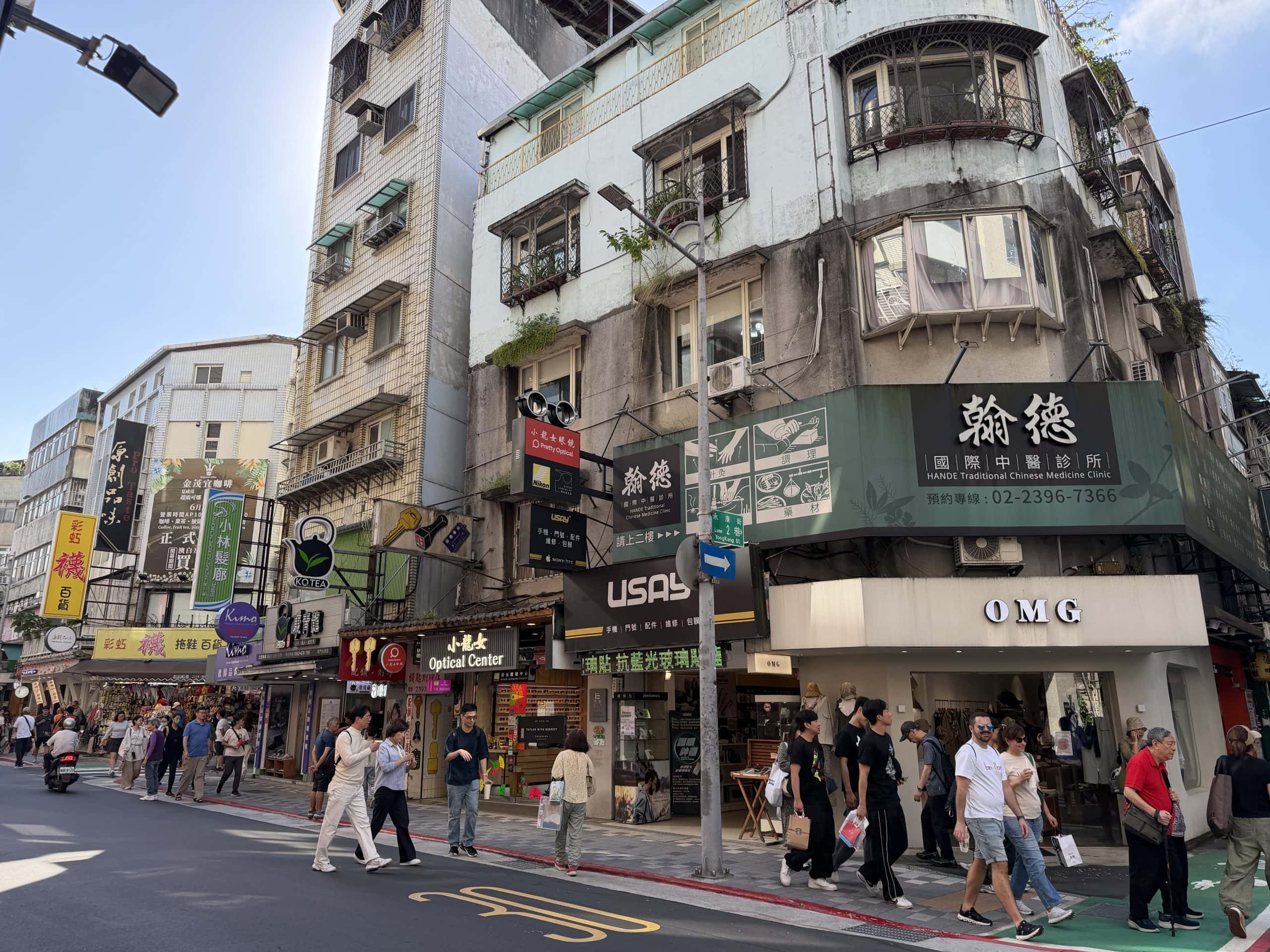
Some restaurants had long lines stretching down the street. It is worth walking around to see what draws your interest.
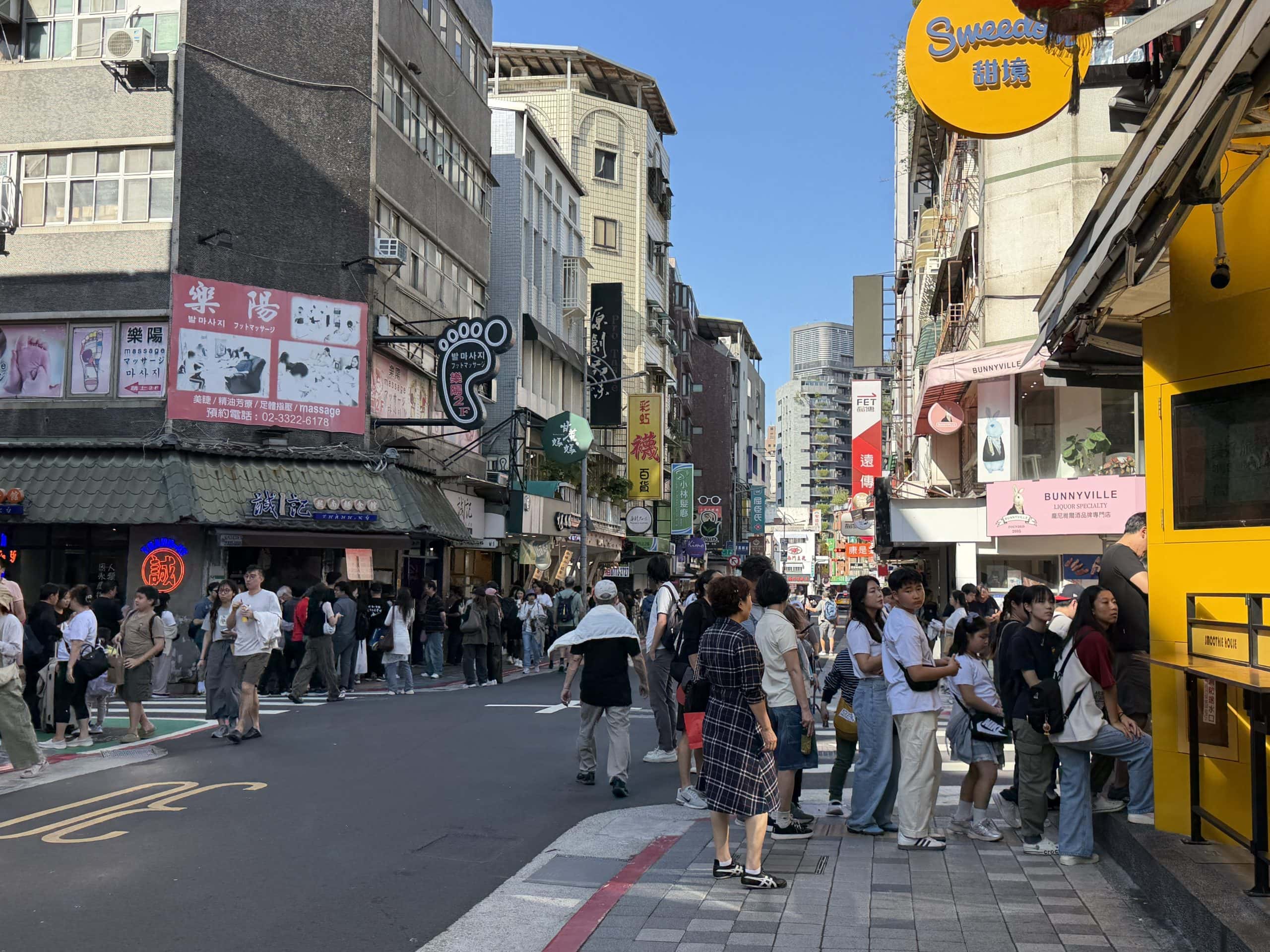
This area is also home to the original Din Tai Fung restaurant. Unfortunately, the wait was too long for us when we visited.
Bring cash, as many vendors prefer it. We were unable to use our AliPay app here, as you needed to have a Taiwanese address for it to be accepted.
✅ Looking to experience the local cuisine of Taiwan, but unsure where to start? This 5-star food tour is a perfect solution. Visit multiple locations with a local guide so you can try all the dishes safely.
Taipei 101
Taipei 101 is an architectural wonder designed to resemble a bamboo stalk, and it dominates the Taipei skyline. Each section of the building has 8 floors, and the light on the top changes to a different rainbow colour each day of the week. The tower reaches 508 metres and was the tallest building in the world for ten years.
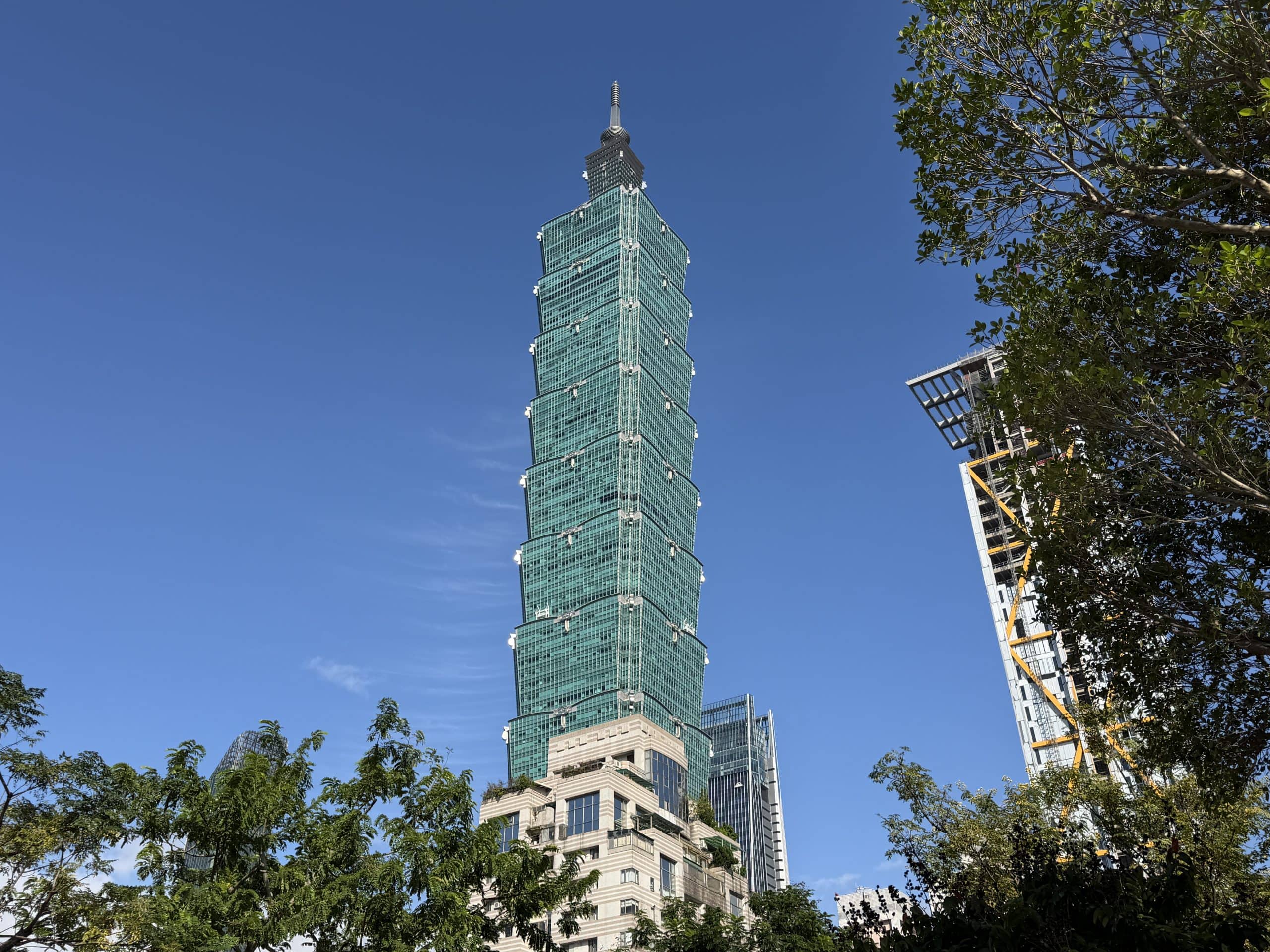
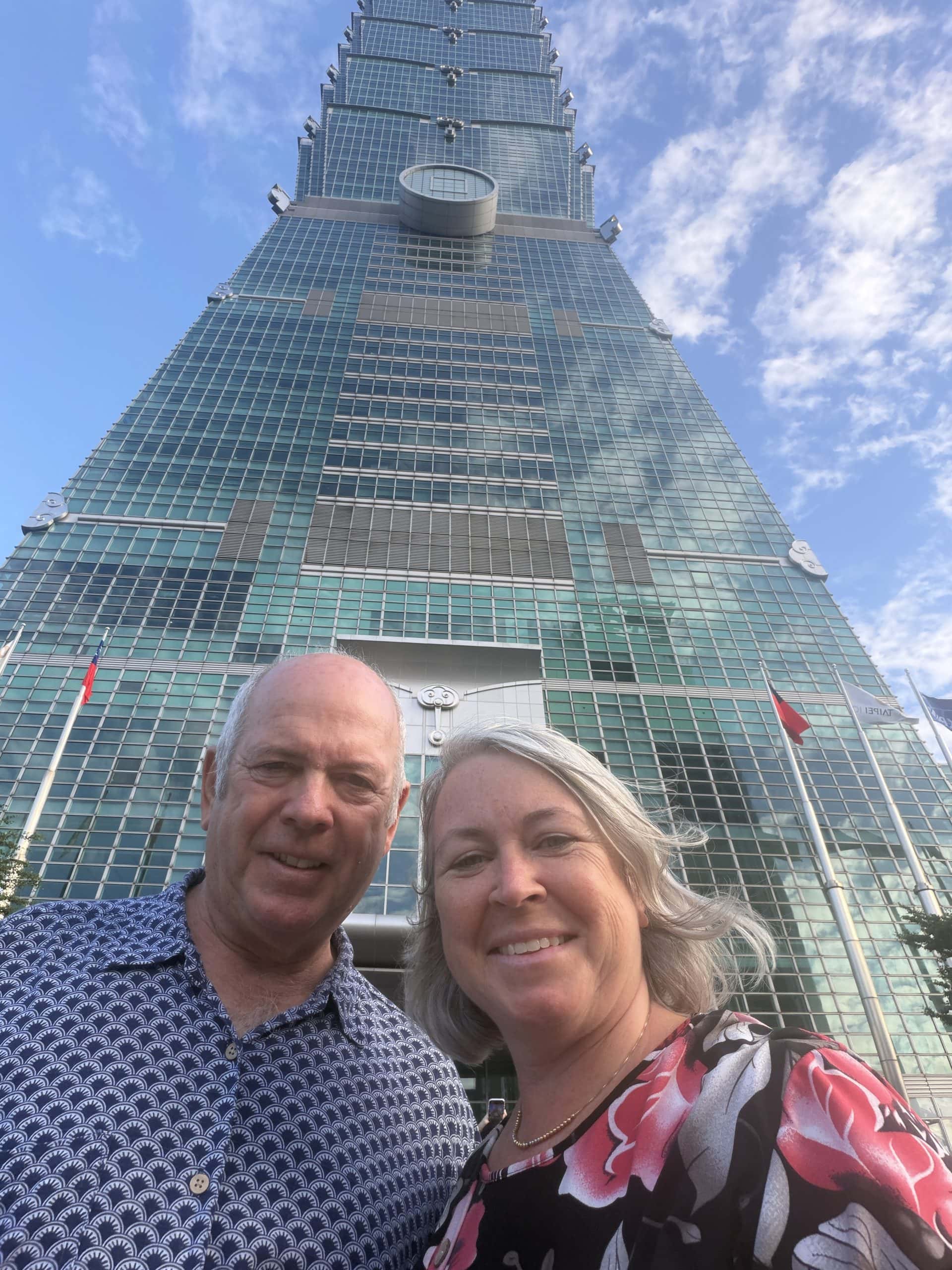
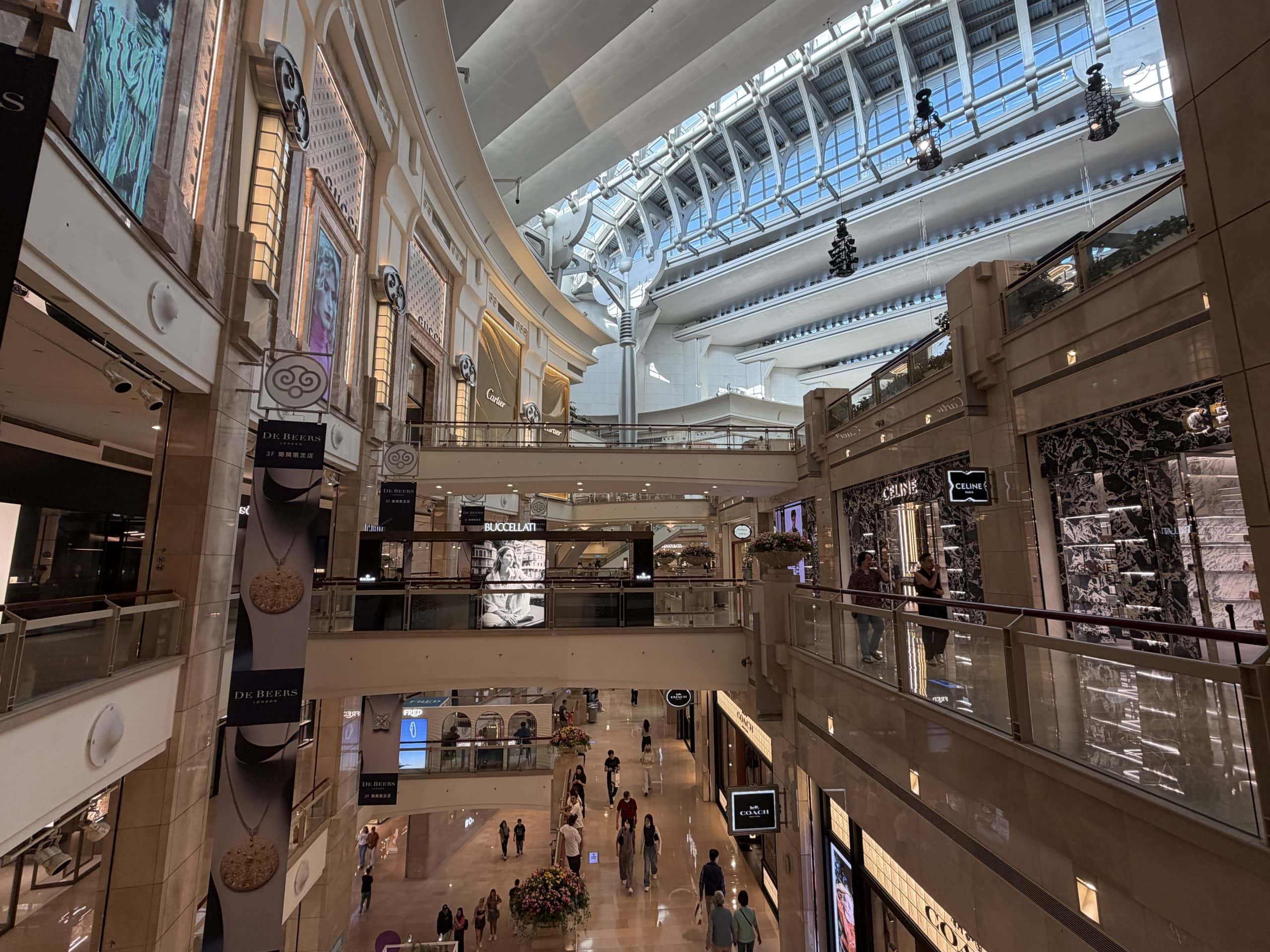
To reach the most popular attraction in Taipei, you must wind your way through multiple levels of a fancy upscale shopping mall.
But once at the entrance, the elevator ride to the observatory is fast. It takes only 37 seconds to reach the 89th floor!

The views from the top are expansive. You have a perfect view of Taipei and the surrounding mountains.


We were impressed by the observation level itself. With artificial grass and displays filled with flowers, educational placards and cultural exhibits, this spot invited people to linger and provided an educational experience beyond the fantastic views.


Not to mention the numerous food outlets, where there were plenty of options for drinks and snacks. It felt inviting rather than rushed.

The most interesting feature was the wind damper. It is the largest and heaviest in the world. It measures 5.5 metres in diameter and weighs 660 tons with 41 solid steel plates, each 12.5 cm thick.

And one of the best things is that you can see it up close from a viewing platform. It hangs from steel cables and reduces sway during typhoons and earthquakes. We found out that it was designed by engineers from four countries, Taiwan, France, Italy and Canada!

It can sway up to 1.5 metres. Around the structure are several screens demonstrating how the damper works and showing footage of when the tower has moved during typhoons and earthquakes, when it has shifted by up to 100 cms. We were glad it was a calm day when we visited!
Insider Tip
When purchasing tickets, check the kiosks to the left. We avoided a long queue by doing this.
FAQs About What To See in Taipei
How Many Days Do You Need To Visit Taipei?
One to two days is enough to see the major highlights and enjoy the food scene.
What Is Taipei Most Famous For?
Taipei is known for Taipei 101, the National Palace Museum, temples, and its street food culture.
Is Taipei Easy To Explore?
Yes. Public transportation is efficient, and many major attractions are accessible. Although we chose to have a private driver to cover more places in a shorter period of time.
Is Taipei 101 Worth Visiting?
Yes. The views are excellent, and the wind damper is fascinating to see in person.
What Should You Not Miss In Taipei?
Do not miss the National Palace Museum, Lungshan Temple, and the Changing of the Guard ceremony.
The Final Word: Is Taipei Worth Visiting?
Taipei offers history, culture, and modern conveniences all in one city.
We appreciated the balance between political memorials and active spiritual sites. And we also enjoyed the skyline views and the local food streets. To us, Taipei felt educational and approachable at the same time.
If you are planning a trip to Taiwan, Taipei is absolutely worth including on your itinerary.


