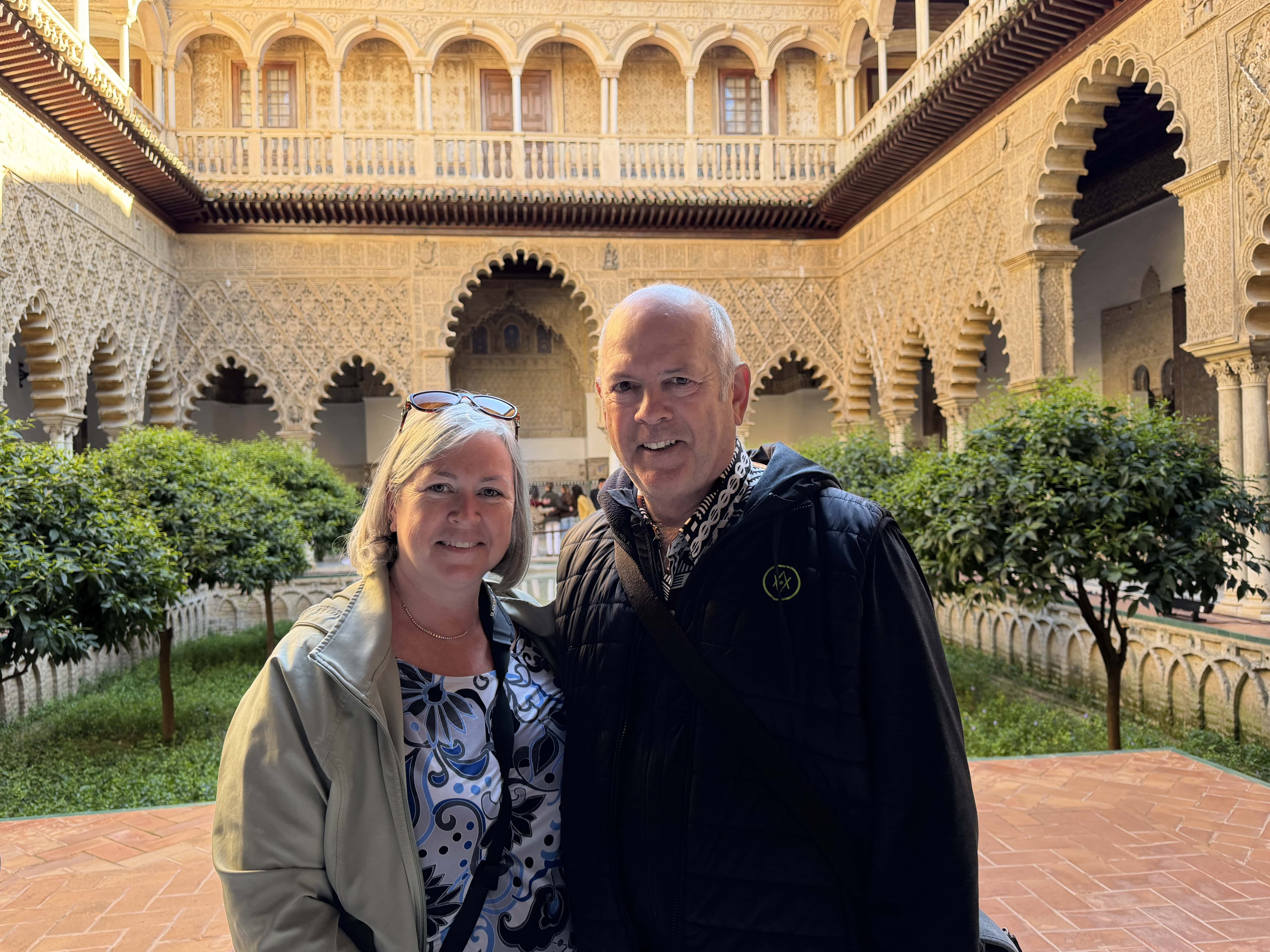
10 Best Things to Do in Seville: Our Firsthand Guide

The top things to do in Seville include exploring the Royal Alcázar, climbing La Giralda at Seville Cathedral, wandering through Santa Cruz, admiring Plaza de España, watching an authentic flamenco performance, and experiencing the city’s tapas culture.
We have visited Seville twice, and it remains one of the cities in Spain that we love returning to because there is so much to do.
One minute you are walking through narrow streets lined with restaurants, and the next you step into an enormous plaza covered with thousands of colourful tiles. Historic palaces hide behind simple façades. Gardens provide peaceful places to escape the streets, while modern architecture such as the Setas gives you a completely different perspective of the city.
Our most recent visit was in March, and we found it a great time for sightseeing. The temperatures were comfortable, and the city wasn’t as busy as it can become during the peak travel season.
If you are deciding how long to spend in Seville, we recommend at least three or four days. There are enough major attractions to fill your days, but Seville is also a city where you want time to slow down. Leave room in your itinerary for wandering through Santa Cruz, relaxing in a plaza, and sitting down for a leisurely tapas lunch.
After two visits, we’ve narrowed it down to the 10 best things to do in Seville for a first-timer.
What You’ll Discover In Seville
In this guide, we’ll share our 10 best things to do in Seville that combine the city’s famous landmarks with some of the cultural experiences that made our visits so memorable.
✅ Why the Royal Alcázar is our absolute must-see in Seville
✅ What impressed us most inside Seville Cathedral and why you should climb La Giralda
✅ The palaces and streets worth exploring in Santa Cruz
✅ What makes Plaza de España one of our favourite places in the city
✅ What it was like attending a flamenco performance
✅ Where we enjoyed tapas and other meals
✅ Where to stay for easy access to Seville’s major sights
1. Explore The Royal Alcázar Of Seville
If you only have time for a few major attractions in Seville, put the Royal Alcázar of Seville at the top of your list. For us, this is the absolute must-see.
The site was originally developed as a fortress, while much of the palace complex where visitors explore today was constructed over many centuries. The result is a fascinating combination of architectural influences. As we wandered through the complex, we saw elements of Islamic, Mudéjar, Gothic, Renaissance, and Baroque design.
Admire The Incredible Tilework
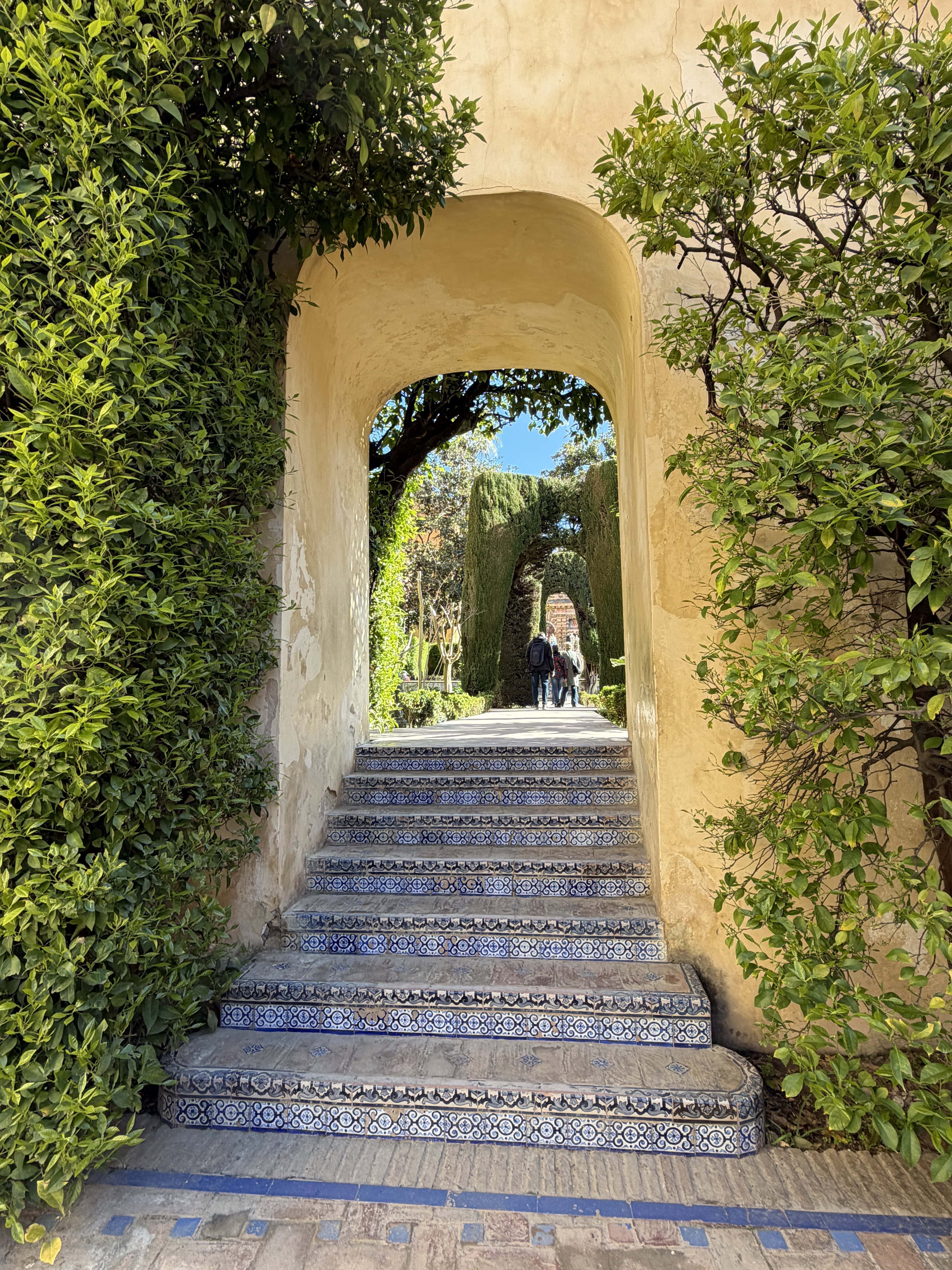
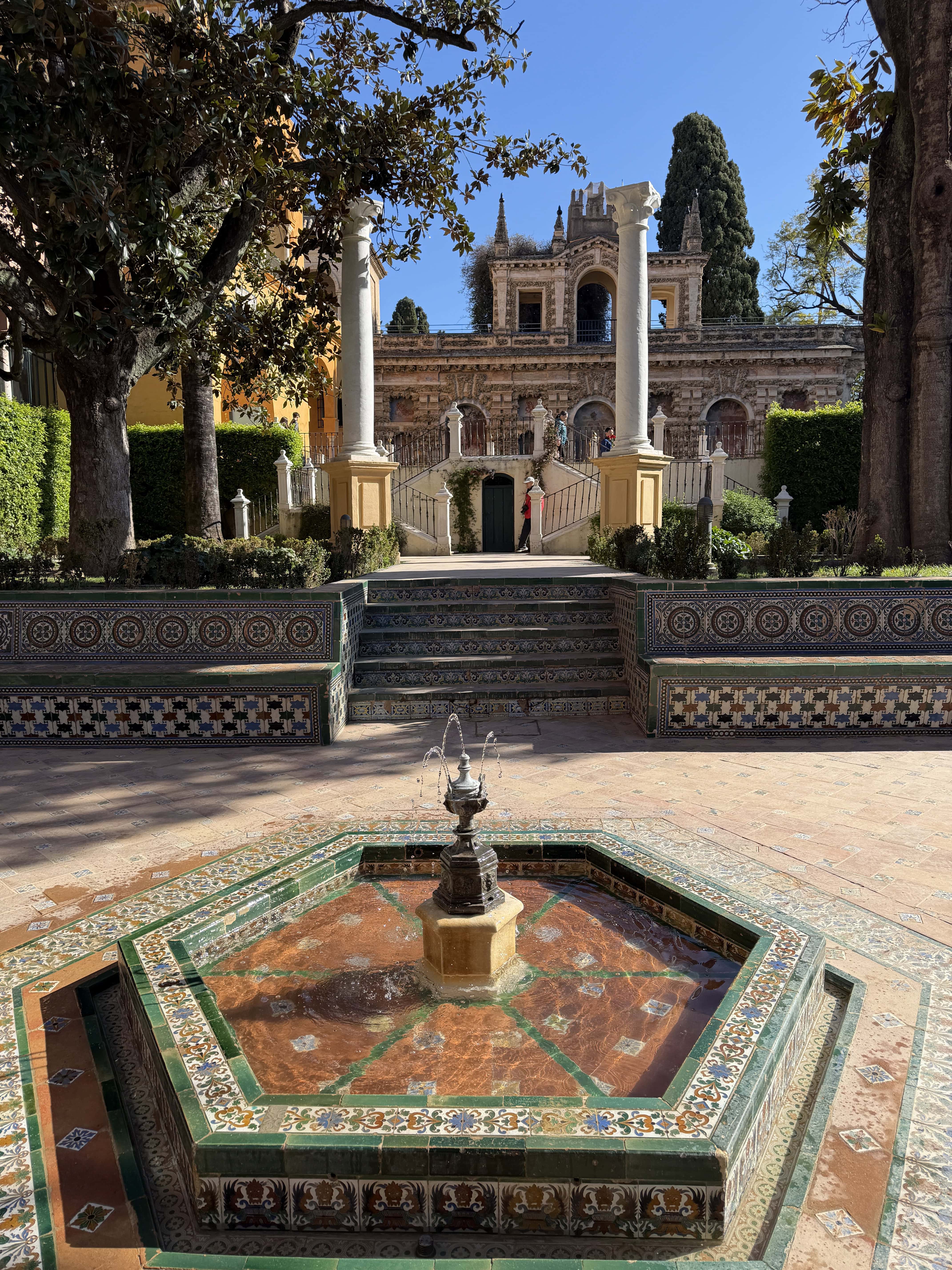
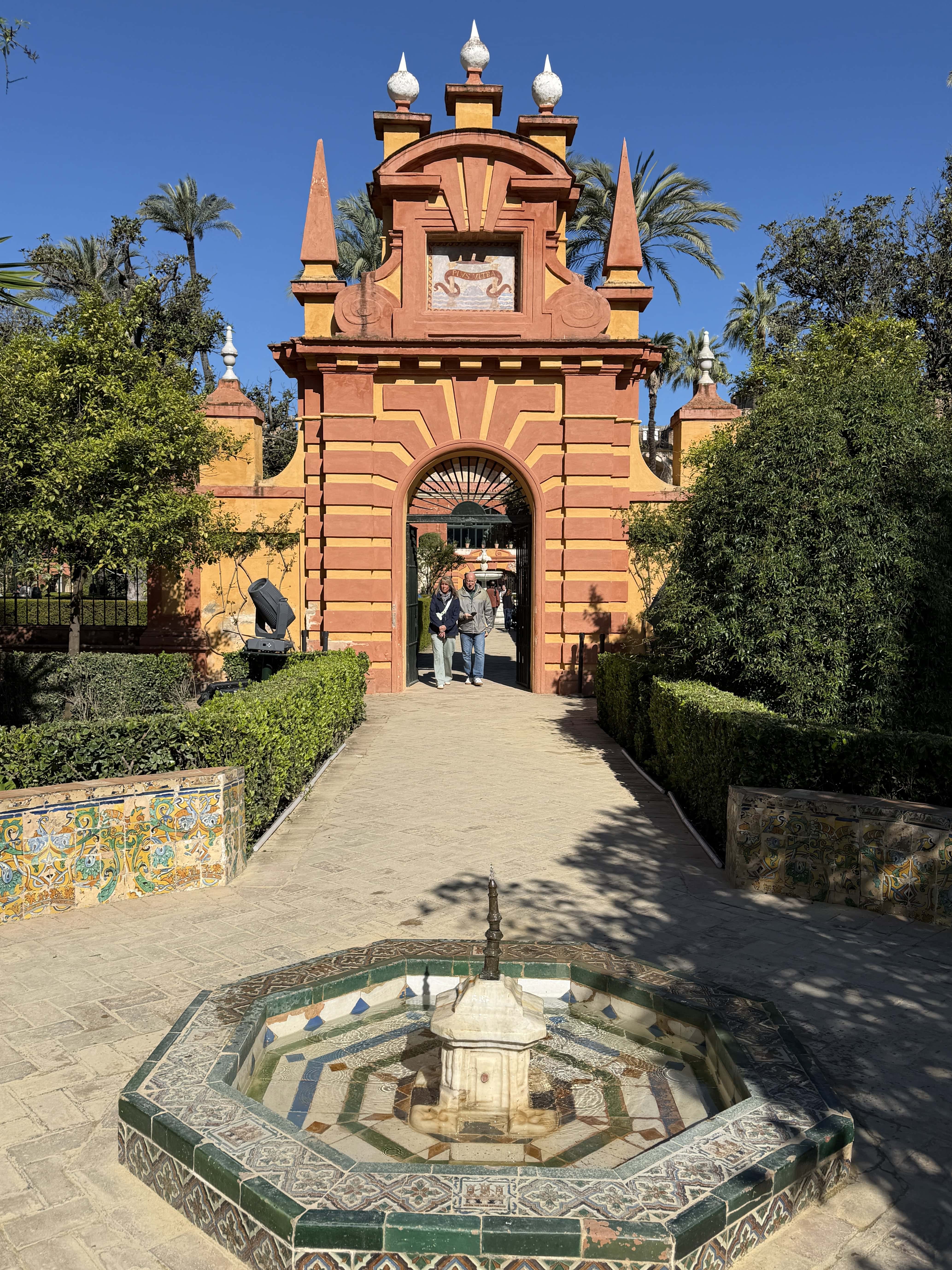
We love Portuguese and Spanish tiles, and the Royal Alcázar certainly didn’t disappoint. Tiles cover walls, floors, fountains, and courtyards. There are more than 150 Mudéjar and Renaissance tile designs throughout the complex.
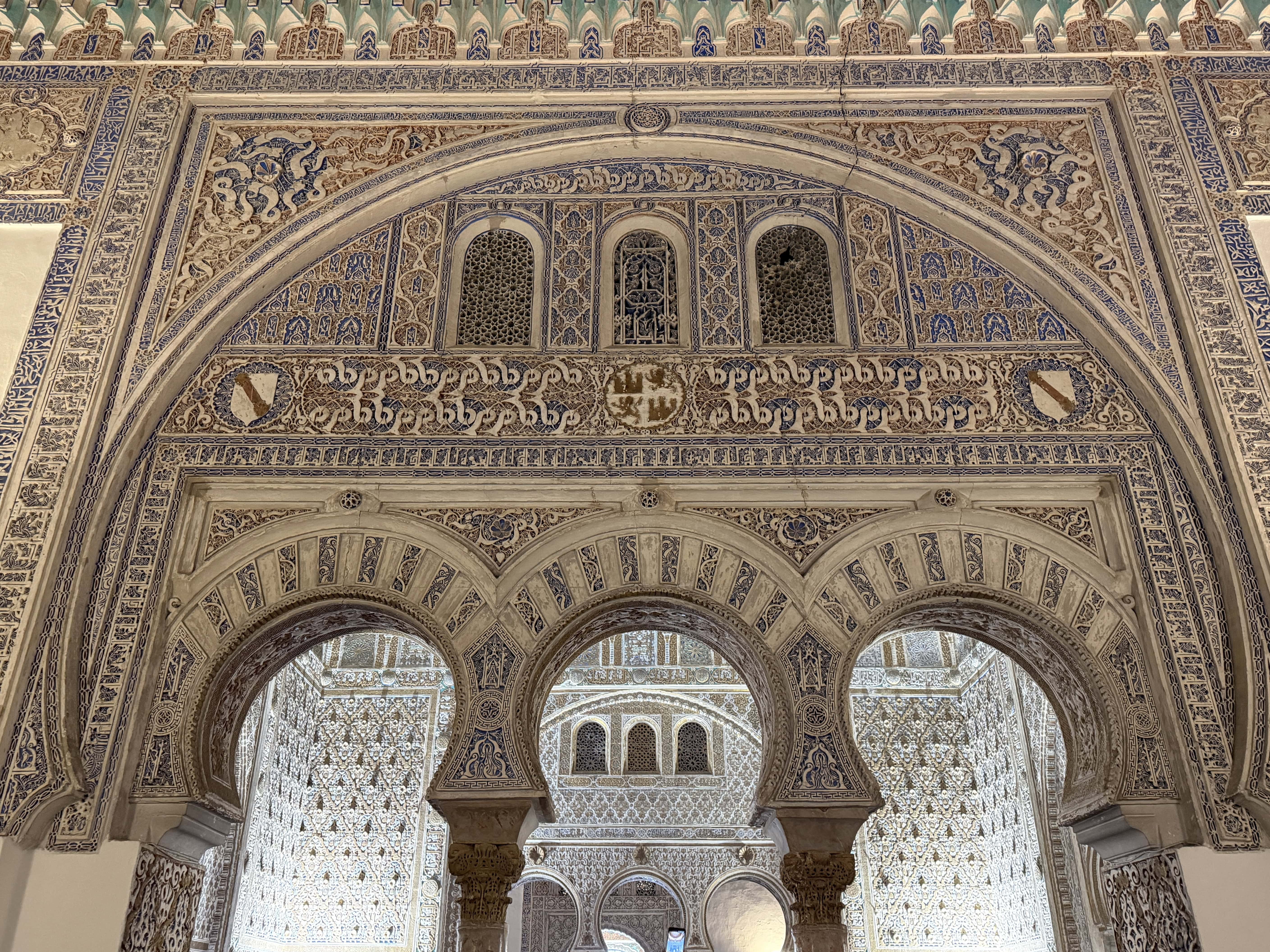
Every time we thought we had found a favourite pattern, we walked into another room and discovered something completely different. Later, in a store, we purchased a tile with one of the famous designs to take home.
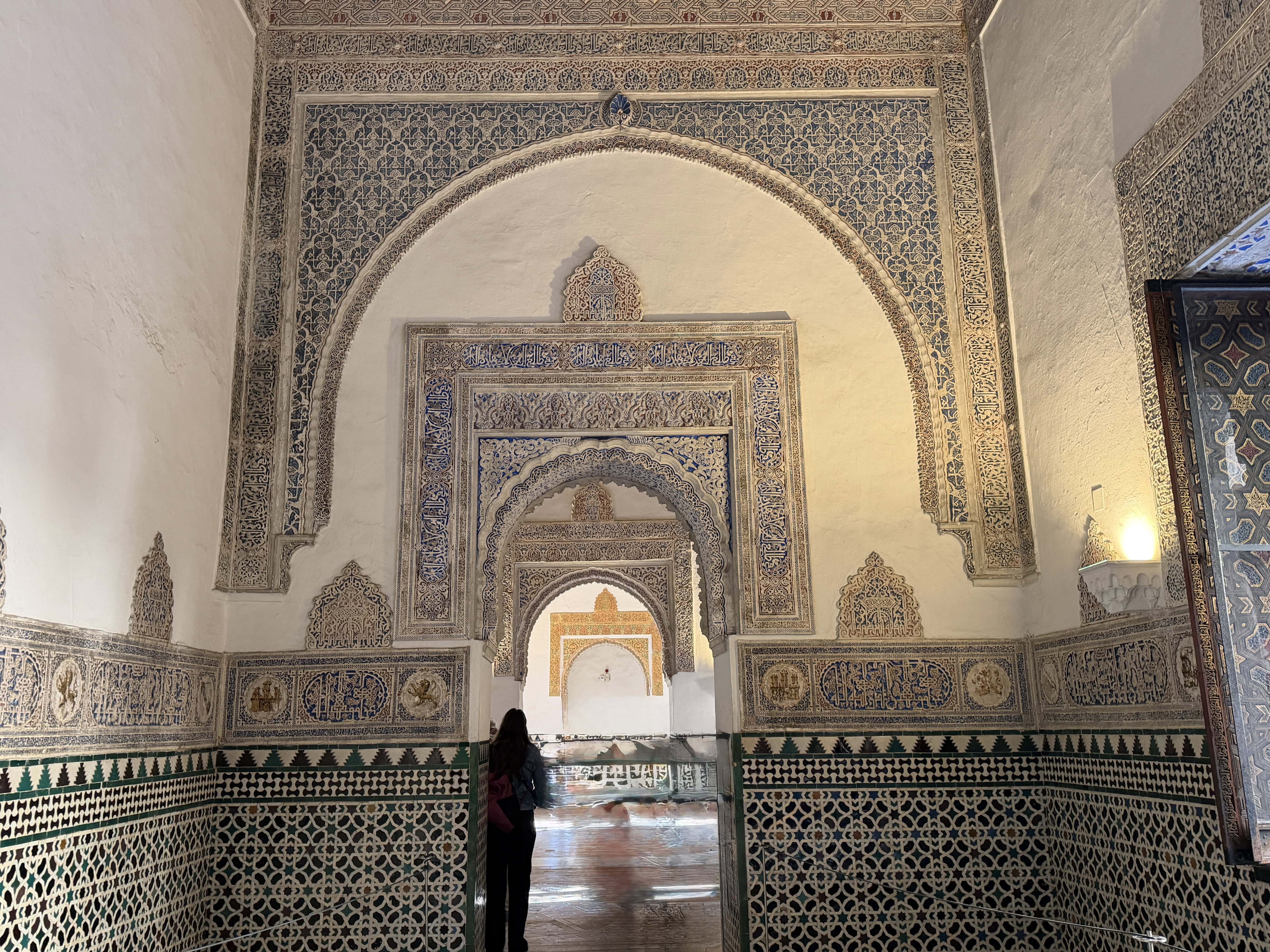
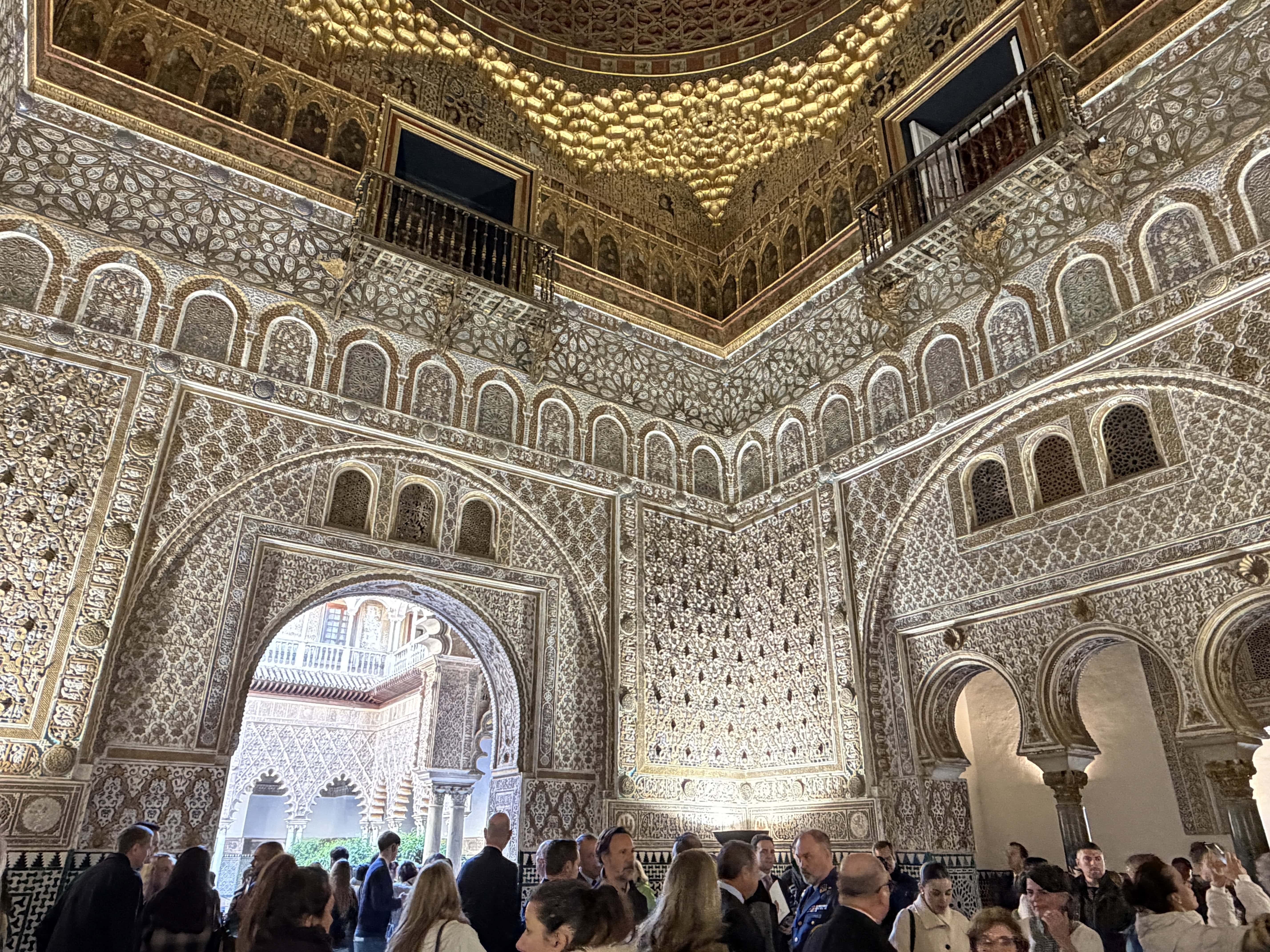
The Patio de las Doncellas is one of the most recognizable areas of the palace. Elaborate arches surround the courtyard, while a long reflecting pool runs through its centre.
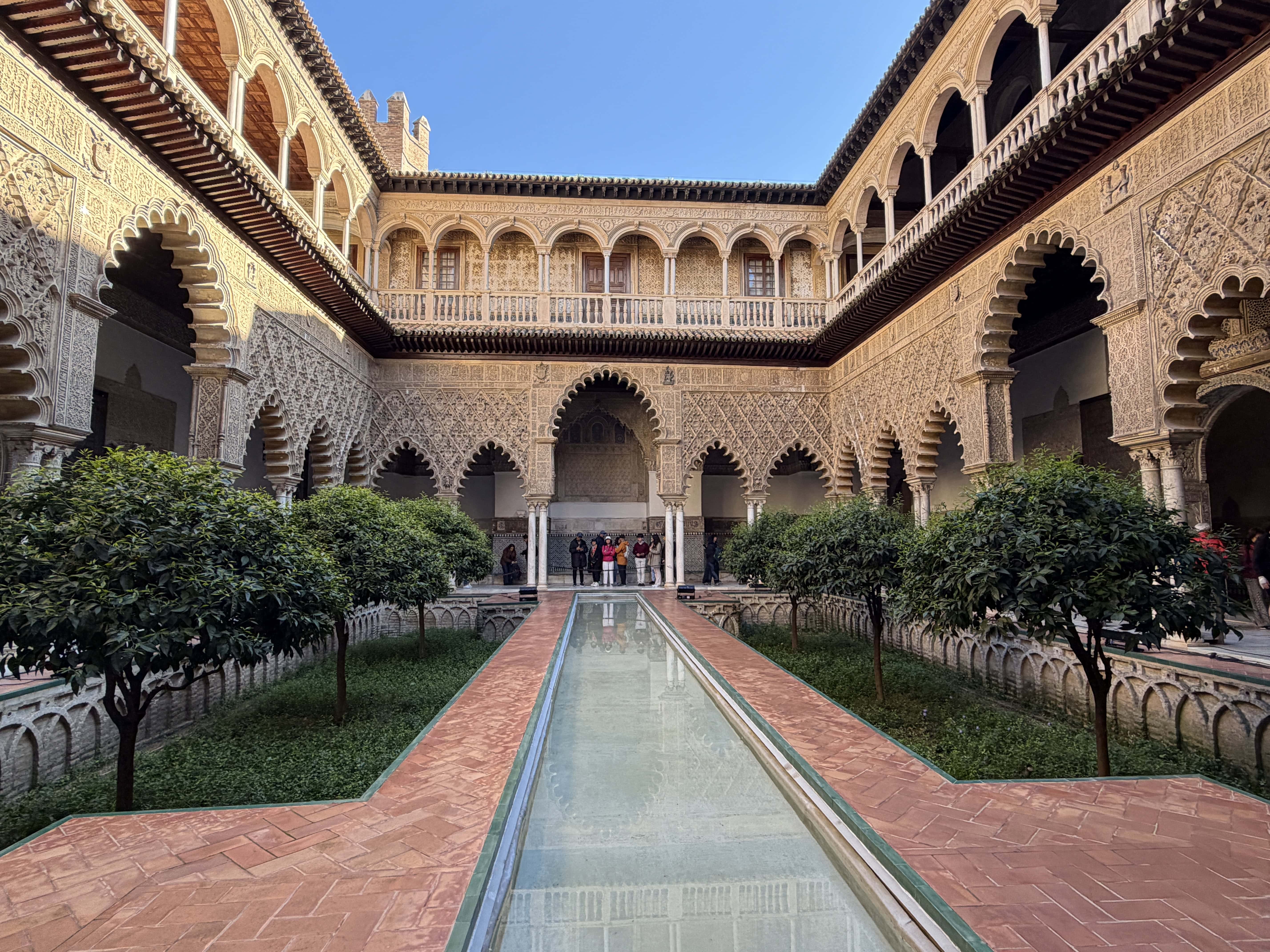
Then there is the smaller Patio de las Muñecas and the magnificent Hall of Ambassadors. This isn’t a palace we recommend rushing through. Look at the ceilings. Look at the walls. And definitely look at the tiles.
Leave Time For The Alcázar Gardens
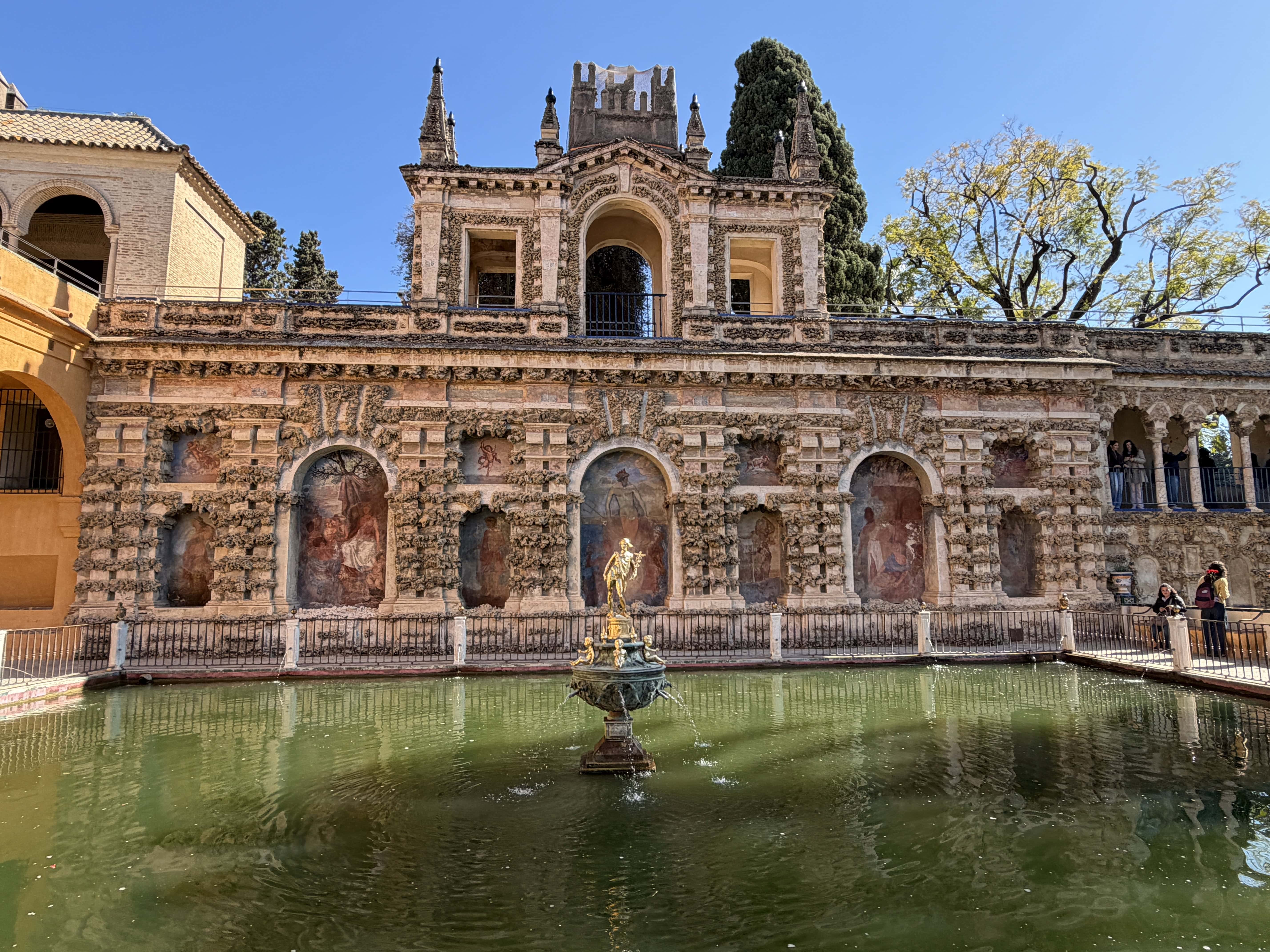
Eventually, we made our way outside into the gardens. After spending so much time examining the details inside the palace, the gardens provide a completely different experience.
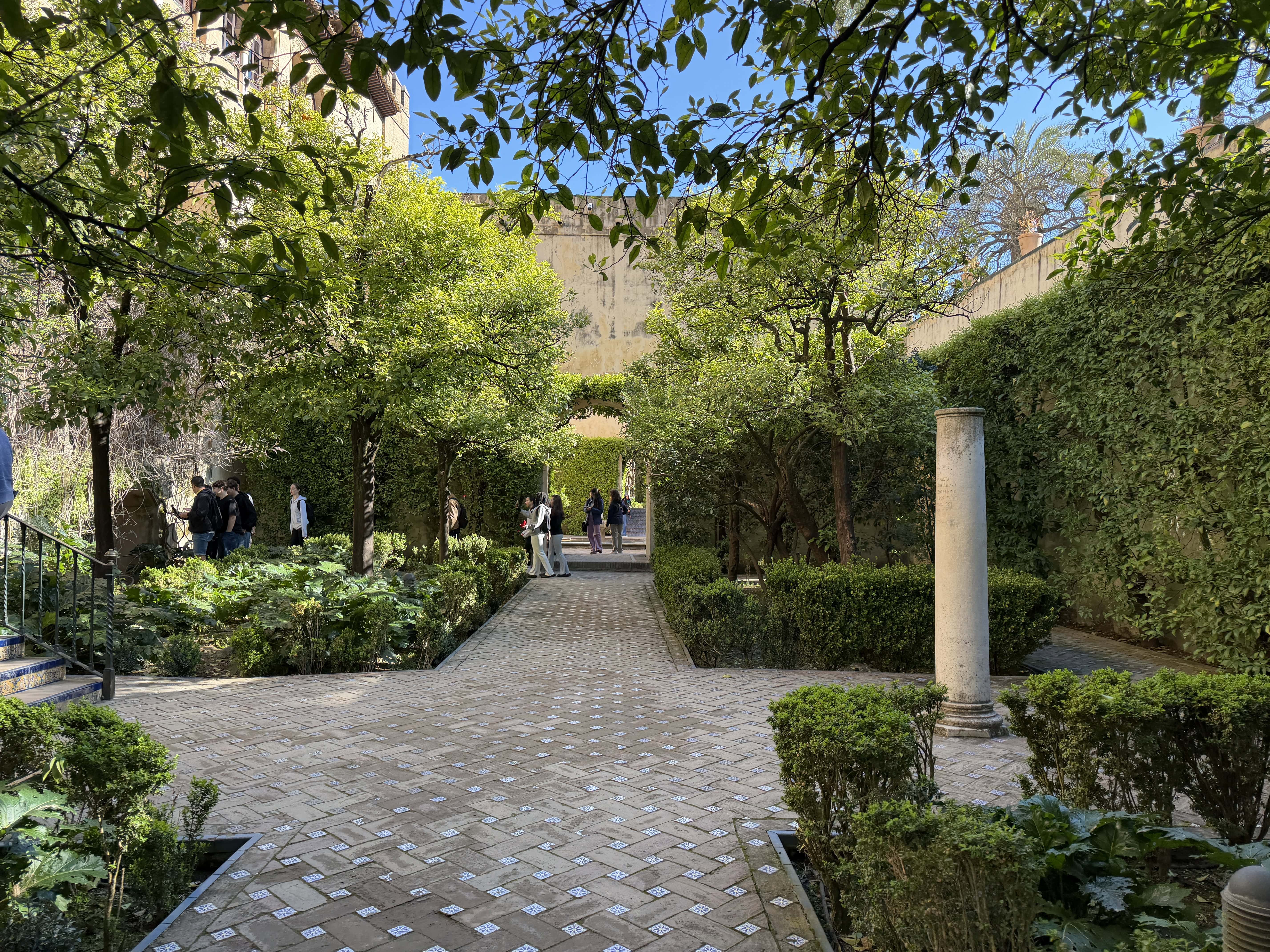
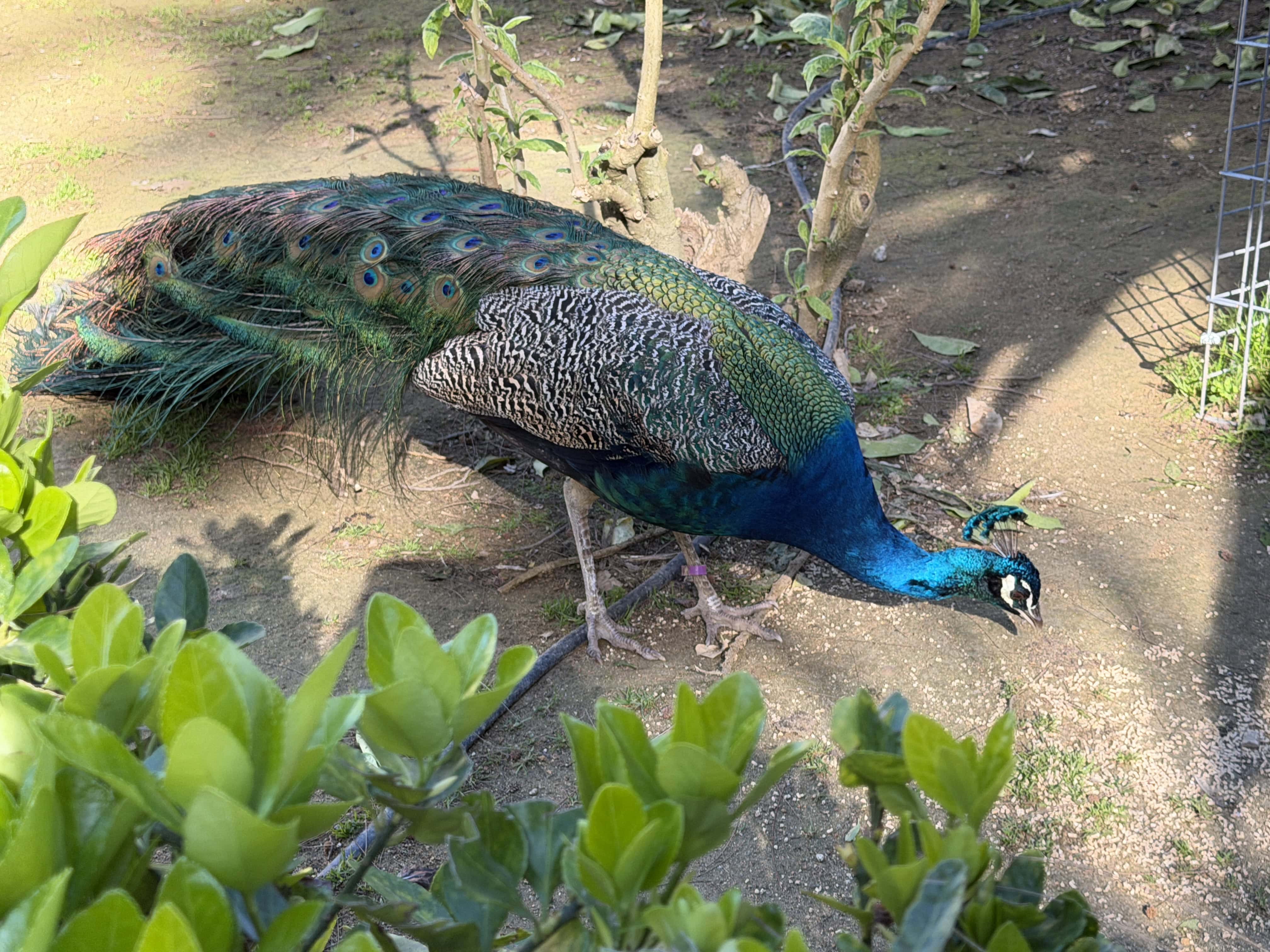
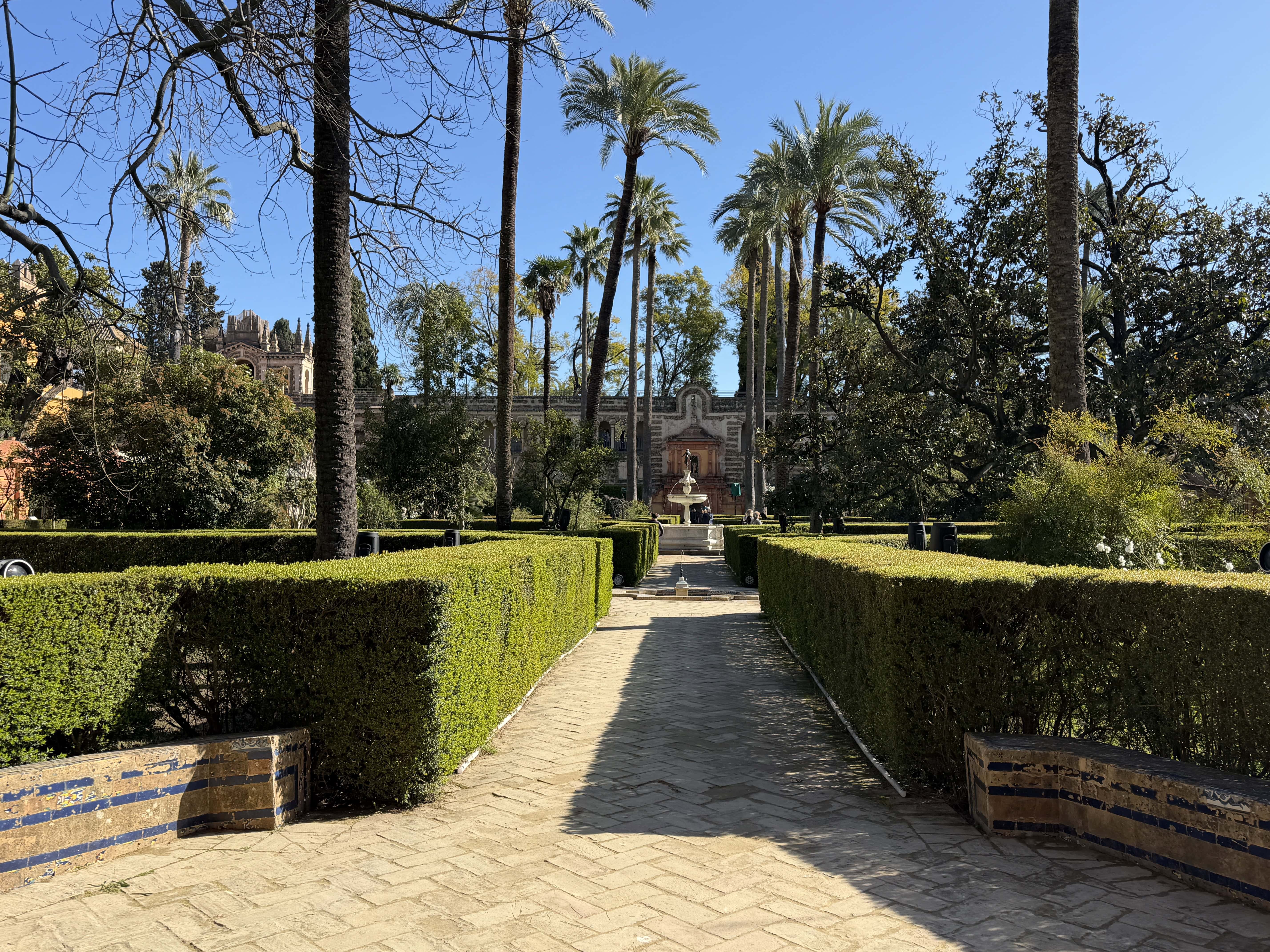
Fountains and pathways lead through the grounds, creating plenty of places where you can stop for a while. We even spotted peacocks wandering through the gardens. The peaceful setting makes it easy to forget that you are in the middle of a major city.
Book The Upstairs Royal Apartments
One experience we definitely recommend is purchasing the additional ticket to visit the Upper Royal Apartments. These rooms are still part of the royal residence, and access is more restricted.
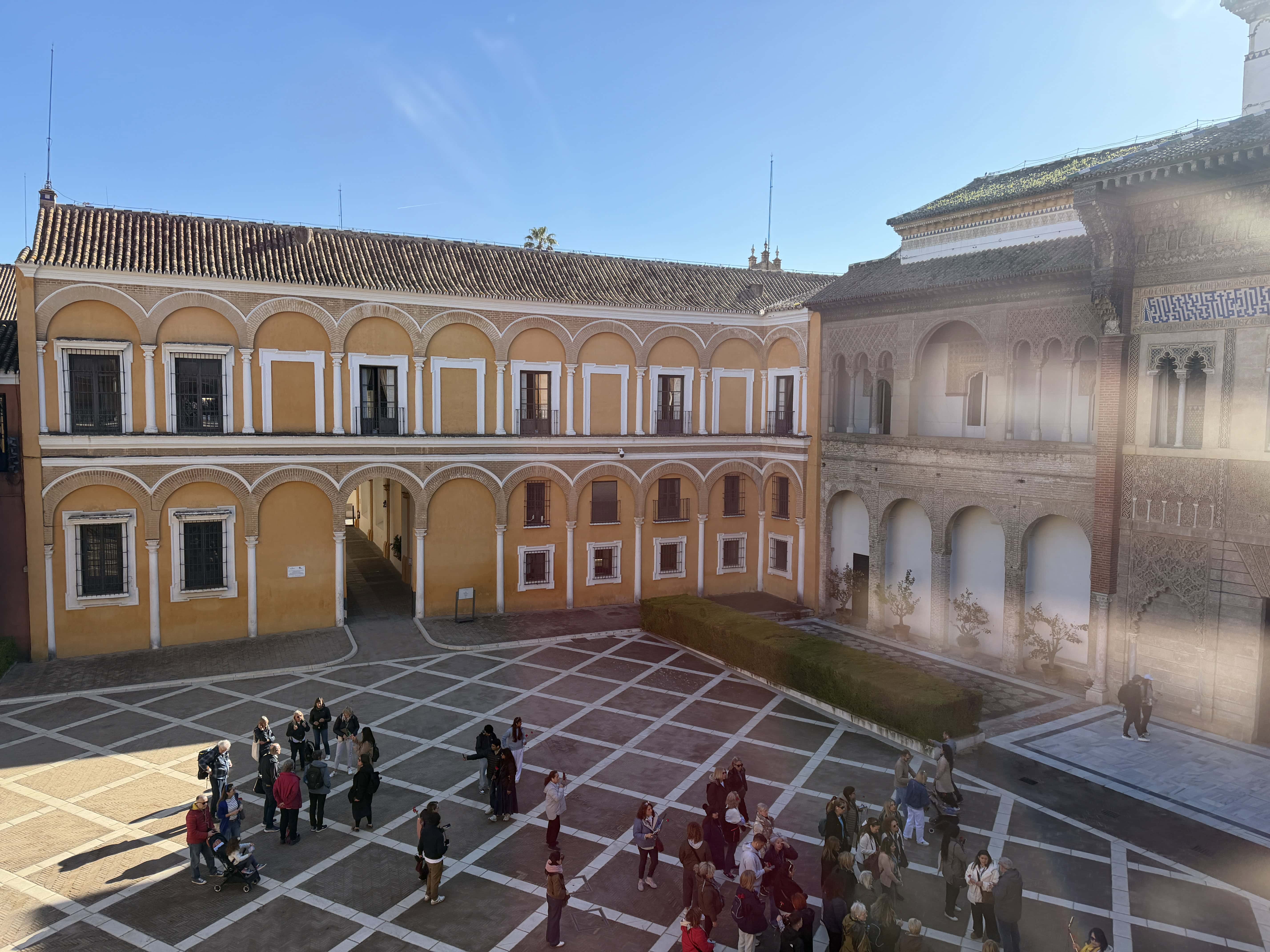
During our tour, we saw the private chapel, formal dining room, and several parlour rooms. The decoration throughout the residence was impressive. We also had wonderful views looking down into the courtyards and gardens below.
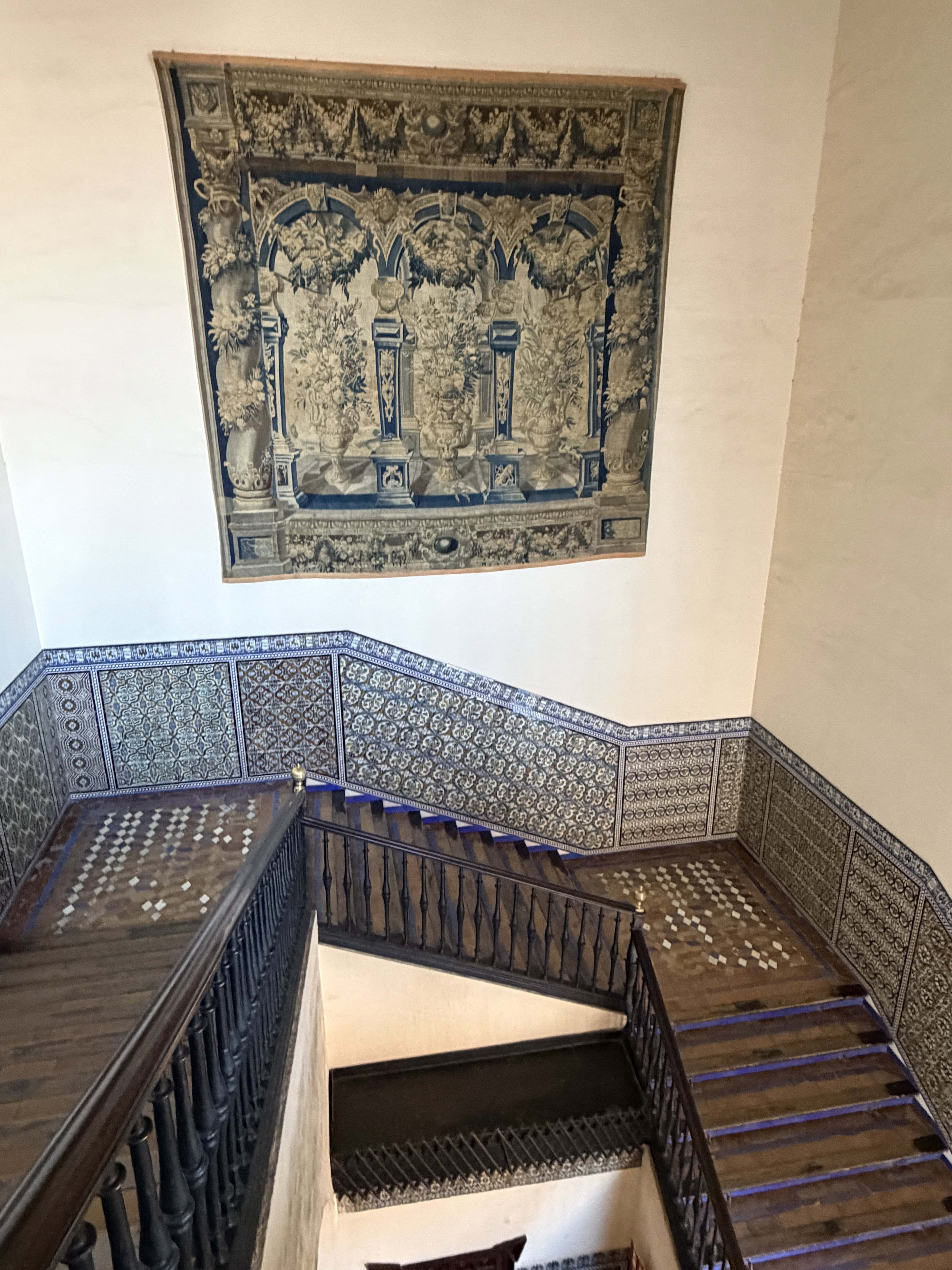
Photography wasn’t allowed during our visit, so this is one experience where you’ll have to put the camera away and enjoy what you are seeing.
✅ If you enjoy seeing a location without the crowds, then this 5-star tour is the perfect one for you. It includes early access tickets and a knowledgeable guide so you can thoroughly enjoy the Palace and all it has to offer.
2. Visit Seville Cathedral
Just a short walk from the Alcázar is another of Seville’s most important landmarks. Seville Cathedral, or Catedral de Sevilla, is the largest Gothic cathedral in the world. Huge pillars rise toward the vaulted ceiling, and almost everything seems oversized.
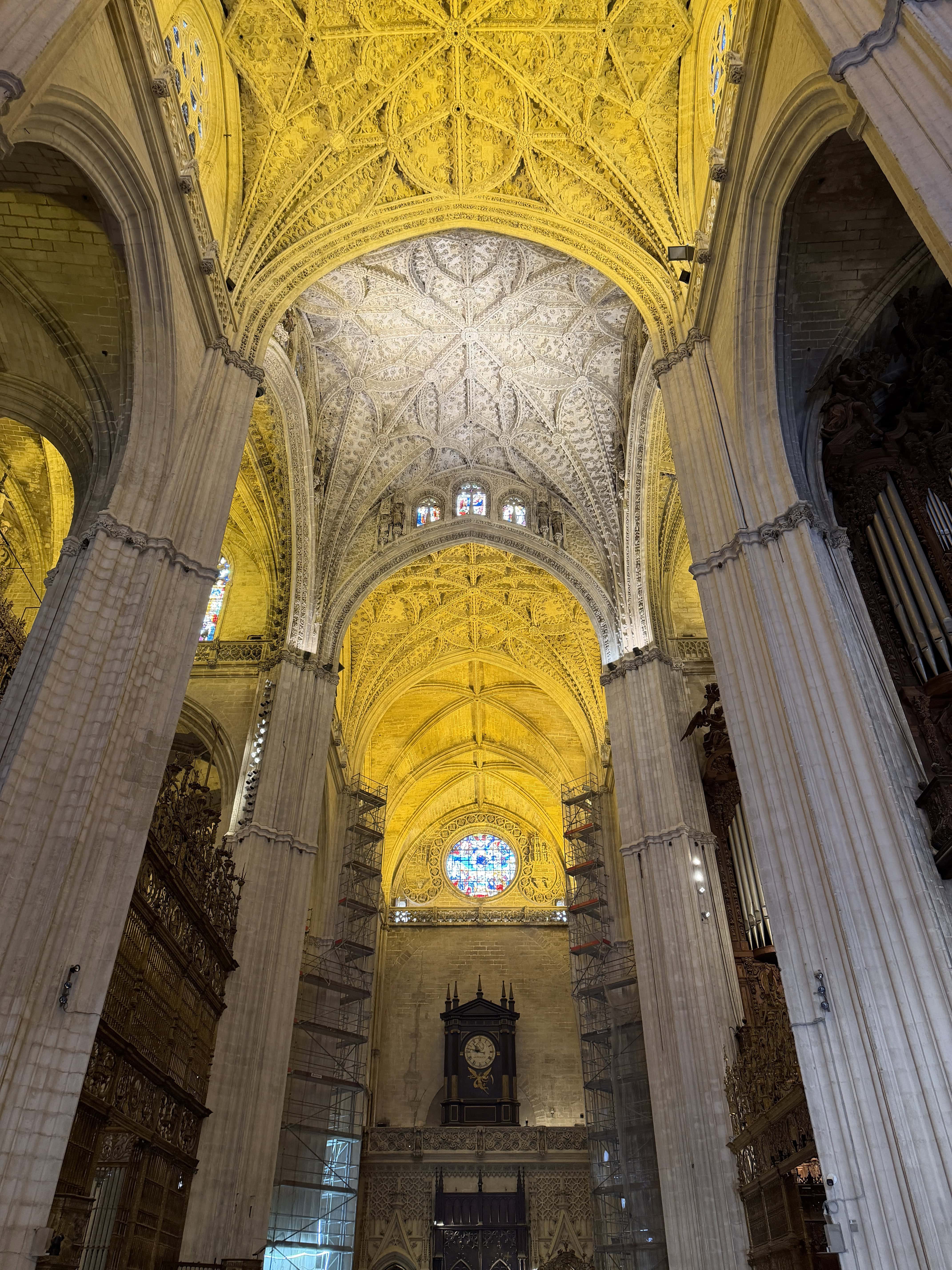
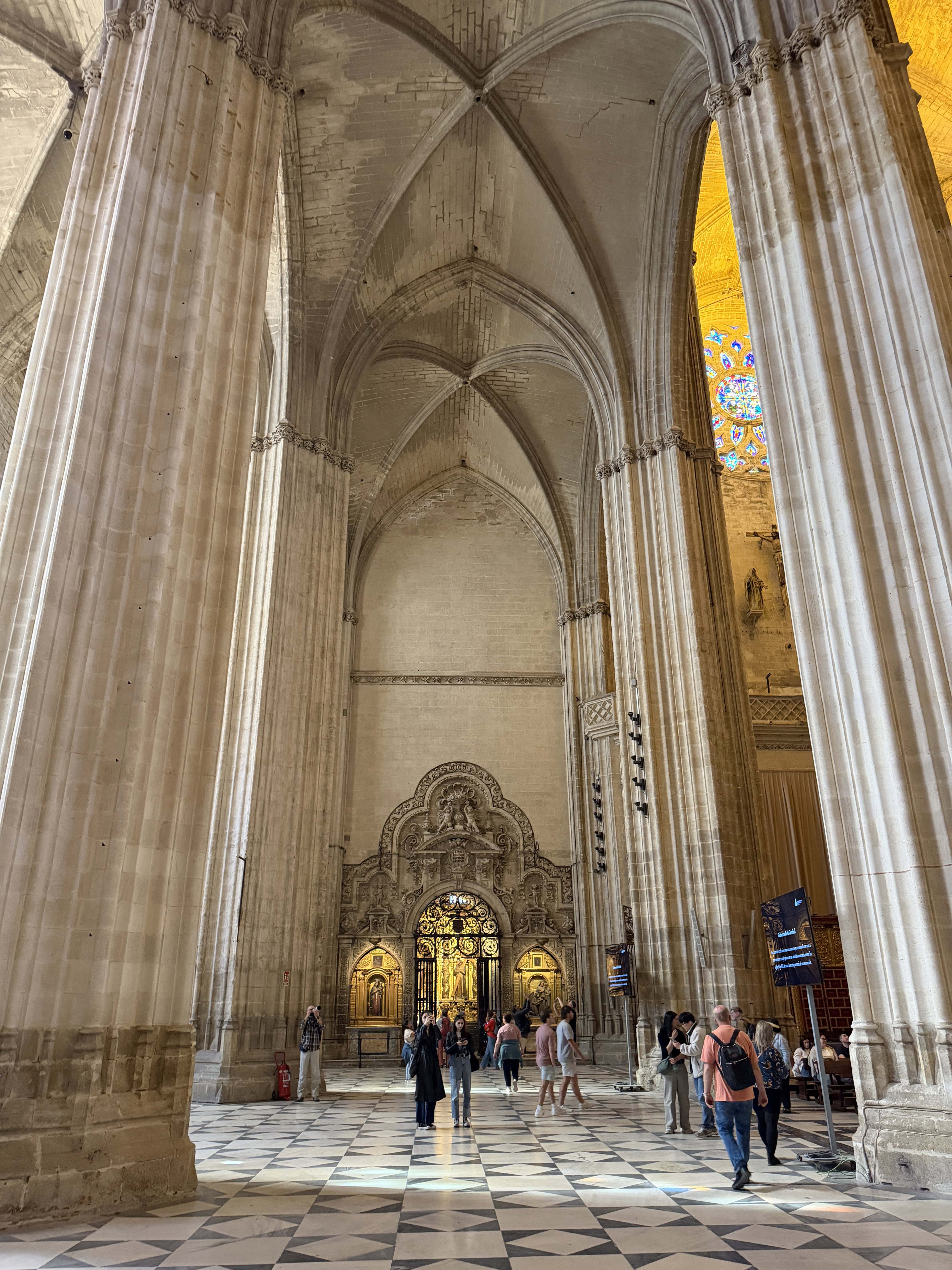
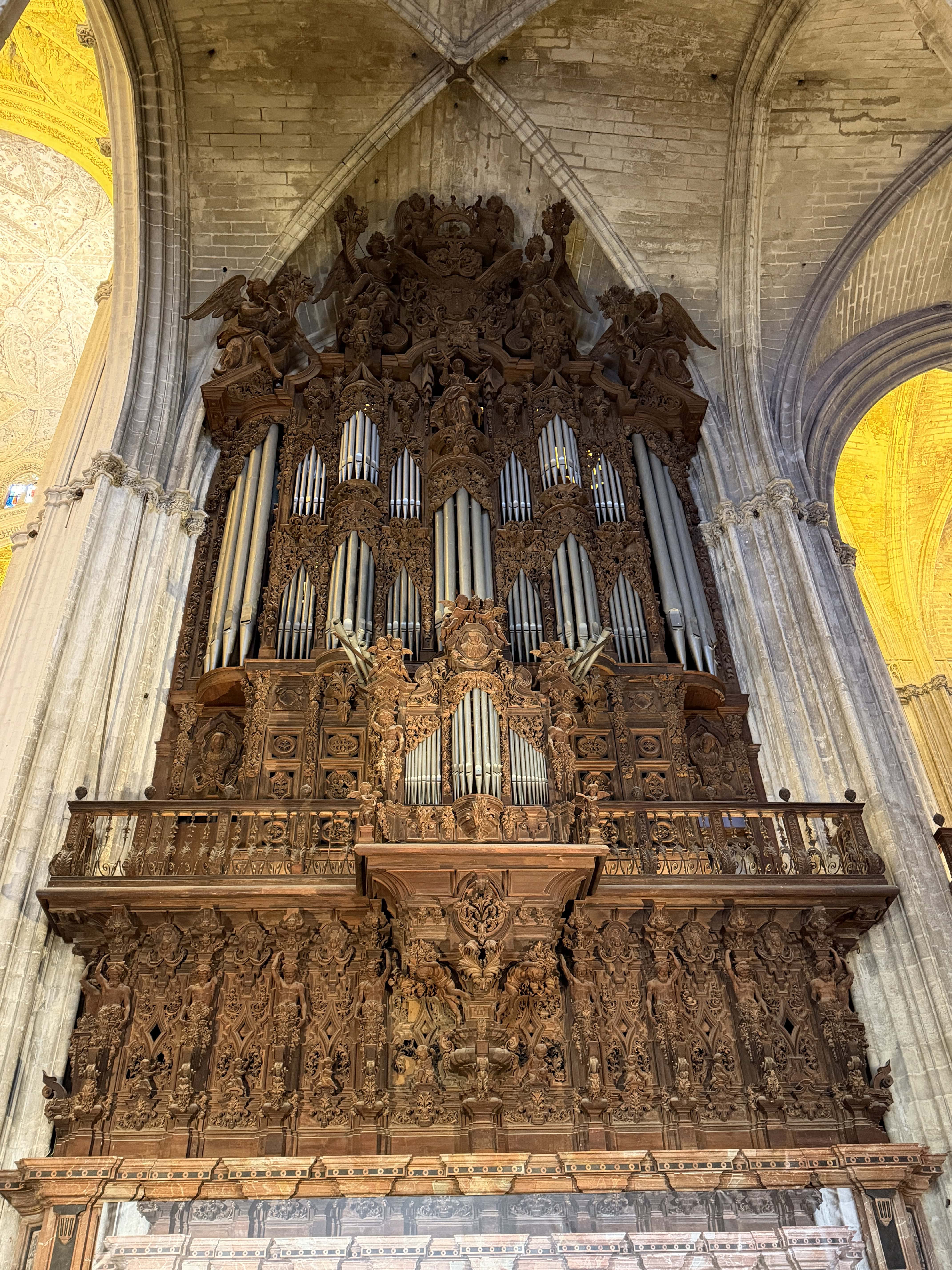
It doesn’t feel like just a cathedral. With the amount of artwork displayed throughout the building, there were times when we felt as though we were walking through an art gallery. Paintings and sculptures depict religious stories as well as historical themes. Even the organ is enormous.
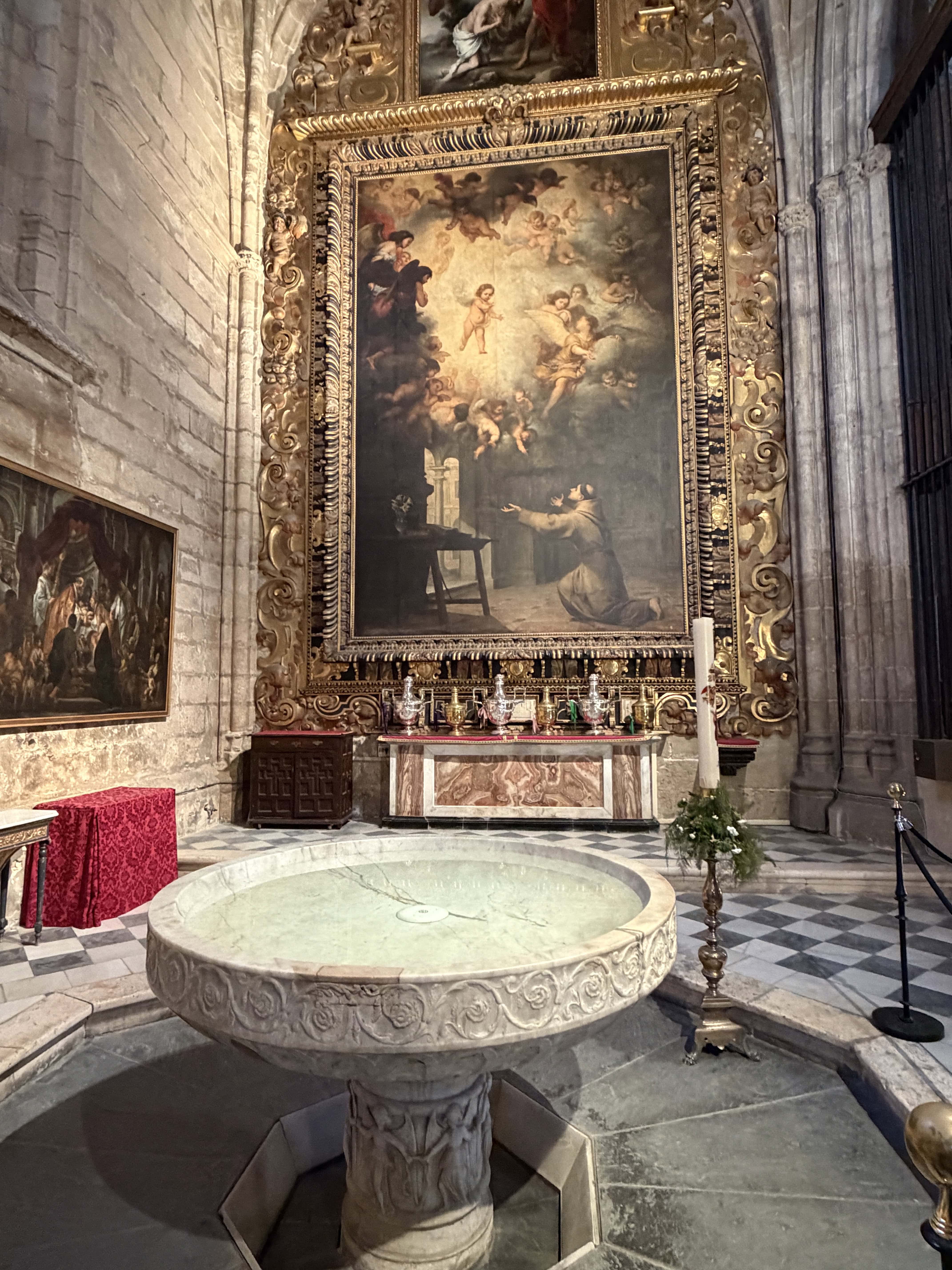
The main altar is constructed from wood and contains more than 200 carved biblical figures.
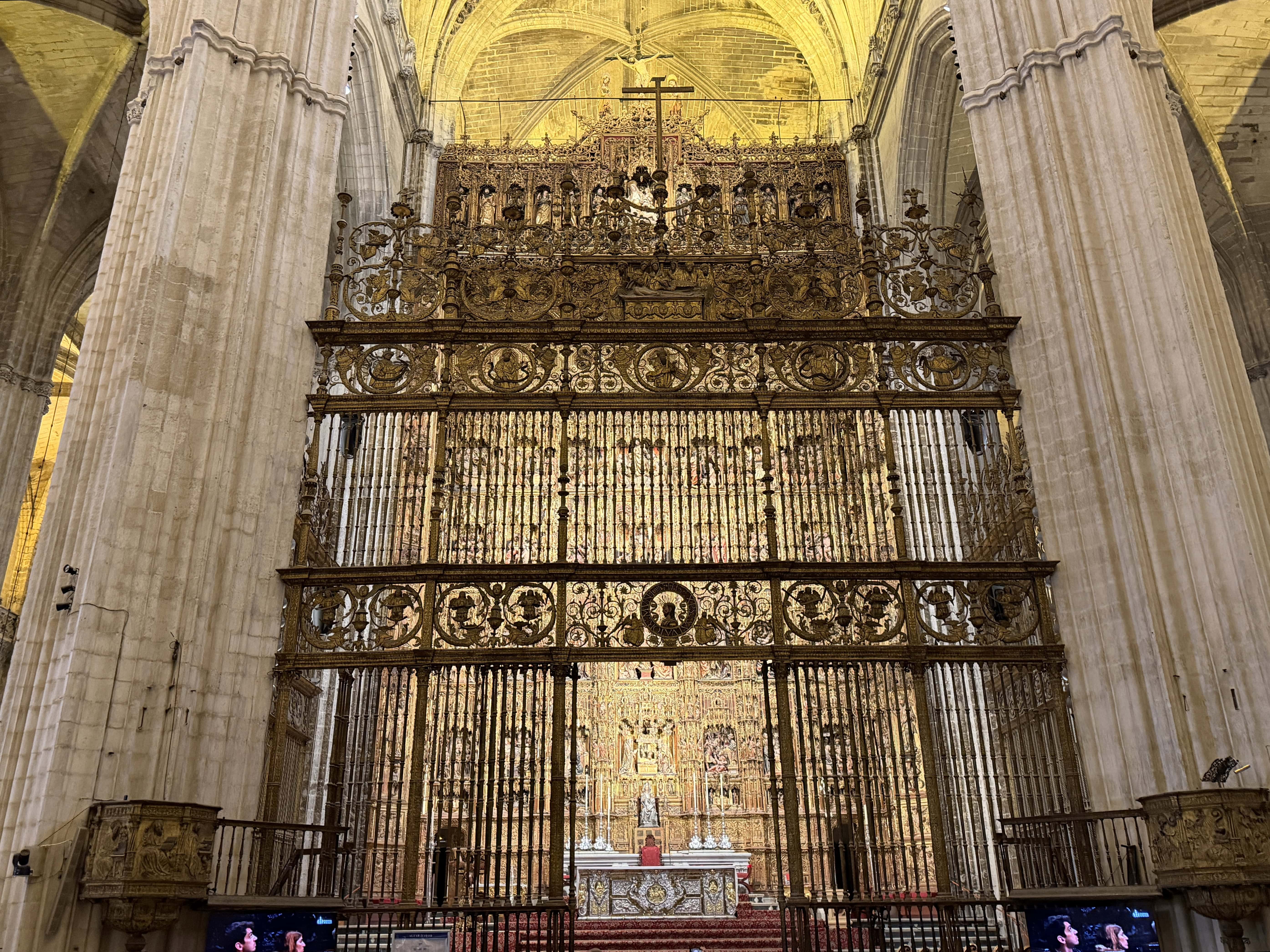
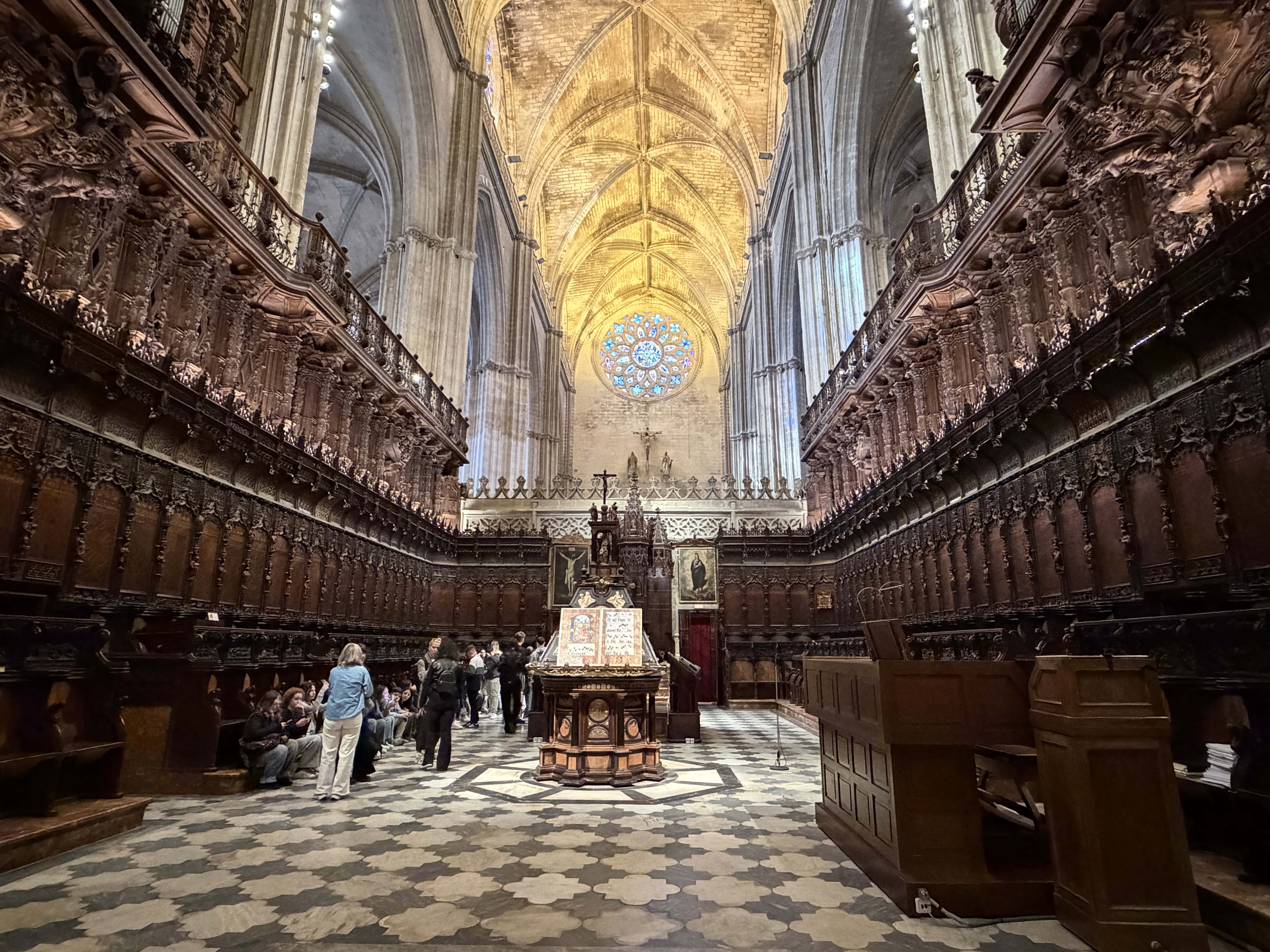
Across from it, the choir features intricate wood carvings and another impressive organ. There is an incredible amount to see, so give yourself time here, and we found that exploring it with a guide made all the difference.
See The Tomb Of Christopher Columbus
One of the cathedral’s most recognizable monuments is the tomb of Christopher Columbus. The elaborate tomb is supported by four carved figures representing the historic kingdoms of Castile, León, Aragón, and Navarra.
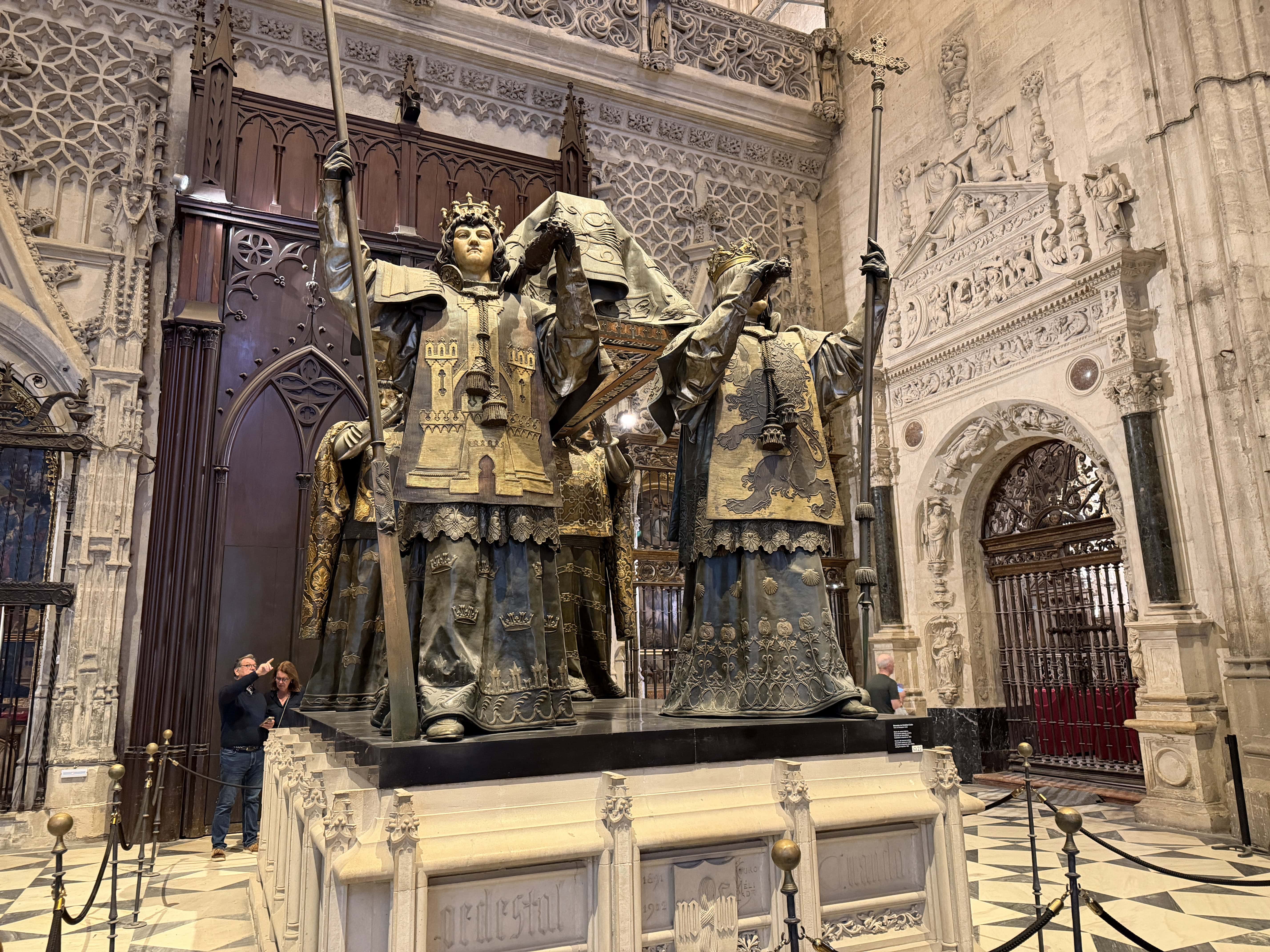
Many people think that he is buried inside this tomb; however, our guide explained that only a small part of his remains is located here, and the rest are in the Dominican Republic.
Whatever your views on Columbus and his role in history, the monument itself is an important part of the cathedral and attracts considerable attention.
Don’t Miss The Chapter House
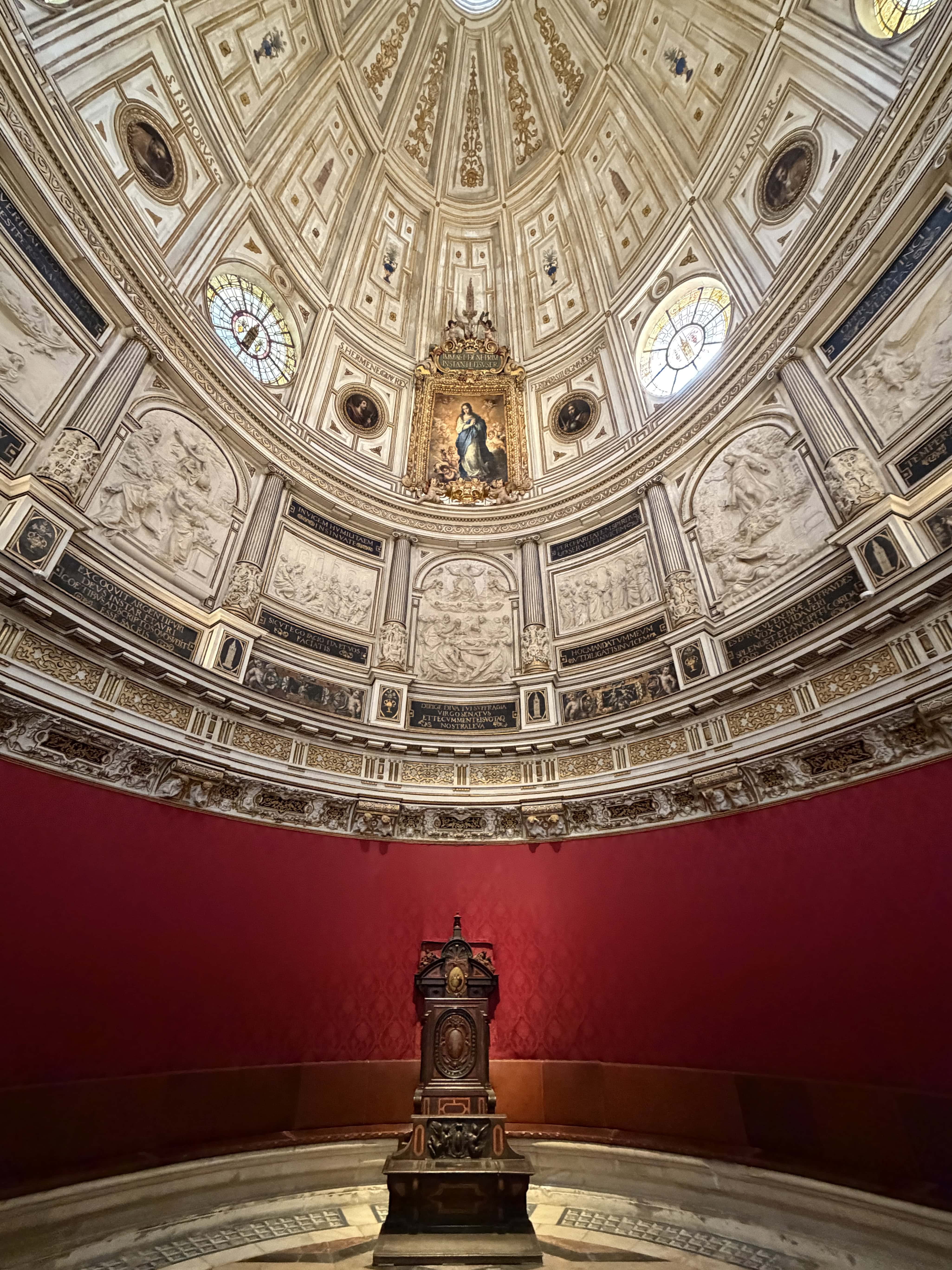
My favourite room in the cathedral was the Chapter House. Dating from the 16th century, it immediately felt different from the enormous spaces we had just walked through. The sculpted marble and detailed carvings were impressive, but it was the dome above us that really caught my attention.
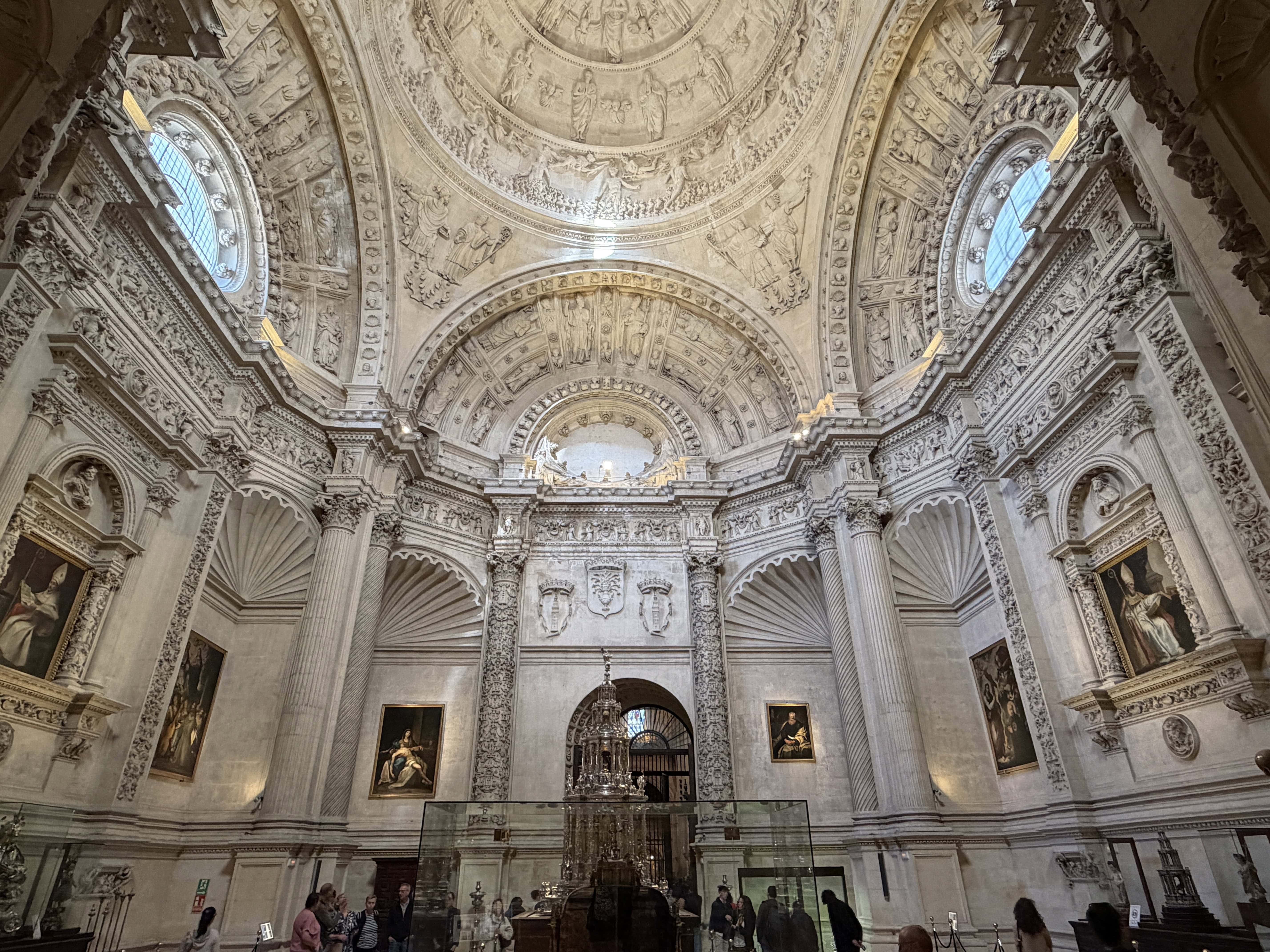
With so many grand spaces inside Seville Cathedral, this is one room that could easily be overlooked. Don’t miss it.
Climb La Giralda For Views Across Seville
Your cathedral visit should also include La Giralda. The tower dates back to the 12th century and was originally constructed as a minaret. Today, you can make your way to the top for some of the best views across Seville.
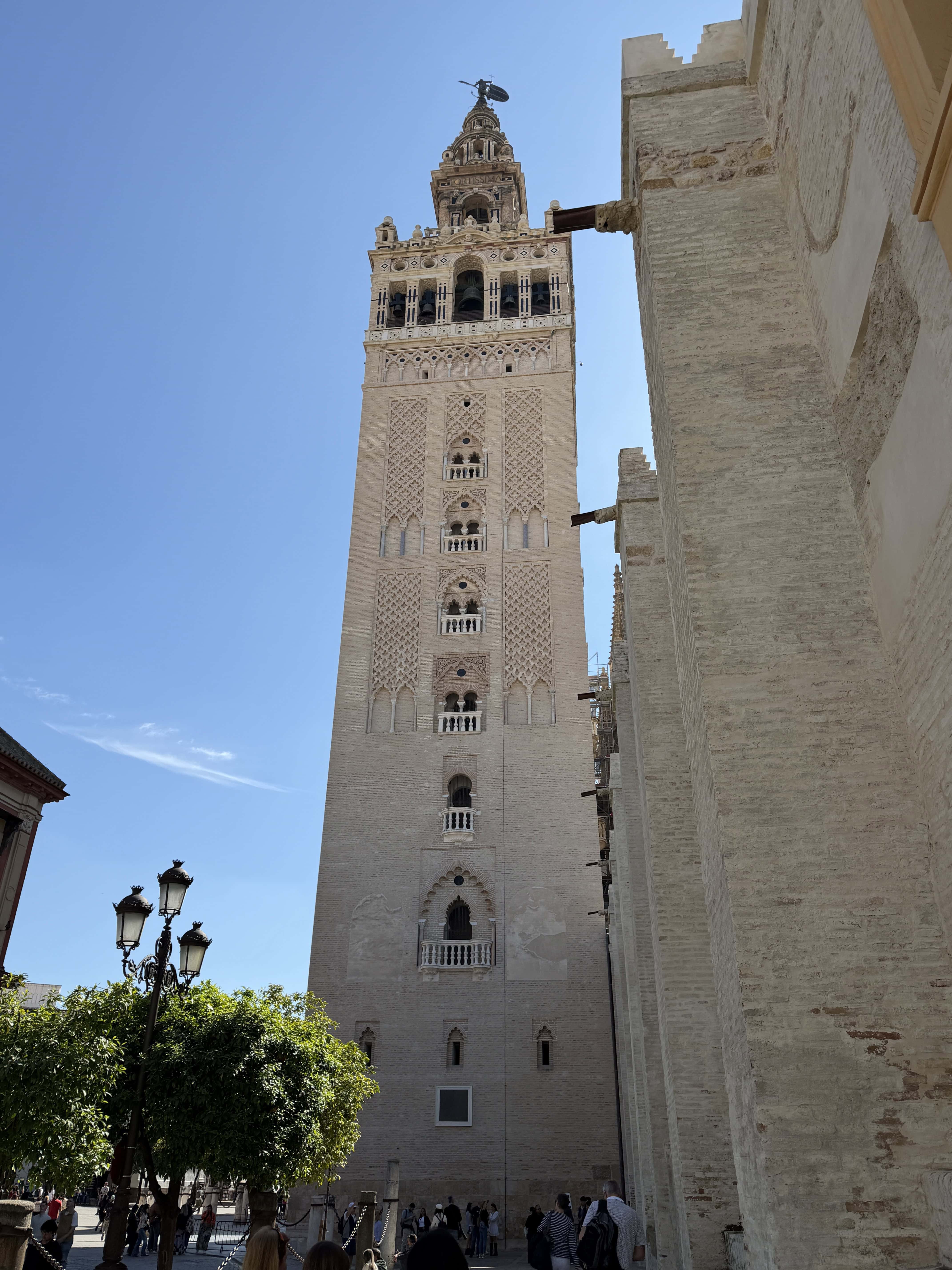
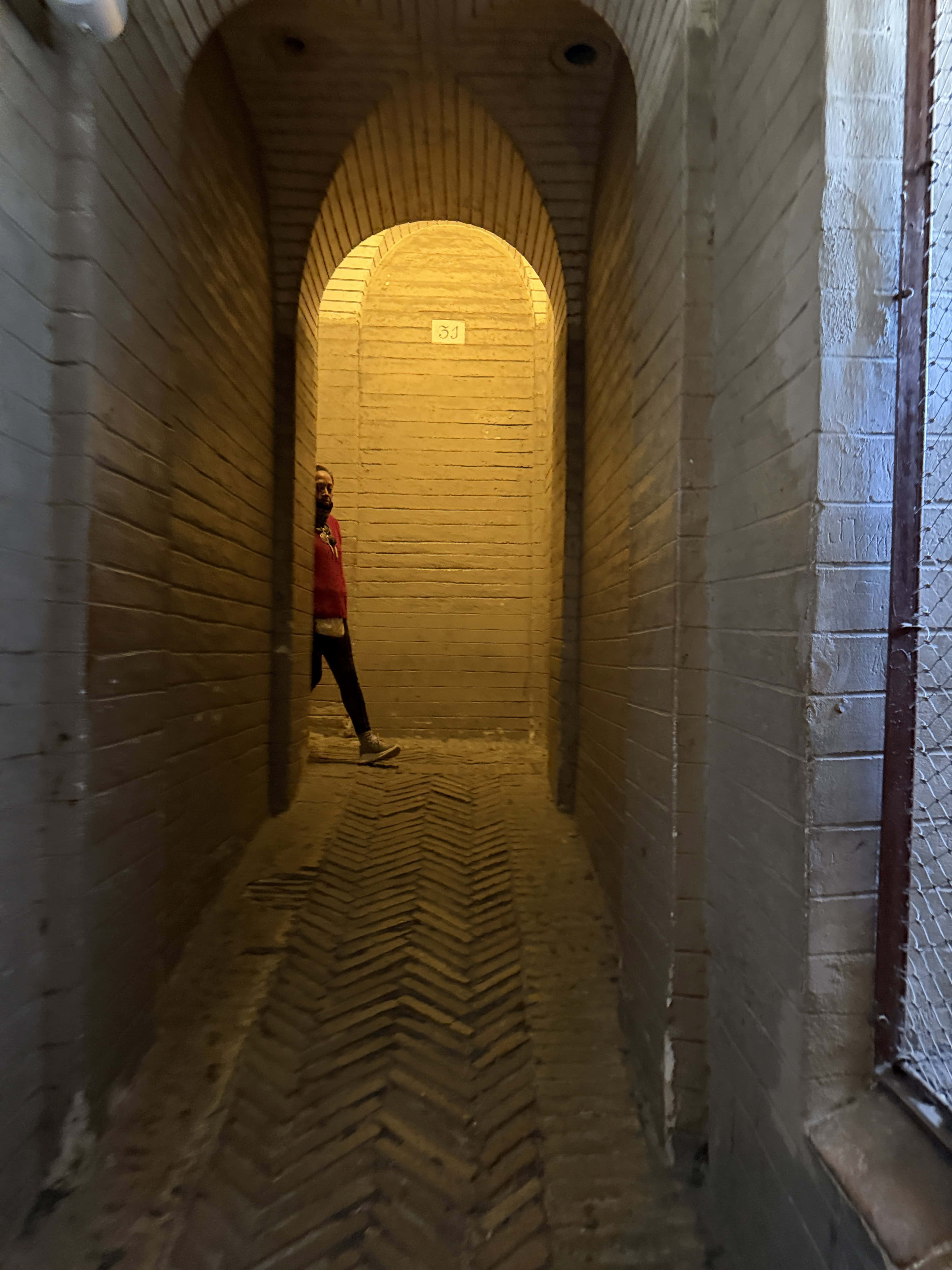
What surprised us was how reasonable the climb felt. Rather than climbing flight after flight of stairs, much of the route uses gradual ramps. That made reaching the top considerably easier than some cathedral towers we have climbed in other places in Europe.
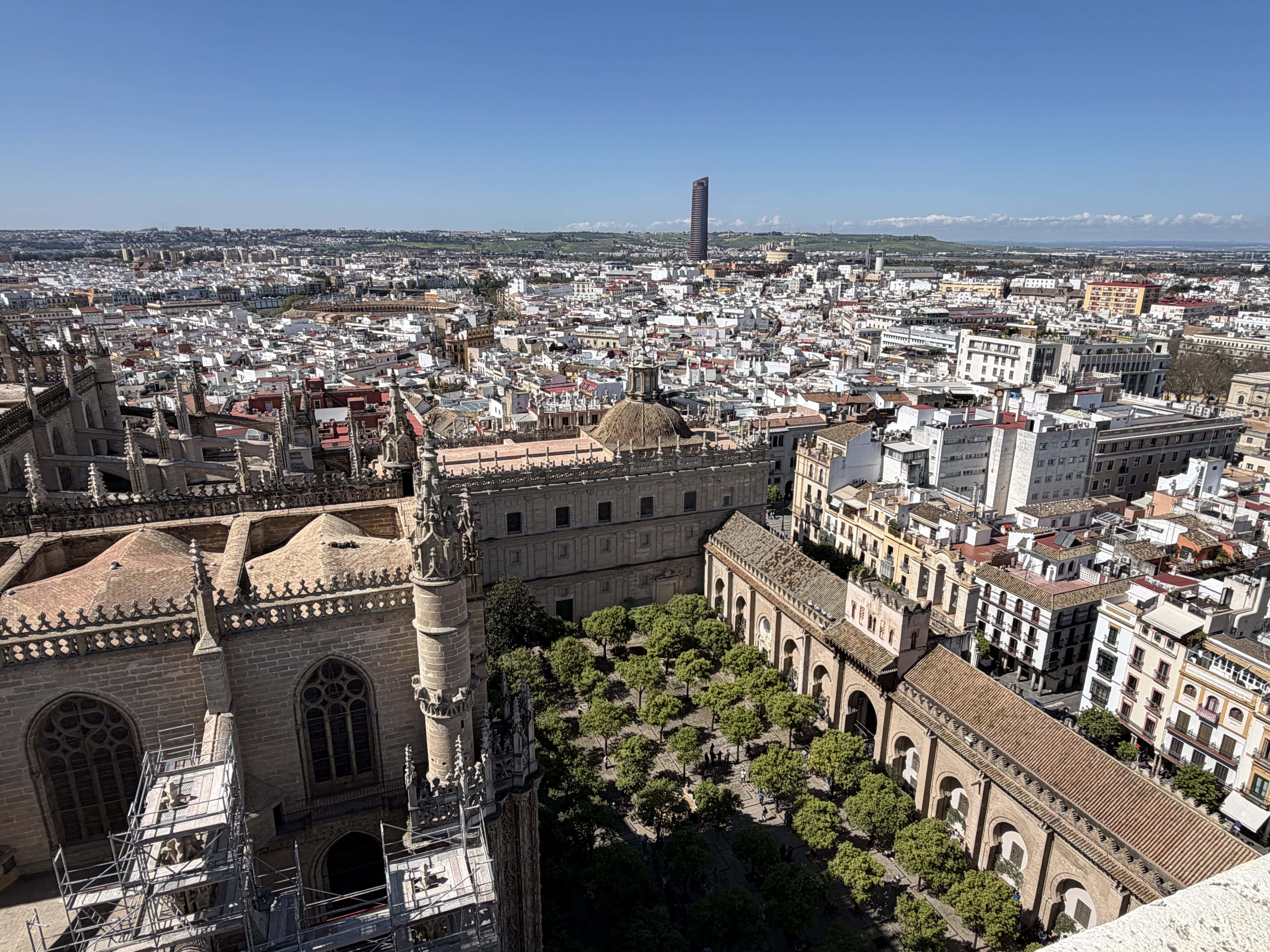
Once we arrived, the views were worth the effort. From above, you can appreciate how Seville’s historic buildings, church towers, plazas, and neighbourhoods fit together.
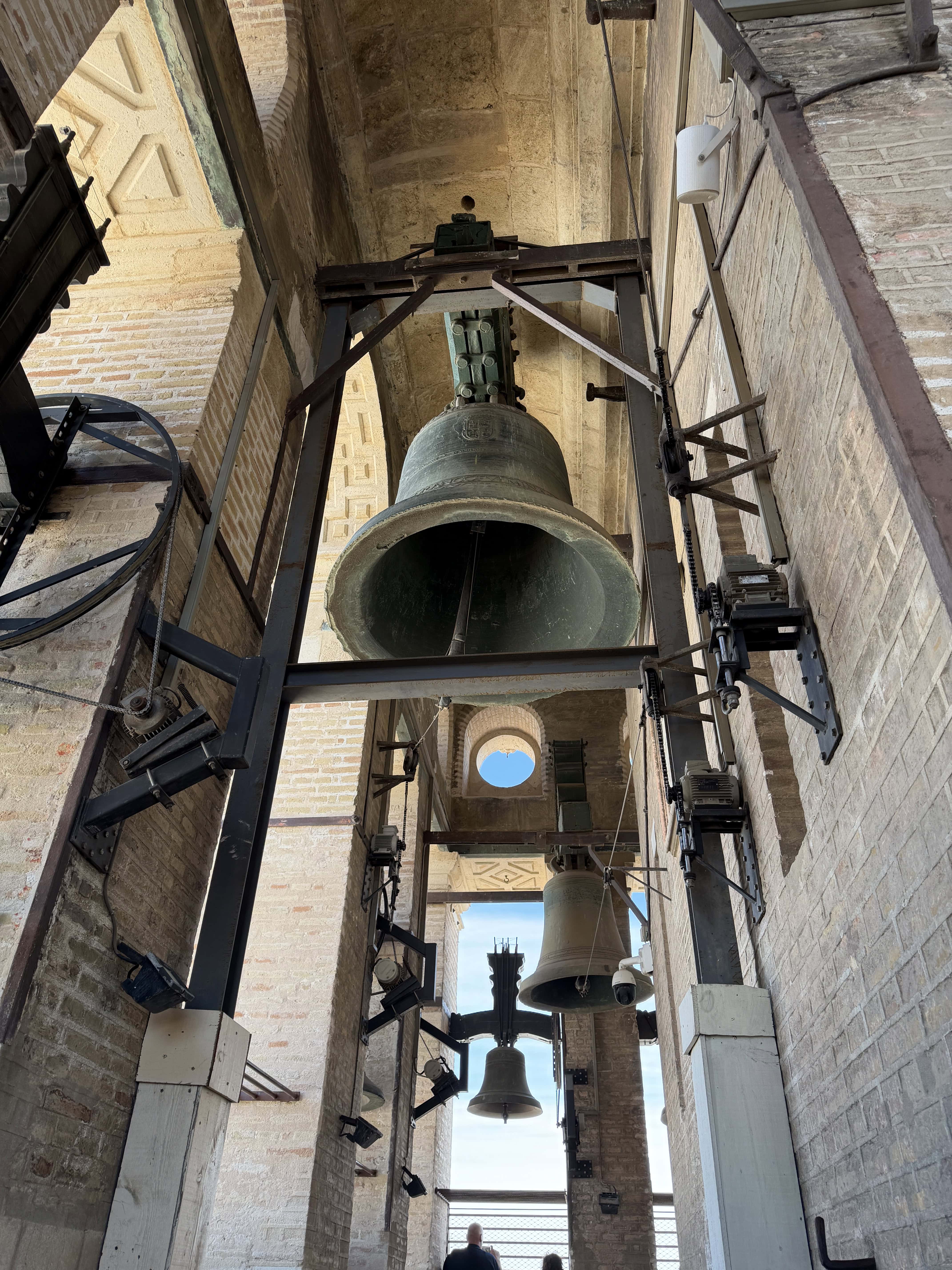
Depending on what time you arrive at the top, you may be up there for the bells ringing. Be prepared, as it is super loud!
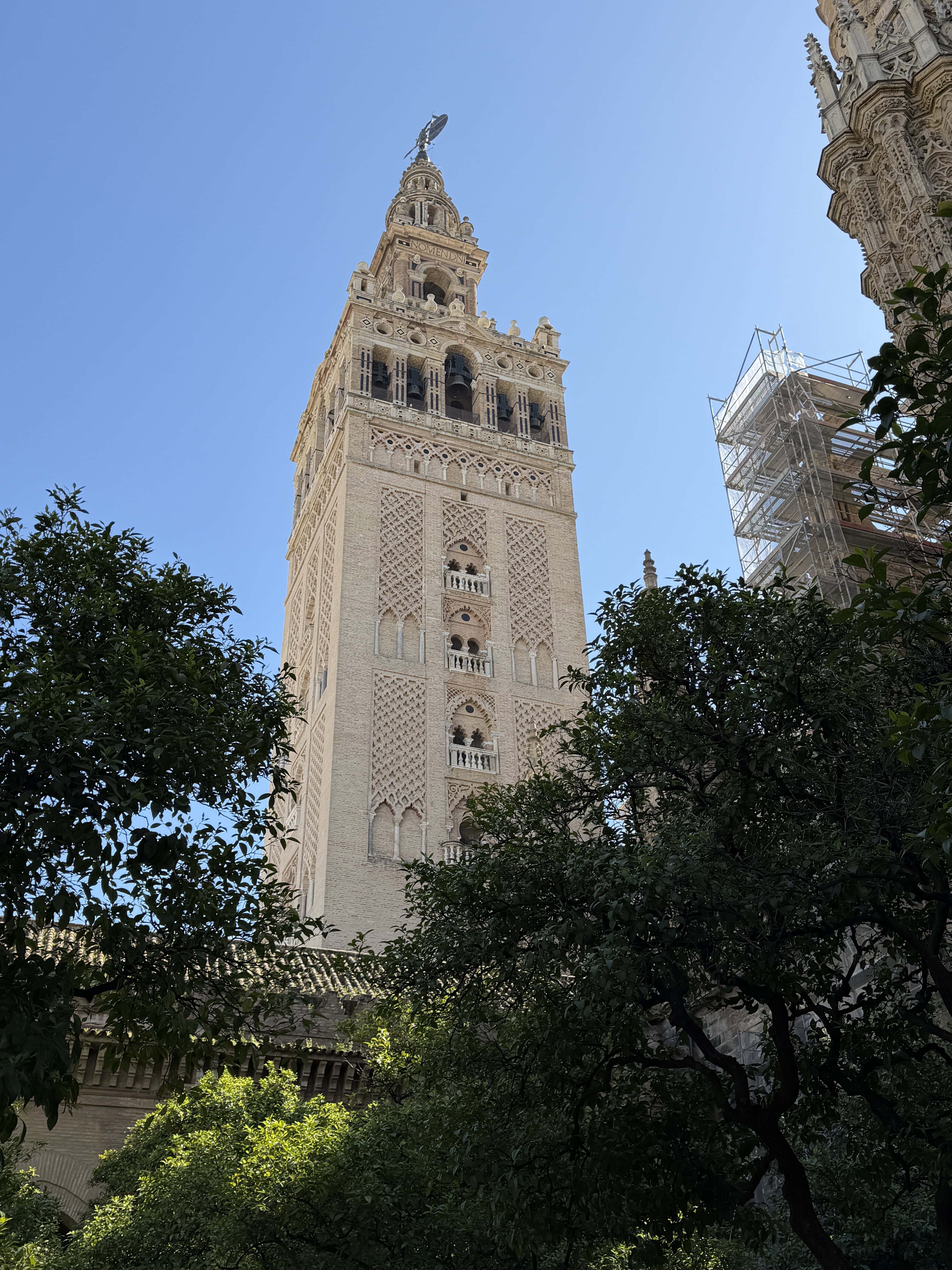
Before leaving, also take a look at La Giralda from the cathedral courtyard. With all the beautiful orange trees, it is a wonderful place from which to view the grand tower.
✅ If you are looking for an excellent guide who can share with you the most important features of the cathedral, then we highly recommend the tour that we took. It included our entrance tickets; it was just the right amount of time, and we learned a lot about what we were seeing. The perfect tour.
3. Wander Through Santa Cruz
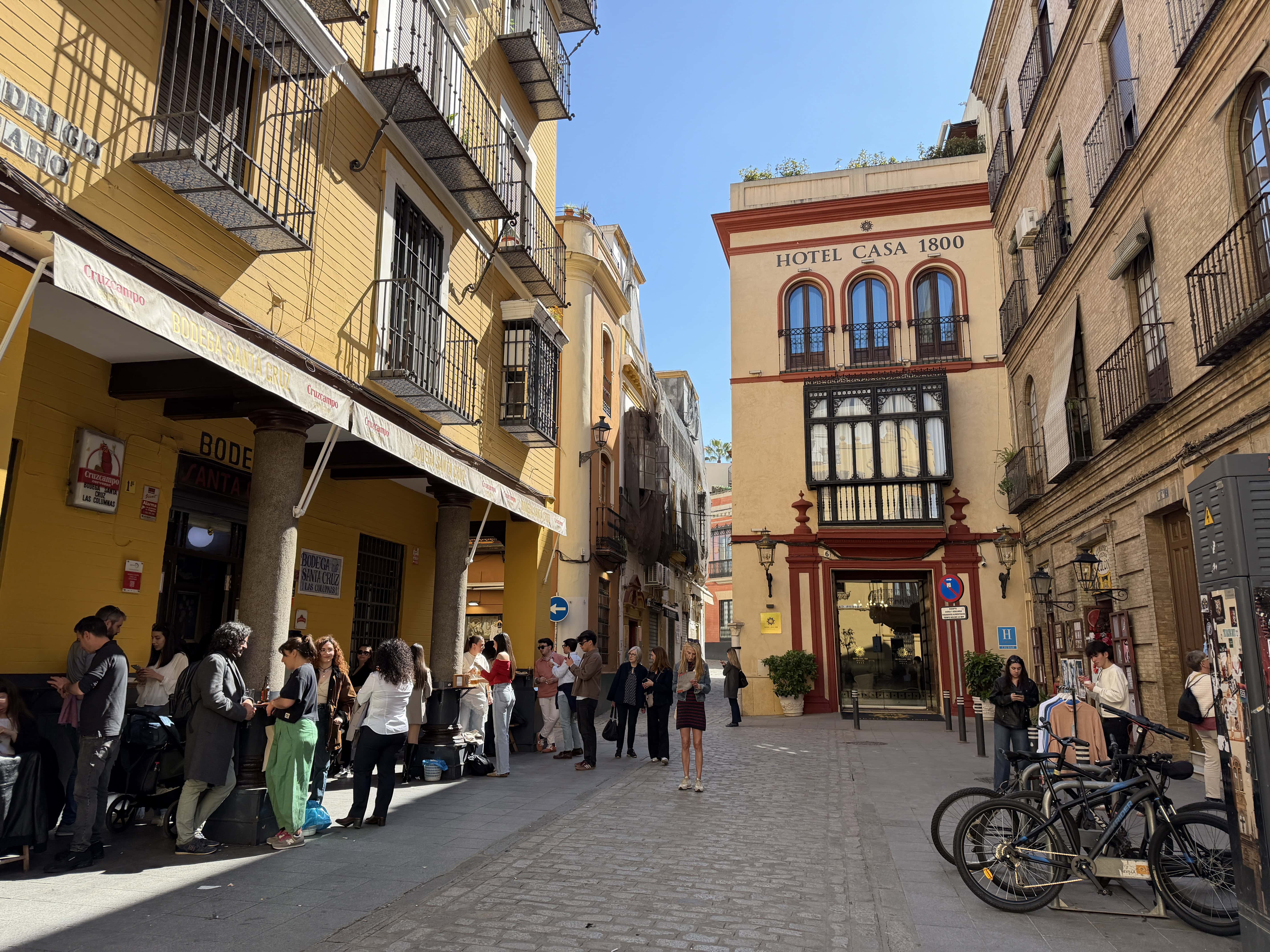
Once you have finished visiting the Alcázar and cathedral, don’t immediately move on to another major attraction. Spend some time exploring Santa Cruz. This former Jewish quarter surrounds two of Seville’s most famous sights, yet it has an identity of its own.
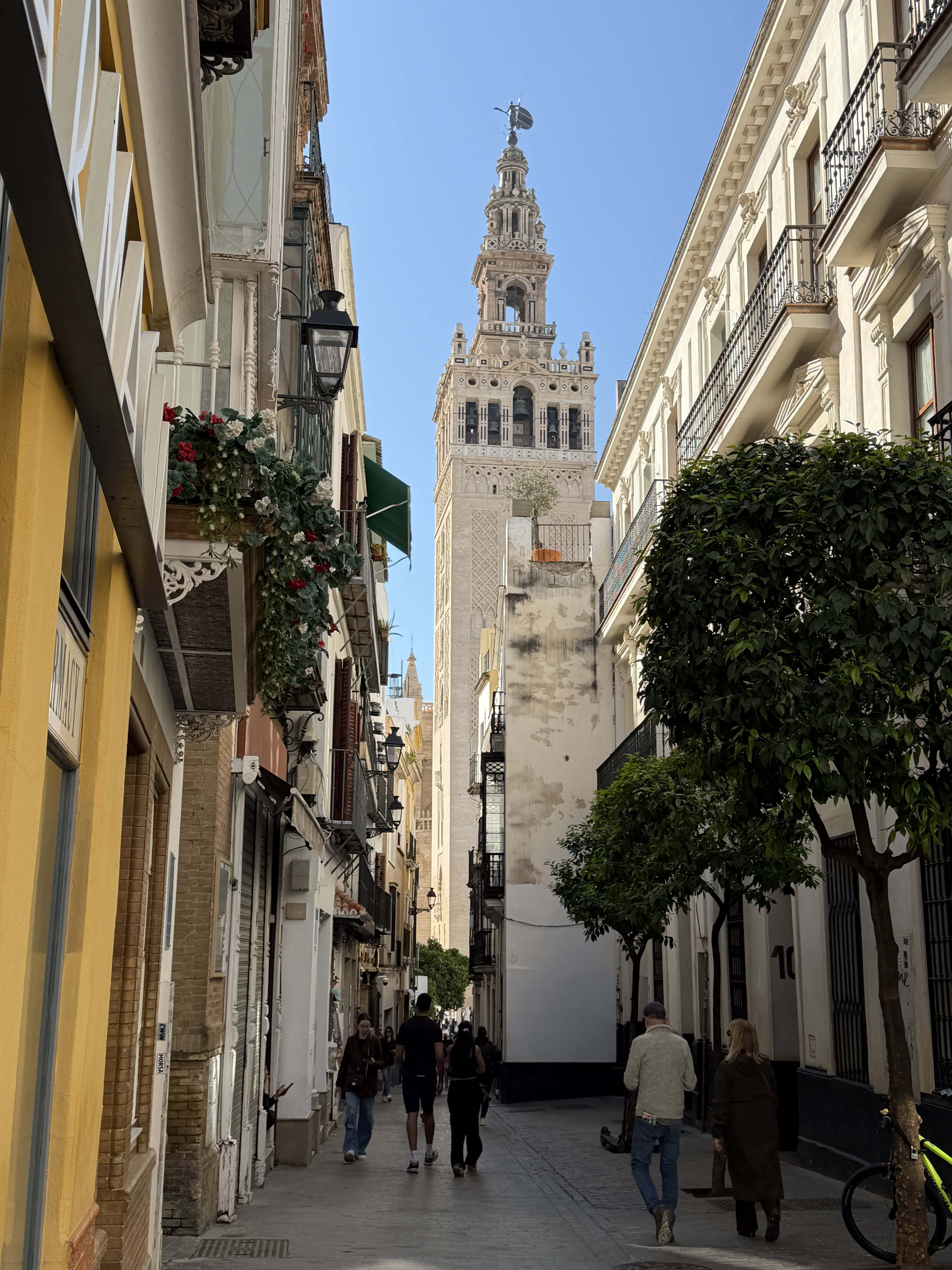
The streets are narrow and lead into small plazas. Restaurants and cafés appear around corners, while shops provide plenty of opportunities to browse. We loved wandering here.
4. Discover Casa de Pilatos
One of the advantages of having more than a couple of days in Seville is being able to visit some of the city’s less famous palaces. Casa de Pilatos was one of our favourites. This 16th-century palace was built as a private residence for a wealthy family and remains associated with the Dukes of Medinaceli. Like the Alcázar, it combines several architectural styles, including Gothic, Mudéjar, and Renaissance elements.
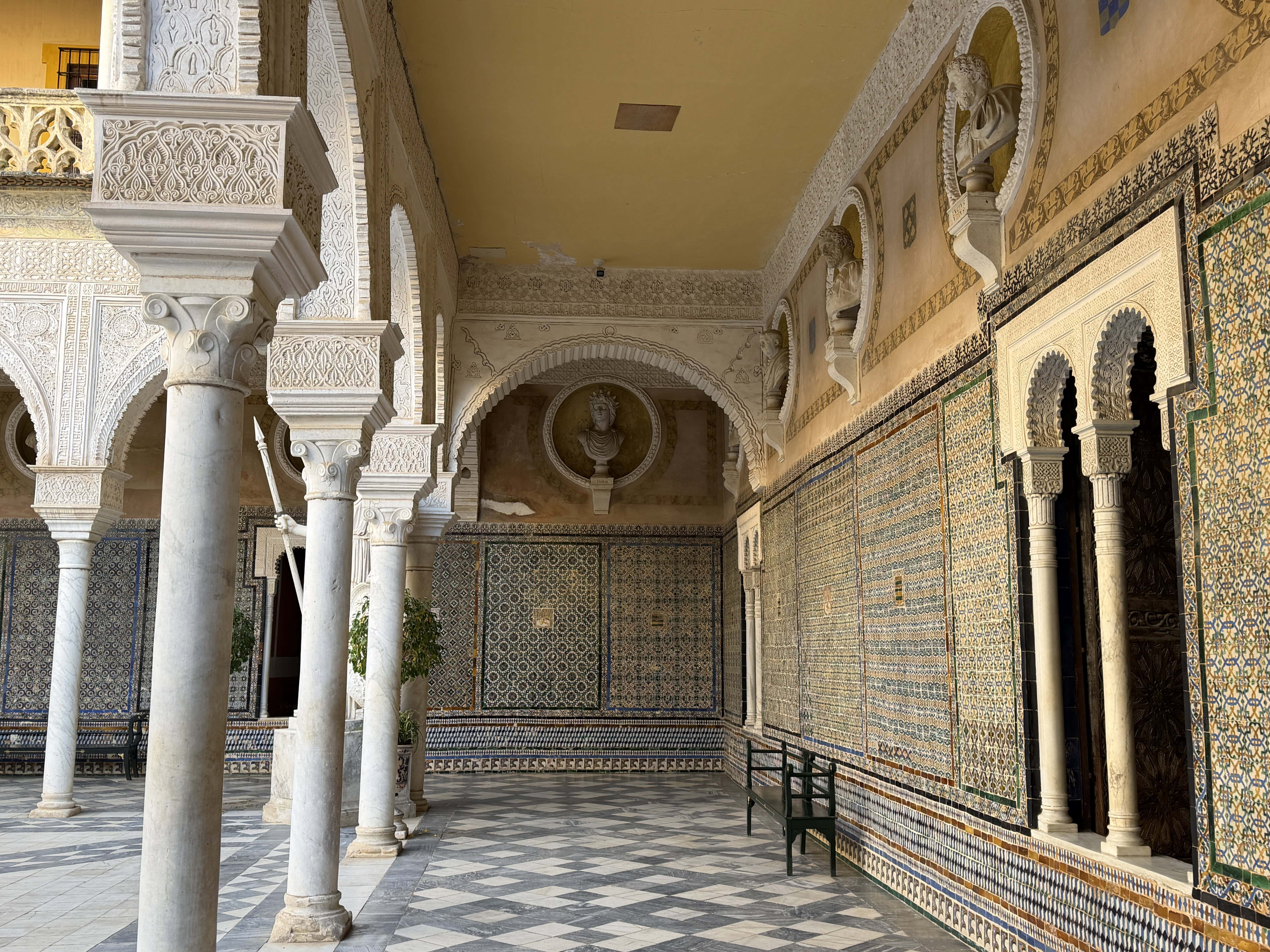
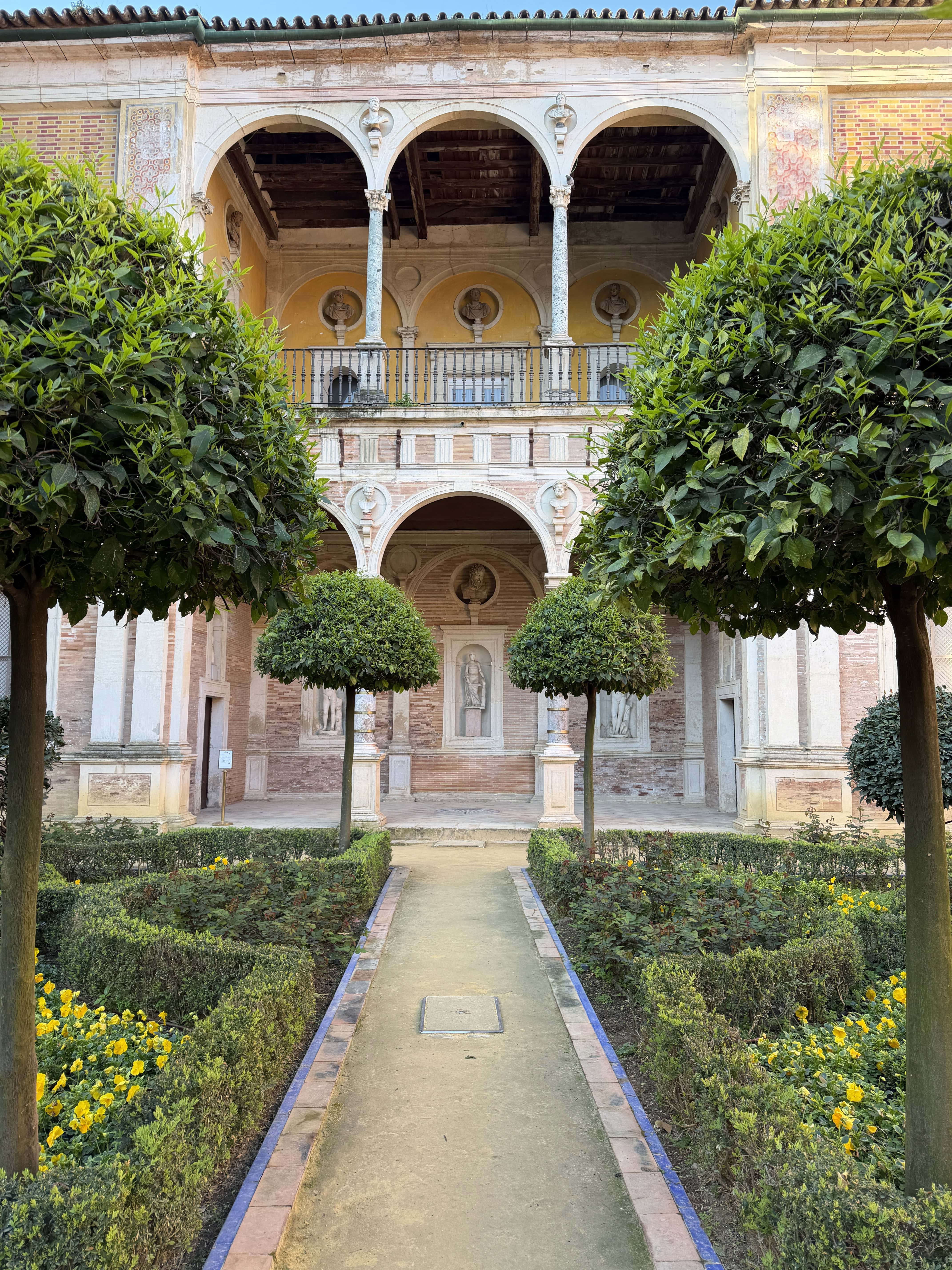
The large central courtyard is gorgeous. A fountain stands in the centre, surrounded by statues and archways.
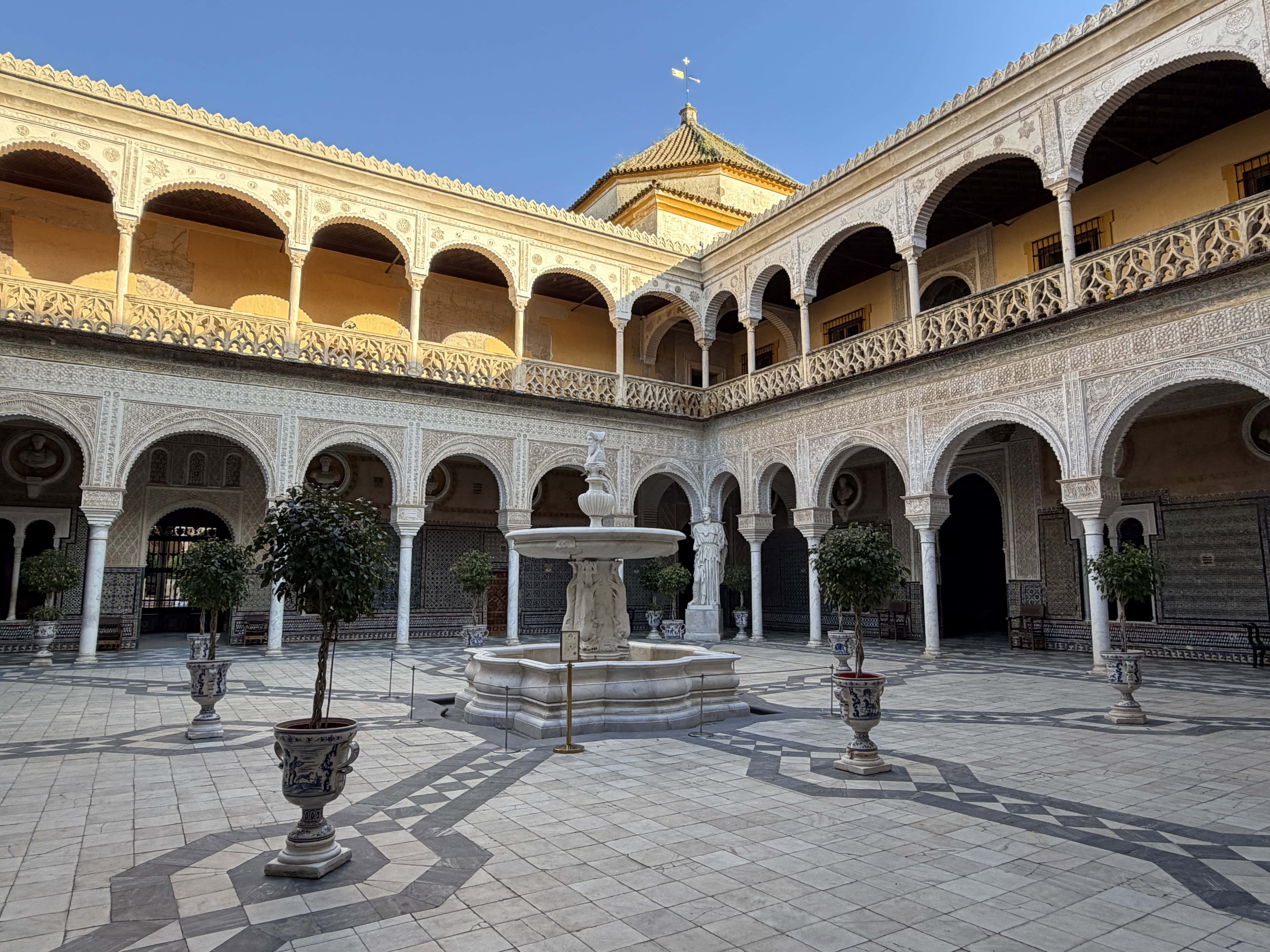
Beyond them are walls covered with colourful tiles. And there are a lot of tiles. We couldn’t get enough of looking at all the different patterns.
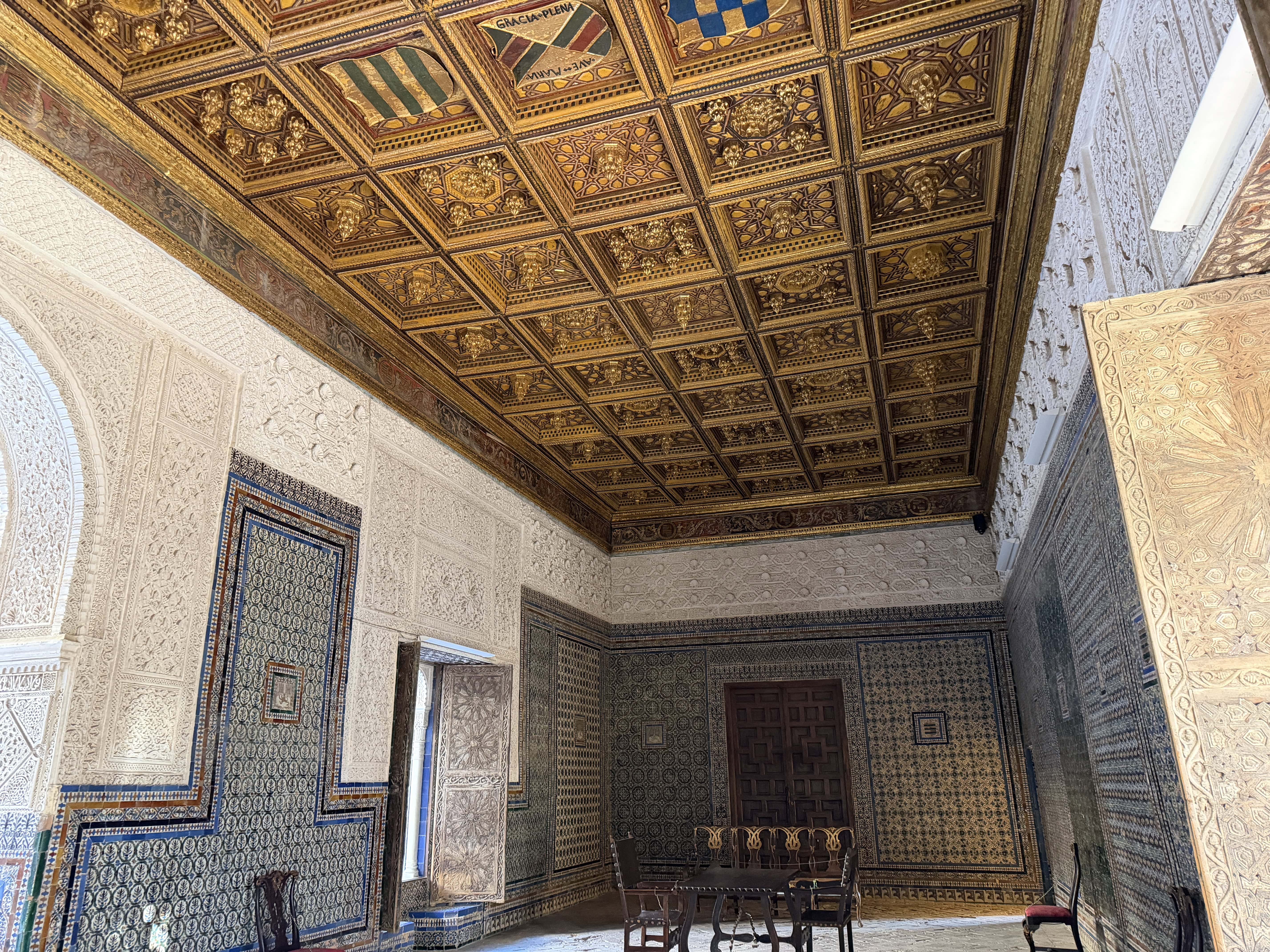
Explore The Gardens And Upstairs Apartments
The gardens are another highlight. Carefully maintained hedges surround water features, while potted plants are everywhere.
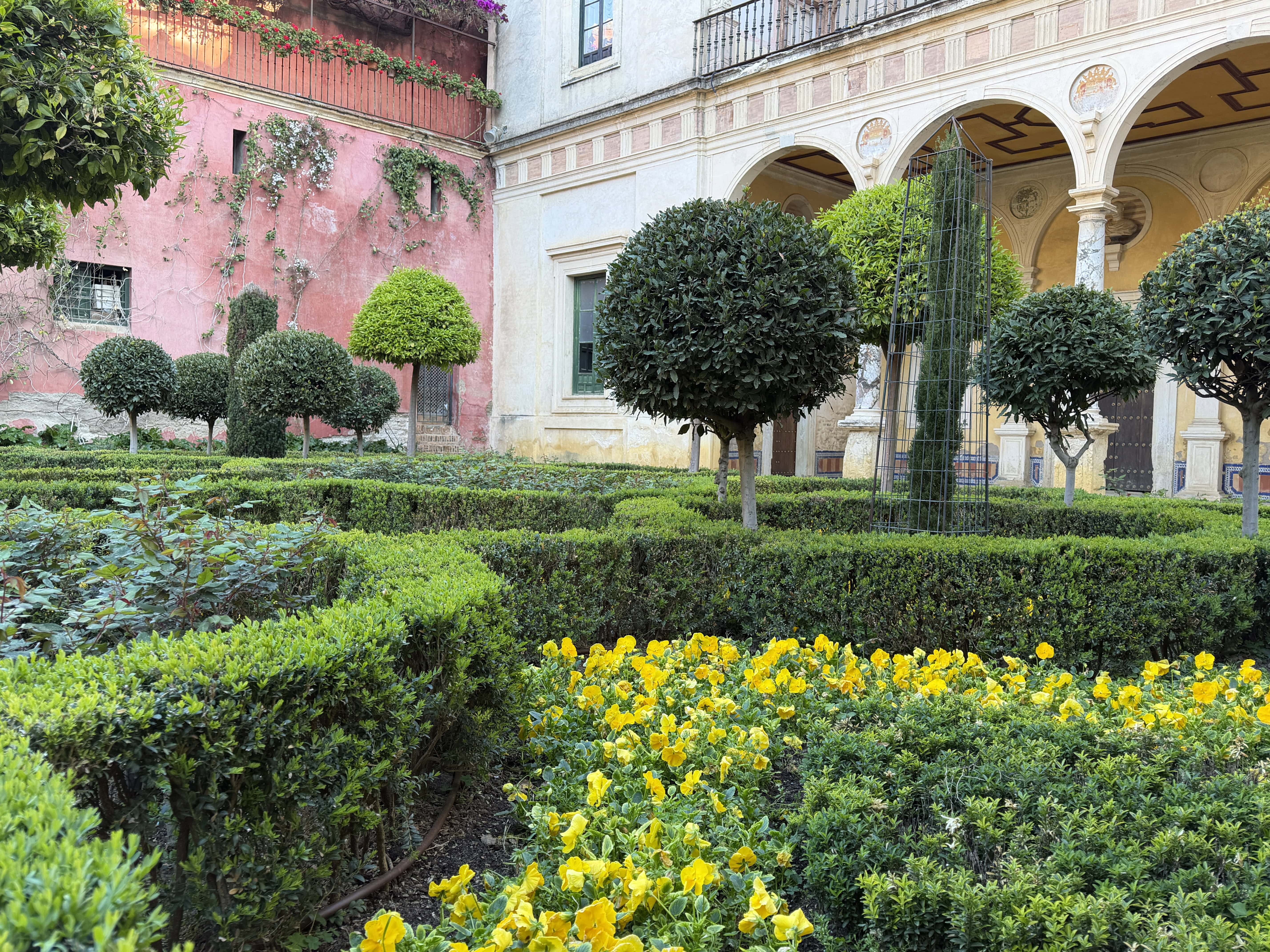
Looking at all those plants, one of my first thoughts was how on earth do they water everything?
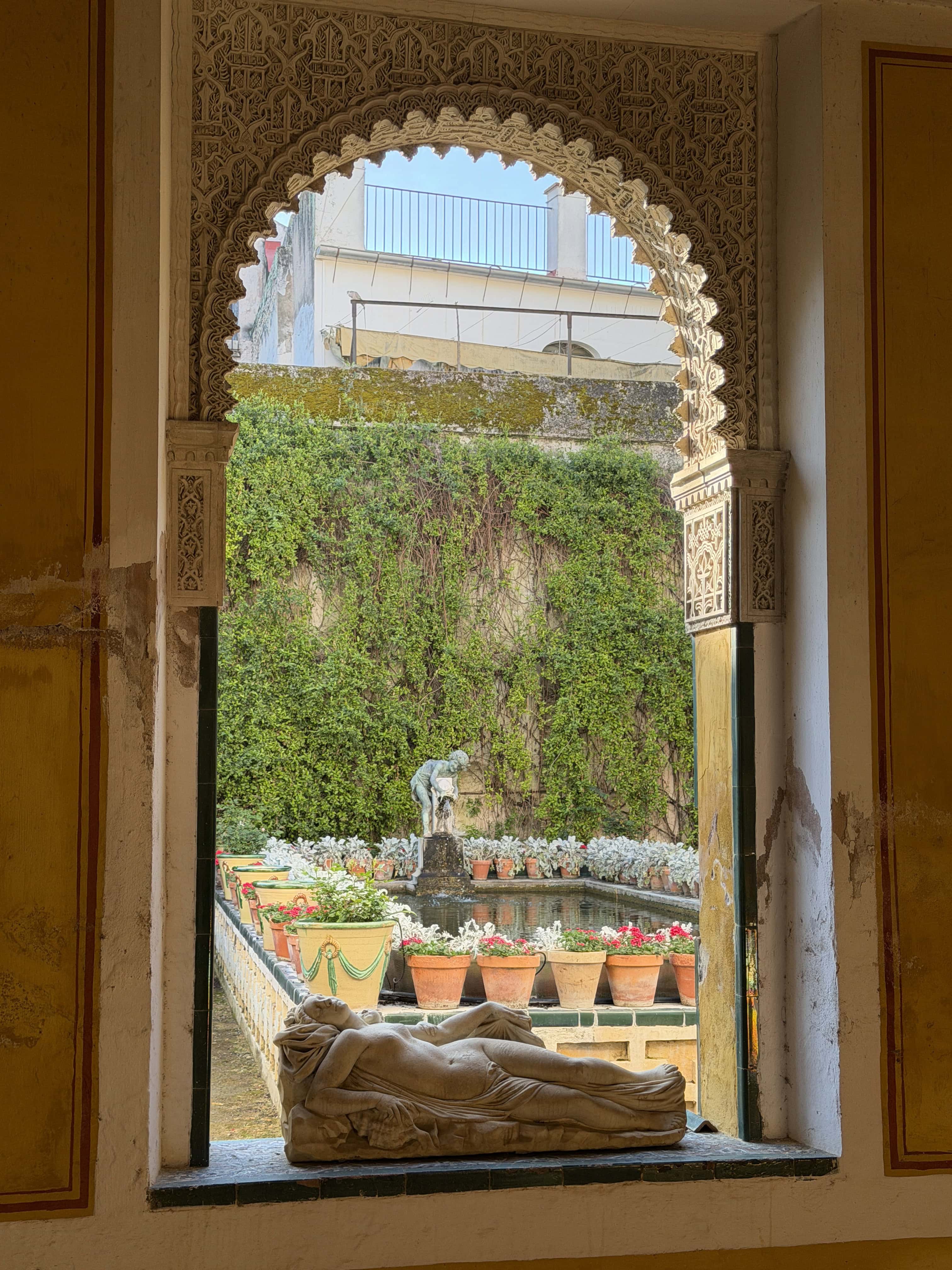
We also purchased an additional ticket for a guided visit to the upstairs apartments. This turned out to be worthwhile.
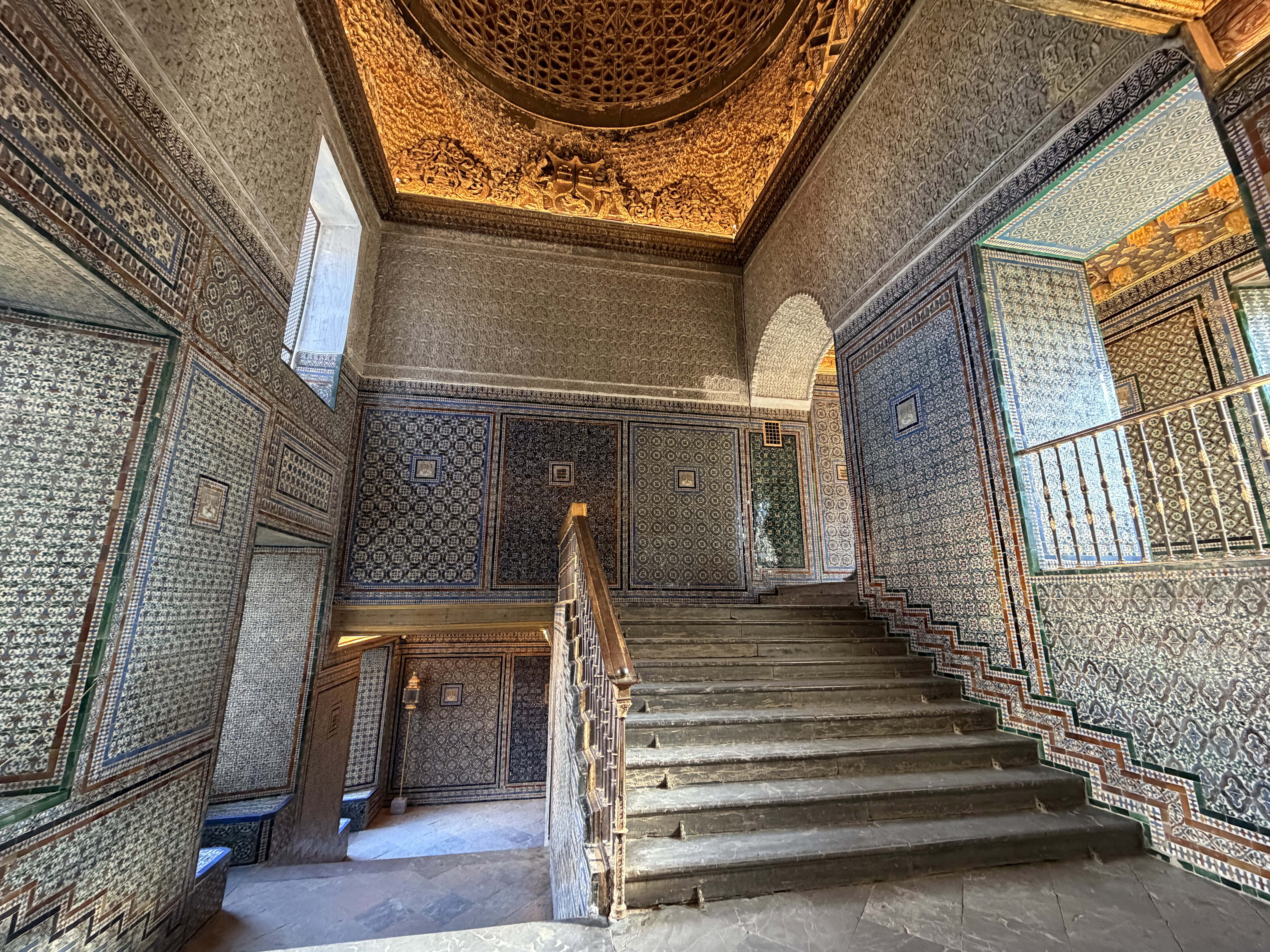
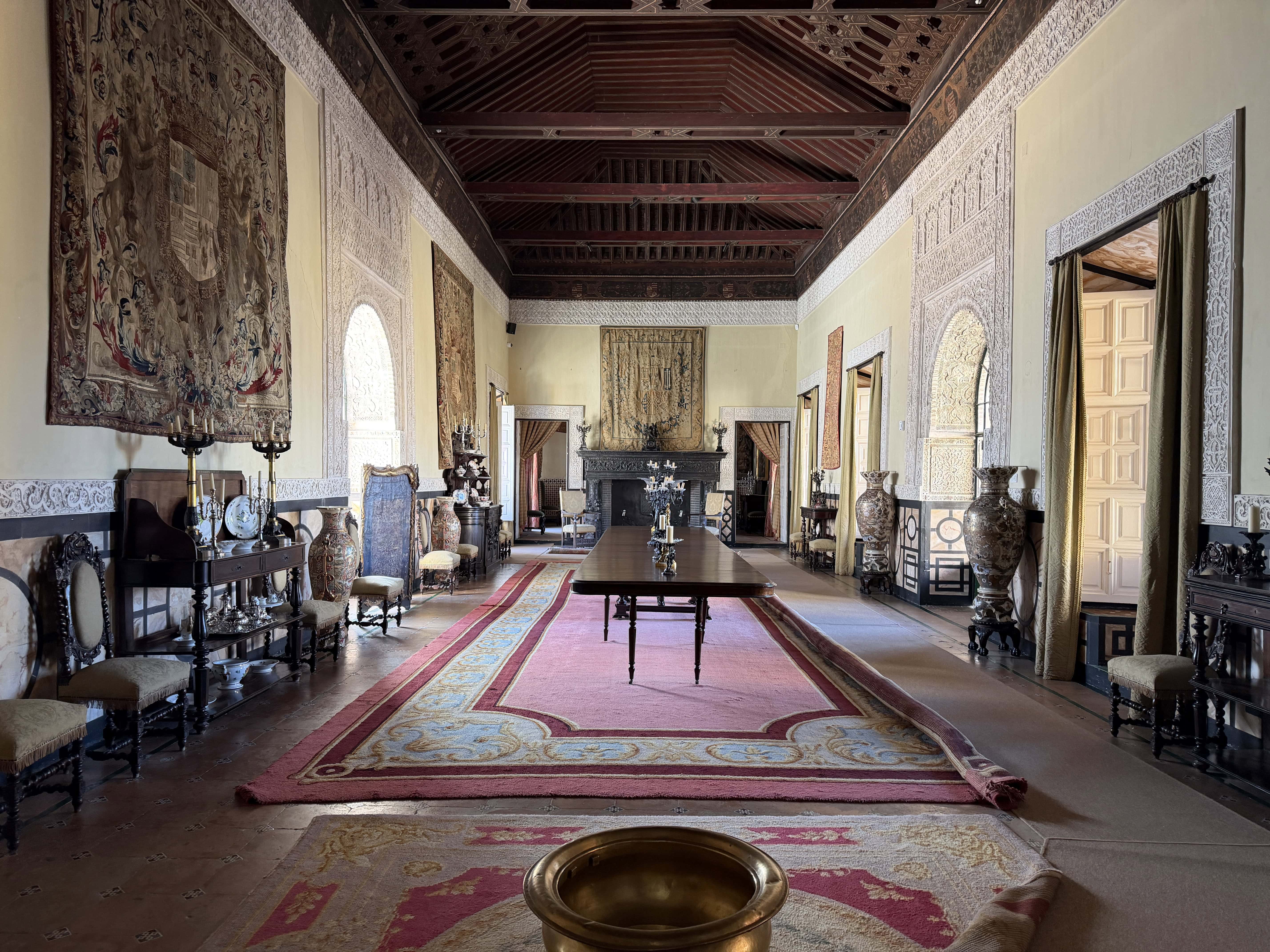
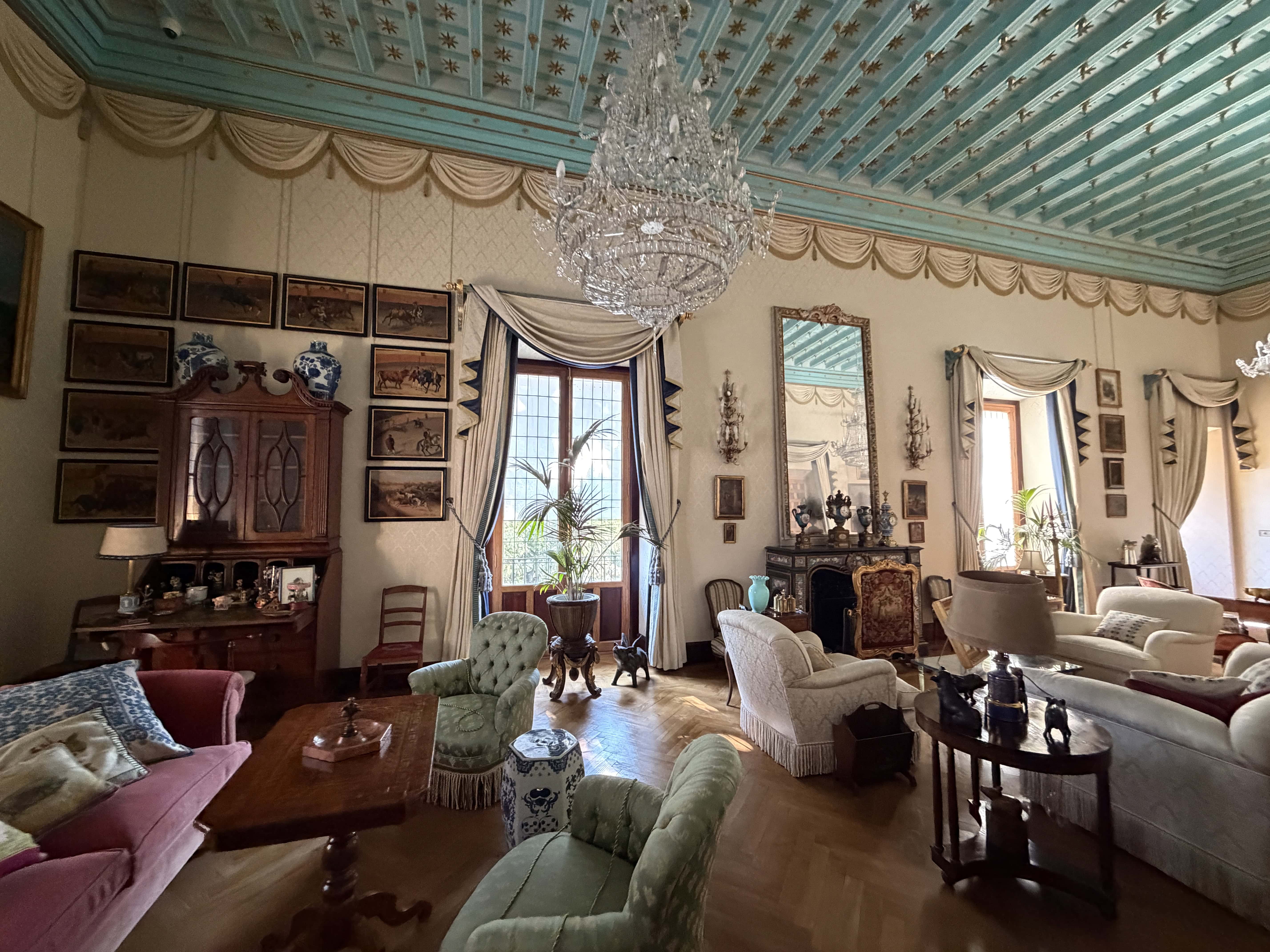
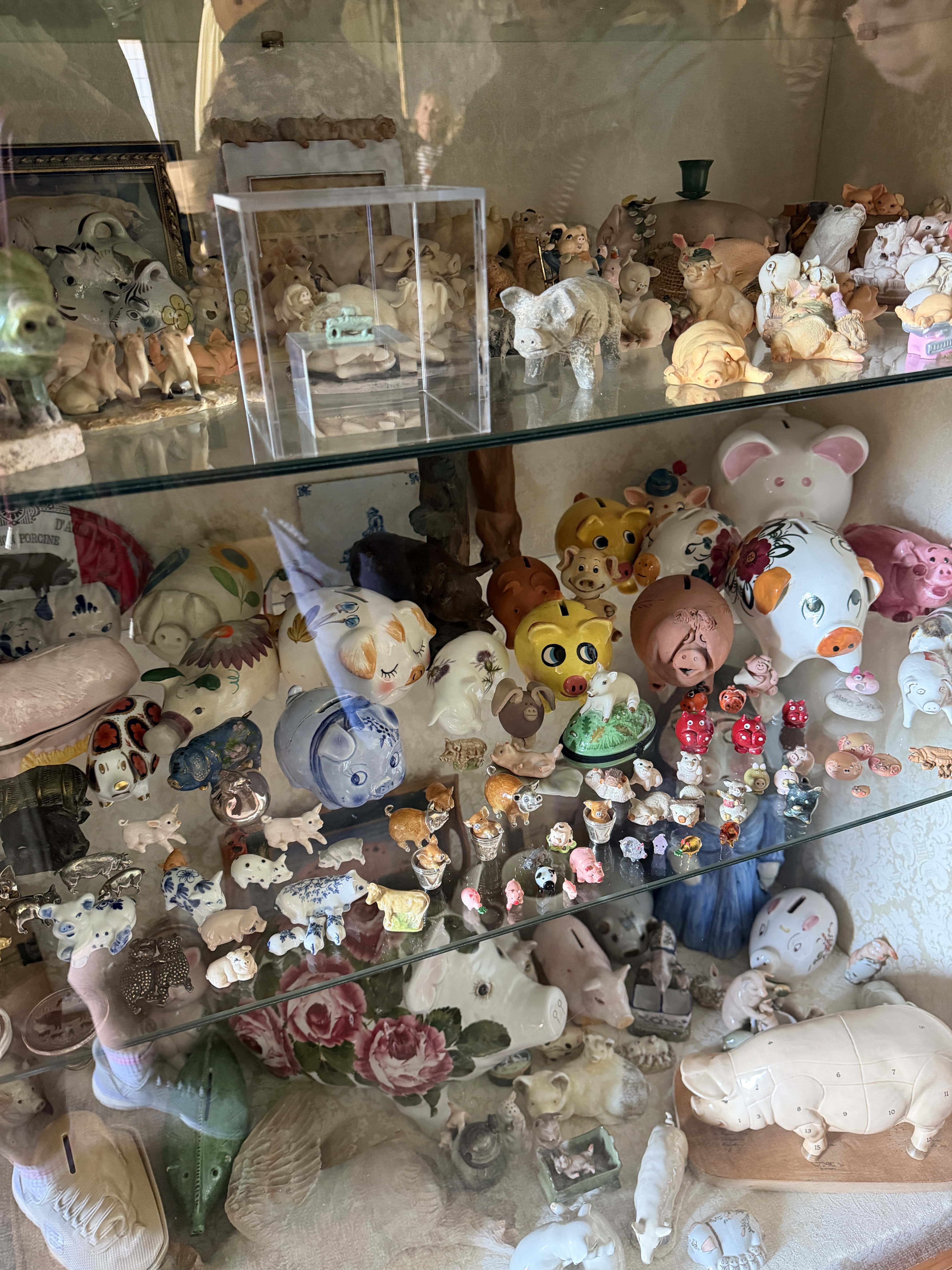
The rooms contain antiques and intricately carved ceilings. We even saw the Duchess’s rather unusual collection of ceramic pigs.
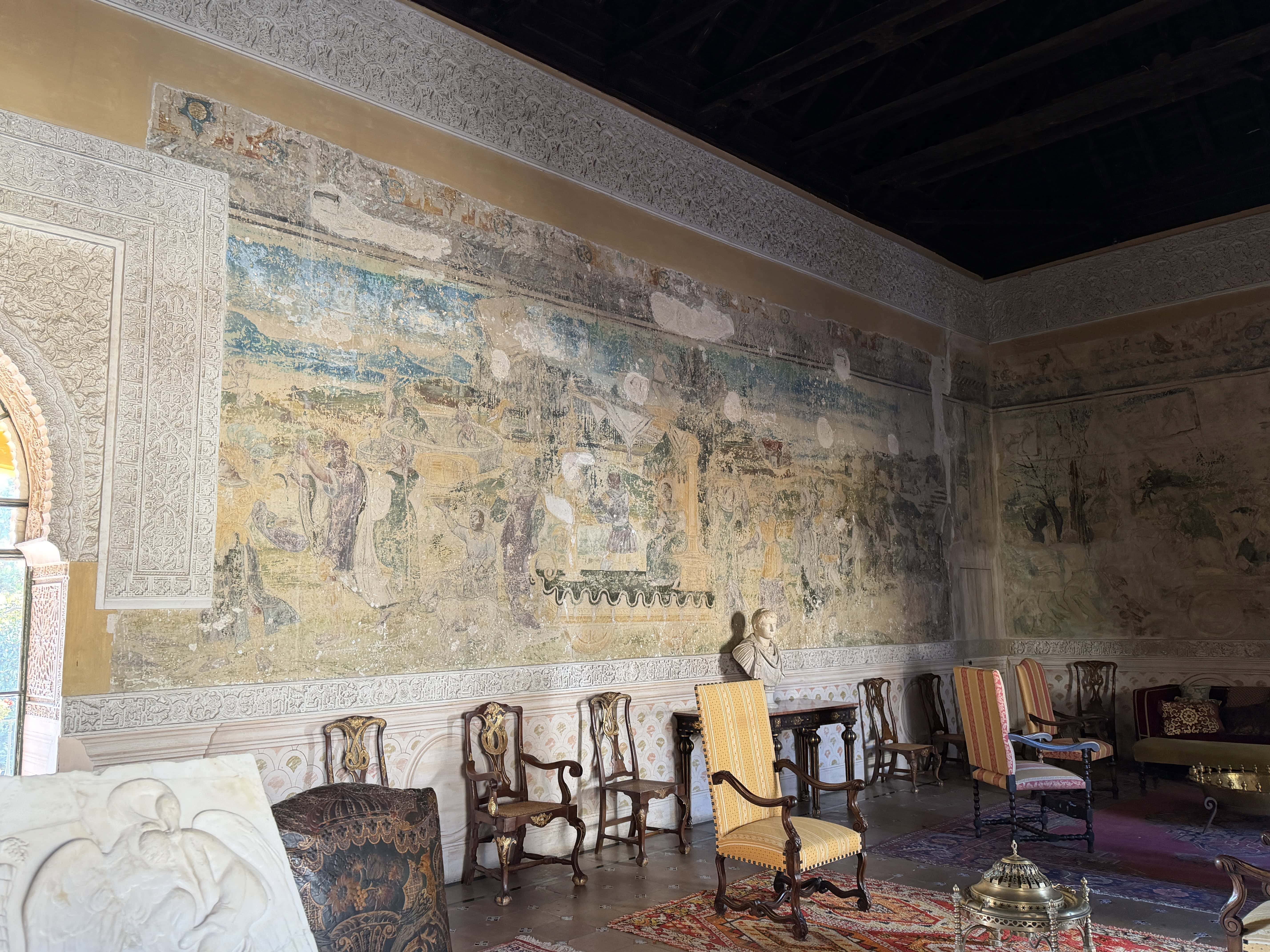
One of the most interesting rooms contained valuable frescoes that were discovered during renovations and dated back to the early history of the building. Casa de Pilatos gave us a more personal perspective of aristocratic life than some of Seville’s larger monuments.
5. Spend Time At Plaza de España
Plaza de España is one of my favourite places in Seville. It is enormous. The plaza was built for the Ibero-American Exposition of 1929, and its sweeping semicircular building immediately makes an impression.
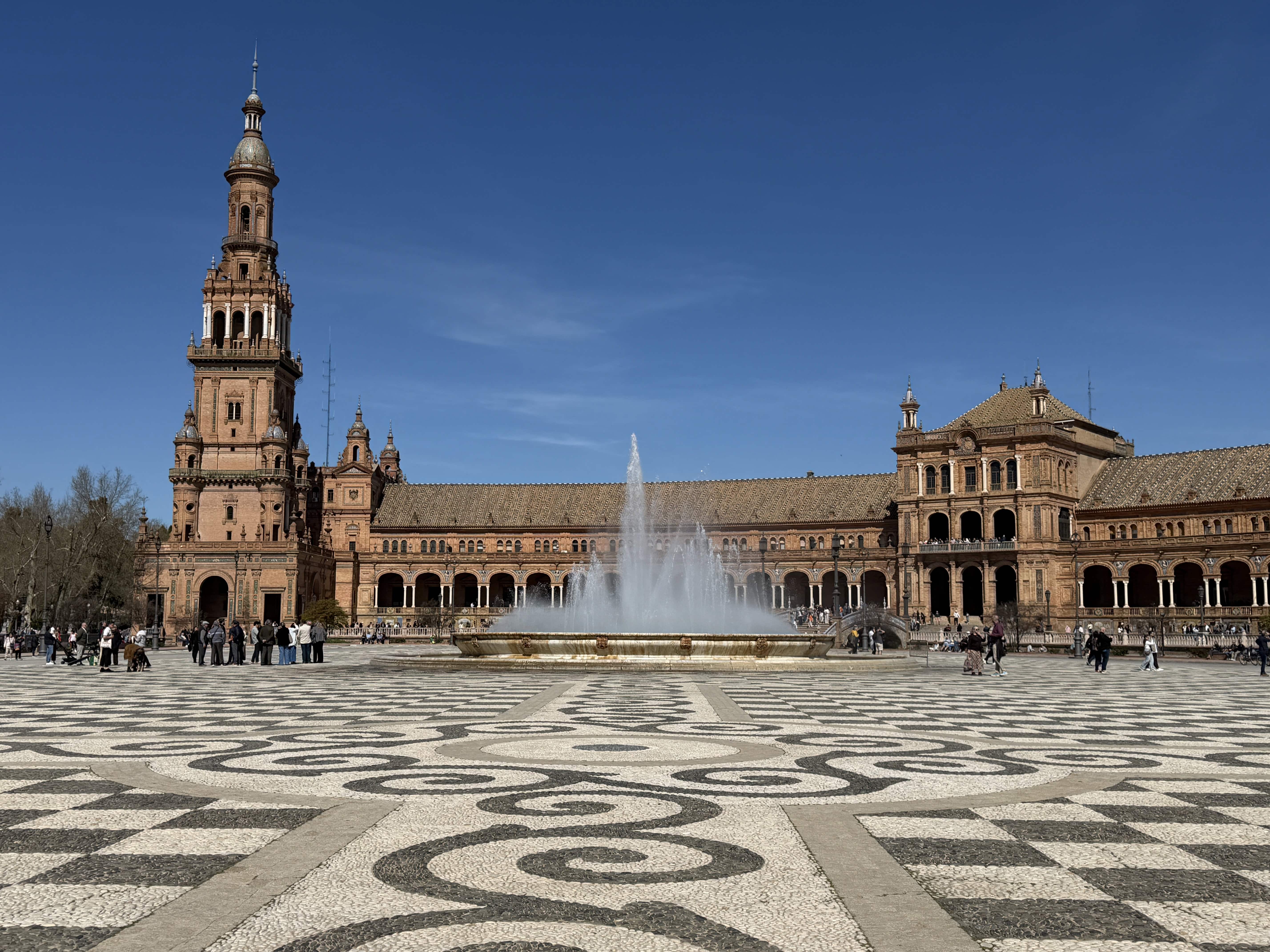
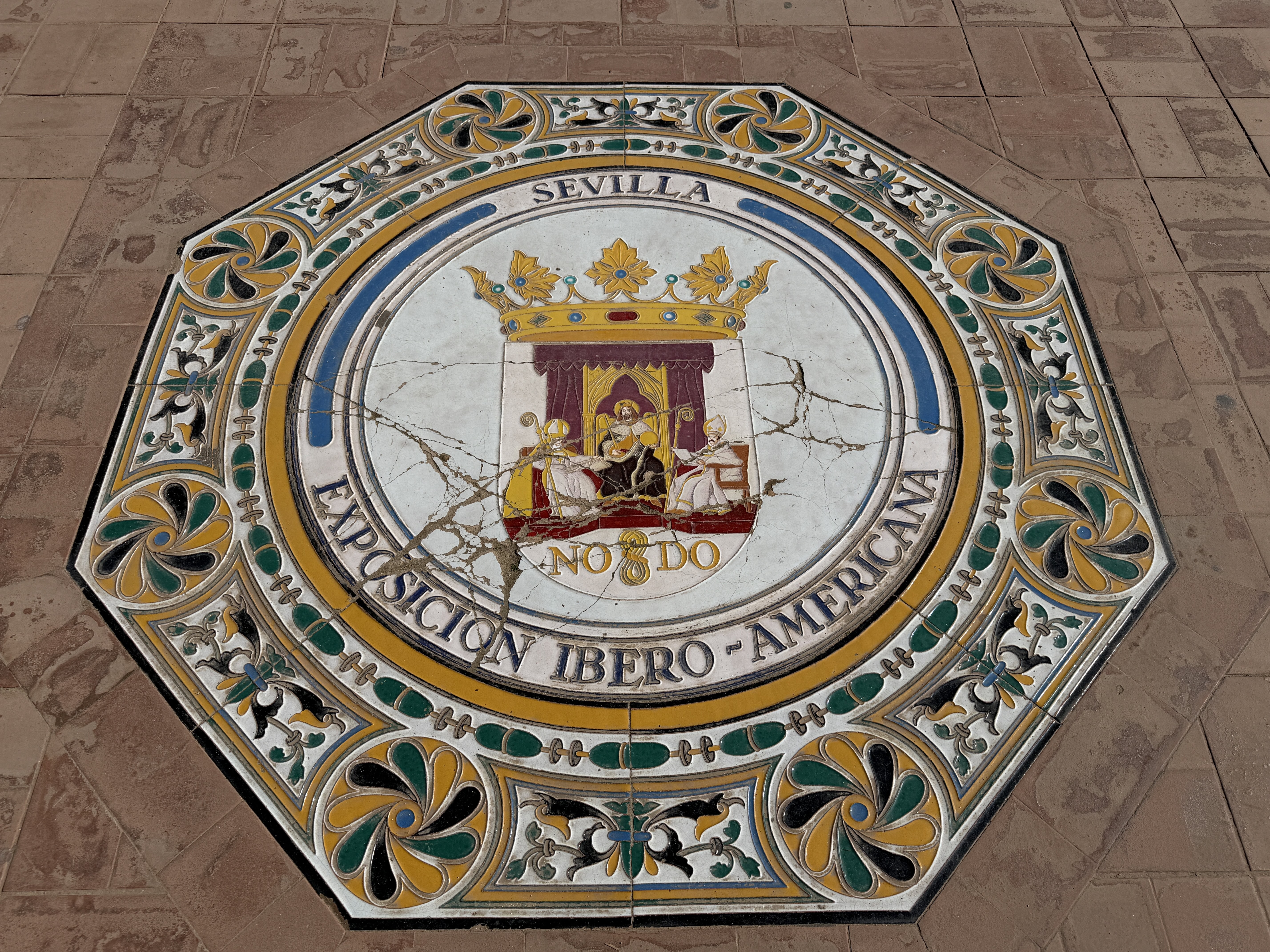
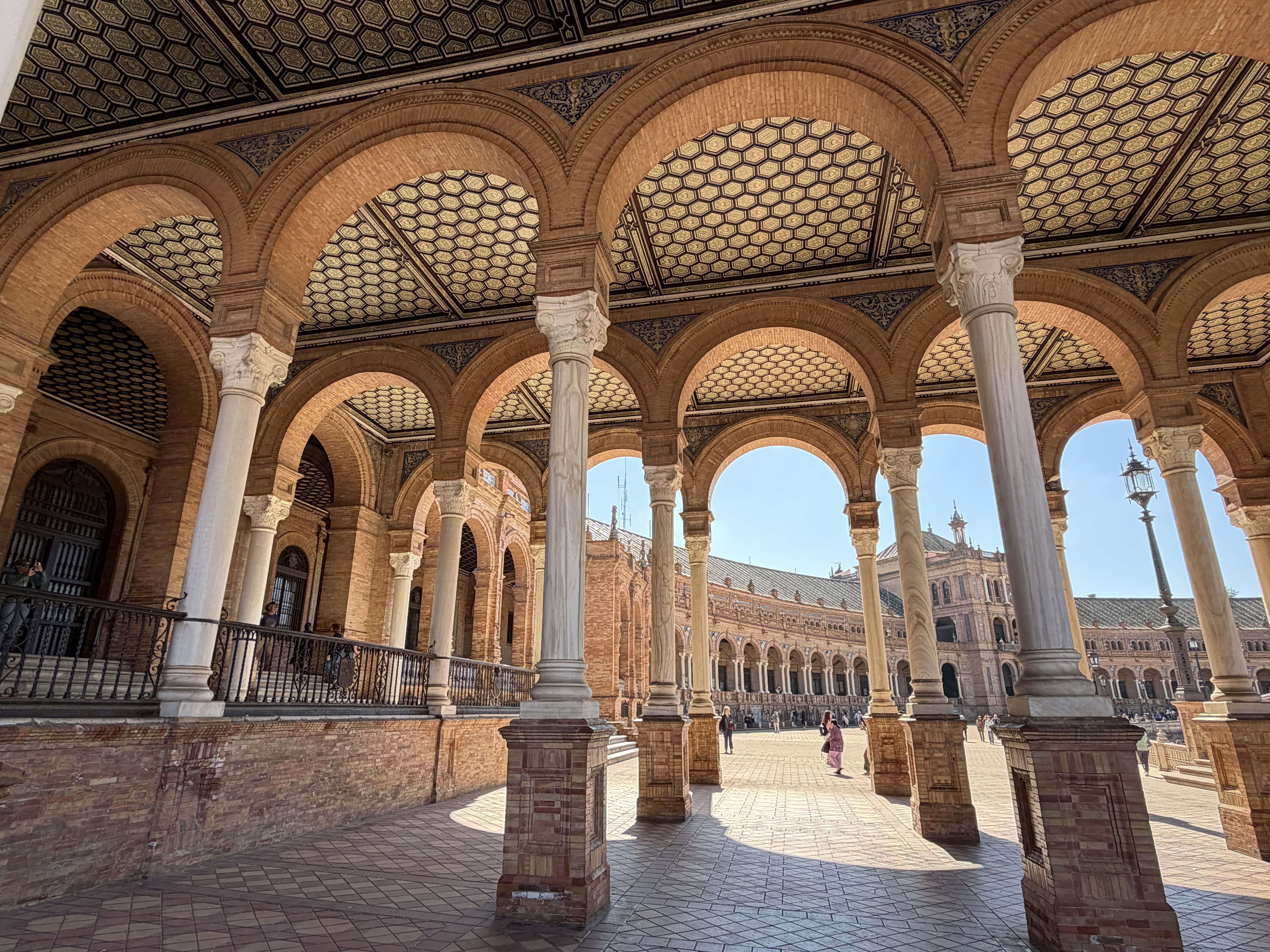
An arcade follows the curve of the structure, with arches and towers incorporated into the design. And then there are the tiles. More than 7000 ceramic tiles decorate the building, bridges, railings, and benches.
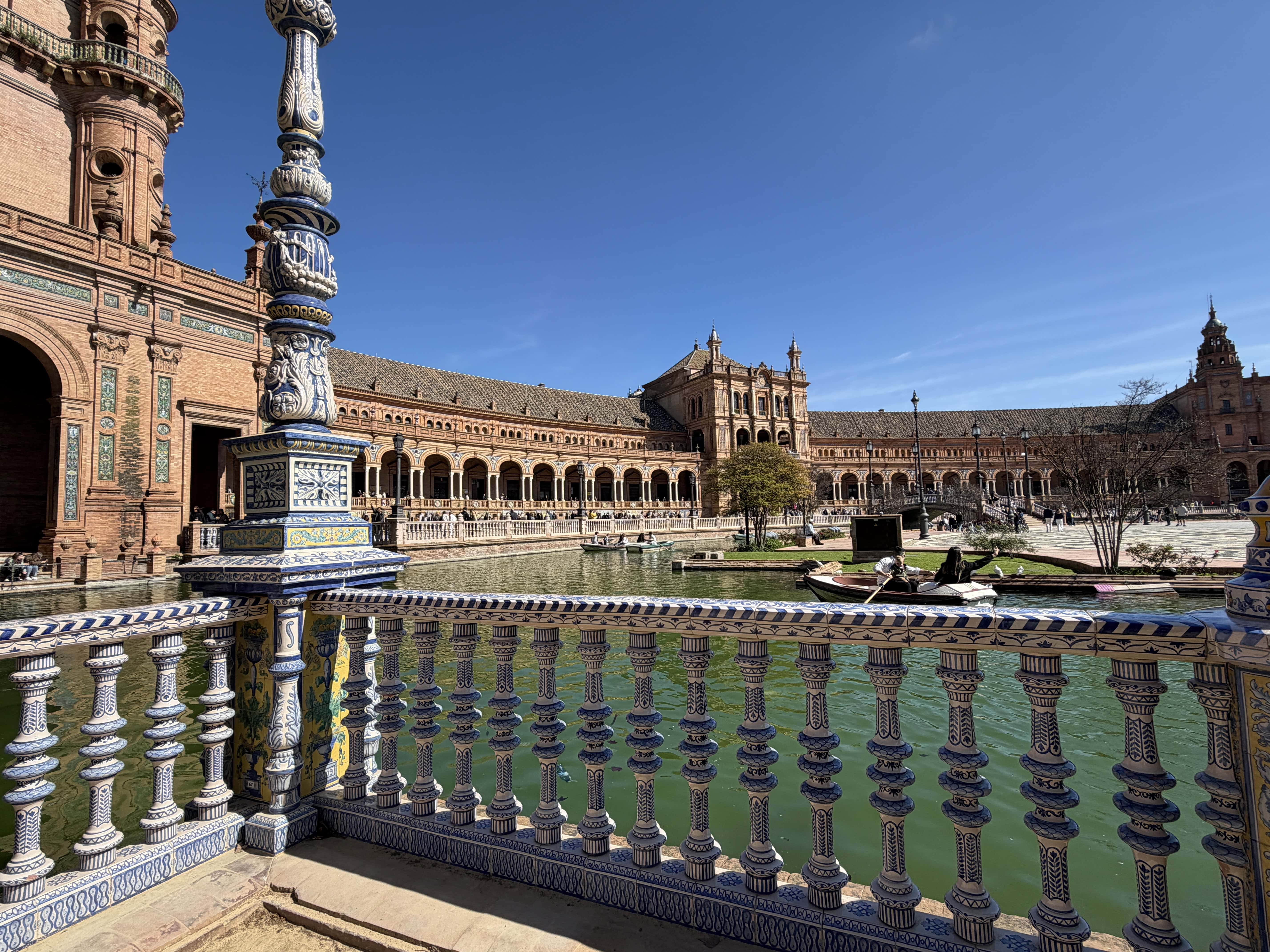
A canal curves through the plaza, where you can take small boat rides. Bridges cross the water, while a large fountain dominates the open space in the centre.
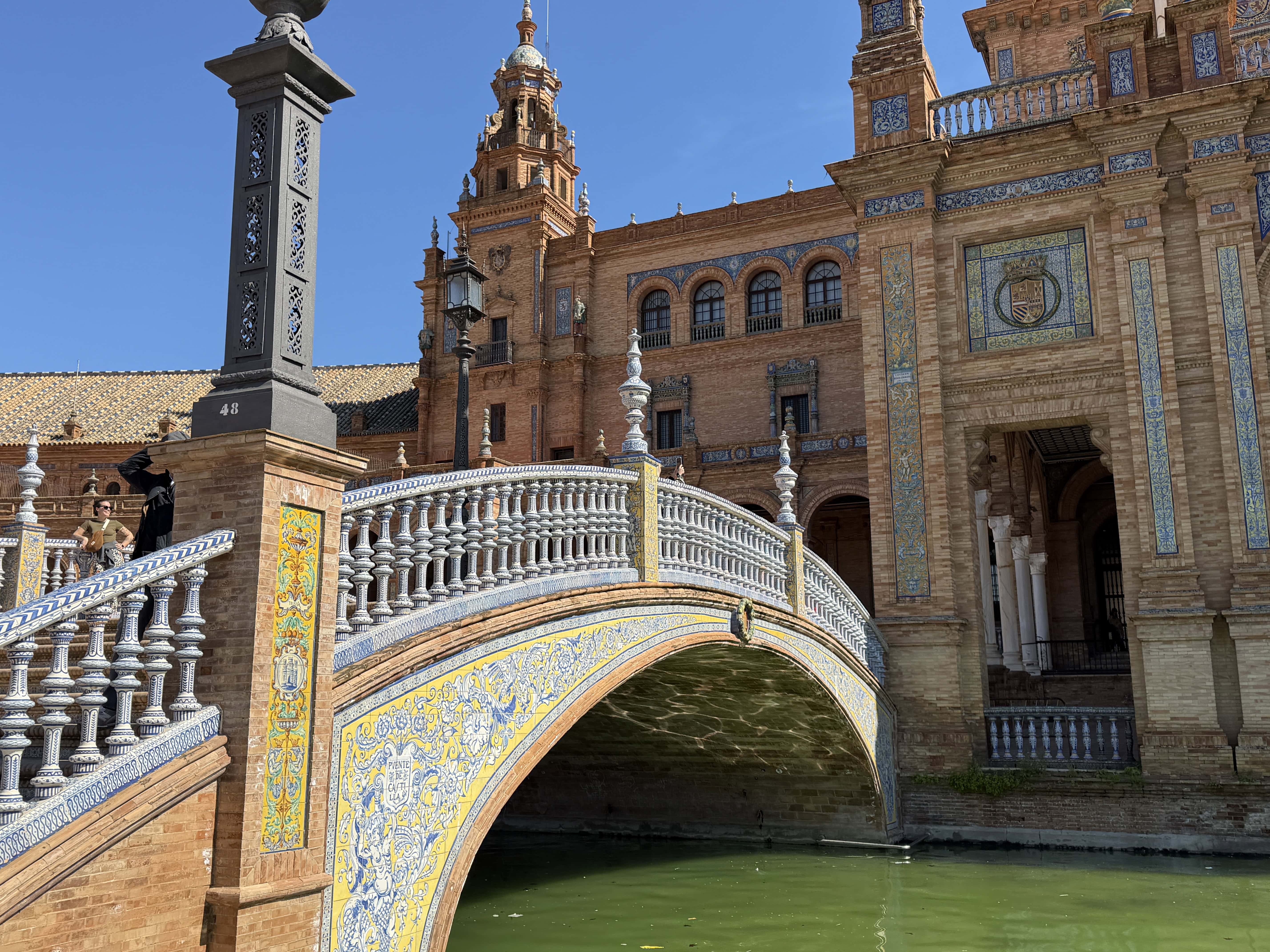
Find The Tiled Benches
Along the inside of the semicircular building are tiled alcoves representing Spain’s 52 provinces. Each one incorporates colourful ceramic designs and scenes connected to that part of the country. We spent plenty of time looking at them.
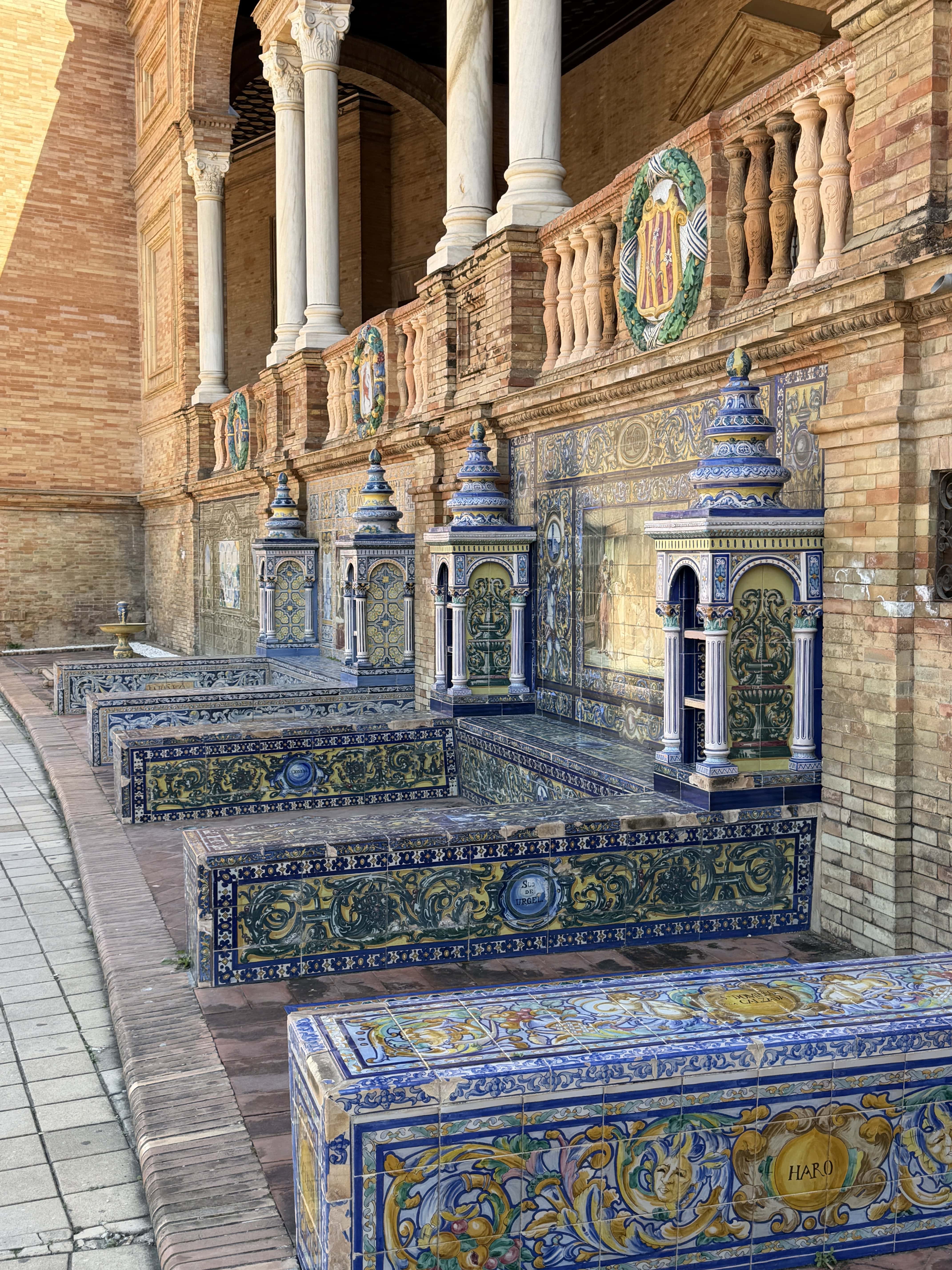
It is another example of how Seville uses tilework as more than decoration. The ceramics help tell stories about Spain’s history and regions.

Best of all, you don’t need an admission ticket to enjoy Plaza de España. We think it is one of the nicest places in the city, and it is completely free to explore.
6. Relax In María Luisa Park
Right beside Plaza de España is María Luisa Park. After exploring the enormous plaza, the park provides a welcome place to slow down.
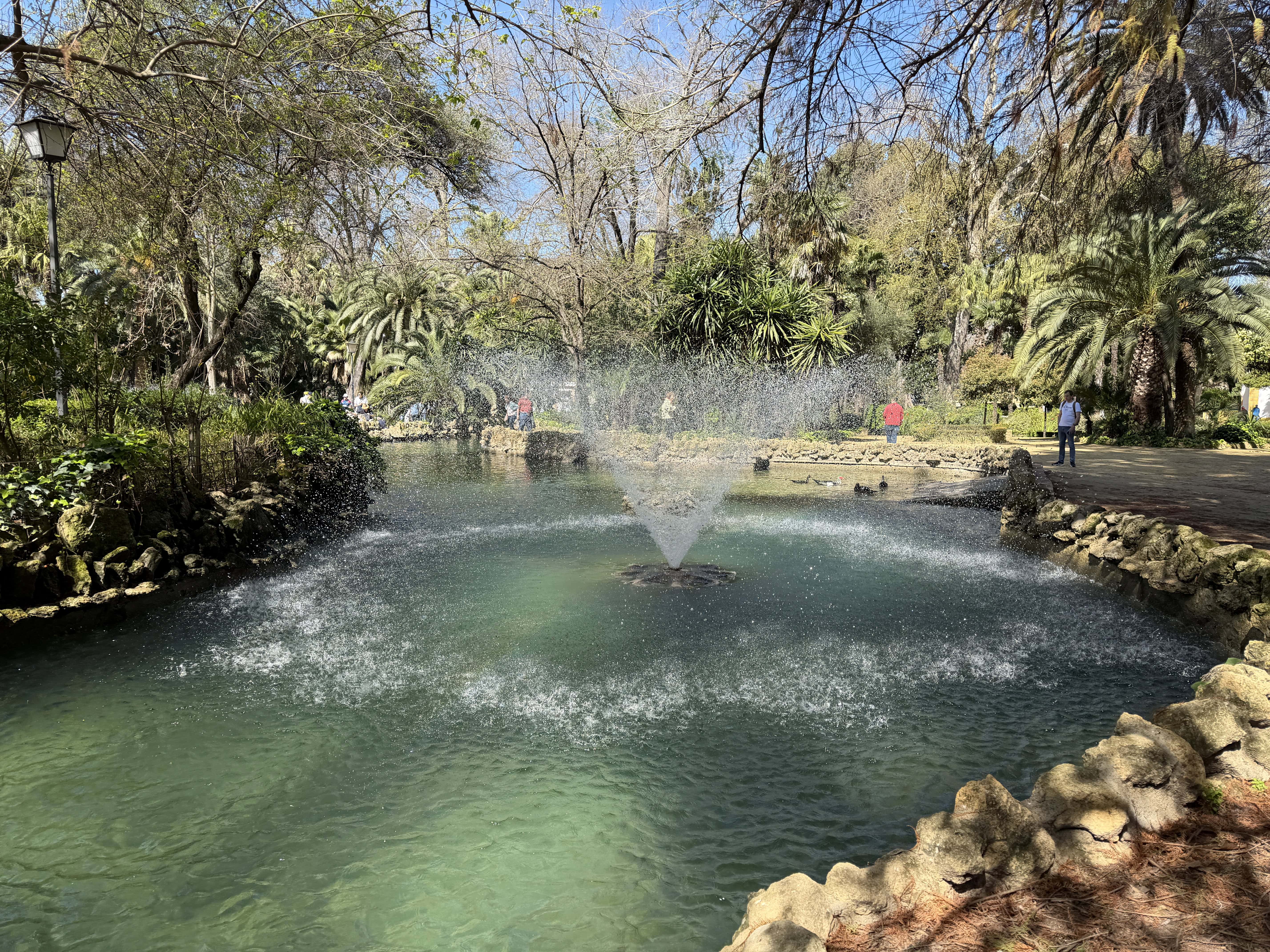
The 34-hectare green space opened as a public park in the early 20th century after land that had once formed part of private gardens was donated to the city. Today, pathways wind beneath mature trees and past flower gardens.
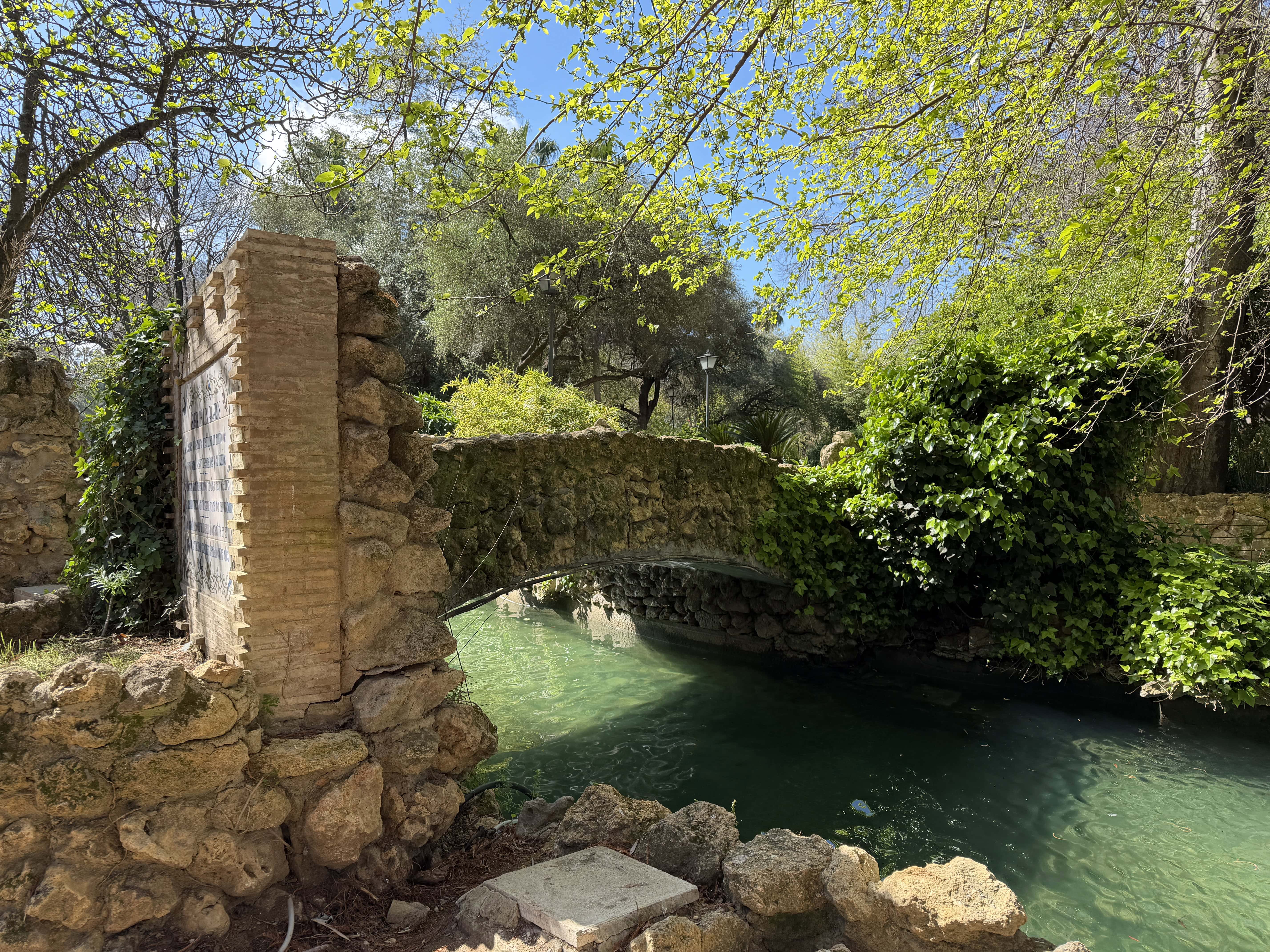
Ponds and impressive fountains are scattered throughout the grounds. We really appreciated how many open spaces Seville has. You can spend hours visiting major monuments and then walk only a short distance before finding somewhere green and peaceful to sit.
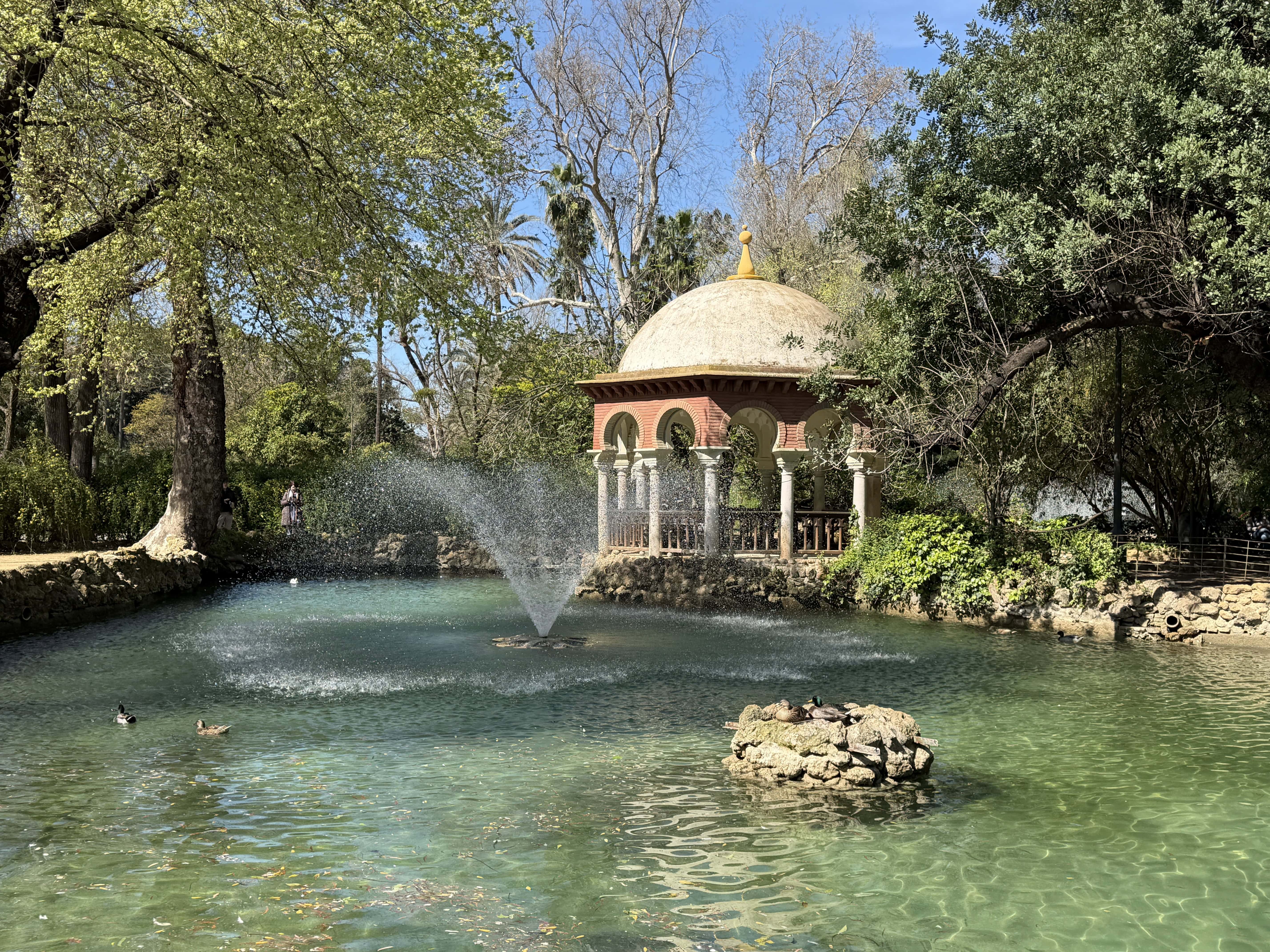
Combining Plaza de España and María Luisa Park makes an enjoyable half day.
7. Check Out The Setas de Sevilla
After seeing so much historic architecture, the Setas de Sevilla comes as quite a surprise. This enormous wooden structure looks like it belongs to a completely different Seville.
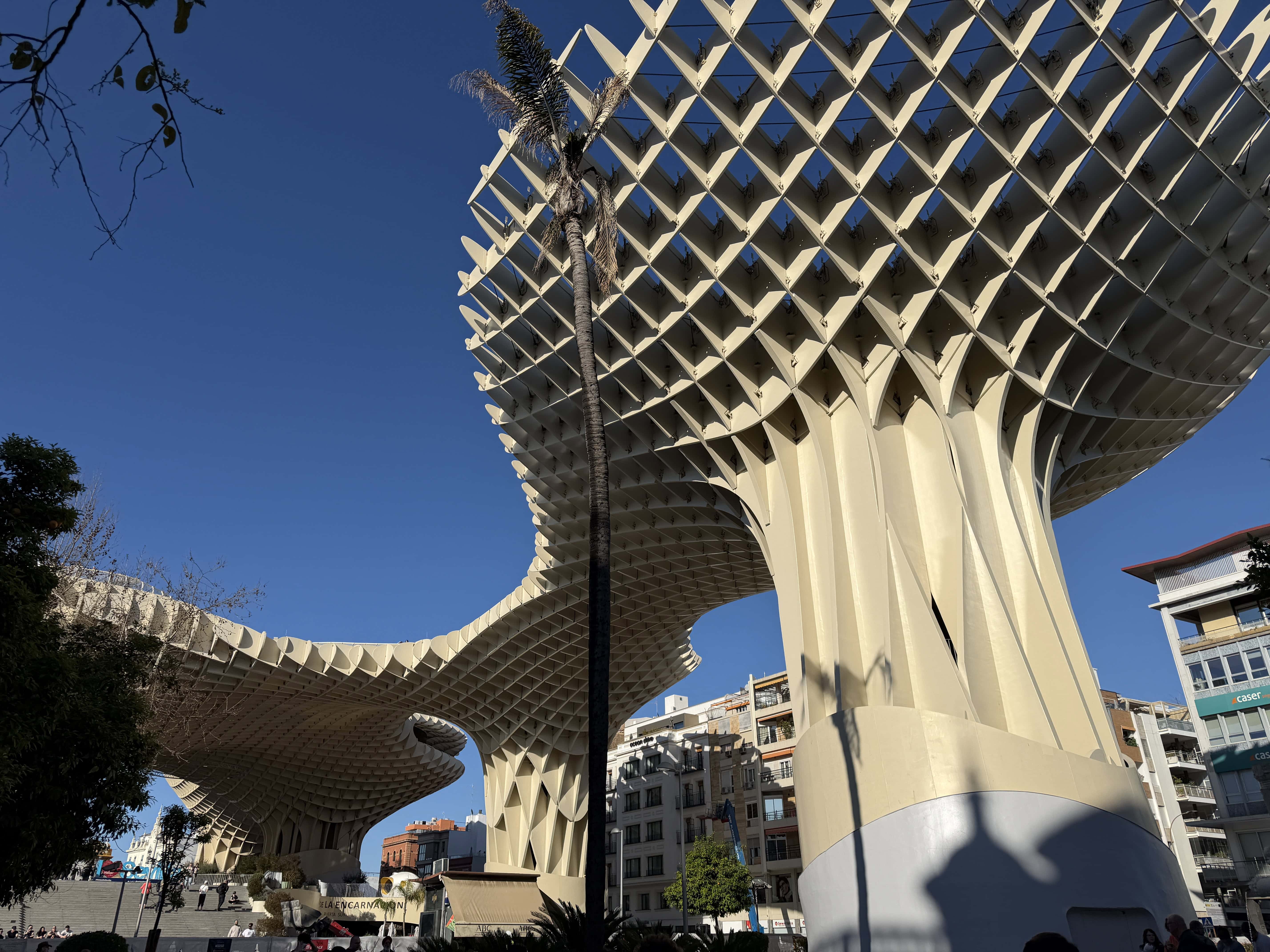
The Setas were constructed as part of a project to revitalize an area of the city that had been in decline. And the result is certainly creative and effective, since there are now vendors and many cultural events held underneath.
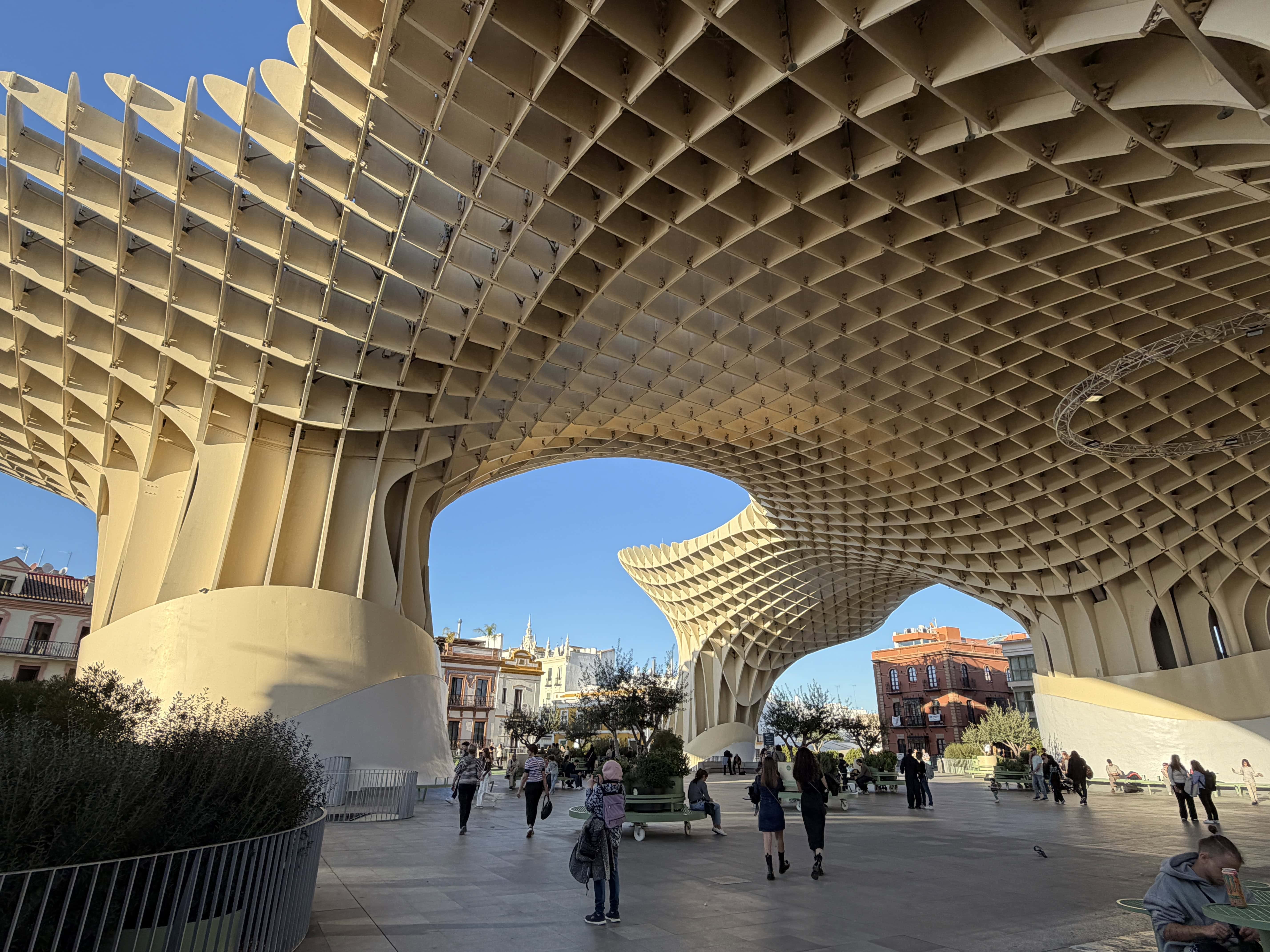
From underneath, you can understand why people started calling the structure the Mushrooms of Seville. From above, we thought it looked more like a gigantic piece of honeycomb.
Walk Across The Top For 360-Degree Views
Visitors can walk along the elevated pathway that stretches across the structure. From here, you get a 360-degree view of Seville.
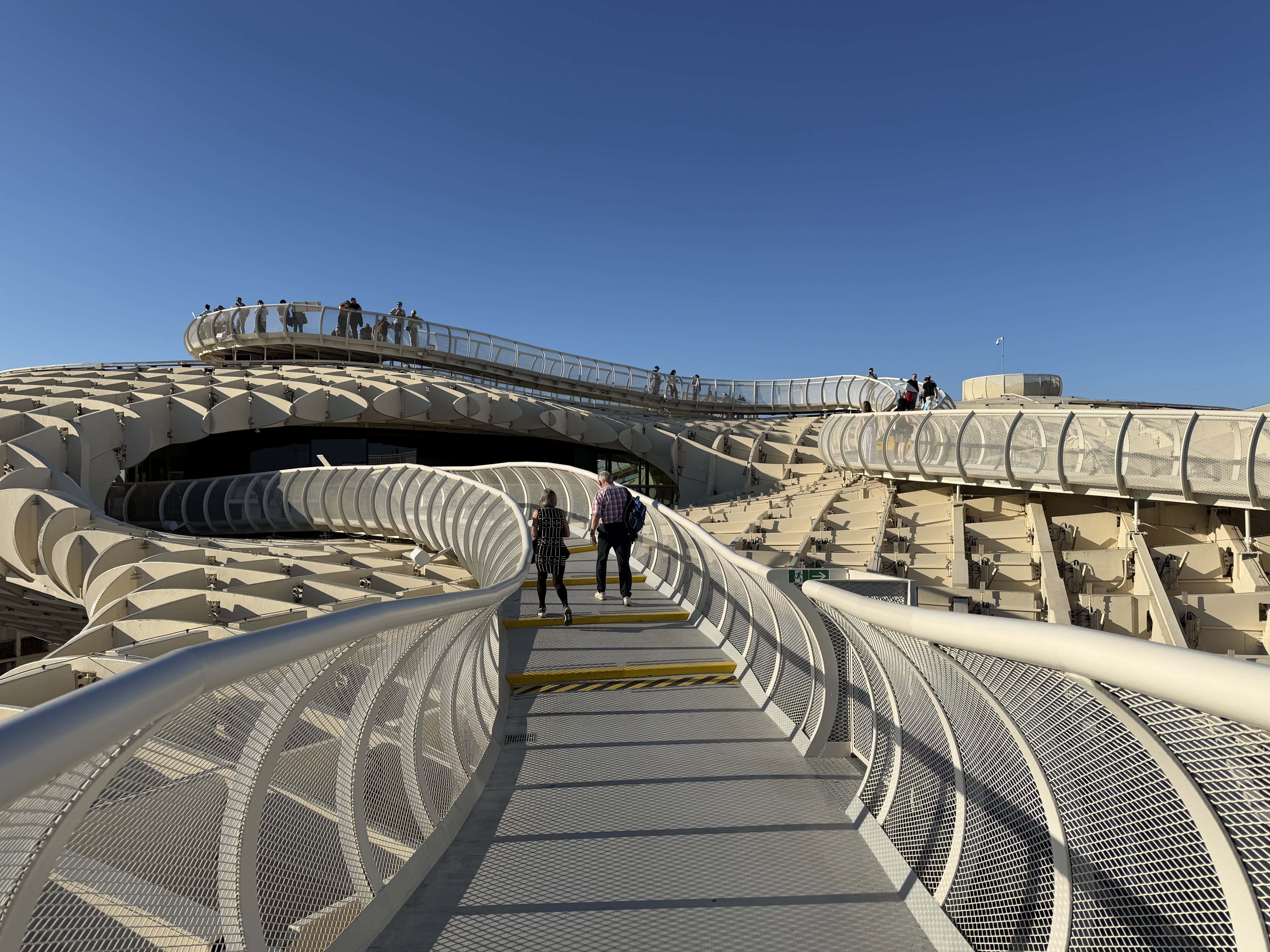
We appreciated that the viewpoints were labelled, making it much easier to identify the buildings and neighbourhoods we could see.
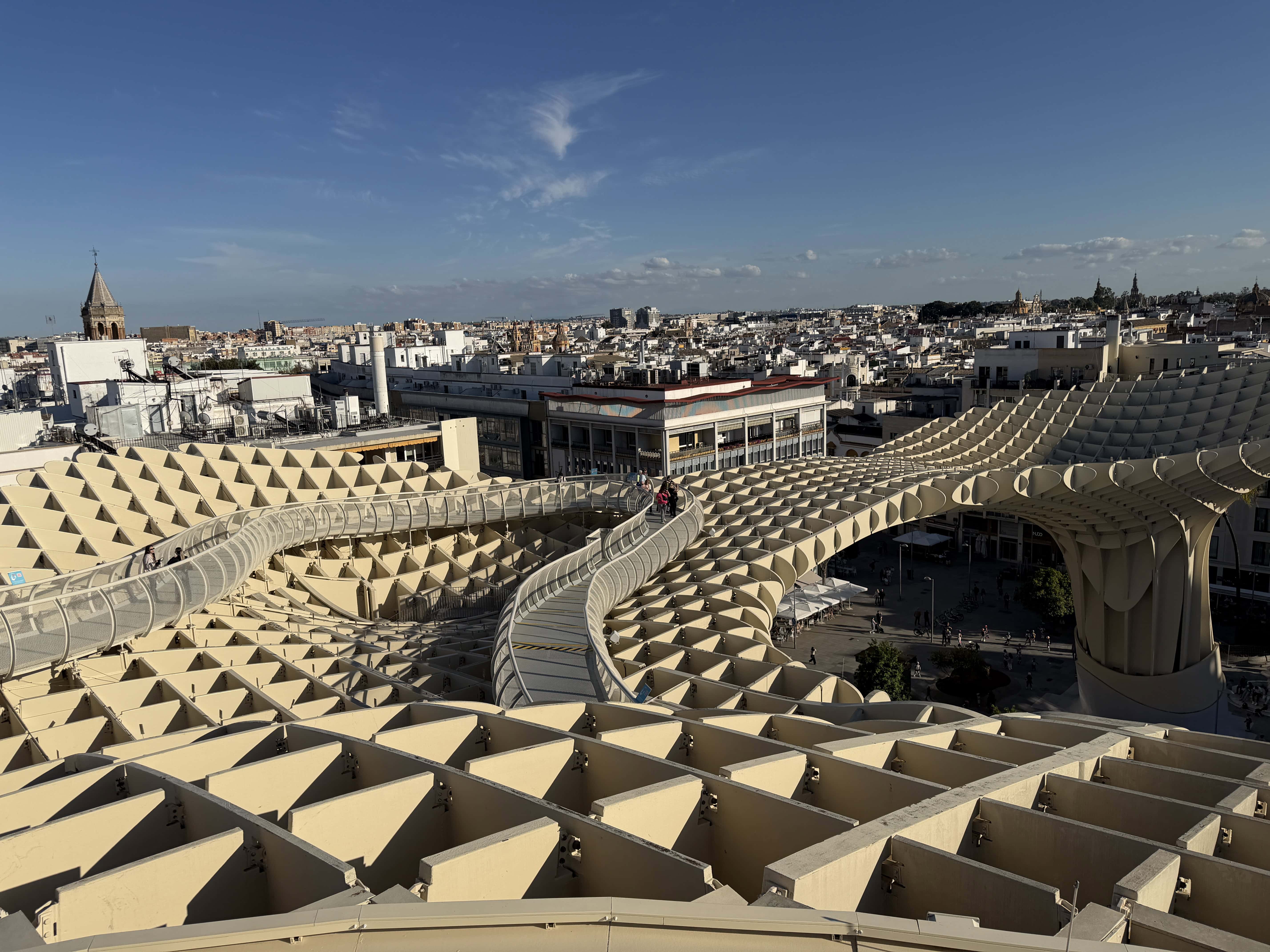
There are also displays explaining how the Setas were designed and constructed. The engineering behind it is fascinating. Thousands of individual wooden components had to be connected with 4000 unique joints to create the enormous flowing structure. There were 16 million screws and lag bolts used, and for every tree that was used in the assembly, there were thankfully three more planted in the forest where they came from. Learning how it was built gave us a new appreciation for what we were walking across.
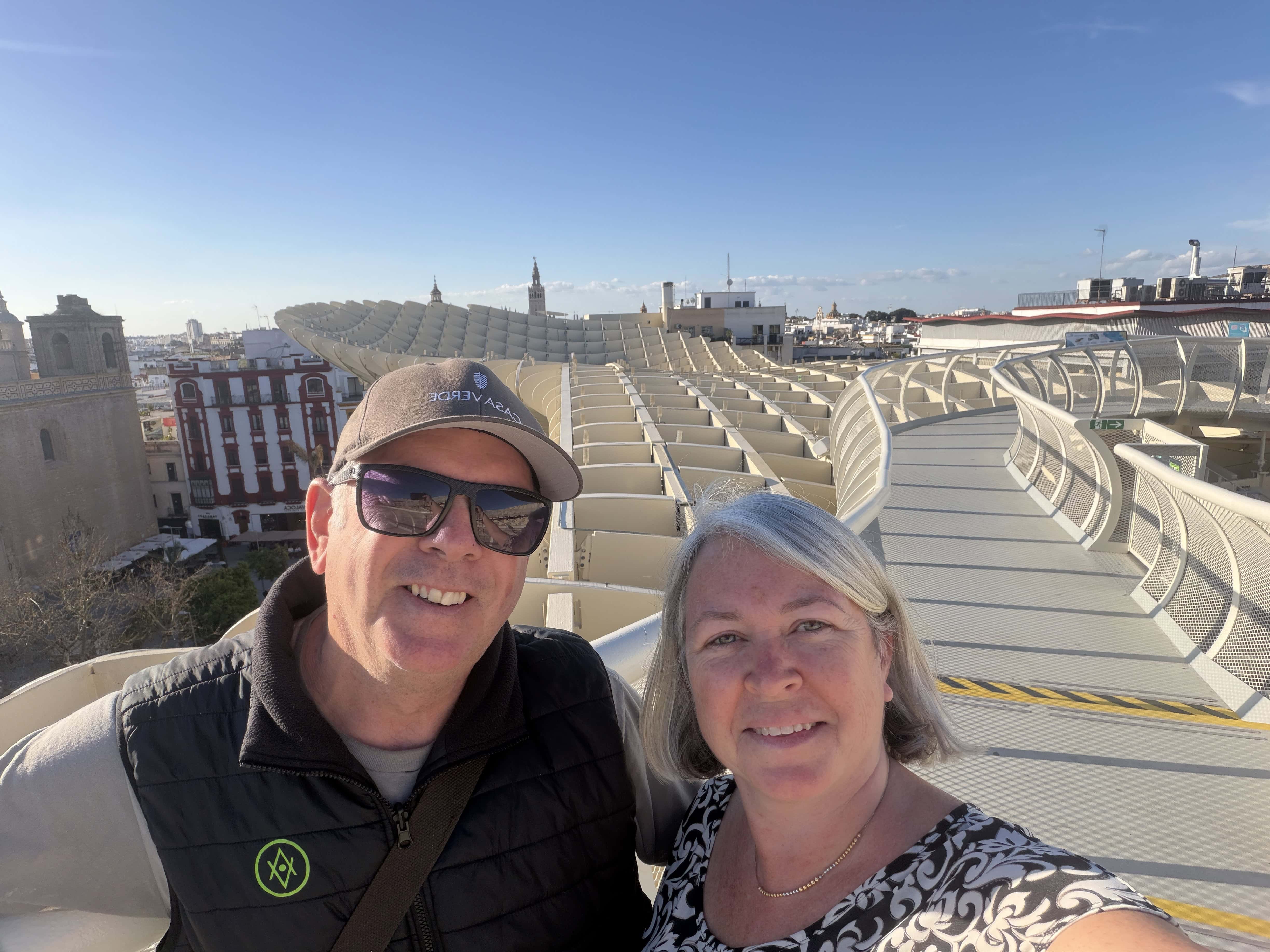
There is also a short film showcasing Seville’s scenery and culture. The Setas are completely different from the Alcázar or the cathedral, and that is exactly why we think it belongs on a Seville itinerary.
8. Tour The Plaza de Toros
Visiting the Plaza de Toros, Seville’s famous bullring, gave us a look at a tradition that has played a significant role in Spanish history. We were surprised by the building itself, which is the oldest stone building in Seville. The Baroque architecture is far more elaborate than we expected from a bullring.
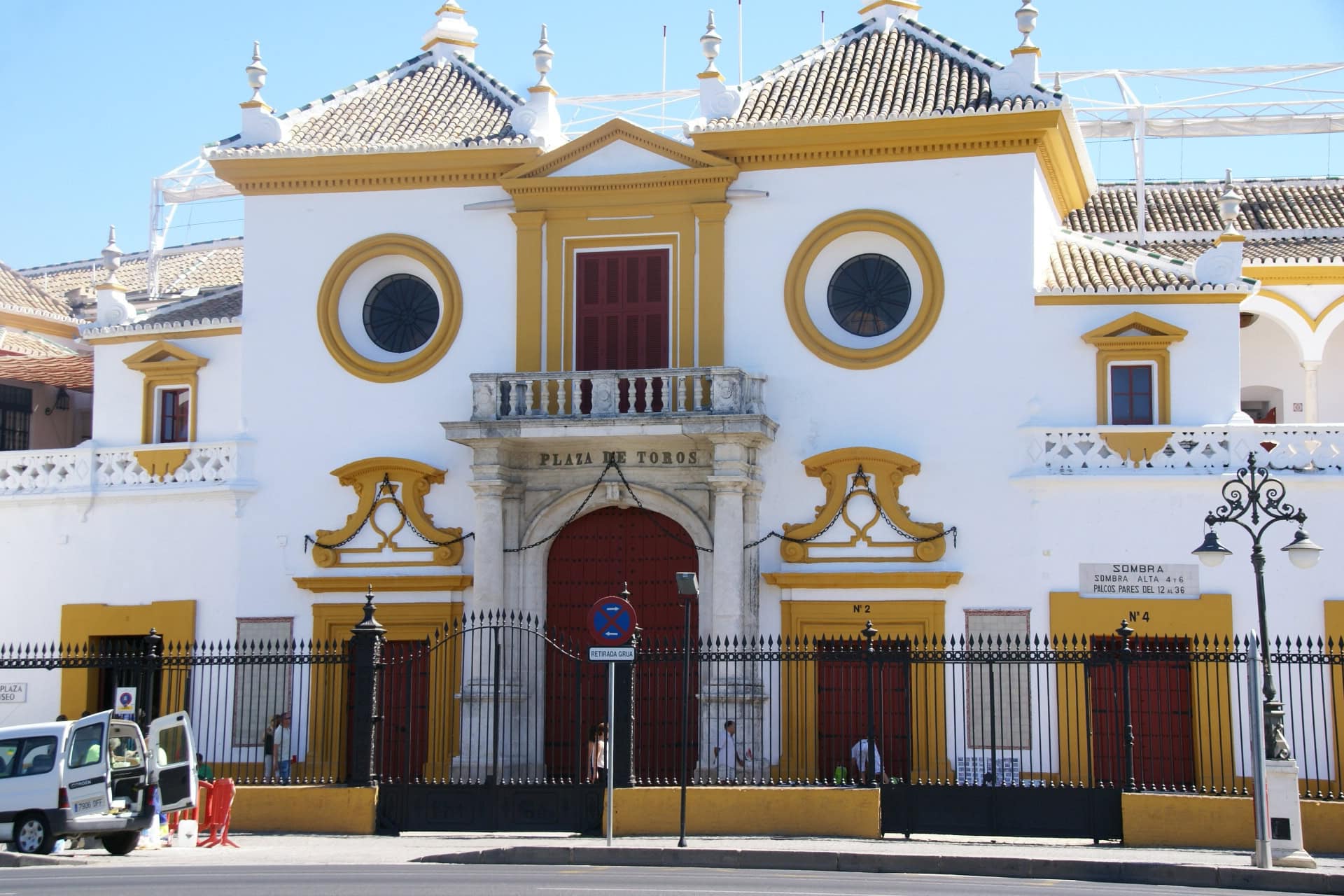
Construction took over 120 years, and the design had to be adapted because of the limited available land. The resulting arena has an unusual oval shape rather than a perfect circle.
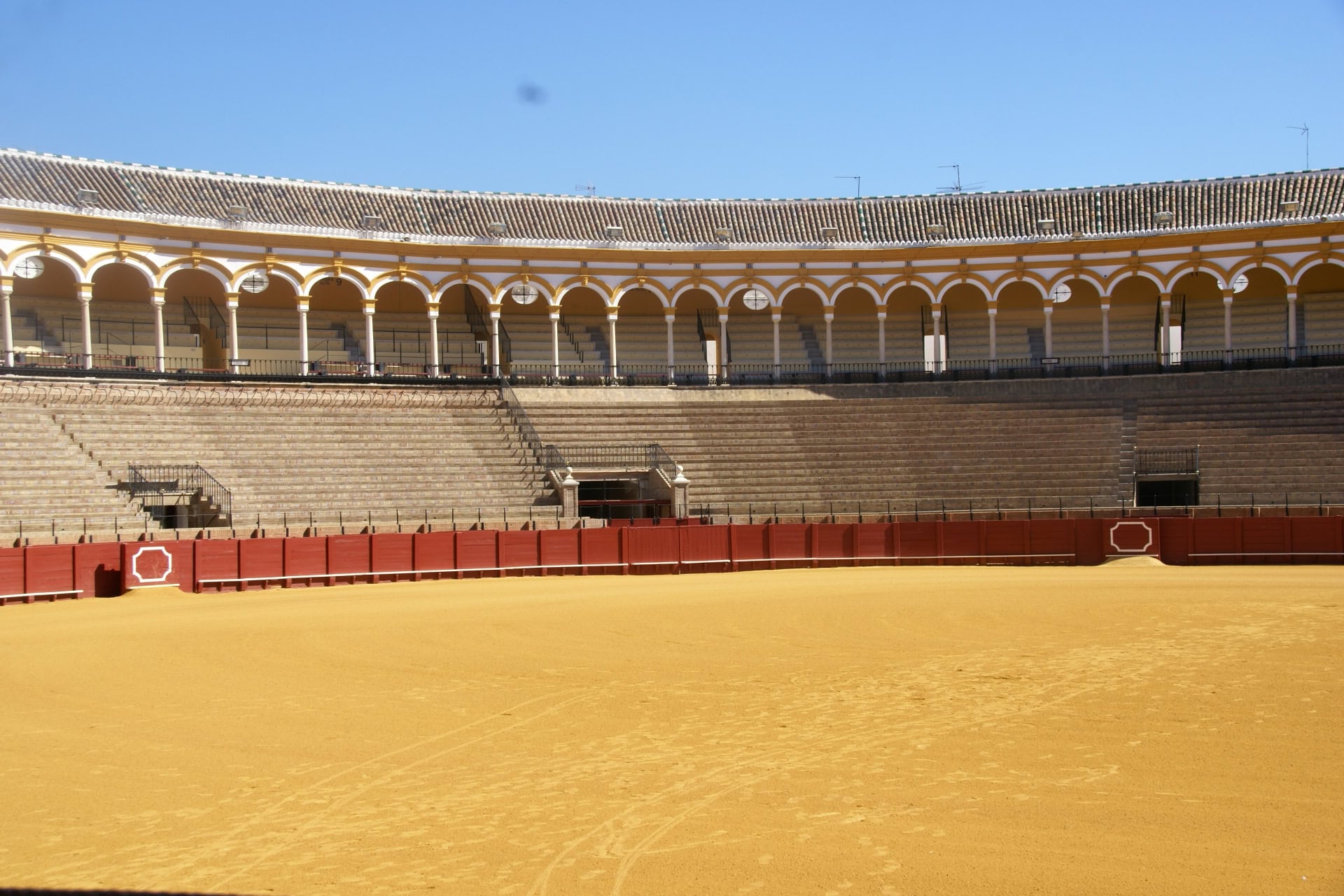
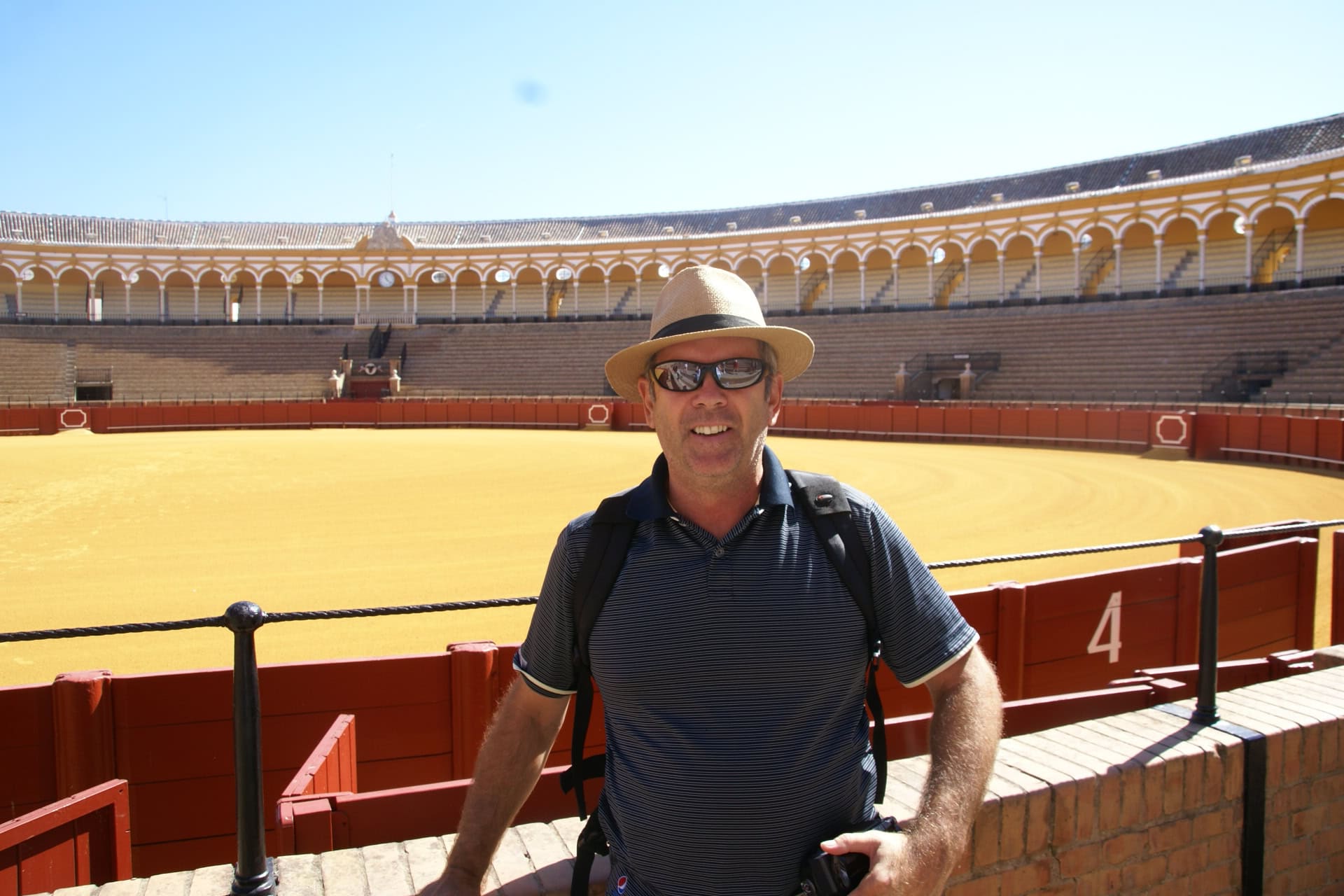
Walking through the stands and looking down into the arena gave us some idea of what it must have been like when filled with spectators. This was on our first visit to Seville, and it was extremely hot in the exposed seating. We could only imagine what it would feel like sitting there during an event in the middle of summer.
The museum and exhibits explain the history of bullfighting, including the role of the matadors, their techniques, and traditional clothing. There are also paintings and other historical displays.
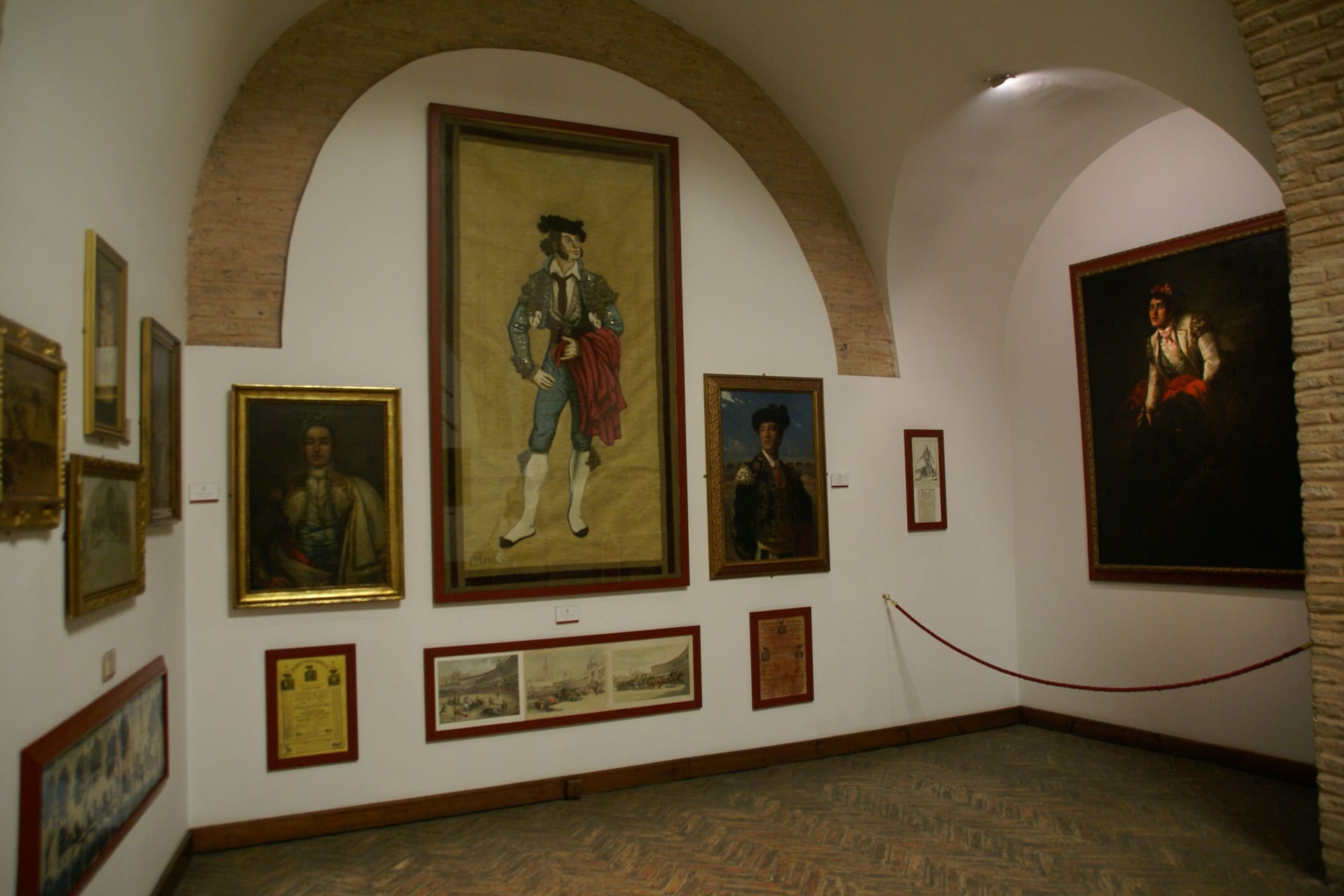
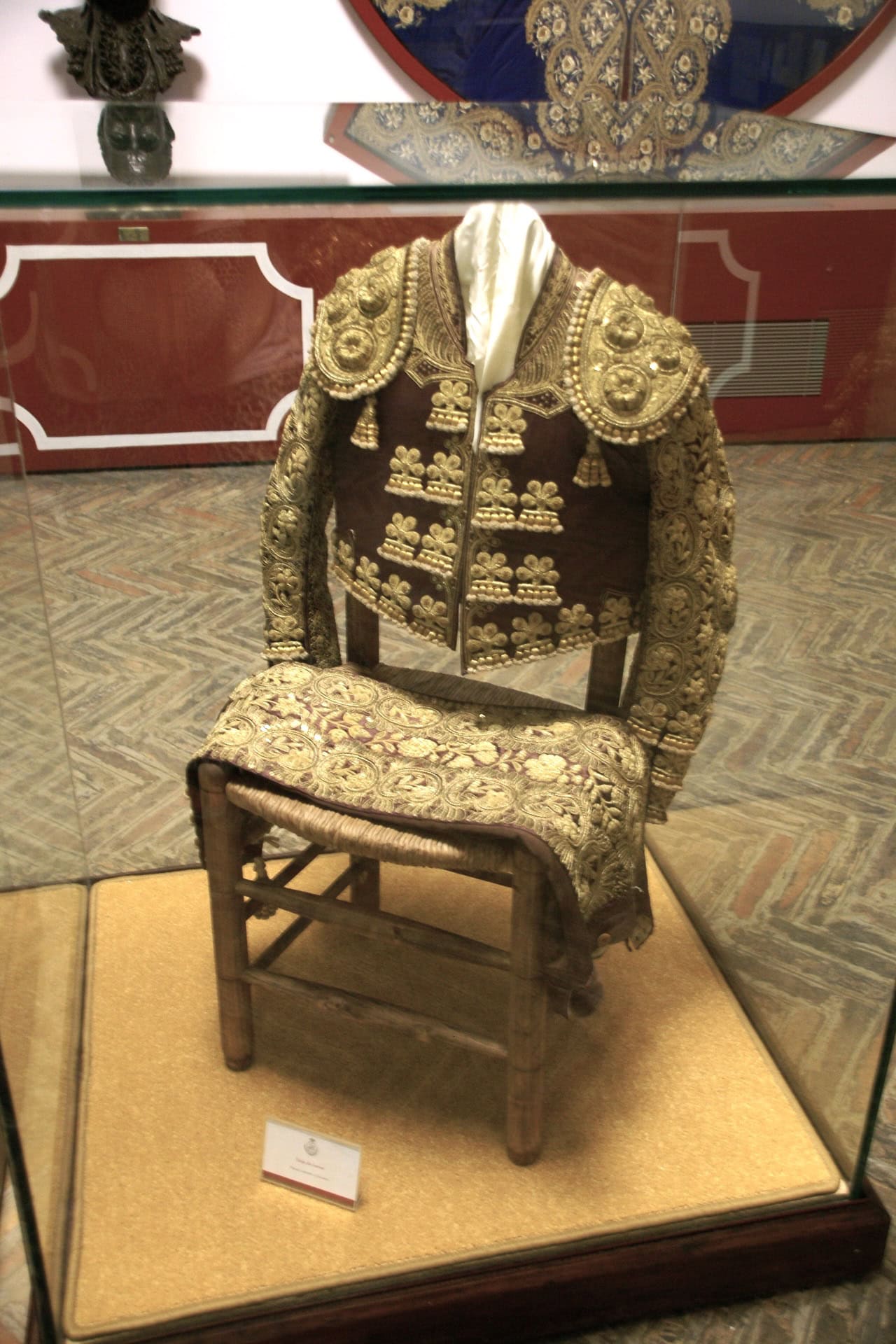
Bullfighting is a controversial tradition, but touring the arena allowed us to learn about its place in Spanish culture and history.
✅ This private tour gives you an in-depth understanding of the history and cultural significance of bullfighting in Seville. You are able to hear about the folklore and discover a beautiful building.
9. See A Flamenco Performance
If there is one cultural experience we highly recommend in Seville, it is seeing flamenco. We absolutely loved it.
Flamenco combines Andalusian music, singing, guitar, and dance in a wonderful performance. But reading a description doesn’t prepare you for the intensity of seeing it performed live. From the moment our show started, we were mesmerized.

The singers performed with incredible emotion. The guitarists created a tension that seemed to build as the performance continued. And then there were the dancers. Their feet moved unbelievably fast as they stomped against the floor in rhythm with the music. The movement of the skirts added another dimension to the performance.

What also surprised us was how individual each performer was. The male and female dancers each had their own style and rhythm. There was nothing mechanical about the performance. It felt intense. We actually found ourselves wondering how the performers managed to do several shows in a single day!

If you are choosing between adding another monument to your itinerary or experiencing flamenco, make room for the flamenco. It gave us a completely different understanding of Andalusian culture.
✅ There are many flamenco shows in Seville. We were very impressed with the show that we saw and the quality of the performers. You can consider purchasing tickets to this same show, and we promise you won’t be disappointed.
10. Walk Along The Guadalquivir River
For another change of pace, head toward the Guadalquivir River. The river has played an important role in Seville’s history as a trading city and once connected it with maritime routes around the world.
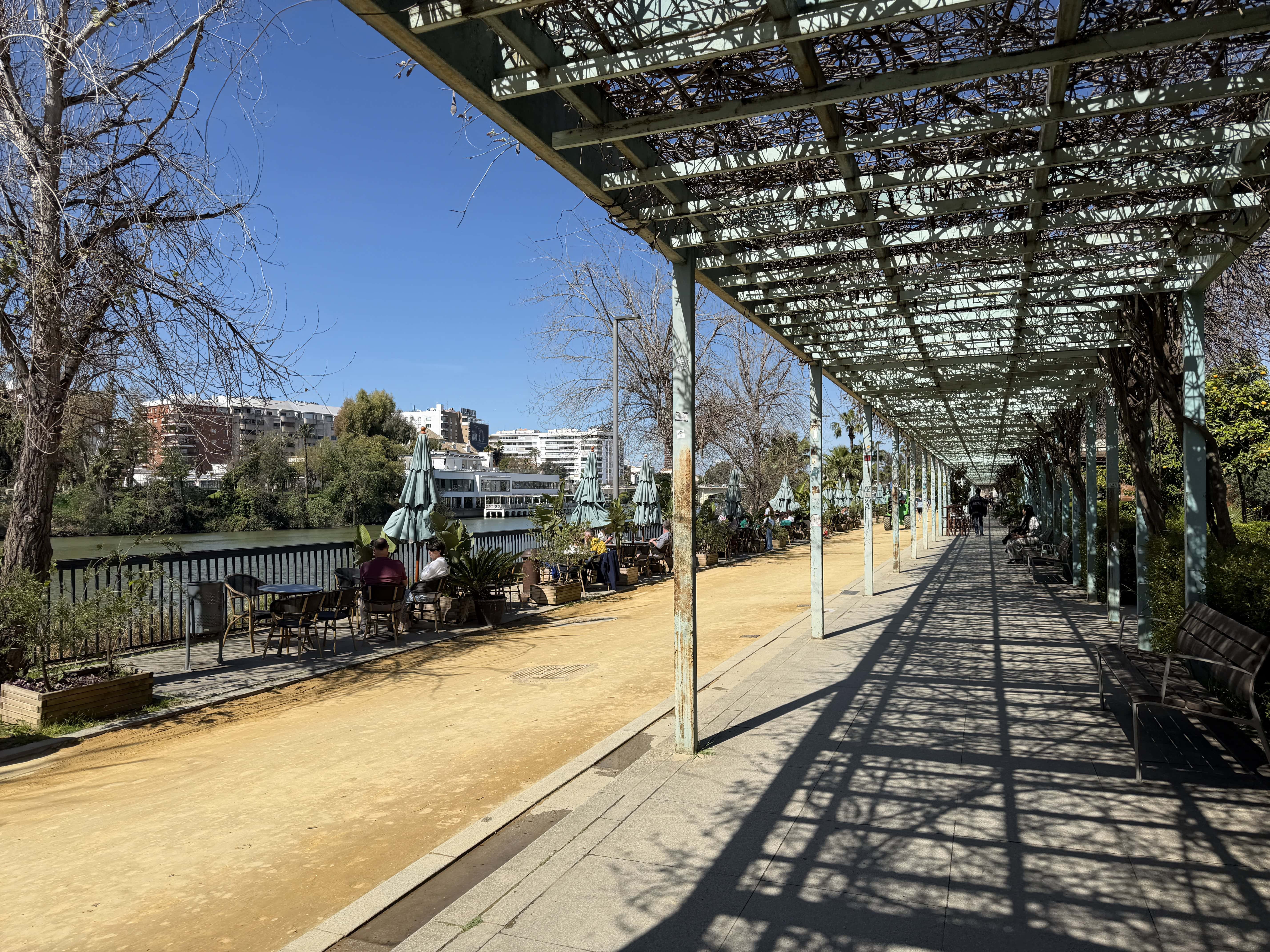
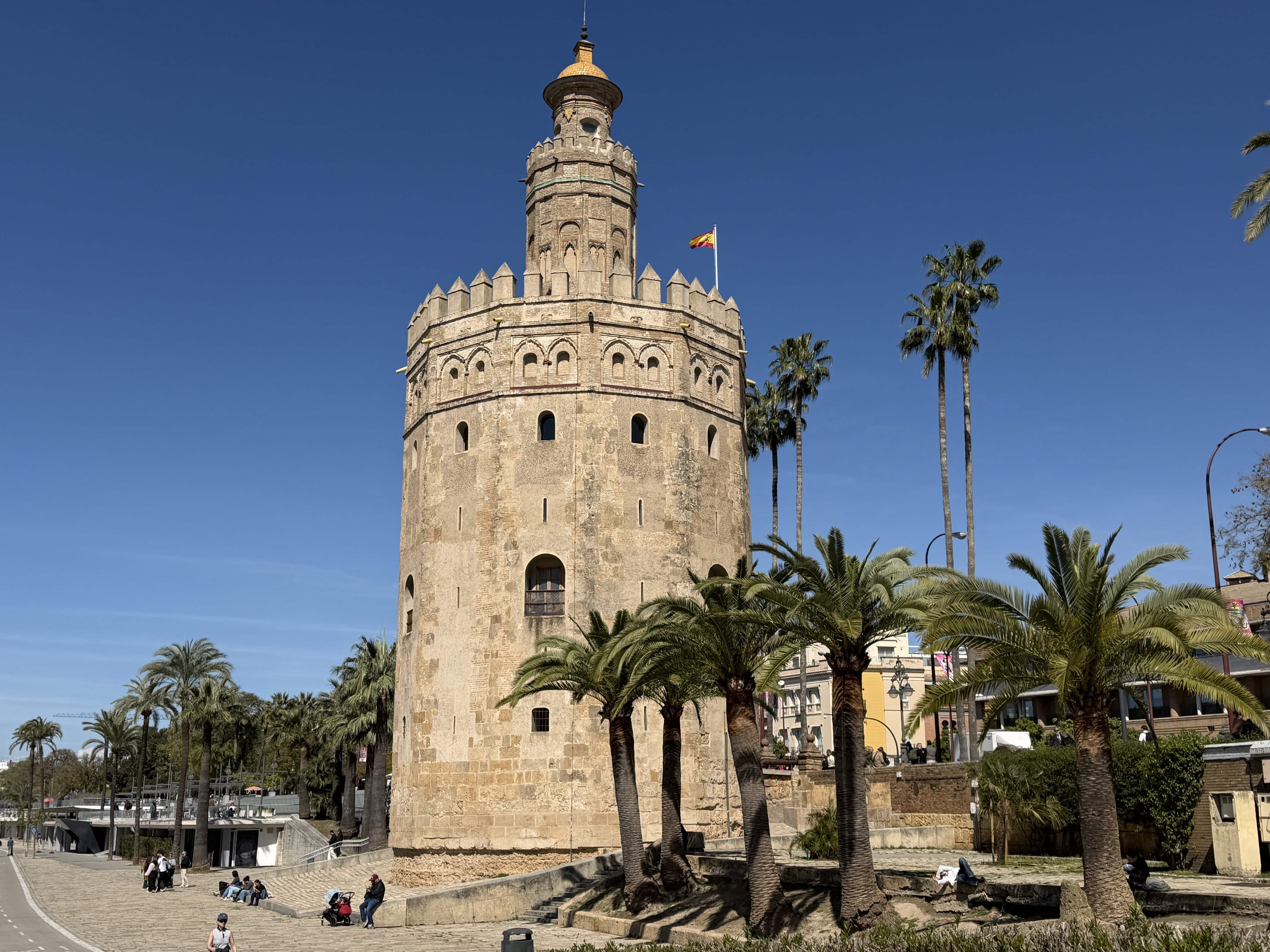
Today, the waterfront is a great place for a walk. One of the most recognizable landmarks is the Torre del Oro. The historic defensive tower stands beside the river and is one of the symbols of Seville. It was originally used in conjunction with a second tower across the river to block enemy ships from entering, with a long chain system between the two.
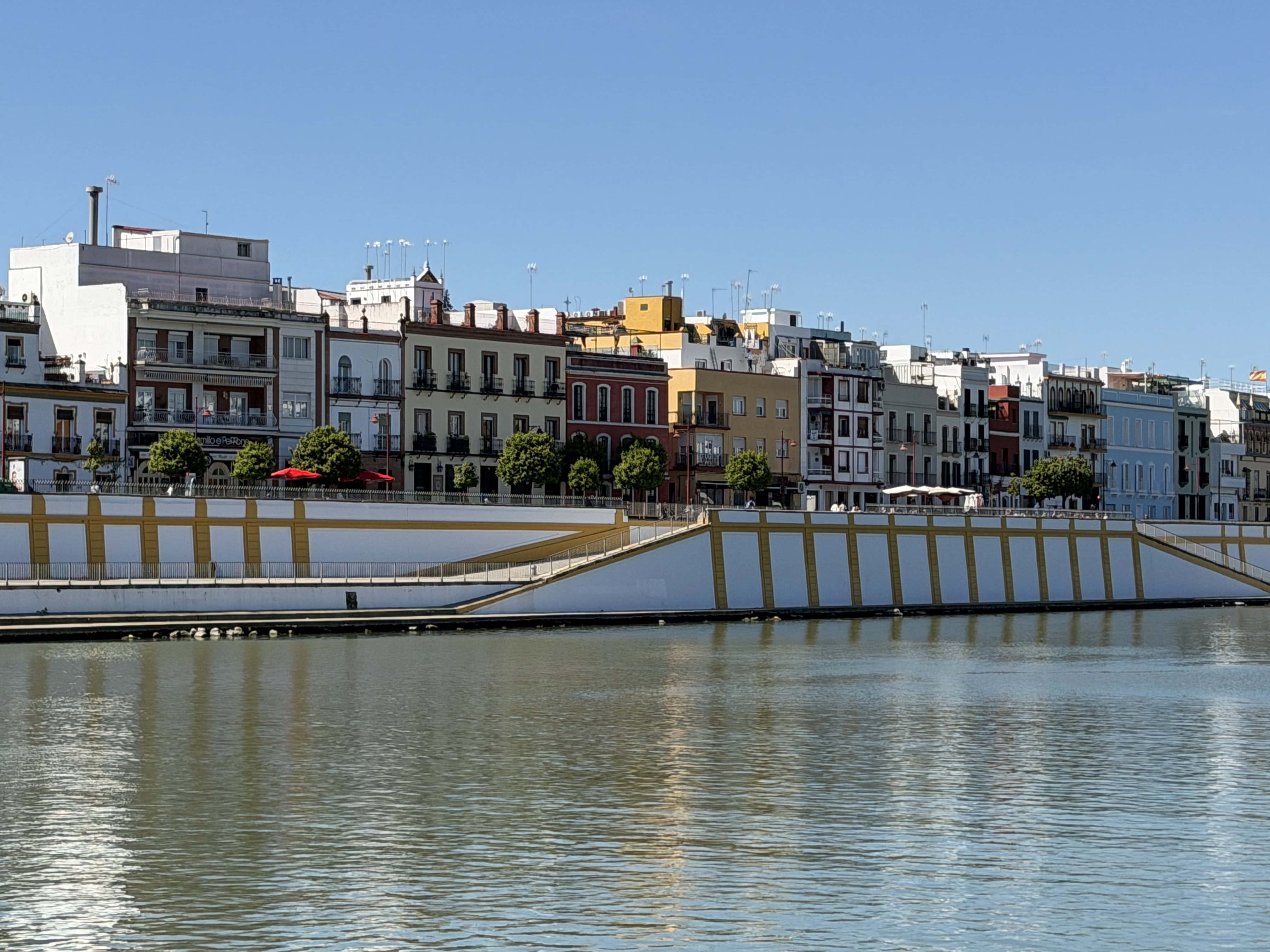
As you continue along the waterfront, look across the river toward Triana to see its colourful buildings.
Cross The River To Triana
We enjoyed spending time in Triana, particularly when it was time for lunch. The neighbourhood has long been associated with artists and craftspeople and has a different feel from the monumental centre around Santa Cruz.
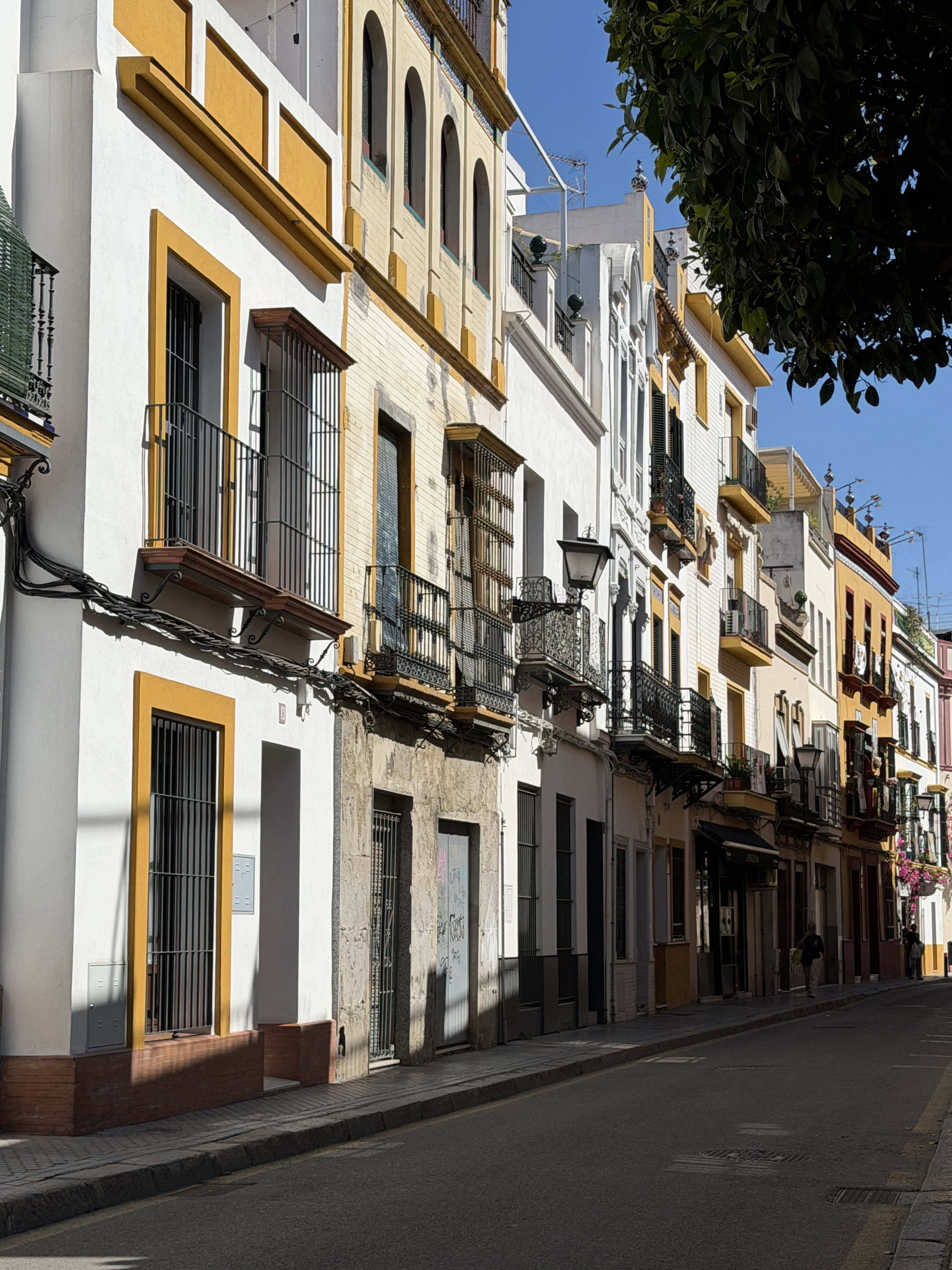
It is also closely connected with Seville’s ceramic traditions. For us, however, one of the main attractions was tapas. We had a wonderful tapas lunch here and found it a great area to experience another side of the city.
Where We Ate In Seville
Tapas should definitely be part of your Seville experience. Instead of treating every meal as just a stop between attractions, we enjoyed taking our time and trying different restaurants. Below are some of the highlights.
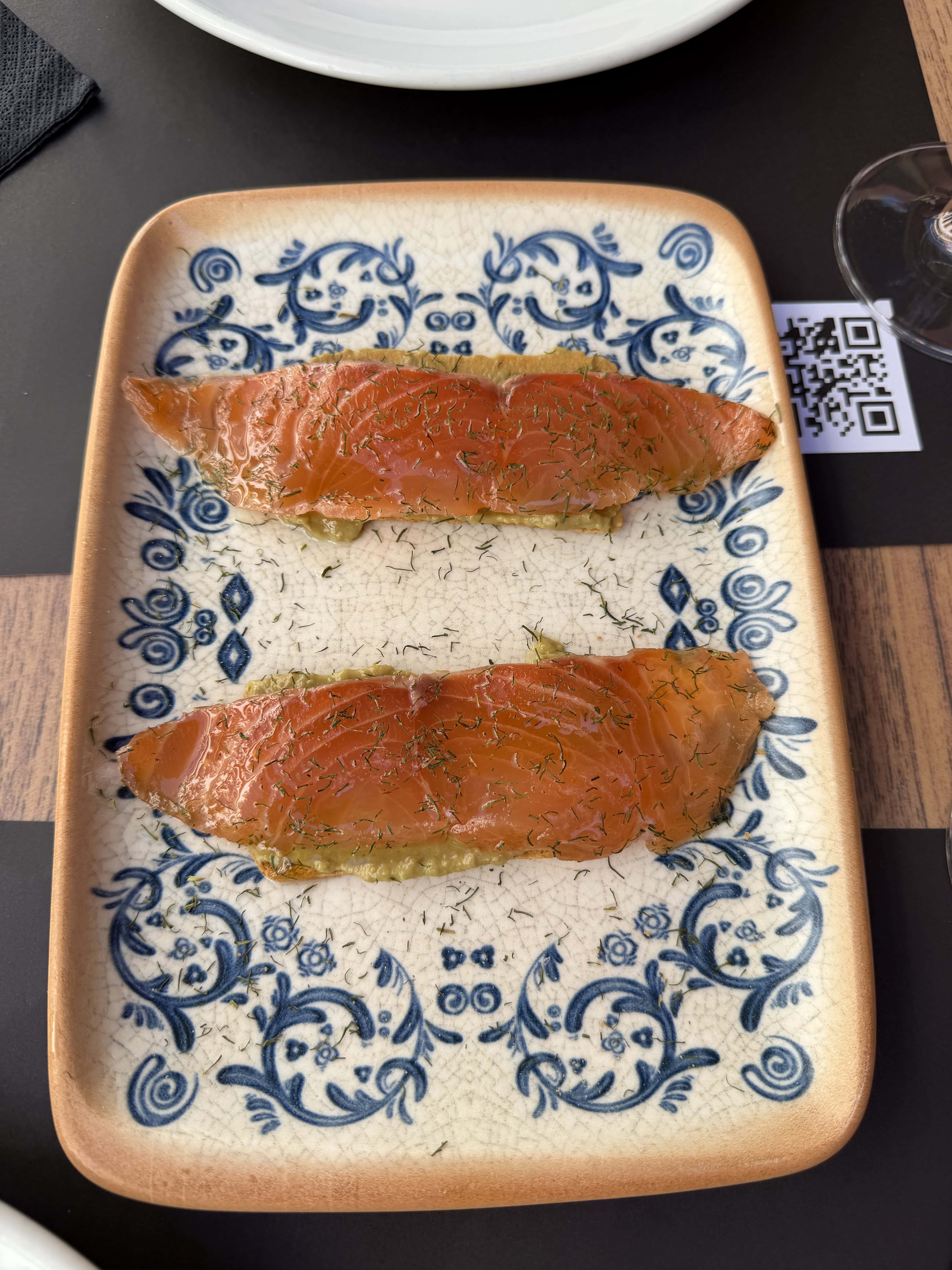
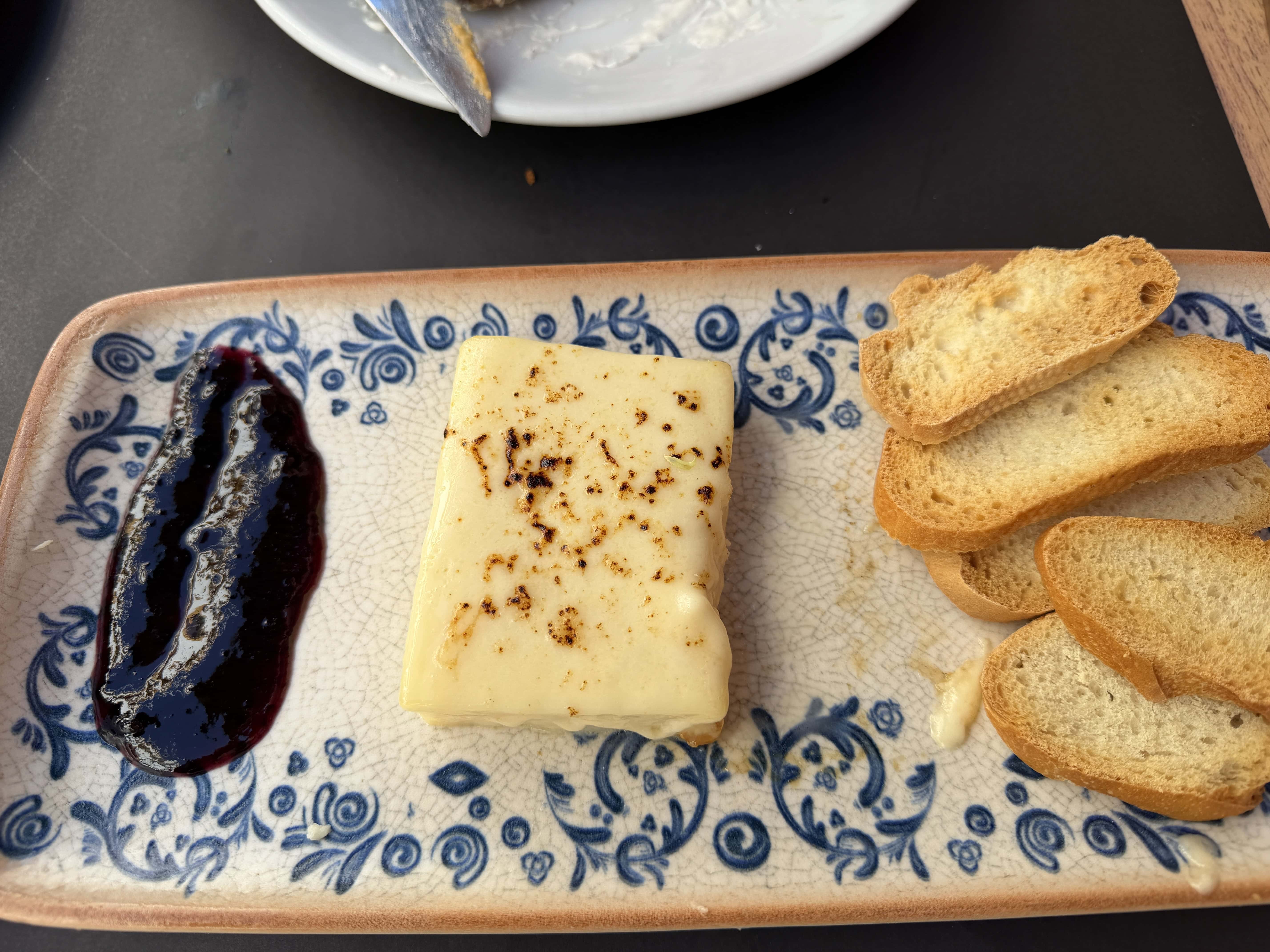
In Triana, we ate at El Sella, where our tapas included local cheese, pork tenderloin and salmon. Sitting on the patio drinking wine was a fabulous experience.
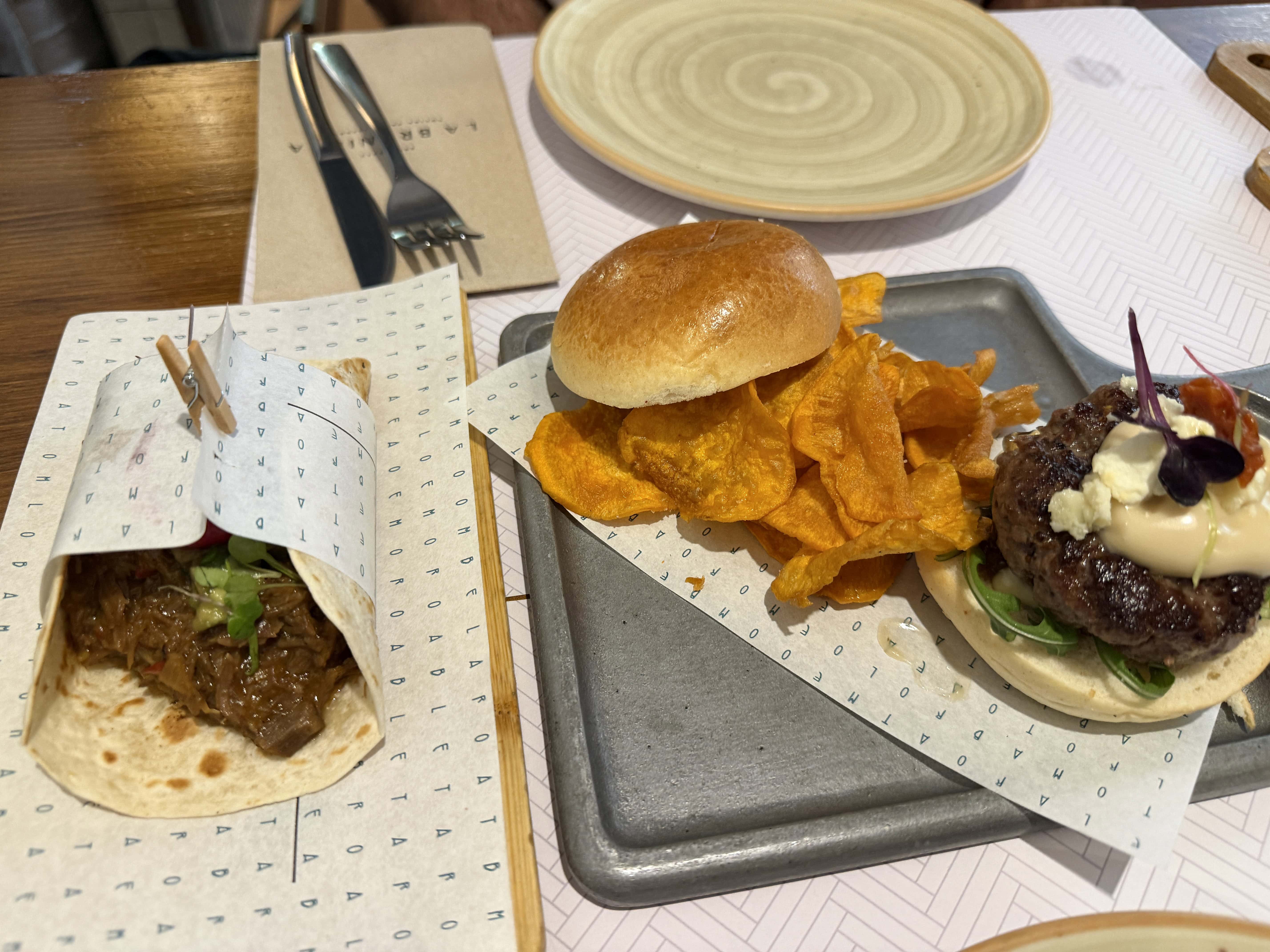
Brunilda had a more modern atmosphere. We enjoyed the vibe and tried dishes including tacos and sliders.
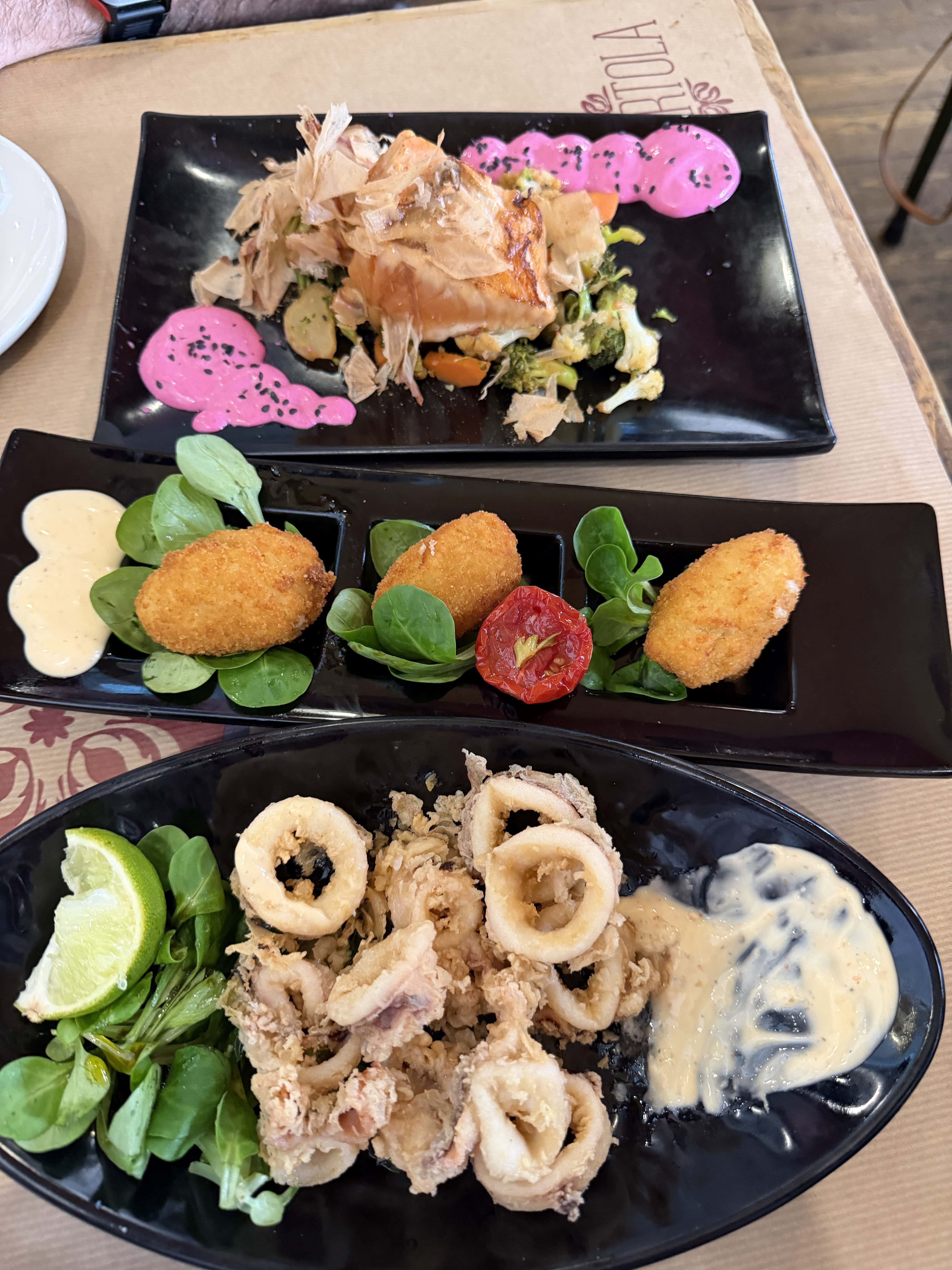
For something that felt more local, we visited Bartola. Here we had more tapas, including calamari and croquettes, along with cheese wrapped in phyllo.
This is one of the reasons we recommend spending at least three or four days in Seville. You can see the sights, but also sit and enjoy several relaxed meals.
Where To Stay In Seville
Location matters in Seville. We recommend staying somewhere that allows you to walk to the major sights, especially if this is your first visit.
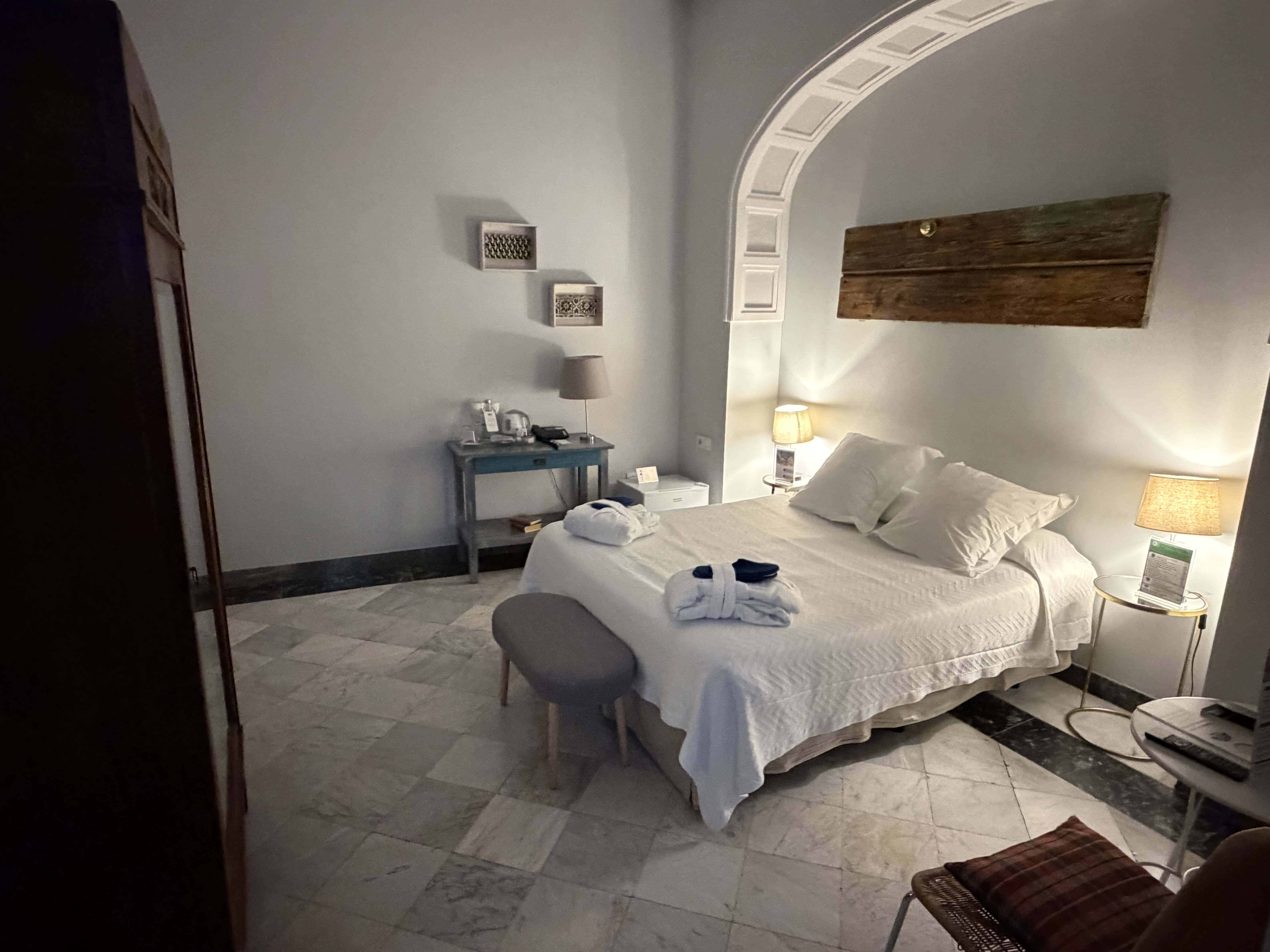
We stayed at Boutique Hotel Casa de Colón, and the location was exceptional. The hotel is only minutes from the Royal Alcázar and Seville Cathedral, making it very convenient for sightseeing. It is family-run, and we found the staff very helpful. A bonus is that it has an elevator.
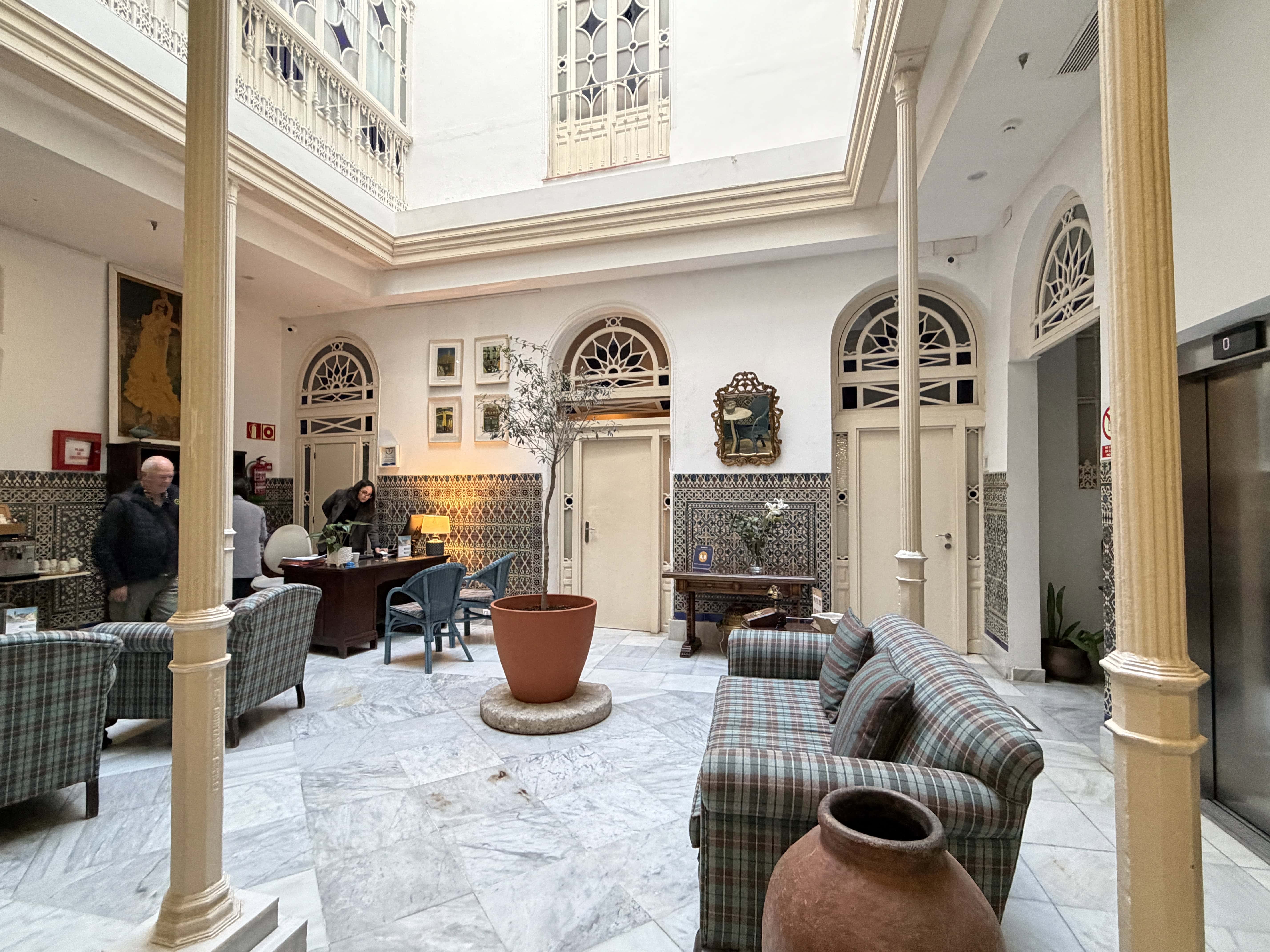
The lobby is arranged around a lovely interior courtyard, giving the property plenty of character. However, we were assigned an interior room and didn’t love it. We would definitely consider staying at Casa de Colón again because of the location, but next time we would choose a different room category.
Another option is Abba Sevilla Hotel, located near the Setas. This is a more modern property with plenty of restaurants nearby. One of its biggest attractions is the rooftop bar, which provides another opportunity to enjoy the Seville skyline.
If you would prefer to stay right in Santa Cruz, consider Hotel Fernando III. The location puts you within easy walking distance of many of Seville’s major sights. The hotel has spacious rooms and attractive décor. There is also a sun deck with a swimming pool, which could be very appealing if you are visiting during warmer weather.
Frequently Asked Questions About Seville
Is Seville Worth Visiting?
Absolutely. We have visited Seville twice and would happily return. The combination of architecture, history, gardens, food, flamenco, and neighbourhoods makes it one of our favourite cities to explore in Spain.
How Many Days Do You Need In Seville?
We recommend three to four days. Three days gives you time for the major sights, but four days allows you to explore at a more comfortable pace and enjoy long lunches, tapas bars, and neighbourhoods such as Santa Cruz without feeling rushed.
What Is The Number One Thing To See In Seville?
For us, it is the Royal Alcázar of Seville. The combination of architecture, tilework, courtyards, and gardens makes it an extraordinary place to explore. We also recommend purchasing the additional ticket for the upper royal apartments.
Is Seville Easy To Explore On Foot?
We found walking one of the best ways to experience central Seville. Many of the major attractions are pretty close together. Walking also gives you the chance to discover the smaller plazas and streets between the famous landmarks.
Is It Worth Climbing La Giralda?
Yes. We thought the climb was quite manageable because much of the ascent is via ramps rather than stairs. The views from the top provide a terrific perspective across Seville.
The Final Word On Things To Do In Seville
Choosing the 10 best things to do in Seville wasn’t easy because there is so much to experience in this city. After two visits, though, these are the places and experiences that have stood out most for us.
Of course, the major sights are extraordinary. But our memories of Seville aren’t limited to its famous attractions. We found that this is a city where you can slow down and enjoy the atmosphere. You don’t have to rush.
After visiting twice, we still don’t feel finished with Seville. And for us, that says a lot about the city.